Netzfund.
Ich habe miterlebt, wie Prinzessin Diana starb.
Ich habe miterlebt, wie Freddie Mercury starb.
Ich habe miterlebt, wie Michael Jackson starb.
Ich habe miterlebt, wie David Bowie starb.
Ich habe miterlebt, wie Prince starb.
Ich habe miterlebt, wie George Michael starb.
Ich habe miterlebt, wie Whitney Houston starb.
Ich habe miterlebt, wie Tina Turner starb.
Ich habe miterlebt, wie Aretha Franklin starb.
Ich habe miterlebt, wie Amy Winehouse starb.
Ich habe miterlebt, wie Olivia Newton-John starb.
Ich habe miterlebt, wie Meat Loaf starb.
Ich habe miterlebt, wie Ozzy Osbourne starb.
Ich habe miterlebt, wie Dolly Parton starb.
Ich habe miterlebt, wie Elvis Presley starb.
Ich habe miterlebt, wie Robin Williams starb.
Ich habe miterlebt, wie Patrick Swayze starb.
Ich habe miterlebt, wie Alan Rickman starb.
Ich habe miterlebt, wie Paul Walker starb.
Ich habe miterlebt, wie Matthew Perry starb.
Ich habe miterlebt, wie Maggie Smith starb.
Ich habe miterlebt, wie Gene Hackman starb.
Ich habe miterlebt, wie Betty White starb.
Ich habe miterlebt, wie Dame Angela Lansbury starb.
Ich habe miterlebt, wie Königin Elisabeth II. starb.
Die Liste ist endlos.
Ich habe erlebt, wie die Welt Abschied von Legenden nahm, von denen ich wirklich dachte, sie würden für immer bleiben.
Ich war am Leben, als die Berliner Mauer fiel.
Ich habe miterlebt, wie Nelson Mandela in die Freiheit entlassen wurde.
Ich erinnere mich an „Live Aid“.
Ich erinnere mich an den Tod von John Lennon.
Ich war am Leben, als der 11. September die Welt für immer veränderte.
Ich habe eine globale Pandemie durchlebt.
Ich habe den Aufstieg des Internets und die Geburt der künstlichen Intelligenz miterlebt.
Ich habe erlebt, wie Schallplatten zu Kassetten wurden, Kassetten zu CDs und CDs schließlich zum Streaming.
Ich habe erlebt, wie aus VHS DVDs wurden, aus DVDs Blu-rays – und wie schließlich alles bei Netflix landete.
Ich habe erlebt, wie Kinos – einst an Samstagnachmittagen brechend voll – durch Filme ersetzt wurden, die wir heute per Knopfdruck auf unseren Fernsehern abrufen können.
Ich erinnere mich an eine Zeit, in der bei MTV tatsächlich noch Musikvideos liefen. Als „Top of the Pops“ ein absolutes Muss im Fernsehen war.
Als die Nummer 1 zu Weihnachten noch wirklich etwas bedeutete.
Als wir die „Top 40“ aus dem Radio aufnahmen und beteten, dass der DJ nicht in unser Lieblingslied hineinquatscht!
Ich erinnere mich an Michael Jacksons „Thriller“.
An Madonnas „Material Girl“.
An Queen bei „Live Aid“.
An den Aufstieg von Wham!, Duran Duran, Culture Club und den Spice Girls.
Ich erinnere mich daran, wie ein Besuch bei „Blockbuster“ das Highlight eines Freitagabends war.
Als wir eine ganze Woche auf die nächste Folge unserer Lieblingsserie warteten.
Als „Dallas“, „Der Denver-Clan“ (Dynasty), „EastEnders“ und „Only Fools and Horses“ die Familien vor einem einzigen Fernsehgerät zusammenbrachten.
Festnetzanschlüsse wurden zu Mobiltelefonen.
Mobiltelefone wurden zu Smartphones.
Und irgendwie wurden unsere Telefone zu Kameras, Landkarten, Computern, Fernsehern – und im Grunde zu unserem ganzen Leben.
Ich erinnere mich an die Zeit vor Google.
Vor Facebook.
Vor Instagram.
Vor TikTok.
Vor der Zeit, in der Amazon einem schon am nächsten Tag etwas direkt vor die Haustür lieferte.
Ich erinnere mich an handgeschriebene Briefe.
Geburtstagskarten per Post.
Einwegkameras.
Fotoalben.
Telefonzellen.
Videotheken.
Und daran, einfach an der Haustür zu klingeln, um zu sehen, ob jemand zu Hause ist.
Ich erinnere mich daran, wie man für einen ganzen Nachmittag verschwinden konnte, ohne dass irgendjemand wusste, wo man war.
Als Fotos noch kostbar waren, weil man nur 24 Aufnahmen zur Verfügung hatte.
Als Musik nicht nur etwas war, das man nebenbei hörte – sondern etwas, das man besaß, in den Händen hielt, sammelte und wie einen Schatz behandelte.
Wir haben nicht einfach nur ein paar Jahrzehnte durchlebt.
WIR HABEN ERLEBT, WIE SICH DIE WELT KOMPLETT VERÄNDERT HAT.
Wir haben gesehen, wie aus Ikonen Legenden wurden.
Wir haben gesehen, wie aus Legenden Erinnerungen wurden.
Wir haben gesehen, wie die Technik alles veränderte, was wir kannten.
Und irgendwo auf diesem Weg ist die Welt, in der wir aufgewachsen sind, ganz still und leise verschwunden.
Und doch fühlen sich die 1980er-Jahre irgendwie immer noch so an, als wären sie erst zehn Jahre her.
Ich würde alles dafür geben, noch einen einzigen Samstagnachmittag in dieser Welt verbringen zu dürfen.
Keine Benachrichtigungen.
Keine Algorithmen.
Kein endloses Scrollen.
Einfach nur großartige Musik, wunderbare Menschen, die einfachen Freuden des Lebens – und ein ganzes Leben, das noch vor uns lag. Wir haben tatsächlich die beste aller Zeiten erlebt.
Und meine Güte, was war das für eine Zeit, in der man
leben durfte!
Bringt mich zurück....
(Foto Eddie von 2005)
@teeteesunflower@Mozes60 The person posting did NOT say that people who can identify with these behavioral aspects of themselves as adults ARE broken; the person posting said that they can “ FEEL” broken inside.
The differentiation, I believe, is the point of the post.
My wife has taught high school in Tokyo for twenty years.
Every year, a few of her students spend a year living with a family in America. When they come home, she asks each of them one question.
"What do you miss?"
She expects hamburgers.
She almost never gets hamburgers.
And these aren't old stories. Most of these kids came home in the last two years.
"Every time I left the house, my host mom said, 'Text me when you get there.' In Japan, nobody needs to know where I am. In Ohio, somebody always did." (Mina, 17, Ohio)
"If you walk toward a door, an American will hold it open. Even if you are very far away. So you have to run. I ran to so many doors." (Itsuki, 16, Georgia)
"My host brother screamed on the floor of a grocery store. A stranger walked by and said to my host mom, 'You're doing great, Mama.' She almost cried. I didn't know strangers were allowed to say that." (Aoi, 17, Texas)
"We went away for the weekend and left our trash can at the curb. When we got back, it was by the garage. Nobody said who. My host dad said if it had been there one more day, the neighbor would have knocked." (Haruto, 16, Minnesota)
"A car got stuck in the snow in front of our house. Four men came out of four houses. Nobody called them. They pushed, the car drove away, and they went back inside without saying their names." (Ren, 17, Michigan)
"Every American has jumper cables. Maybe half of them know which clip goes where. The other half help anyway." (Shin, 16, Montana)
"In July, my host family put a cooler on the porch. Cold water, snacks, and a sign: 'For our delivery drivers. Thank you!' I asked if they knew the drivers. They said no." (Nanami, 16, Arizona)
"Downtown, there are banners on the lampposts. Photos of soldiers from the town. Some old, some very young. My host grandpa walked me down the street and told me every name." (Yuna, 16, Iowa)
"I got a C-plus on my first test. My host dad said, 'I'm proud of you,' and put it on the fridge. In Japan, nobody is proud of a C-plus." (Takeru, 17, Pennsylvania)
Then the quietest girl in the class raised her hand.
Sora. Seventeen. Missouri.
"Nobody asks me 'home safe?' anymore," she said.
She was wrong.
In September, there was a typhoon warning for Tokyo. At 2 a.m., Sora's phone lit up.
It was her host mom. In Missouri. Watching the weather in a country she had never been to.
"Saw the storm. You home safe?"
Sora told my wife she cried for a long time. Then she typed the answer she had typed a hundred times, from football games and friends' driveways.
"Home safe."
Her host mom wrote back one line.
"Good. That's all I needed."
My wife has asked that question for twenty years. Not one kid has ever said they missed how big America is.
They miss how America says goodbye. And how it checks that you got home.
So, America. You think you've lost something.
You haven't. It's on a porch in Arizona. It's pushing a car in Michigan. It's awake at 2 a.m. in Missouri, watching our weather.
You don't remember doing any of it.
A kid in Tokyo will never forget.
"Let it be told to the future world, that in the depth of winter, when nothing but hope and virtue could survive, that the city and the country, alarmed at one common danger, came forth to meet and to repulse it."
-- Thomas Paine, The American Crisis (#1)
There's a saying on American social media:
"Be the American that Japanese people think you are."
I'm Japanese. I've lived in Tokyo my whole life.
So let me tell you what we actually say about you, when you're not in the room.
"When someone falls down on the street, we pretend not to see. We're protecting their pride. Americans run straight at them. They don't care about the pride. They care about the knee." (Office worker, 38)
"An American will stop four lanes of traffic for a family of ducks. And then everyone in the cars claps for the ducks." (Taxi driver, 61)
"If you lend an American a pen, you will never see it again. If you need a kidney, they'll ask your blood type." (Nurse, 45)
"At kids' soccer games, they cheer when the other team's kid scores. The other team's parents look confused. Then they cheer too." (Youth soccer coach, 52, lived one year in Ohio)
"A man sneezed on a bus in Chicago. Eleven strangers said 'Bless you.' He said 'thank you' eleven times. Nobody on that bus thought this was strange." (University student, 21)
"At an airport in Texas, I watched a soldier try to pay for his lunch. The cashier said someone already had. He asked who. She said, 'Somebody who didn't want you to know.'" (Retired teacher, 70)
"American fathers cannot braid hair. But they will watch a video at midnight for an hour so their daughter's hair looks right on picture day." (Hair stylist, 33)
"I ran the Chicago Marathon once. Strangers stood in the cold for hours holding signs for people they will never meet. At mile 20, a man I'd never seen read the name off my bib and screamed it like he'd raised me." (Runner, 48)
"When Americans get lost, they ask a stranger. If the stranger is also lost, they become a team." (Tour guide, 39)
"They ask the waitress her name. And then they remember it." (Restaurant owner, 66)
And one more. From my father. He's 76. He doesn't say much about anything. This is the longest thing I have ever heard him say about another country.
"Every time something terrible happens in America, I watch the news, and I look for one thing.
The people running toward it.
There are always so many."
So, America.
You don't have to become the Americans we think you are.
We're not imagining you.
We're remembering you.
I have been holding my tongue about something that happened during the Ohio gubernatorial race. I refused to speak while the election was underway because I did not want my words mistaken for an attempt to influence anyone’s vote.
But now that the election is over, I have something to say.
For nearly twenty years, my ministry has taken me among the homeless, the abused, the exploited, and the forgotten. I have sat with victims of sexual violence and witnessed the lifelong wounds of childhood trauma.
What Vivek Ramaswamy’s campaign did to Amy Acton was among the most morally repulsive things I have witnessed in American politics.
They took a woman whose stepfather was indicted for raping her when she was twelve years old and featured her mother, from whom she had been estranged for nearly fifty years, in a political advertisement attacking her credibility.
The advertisement challenged Acton’s account of her childhood without mentioning the sexual abuse allegations or the circumstances of that estrangement. When people expressed their horror, the campaign defended it.
Imagine examining another person’s childhood suffering and fractured family relationships, then deciding those wounds might help win an election.
Anyone who has worked with survivors of childhood sexual abuse understands the painful realities of denial, betrayal, shame, and estrangement. A child growing into a successful adult does not erase what happened. Nor does a parent’s denial make that suffering disappear.
I find it equally disturbing that an elderly mother, whom Acton herself described as unwell, was brought into this spectacle. Whatever her own struggles or responsibility for the past, exploiting that fractured relationship was grotesque.
To everyone who defended this, consider the message you sent to survivors. To the young woman whose family refuses to believe her. To the man who has carried the shame of childhood abuse for forty years. To the frightened child who has yet to tell anyone.
What did you teach them about the value of their suffering?
I am a priest. I believe in repentance, forgiveness, and redemption. But none of those things requires me to pretend that deliberate cruelty is anything less than a grave moral failure.
Your political allegiance does not absolve you of moral responsibility. You do not get to set aside your conscience during an election and retrieve it afterward.
If your loyalty requires you to defend the exploitation of a childhood sexual abuse survivor, your loyalty has become an idol. And if your conscience cannot recognize the wrong here, examine what political tribalism has done to it.
This is not about Republicans or Democrats. We have a choice as a people: continue excusing cruelty from our preferred political camp, or summon the courage to condemn it wherever it appears.
Amy Acton deserved better. Every survivor who watched this unfold deserved better.
And God help us if we have reached the point where winning an election matters more than protecting the dignity of a wounded human being.
@Aylin_0034 The guy with the watch on his wrist.
But it’s also very possible that he had the type of watch that with the press of one button, could announce the time…
@WilliamMewVMAX@NataliaBower100 You the same guy that posts about drunken forays while spending your days/nights/weekends as an adrenaline-seeking Pokémon champion?
Tell us more about your work in philosophy so we can better understand yr perspective on who/who shouldn’t choose the tedium of early childcare.
@calicheph@raulcontev That is just not always so. The day after I was put in an ambulance from my workplace because I was having a stroke was the day that both my husband and I put ourselves on a location app so that in a critical situation we would know where the other was.
@RpsAgainstTrump If this came out of the mouth of a person with a microphone standing on the corner of any street anywhere in this country, it would be understood as the spewings of a seriously disturbed individual.
This is the president of the United States of America.
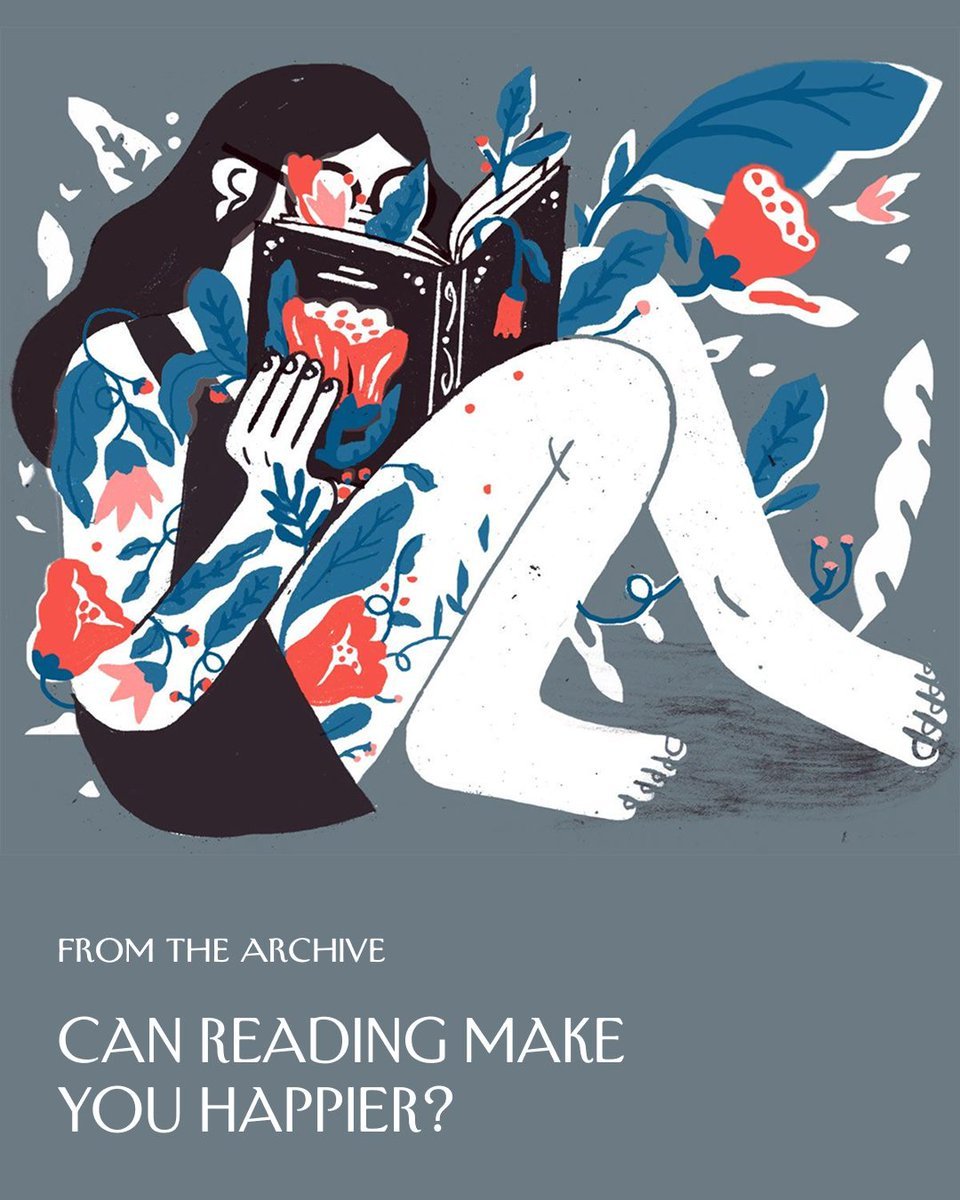
Whatever book you pick up, it’s likely to make you feel better—maybe even a whole lot better. “In a secular age, I suspect that reading fiction is one of the few remaining paths to transcendence, that elusive state in which the distance between the self and the universe shrinks,” Ceridwen Dovey writes, in “Can Reading Make You Happier?,” which was published in 2015. Dive into the research behind the therapeutic effect of books: https://t.co/H94aQp3jtK
Os vais a reír, pero hay pocas cosas que me pongan más de mala leche que ver a alguien con cargo o presunta formación destrozando el idioma por escrito.
Entiendo que al hablar, por el acento, la rapidez o la pura costumbre, se te escape un infinitivo por un imperativo. Vale, compramos barco. Nos pasa a todos.
Pero cuando coges un bolígrafo, redactas un informe médico o mandas un maldito correo... ¡la palabra escrita permanece!
Queda ahí para la posteridad, grabada a fuego en la historia clínica o en el tablón de anuncios para que todo el mundo vea el preciso y exacto momento en el que decidiste apalear el diccionario.
Si eres jefe de servicio, coordinador o vas a dar instrucciones por escrito a tu equipo, qué menos que saber usar un verbo. Vamos, digo yo. Que exigir respeto profesional empieza por respetar las normas más básicas de la lengua.
Es fascinante cómo pretendemos coordinar un quirófano o gestionar una planta entera si no somos capaces de coordinar una mísera desinencia verbal.
Por si hay dudas, os dejo un breve manual de supervivencia para vuestros próximos memorandos:
No es "iros" o “irse”, es “idos”.
No es "sentaros a rellenar las altas", es “sentaos”.
Y, por el amor de Dios, no es "mirar este informe", es “mirad”.
Que las vidas de vuestros pacientes puede que no dependan de una "d" final, pero vuestra dignidad y la salud visual de los que os tenemos que leer, sí.
Haced el favor. Escribid bien. Es gratis.
#LaTraumatologaGeek
El andamiaje de las palabras. En la última guardia, entre cafés y quirófanos, acabamos debatiendo una ida de olla: ¿el idioma en el que pensamos altera nuestra percepción del mundo?
Me refiero al esquema mental con el que procesamos la vida. Yo misma noto que mi forma de comportarme o de reaccionar a las cosas cambia dependiendo de la lengua que esté usando.
Por ejemplo, en el italiano. Ellos distinguen entre esperar el de paso del tiempo (aspettare) y la esperanza que nace del corazón (sperare). Y me parece una preciosidad.
Aunque tienen su propio agujero. No tienen una palabra para ese cosquilleo tonto de usar algo nuevo por primera vez, estrenar. Pero la tuvieron.
Los romanos llamaban strena al regalo de buen augurio que se hacían en Año Nuevo. De ahí salió strenna, que hoy significa regalo de Navidad. Y nuestro estrena, que acabó convirtiéndose en verbo.
Imagina, si este contraste pasa con un idioma que está aquí al lado, imaginad el abismo perceptivo con lenguas muchísimo más lejanas.
Pero ahí me quedé yo, dándole vueltas y llegué a la conclusión de que el español es pura magia.
Piénsalo, un idioma que consigue que cientos de millones de personas distintas y repartidas por todo el planeta, compartan exactamente el mismo andamiaje mental. El mismo sistema operativo para el mundo. Me considero afortunada.
¿Alguien más ha notado que su forma de comportarse y entender la vida cambia con el idioma que use?
#LaTraumatologaGeek
TU ABUELA SE ROMPIÓ LA CADERA Y MURIÓ 6 MESES DESPUÉS (pero nadie te contó por qué)
Todos hemos escuchado esa historia. La abuela que se cae, se rompe la cadera, y en menos de un año está muerta
Y pensamos: “Caray, qué mala suerte.”
Pero no es mala suerte
Es biología pura y dura
Déjame contarte algo que Harvey Cushing, el padre de la neurocirugía moderna, ya sabía en 1920: el cuerpo humano es un adicto al movimiento
Como un yonqui necesita su dosis, tus músculos necesitan contraerse… o se van
Cuando tu abuela se rompe la cadera y pasa dos semanas en cama, sus músculos empiezan a desaparecer
Se evaporan. Un 1-2% de masa muscular por día de reposo absoluto
En una semana ha perdido el 10%. En dos semanas, el 20%
¿Y sabes qué pasa entonces?
Que se levanta débil. Tan débil que cualquier escalón es el Everest. Que su corazón, que también es músculo, bombea peor. Que su sistema inmune, que depende de la movilidad para funcionar, se va al carajo.
Que coge una neumonía por estar tumbada. Que se cae otra vez porque sus piernas ya no responden
Y así, señoras y señores, es como una fractura de cadera mata
No es la fractura. Es la inmovilidad
Los romanos lo sabían cuando obligaban a sus legionarios a marchar 30 kil��metros diarios. No era disciplina militar. Era supervivencia
Porque el movimiento no es opcional. Es LA medicina.
Y el reposo eterno, el “descansa que ya te lo has ganado”… Eso es veneno puro. Opio para el cuerpo
Te hace sentir bien al principio, pero te está matando por dentro
Tu cuerpo no entiende de jubilaciones
Solo entiende de uso o muerte
#LaTraumatologaGeek