It‘s absurd to make a competitive sport of bread and butter, but the cafes and bakeries in Copenhagen have done that. The latest gastronomic sensation there is bread and butter with a slice of cheese. This in a city where the best restaurants serve foraged food. Moss, ants, fermented things, objects from intertidal zones etc. It’s called bolle med ost (bun with cheese). There’s warm sourdough with a dark crust you can hear across the table. And an interior of irregular chambers to accommodate butter. Butter we thought we knew. We’d bought it for decades, sometimes made it. This is different, whipped into folds. It’s a different physical state of fat. The cheese (usually Gammel Knas, that takes more than two years to mature) is for the salt and the nutty finish.
My wife and I became quiet whenever we ate the BMO. Married people will recognise this as one of the better sorts of silence. Neither party is in trouble.
Copenhagen’s bakers have been competing over this kind of stuff: flour, fermentation, seeds, the precise condition of butter, the moment when cheese is to be sliced.
We’ve now begun to resent all the bread and butter we’ve previously eaten.
A couple of nights back our friend Indira Basu played one of Tagore’s most enchanting songs for us on the piano. It was beautiful, there were ascents and sudden, lovely troughs where everything seemed to fall away except the bare bones of the tune. Here’s Ami Chini Go Chini Tomare on the piano. Do listen to the end. Indira starts with the song we’ve all known for years, takes it somewhere it hasn’t been, and then brings it home.
I find it extraordinary that mistris, electricians, plumbers and other people in the Indian building trades cannot put up a single thing up straight. There seems to be a philosophical objection to the right angle. Ninety degrees is regarded as a vulgar Western absolutism.
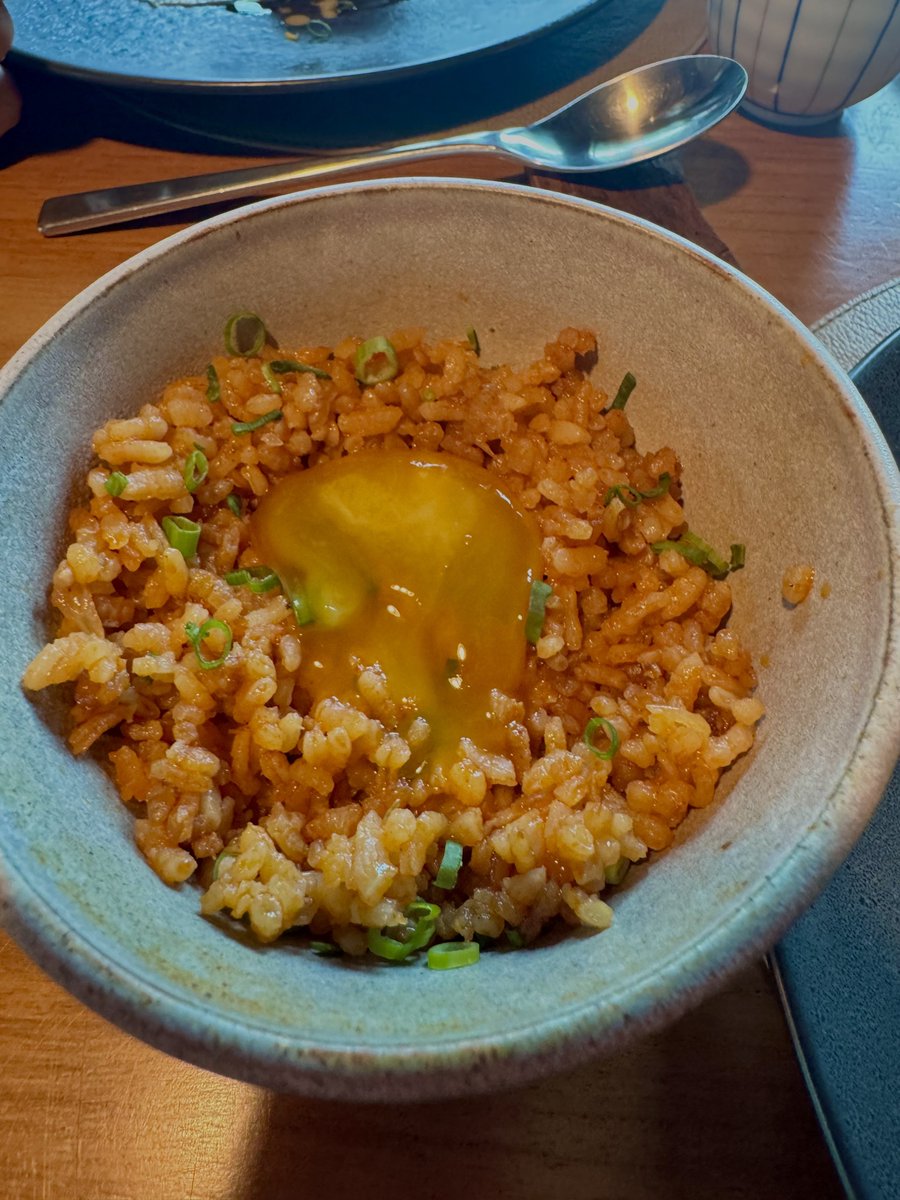
Soy curing is an arranged marriage between an egg yolk and soy sauce. The yolk is a fat-heavy emulsion designed to manufacture and sustain a bird embryo outside a bird. Soy sauce is the accumulated debris of soybeans and wheat undone by mould, yeast, bacteria and salt. It’s beautiful how it persuades the yolk to become a gel. If it’s allowed to exert itself longer: custard. Longer: jam. Then: fudge.
I know nothing about this beyond having eaten it with some attention, but it seems to me that the most interesting soy-cured yolk is the one that hasn’t quite finished becoming one. A short cure of eight to ten hours can produce a yolk with a seasoned, slightly gelled exterior surrounding an almost molten centre. Drop it on rice and prod it with a fork. The yolk gives way and gets everywhere. At this point, one should have the good sense to interfere no more.
Pic: Kashmiri Mushkbudij rice at @restaurantnaar, near Kasauli.
बुलबुल को गुल मुबारक गुल को चमन मुबारक
हम बे-कसों को अपना प्यारा वतन मुबारक
ग़ुंचे हमारे दिल के इस बाग़ में खिलेंगे
इस ख़ाक से उठे हैं इस ख़ाक में मिलेंगे
A good measure of the emotional charge carried by a patriotic song is if it can affect the unsentimental amongst us.
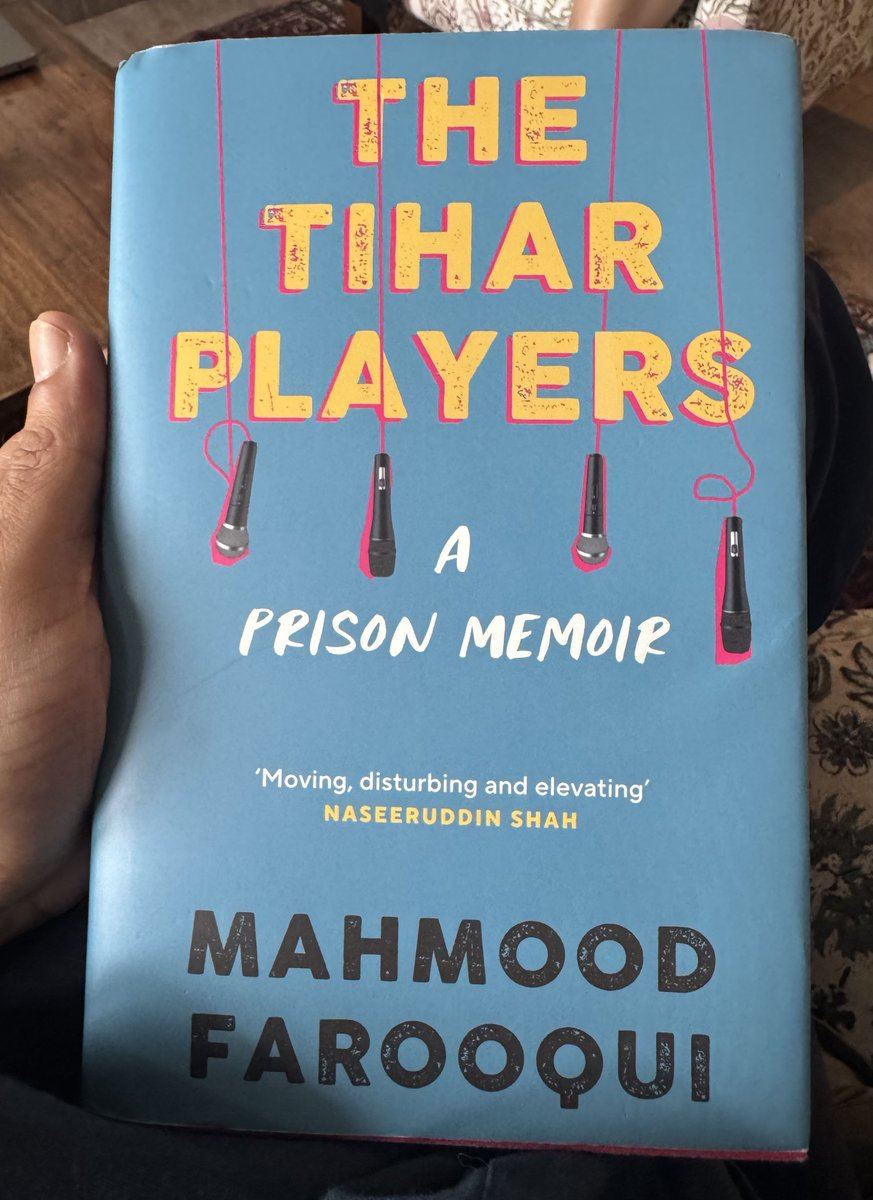
This book is Mahmood Farooqui’s khoon-e-jigar. Paid for in the dearest currency a writer can possess. It alters the weight of ordinary things. Keeps revealing on every page how much of a human being remains after everything else has been taken away. Perhaps one of the finest prison memoirs ever written. @DastangoiTheArt
Governments are forever urging young people to participate in democracy. We’ve come to think that democracy is an event that consists of appearing every few years, queueing up and staining your finger as you make a choice. What’s equally true is that democracy is also a condition. It begins the morning after the election, when the citizen’s real occupation begins: the continuous supervision of power.
The moment we begin referring to elected representatives as ‘our rulers’, we have surrendered the republic. They do not rule us. In a monarchy one has rulers. In a democracy one has public servants.
Over a lifetime in politics, the British politician Tony Benn developed five little democratic questions. These were questions he asked of every powerful person holding public office.
What power have you got? Where did you get it? In whose interests do you exercise it? To whom are you accountable? And how do we get rid of you?
Notice that not one of Benn’s questions asks, Did you win an election? That question has already been answered.
These are questions for every citizen. They should accompany every holder of office like a shadow. If those questions become unwelcome, liberty is already in retreat.
Insaan ke haathon ki banayi nahi khaate
Hum aam ke mausam mein mithaai nahi khaate
#munawwarrana
The Rataul at its birthplace. Rataul, Khekra tehsil, Baghpat district.
Most sweet mangoes hit one glorious note and refuse to leave it. The Rataul begins sweetly enough, and stays sweet, but then other things happen alongside the sweetness. Perhaps jasmine, maybe spice, maybe something faintly resinous, and because it’s a small mango, it finishes before you’ve properly identified it. So you immediately reach for another.
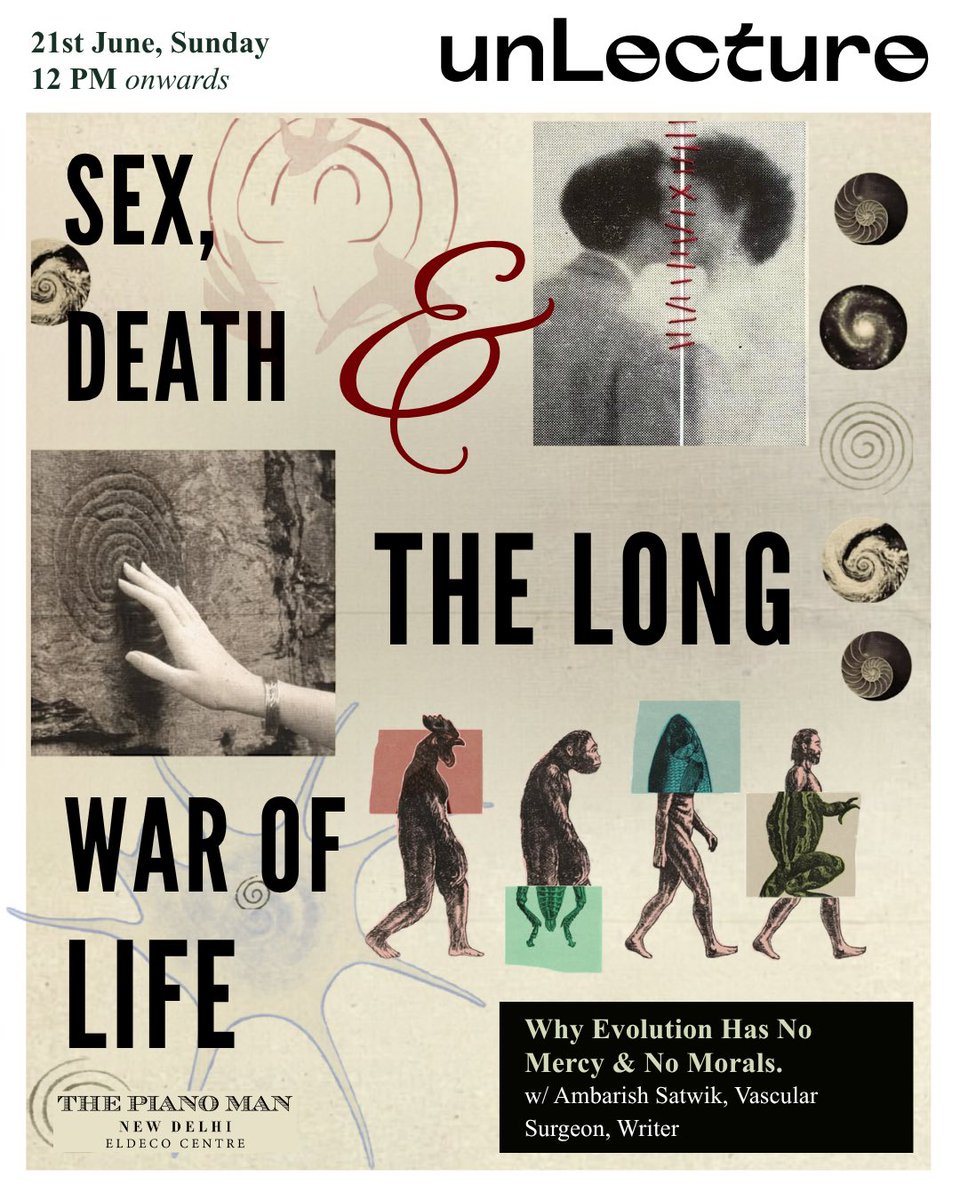
Doing this again: How we crawled out of slime only to develop opinions.
I’ll be attempting to summarise four billion years of ruthless biological improvisation without embarrassing myself. No promises.
Sunday, 21 June, 12 noon, The Piano Man, Eldeco, Delhi.
This is part of the unLecture series. Details here: https://t.co/9zFBMgt7cB
There is an old curiosity of mountaineering literature: the unseen companion. Particularly on Everest, high in the death zone (above 8,000 metres), where the air has roughly a third of the oxygen available at sea level. It’s been described as an extra presence. It appears when your body is a sack of broken glass and your mind a leaking battery in the howling waste. The phenomenon has been reported often enough to have acquired a name: the Third Man Factor. Neurologists call it a hallucination. But one notices (in reports) that the hallucination is invariably constructive. It doesn’t urge men and women to lie down and die. What’s remarkable is the number of times it’s been reported. The newcomer arrives as a fellow traveller. Someone walking just off your shoulder, matching your pace. Oddly calm and professional, encouraging you onwards. Even their silence is reassuring rather than ominous.
The upper reaches of Everest have produced many such accounts. Frank Smythe, descending from the mountain in 1933, became so convinced of a companion’s presence that he broke off a piece of mint cake to share with him. More than seventy years later, the British physician Jeremy Windsor, exhausted and hypoxic near the summit, found himself accompanied by climber whom he named Jimmy and had a full conversation with him. Others have reported the same phenomenon in Antarctica, at sea, in deserts, in disaster zones, in the lonely aftermath of accidents and shipwrecks.
We’ve always been reluctant to accept that the most mysterious experiences may arise from ordinary tissue. The neurological explanation is less mystical than it is strange. Our sense of being a self and occupying a body, moving through space, is a given. But to achieve that the brain must constantly integrate signals from vision, touch, balance, proprioception and memory into a coherent account of who and where we are. Under conditions of severe stress, that integration can falter.
One region that has attracted particular interest is the temporoparietal junction, a patch of cortex involved in constructing the boundary between self and other. Neuroscientists have shown that disrupting activity in this area can produce the vivid sensation that another person is standing nearby, mirroring one’s movements. The figure is not seen in the ordinary sense, but felt. The brain appears to externalise part of its own representation of the self and then experiences it as a companion.
The combination of hypoxia and sleep deprivation may make such misfires more likely.
Yet the phenomenon has another aspect that neuroscience doesn’t fully capture: the presence being helpful, shepherding people through circumstances in which they might otherwise surrender. Why should there be a voice suggesting the next crevasse to avoid? Why a steadying hand at the small of the back when the legs have turned to water? One is tempted to think that the brain, faced with conditions for which evolution made little provision, is manufacturing the thing most likely to improve the odds of survival: another human being.
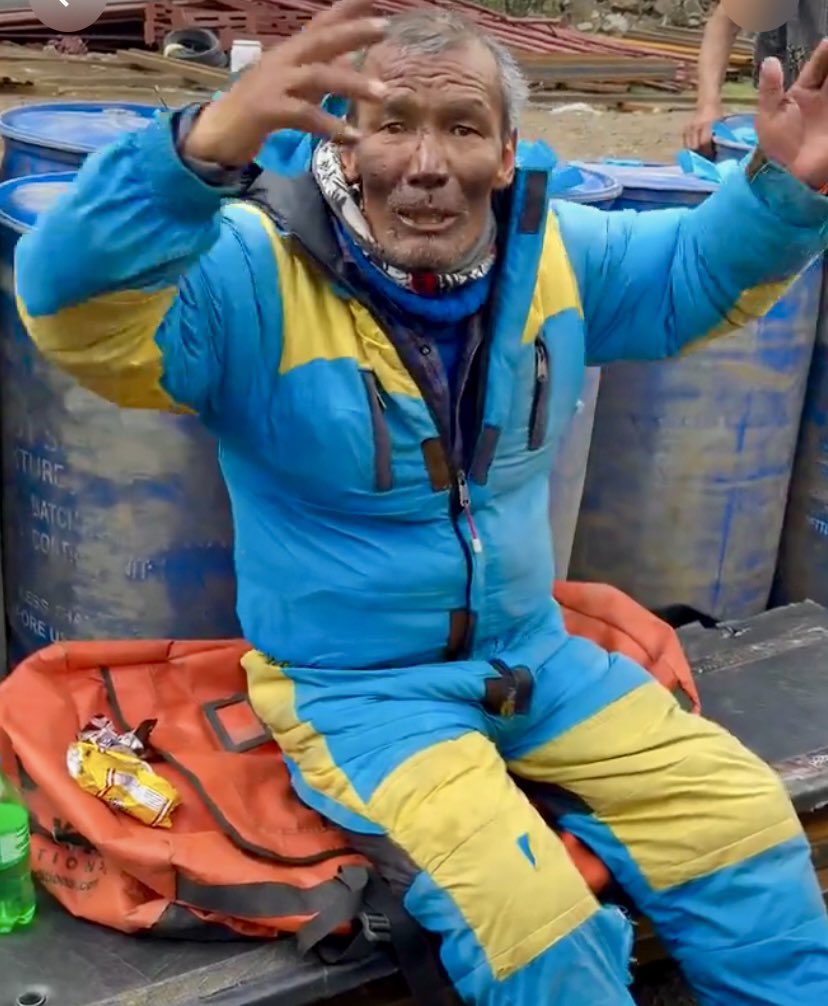
Whether Dawa Sherpa encountered such a figure is known only to him. Perhaps there was no phantom, only a lifetime of mountain knowledge operating below consciousness. Either way, one hopes he has many years ahead of him: many more climbs and many more evenings spent telling stories that sound impossible.
Dawa Hillary Sherpa (52 años, de Okhaldhunga, Nepal), guía sherpa experimentado, fue dejado atrás el 29 de mayo de 2026 (último día de la temporada) durante el descenso del Everest, cerca de la zona de la muerte.
Dawa guiaba a un cliente polaco con Himalayan Traverse Adventure (agencia nepalí). El cliente —que escalaba sin oxígeno suplementario— sufrió congelaciones graves cerca del Collado Sur (Campo 4, 7.950m), por lo que dieron la vuelta.
En el descenso por la Cara de Lhotse (cerca del Campo 3 / Yellow Band, 7.500-7.600 m), Dawa se detuvo a descansar con mochila pesada y les dijo al cliente y a otro sherpa que siguieran. Se separaron.
El cliente y otro sherpa llegaron al Campo 2 (6.400 m), de donde fueron evacuados en helicóptero. Dawa no apareció.
La temporada en el Everest cerraba ese mismo día. Los Icefall Doctors retiraban las escaleras de la Cascada de Hielo del Khumbu poco después (zona 5.500-6.000 m).
Su empresa tardó días en reportarlo y no activó una búsqueda inmediata.
El miércoles 3 de junio subi�� un helicóptero (de 8K Expeditions, a petición de la familia), pero no lo vio a pesar de buscar desde la Cascada de Hielo hasta Campo 3.
Críticas duras por negligencia y falta de apoyo.
Final milagroso (hoy, 4 de junio): Dawa sobrevivió 6-7 días solo en la montaña (sin oxígeno, sin comida, solo, sin ayuda).
Bajó arrastrándose más de 2.000 m por la vertiginosa Cara de Lhotse, Western Cwm y la peligrosa Cascada de Hielo del Khumbu, arrastrándose hacia el Campo Base . Un equipo de limpieza lo encontró cerca del Crampon Point, consciente pero con graves congelaciones. Dawa hablaba lento y estaba débil. Le dieron una sopa caliente. Fue evacuado en helicóptero a Kathmandu, donde está en el hospital recuperándose.
Su familia ya preparaba los funerales.
Pero como dice la canción de Cheo Gallego:
"Nadie sabe si luego de la muerte podemos vernos,
nunca;
Que si el infierno que resguardas tú
Lo guardas, pero en tu yo interno
NUNCA."
📷Mingmar Sherpa/Capitán Bibek Khadka
In 1955, the Archives of Surgery published a paper titled Management of Adreno-cortical Insufficiency During Surgery, describing the successful operation on a 37 year old Addisonian patient undergoing major spinal surgery. The paper was there in the open, respectably cited and available to anyone inclined to look. The patient's identity, naturally and properly, was withheld. And so the case remained in the annals: visible in every respect, yet detached from the identity that would have revealed its wider significance.
Addison's disease begins when the two small adrenal glands that sit above the kidneys fail. They stop producing cortisol, a hormone involved in maintaining blood pressure, blood sugar, energy metabolism, and the body’s response to stress. The simplest tasks (climbing a flight of stairs, rising from a chair) may require an effort out of proportion to their apparent demands. There’s also the matter of stress. Healthy people meet illness, surgery, grief, fear, mental crisis, or injury with an invisible hormonal surge. It’s a physiological reserve they never have to think about. The body prepares itself for adversity. The Addisonian cannot. It’s one of those conditions that reveals how much of what we call character is in fact hormonal physiology.
The patient in the paper was John F Kennedy. Five years after the paper was published, he won the US presidential election by a razor thin margin. If voters had learned that the handsome young senator was dependent on corticosteroids, and afflicted by chronic illness, and perhaps engaged in a daily struggle with pain and endocrine failure, Richard Nixon might well have become President instead.
So Nixon enters the White House. The Camelot legend never takes hold in America. The Bay of Pigs belongs to another presidency altogether. And the Cuban Missile Crisis, perhaps the nearest our species has come to a collective obituary, is entrusted to another temperament entirely. The Cold War’s most celebrated exhibition of presidential nerve is never performed by a man whose body (undisclosed to the public) required relentless chemical maintenance just to get through the day.
For Kennedy, Addison’s was an invisible dependency. He was sustained day to day on a pharmacological scaffolding. It’s quite absurd that the destiny of nations and the continued existence of several hundred million people may have rested, for a time, on the daily successful replacement of a hormone measured in milligrams.
A Small Inheritance
In a small car’s hush, three voices meet,
A child leans forward from the backseat;
He mouths a song he cannot yet know:
Of clouds that come, of wine that may flow.
He knows not longing, loss, or art,
But learns their music by the heart;
Between his parents’ easy refrain
He gathers memory before pain.
Years hence, unbidden and unsought,
This tune may find him, sudden, fraught;
And through some later inward day,
Remind him how he was loved this way.
https://t.co/eL0Jf05Qj1
We’ve lost a wonderful colleague who was an integral part of our family. Tremendous loss for the department, institution, vascular fraternity, patients and all those who were connected with him.
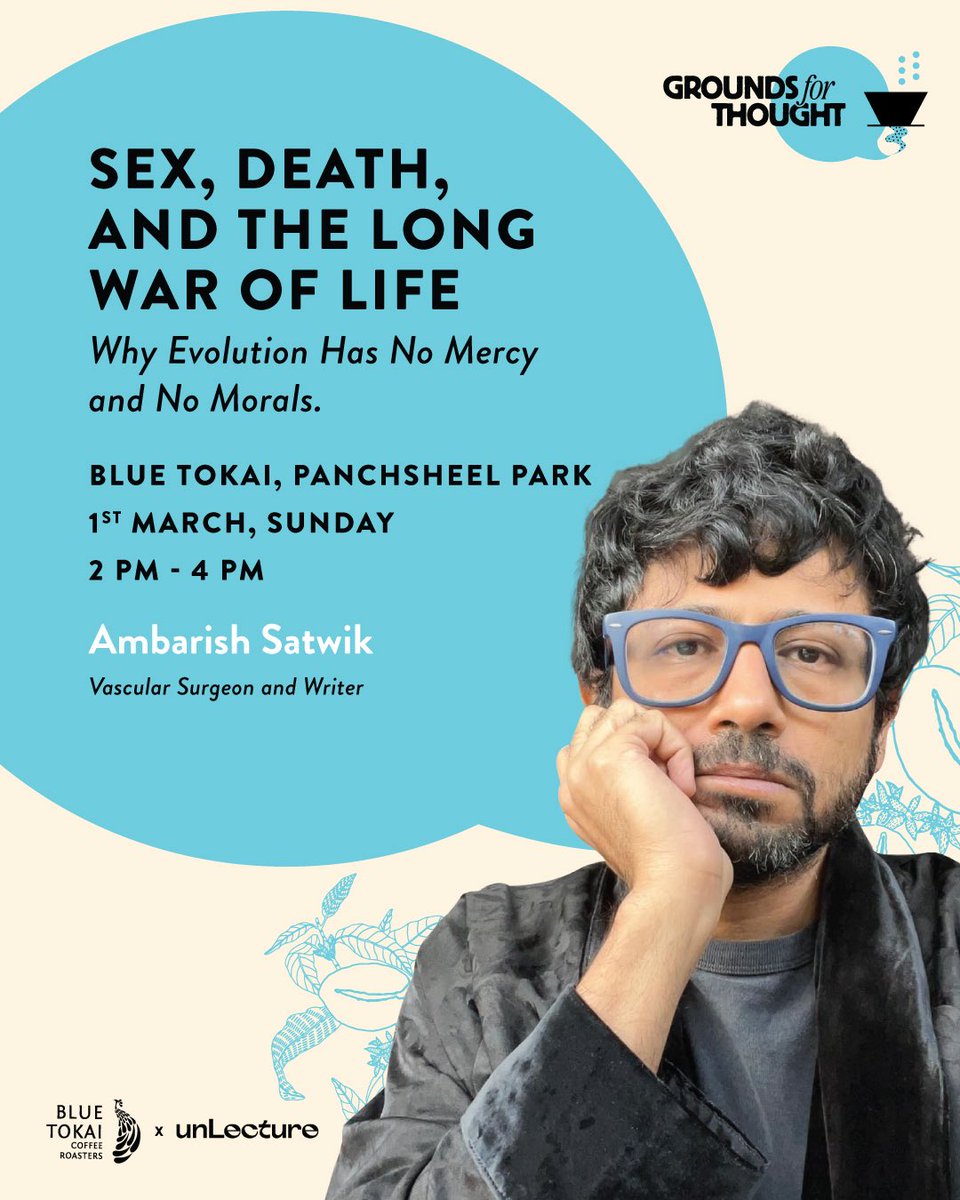
How we crawled out of slime only to develop opinions.
I’ll be attempting to summarise four billion years of ruthless biological improvisation without embarrassing myself. No promises.
This is part of the unLecture series. Details here: https://t.co/zm9fSzUaFN
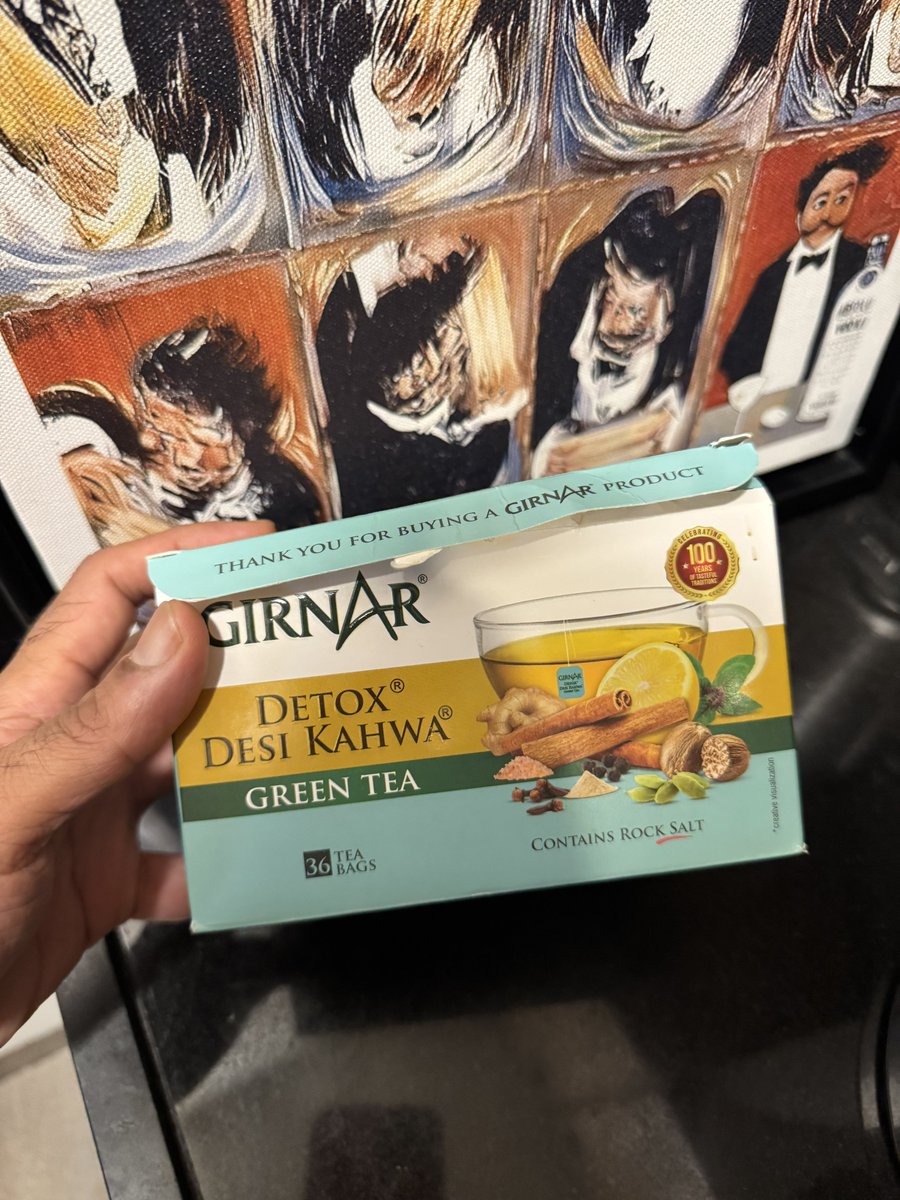
I’m aware this declaration may result in immediate disciplinary proceedings, but I must report that this tea bag from Girnar is quite magnificent. I can’t swear to the botanical integrity of its contents. It probably contains three molecules of tea and an assembly of spices. But the thing is joyous. And entirely without the self-seriousness that ruins most beverages. With heroic cheek, they call it Detox Desi Kahwa.
It’s anti-Kahwa. What it truly is is warm shikanji in disguise. I drink it shamelessly.
I now await developments. @KaviBhansali (who maintains that the words tea and bag, when caught fraternising, should be separated by law) will no doubt convene a tribunal. And @PragyaTiwari will draft a slim and fatal essay titled On the Decline of Standards, in which I feature as Exhibit A.