Capitalists for capitalism. Investing for a freer future with @liberty_ven and building the movement of principled business leaders with @principledbus.
"You could be poor and have dignity. You could be rich and no dignity. And life without dignity is worth nothing."
@SelimBassoul at The Principled Business Summit.
This must be ragebait for engagement. Because there are so many problems that are bigger than just “add money and it’ll be done”.
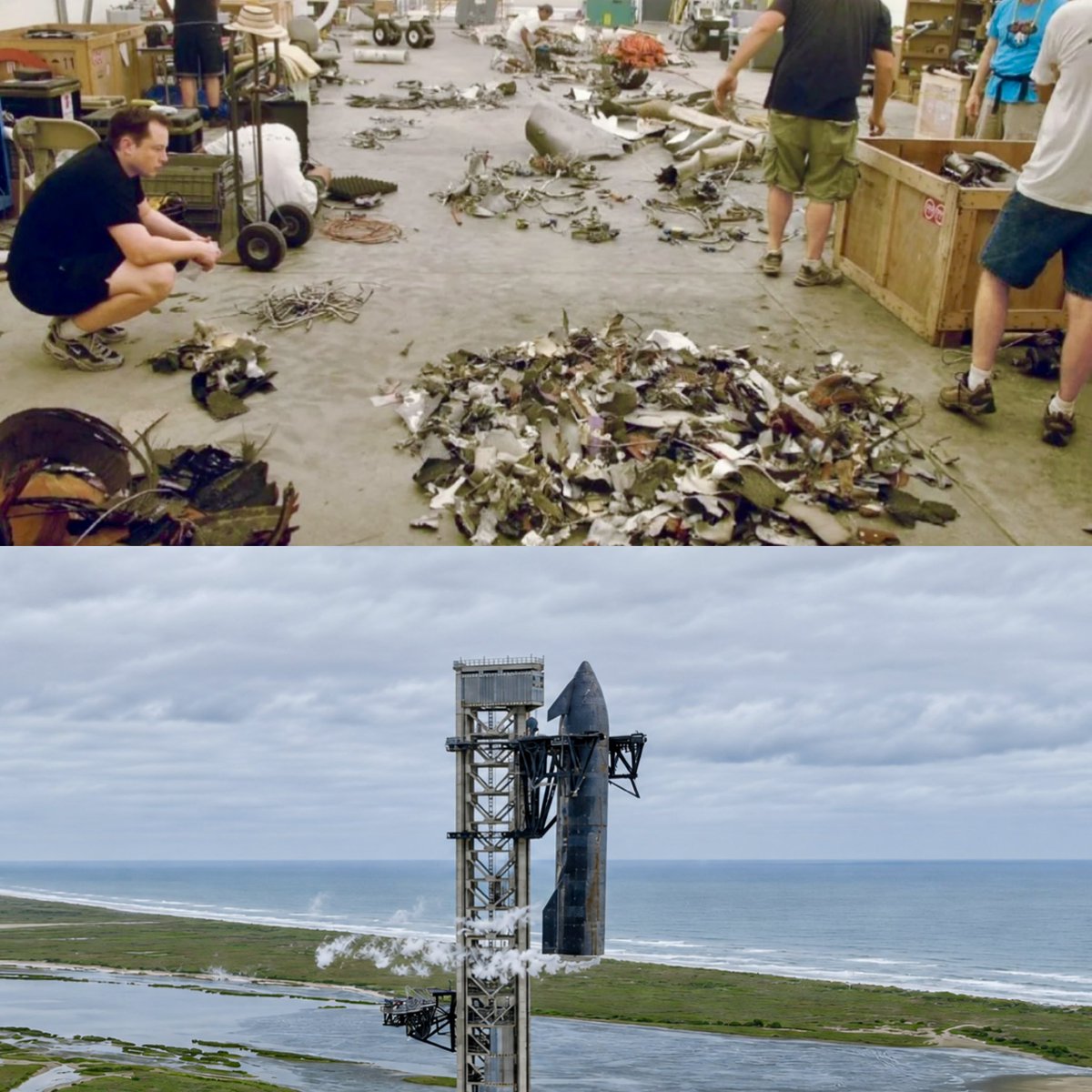
In Elon’s case, all of the experts said what wanted to do was impossible. No one said 20 years ago it just needed more money. They all said it waste of money to try.
Elon is a hero.
What SpaceX did today is the normal consequence of applying capital and engineering to any industry. You get better at it.
Musk isn't a genius, he's just a guy who can get capital from Wall Street. Maybe that's unique right now, but it's not the skill his fanboys think it is.
The greatest form of love one can exhibit for the human race is to build technological cathedrals that advance our civilizational project, through sheer blood sweat and tears.
Everyone who sacrificed their lives working on this magnificent object should be viewed as heroes
When the books were being written, the first Harry Potter movie was released in the late '90s and early 2000s, the general worldview was one of abundance, positivity, and confidence in good triumphing over evil. Today, the dominant global mindset seems to be one of stagnation, depression, and superficiality, and this Harry Potter remake reflects that.
Commerce is and always has been a school for character.
@patrickc points out that Smith and Montesquieu showed markets make us better because they reward improving oneself and making things others value.
AI is just a tool. Not a replacement for humans. We will keep learning, improving, and offering value to others. Especially through the market.
Most founders learn more from their first ten customers than from any class they ever took.
What did your first paying customer teach you?
Smith and Montesquieu thought that markets and commerce made us better: that they create an incentive to pursue self-improvement and to create things of value for others. In the positive AI visions, where the labor of humans is made redundant, I find myself wondering how we fare in the presumptive absence of these incentive gradients. Perhaps we are released to a life of freedom, where we can study Mozart and read Dickens, but that still seems complicated: both Mozart and Dickens were themselves deeply commercially-motivated in the production of their work, as were most of the great artists through human history. If the premise is that nobody will need to work or produce, how confident are we that we actually get the next Mozart and Dickens? The relevant question is not the partial equilibrium of whether one individual can pursue a life of enlightened leisure, but the general equilibrium of what form a society as a whole will take on.
One could maybe invoke Periclean Athens or the aristocratic gentleman scientists of Victorian England as a counterpoint. While these individuals were perhaps not motivated by commercial considerations, they were embedded in wider societies shaped by commerce, attendant betterment, and trade: Byron was himself upper class, but he was also surrounded by and writing for an educated bourgeois audience. So we’re back to the equilibrium question. Furthermore, even these individuals were surely motivated by a sense of high-stakes and consequential agency: if they did not apply themselves to their labors, they presumably believed that the work would not otherwise exist. Thucydides was addressing pressing military matters.
So I would like to read more optimistic cases from AI proponents about what a society (vs individual life) looks like if everything goes well: what people do, why they do it, whether humans achieve excellence (and in which domains), and which historical groups we should look to as relevant precedent.
One can perhaps imagine that humans will turn out to have a strong preference for work created by other humans. This may work in certain domains (ceramics?), but for how many will it actually apply? (I’m told that much of what is sold on indie crafts websites is now in fact manufactured in China.) It’s hard to see how this human preference, even if strong, would, for example, save scholarship.
Another idea would be to accept that nobody will become Einstein or Mozart or Byron, and that human excellence as such diminishes, but that there are compensatory benefits (planet brains and Dyson swarms?).
I believe that we can satisfy individual desires, but to what extent will we cultivate behavior worthy of admiration? Will a post-scarcity society mold capable and ambitious people? Which institutions will sustain them and which responsibilities will they have? I’d like to hear more of the equilibrium for the maximalist case spelled out.
"Socialism sucks." - @mlevchin
"Take it from somebody who spent his first 16 years under the 'warm embrace of collectivism' as a certain mayor recently put it—socialism sucks."
"The only people who do well in redistribution of wealth are the ones doing redistribution."
"It's fundamentally corrupt. There's not enough bad things I can say about socialism."