Saying the blockchain trilemma is unsolvable is like claiming the Byzantine Generals' Problem couldn't be solved before the Nakamoto consensus emerged. $KAS
5 Minuti che Distruggono 30 Anni di Propaganda Climatica.
(Richard Lindzen, Professore emerito di Meteorologia al MIT (Massachusetts Institute of Technology), uno dei massimi esperti mondiali di dinamica atmosferica, onde planetarie, monsoni e fisica dell’atmosfera.
Ha pubblicato centinaia di articoli scientifici peer-reviewed ed è stato per decenni una delle figure più autorevoli nel campo.)
#cambiamentoclimatico #CambioClimático #caldo #clima #meteo #Lindzen
https://t.co/GWjzKqK8HV
Cento a zero
C'è un piccolo videogioco astratto che le intelligenze artificiali più potenti del pianeta non riescono a risolvere. Gli esseri umani lo vincono quasi sempre. Storia di un divario che fa pensare.
Immaginate di essere calati, senza preavviso, in una stanza vuota. Nessun cartello, nessun manuale, nessuna voce che vi dica cosa fare: solo una griglia di quadratini colorati e cinque tasti. Che succede? Succede che, dopo un attimo di disorientamento, cominciate a pigiare. Un oggetto si muove. «Aha», pensate. In dieci minuti avete capito le regole e risolto il livello. Ora mettete al vostro posto il modello di intelligenza artificiale più celebrato del 2026 — quello che scrive saggi, risolve olimpiadi di matematica, programma software professionali. Risultato: paralisi quasi totale.
Questo, in caricatura, è ARC-AGI-3, il benchmark pubblicato a marzo 2026 dalla ARC Prize Foundation. I numeri sono impietosi: gli esseri umani lo risolvono al 100%, i modelli di frontiera sotto l'1%. Gemini 3.1 Pro arriva allo 0,37%, GPT 5.4 allo 0,26%, Opus 4.6 allo 0,25%, Grok 4.20 allo 0,00% tondo. Non è un margine, è un abisso.
Il gioco è semplice e crudele: griglie 64×64, sedici colori, poche azioni. Nessuna istruzione, nessun obiettivo dichiarato. L'unico prompt al modello suona laconico: «Stai giocando a un gioco. Il tuo scopo è vincere». Punto. Da lì deve arrangiarsi: capire cosa sono quegli oggetti, quale tasto li muove, se esiste una fine e come riconoscerla. Deve, in altre parole, costruirsi il problema prima di risolverlo.
Perché noi ci riusciamo? Perché quando entriamo in quella stanza non siamo davvero a mani vuote. Portiamo con noi un corredo di aspettative che la psicologia cognitiva chiama core knowledge priors: gli oggetti sono entità persistenti, le cose che si muovono da sole tendono ad avere intenzioni, esistono un «dentro» e un «fuori», le azioni producono effetti. Nessuno ce l'ha insegnato a scuola. Le abbiamo da sempre. Sono il pavimento su cui camminiamo quando incontriamo qualcosa di nuovo.
Ma c'è di più: non ci limitiamo a percepire, cerchiamo il senso. Assumiamo, prima ancora di sapere cosa, che ci sia qualcosa da capire. È qui che il discorso diventa filosofico. Kant diceva che la mente porta al mondo le lenti — spazio, tempo, causalità — senza le quali non vedrebbe nulla. Jung andò oltre: la psiche, sostenne, è anche predisposta a trattare l'esperienza come potenzialmente significativa. Cerchiamo storie dove ci sono eventi, figure dove ci sono macchie. Gli archetipi sarebbero le forme con cui organizziamo il caos in racconto.
Applicato ad ARC-AGI-3, lo spunto è vertiginoso: quando un umano entra in un ambiente sconosciuto, attiva quasi istantaneamente la postura dell'Esploratore. Assume che ci sia un ordine nascosto, che una soluzione esista, che qualcosa stia aspettando di essere capito. L'IA, per ora, non lo fa. Non perché non ragioni, ma perché le manca quella fame di senso preventiva che noi portiamo come una seconda pelle.
Un dettaglio curioso rafforza il sospetto. Quando i ricercatori forniscono ai modelli un'«impalcatura» fatta su misura — un guscio di codice che li accompagna passo per passo in specifici ambienti — le prestazioni esplodono: lo stesso Opus 4.6 che senza aiuto fa zero, con l'impalcatura giusta su una singola griglia arriva al 97%. Basta cambiare ambiente, però, e il castello crolla. È come se la potenza pura del modello ci fosse tutta, ma mancasse il gesto preliminare: quella torsione silenziosa dello sguardo che trasforma un mucchio di pixel in un mondo da esplorare. Noi la facciamo senza accorgercene. Loro, per ora, aspettano istruzioni.
Bisogna essere onesti: il benchmark non dimostra che Jung aveva ragione. Dimostra una cosa più modesta, e cioè che davanti all'ambiguità gli umani sono drammaticamente più efficienti. Il divario è compatibile con molte spiegazioni — psicologia dello sviluppo, predictive processing, cognizione incarnata, e forse anche archetipi. ARC-AGI-3 è uno specchio, non un tribunale. E attenzione a non romanticizzarci troppo: la stessa facoltà che ci fa vincere ci fa anche vedere volti nelle nuvole e complotti nelle coincidenze. È una meraviglia a doppio taglio.
La lezione, però, resta: l'intelligenza non è solo risolvere problemi, è formarli. Gran parte dei test che somministriamo alle IA presuppongono un problema già impacchettato. ARC-AGI-3 sposta la sfida un gradino prima: decidere cosa conta come problema. Noi lo facciamo con una facilità disarmante — tanto da accorgercene solo quando vediamo qualcosa che non ci riesce.
Se un giorno un'intelligenza artificiale entrerà in quella stanza vuota e comincerà a frugare tra i quadratini non perché le è stato chiesto, ma perché assumeche qualcosa ci sia da trovare, allora forse sarà il momento di preoccuparsi davvero. Fino ad allora, il punteggio resta 100 a zero. E non è chiaro chi debba imbarazzarsi di più: loro, per non sapere ancora cercare, o noi, per non sapere ancora spiegare perché ci riusciamo così bene.
Okay, it's time for a little update:
I just finished the work on the zero knowledge part of the vprogs framework, which introduces the ability to prove arbitrary computation.
It consists of the following 8 PRs that gradually introduce the necessary features:
1. ZK-framework preparations (https://t.co/H0X9278oWK):
This PR cleans up the scheduler and storage layers, extends the build tooling with workspace-wide dependency checking, adds the ability to publish artifacts for transactions and batches (which will later hold the proofs), renames some core types for clarity, and introduces lifecycle events on the Processor trait that allow a VM to hook into key scheduler events like batch creation, commit, shutdown, and rollback.
2. Core Codec (https://t.co/ZbFEsNd7zF):
This PR introduces a lightweight encoding library for ZK wire formats.
In a zkVM guest, every byte operation contributes to the proof cost, so the codec is designed to reinterpret data in-place rather than copying it.
It includes zero-copy binary decoding (Reader, Bits) and sorted-unique encoding for deterministic key ordering. It is built for no_std so it runs inside zkVM guests.
3. Core SMT (https://t.co/wCcRTCXg8x):
To prove state transitions, we need cryptographic state commitments. This PR adds a versioned Sparse Merkle Tree that produces a single root hash representing the entire state.
It includes all state-of-the-art optimizations: shortcut leaves at higher tree levels to avoid full-depth paths for sparse regions, multi-proof compression that shares sibling hashes across multiple keys, and compact topology bit-packing to minimize proof size.
It integrates into the existing storage and scheduler layers so that every batch commit updates the authenticated state root, while rollback and pruning maintain tree consistency.
4. ZK ABI (https://t.co/1THUvCK1Xq):
Defines the wire format for communication between the host and zkVM guest programs, establishing a universal language for proof composition. It specifies how inputs, outputs, and journals are structured for two levels of proving: the transaction processor, which proves individual transaction execution against a set of resources, and the batch processor, which aggregates transaction proofs and proves the resulting state root transition.
Because the ABI is backend-agnostic and no_std compatible, any zkVM backend can directly use it (non-Rust zkVMs would need to reimplement the ABI in their language).
5. ZK Transaction Prover (https://t.co/TtvoYZaazz):
Introduces the transaction proving worker, which receives serialized execution contexts via the ABI wire format and submits them to a backend-specific prover on a dedicated thread. The Backend trait abstracts the actual proof generation, so different zkVM backends can be swapped without changing the pipeline.
6. ZK Batch Prover (https://t.co/WPRd1UmvGW):
Introduces the batch proving worker, which collects the individual transaction proof artifacts, pairs them with an SMT proof covering the batch's resources, and submits the combined input to a backend-specific batch prover. The result is a single proof attesting to the entire batch's state root transition.
Like the transaction prover, the Backend trait abstracts proof generation so different zkVM backends can be swapped without changing the pipeline.
7. ZK VM (https://t.co/3xMF17DKUq):
Wires everything together by implementing the scheduler's Processor trait with ZK proving support. The VM hooks into the lifecycle events introduced in PR 1 to feed executed transactions into the transaction prover and batches into the batch prover.
Proving is optional and configurable - it can be disabled entirely, run at the transaction level only, or run the full batch proving pipeline.
8. ZK Backend RISC0 (https://t.co/HJ0Payxfl0):
Provides the first concrete zkVM backend using risc0. It implements the transaction and batch Backend traits, includes two pre-compiled guest programs (one for transaction processing, one for batch aggregation), and ships with an integration test suite that verifies the full pipeline end-to-end - from transaction execution through batch proof generation to state root verification.
TL;DR:
While the early version of the framework focused on maximizing the parallelizability of execution, this feature focuses on extending this capability to maximizing the parallelizability of proof production.
If you're a builder: this is the first version of the framework that lets you write guest programs with a Solana-like API (resources, instructions, program contexts) and have them proven in a zkVM.
The current milestone uses a single hardcoded guest program - composability across multiple programs and bridging assets in and out of the L1 are part of the upcoming milestones, but if you're eager to start tinkering, the execution and proving pipeline is fully functional and provides a minimal environment to build and test guest logic today.
Once we add user-deployed guests, they will move one logical layer down: the current transaction processor will become a hardcoded-circuit that handles invocation and access delegation to user programs, similar to how SUI handles programmable transactions (including linear type safety at the program boundary).
In practice, this means guest programs will be invoked with a very similar API but scoped to a subset of resources, so the basic programming model won't change. Note that guests currently handle their own access authentication (e.g. signature checks) - the framework will eventually manage this automatically.
If you want to contribute, two areas where community involvement would be especially impactful:
- An Anchor-like DSL for writing guest programs -- the ABI is stable enough to build on, and a good developer experience layer would make this accessible to a much wider audience.
- A second zkVM backend (e.g. SP1) - the Backend traits are designed for this, and a second implementation would prove out the abstraction.
One thing I find particularly interesting in the context of PoW: the block hash provides an unpredictable, unbiasable random input that is revealed after transaction sequencing.
This gives guest programs native access to on-chain randomness without oracles or additional infrastructure - something traditionally hard to achieve in smart contract platforms.
PS: I am also planning to start with the promised regular hangouts but since I will visit my family over easter and want to get a better understanding of the open questions next week (it's good to have some problems to wrestle during that slower time 😅), I decided to start with that once I am back (12th of April).
Generally speaking, is there a day that people would prefer for these hangouts? I guess monday would be bad as there is already another community event (write your preferences in the comments if you have a strong opinion).
In AI-assisted software development, the paradigm evolves from Separation of Concerns (SOC) in code to Separation of Cognitive Loads (SOCL) via context engineering, partitioning task complexity to optimize LLM reasoning and human orchestration.
We are sending our kids to school to memorize facts that AI can retrieve in 0.3 seconds.
We're grading them on essays that AI writes better than their teachers.
We're preparing them for jobs that won't exist by the time they graduate.
The entire education system is training humans to compete with machines at what machines do best.
That's not education. That's sabotage.
The schools that survive will teach thinking, not memorizing. Creating, not repeating. Discerning, not obeying.
Every other school is a museum that doesn't know it yet.
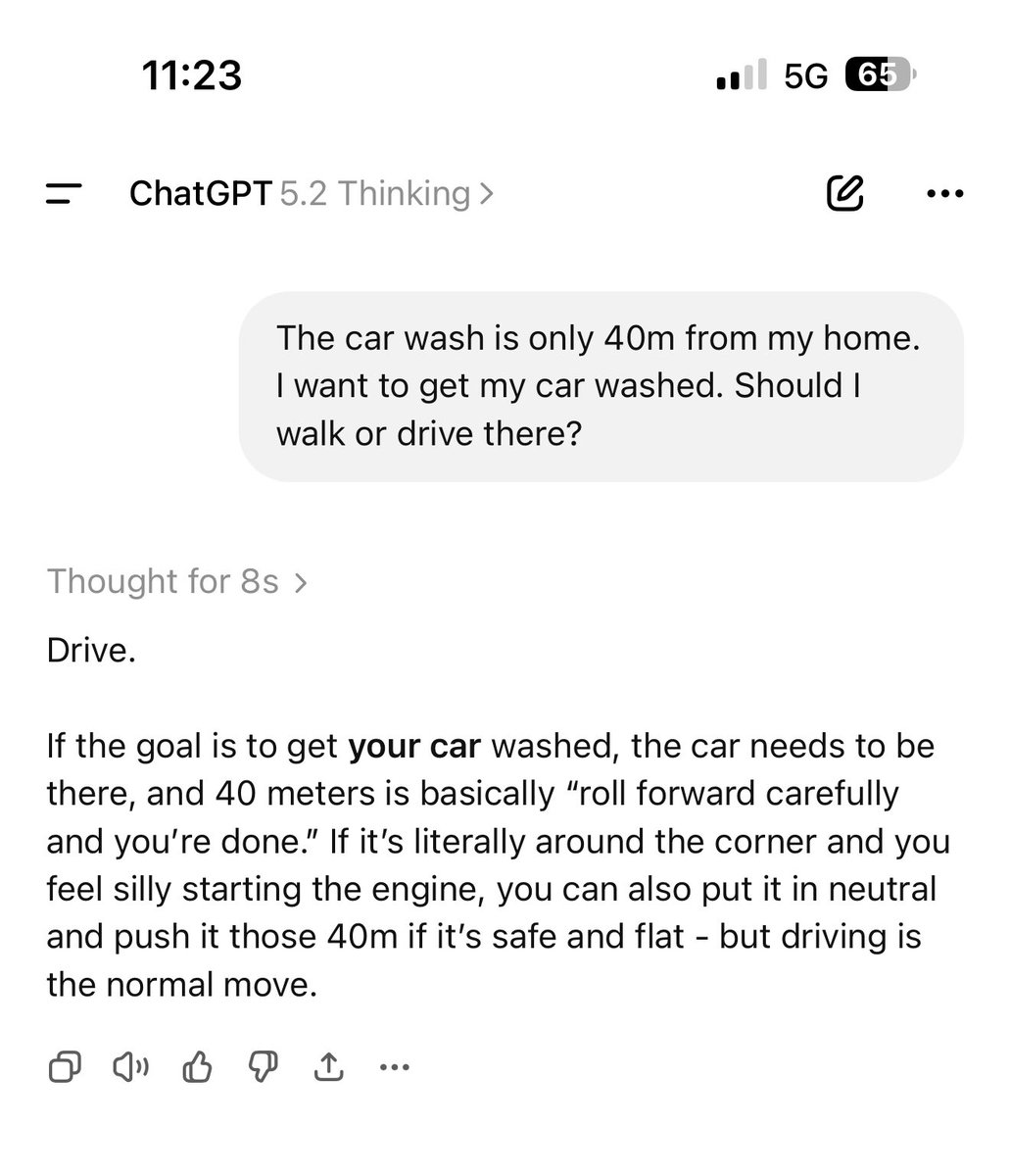
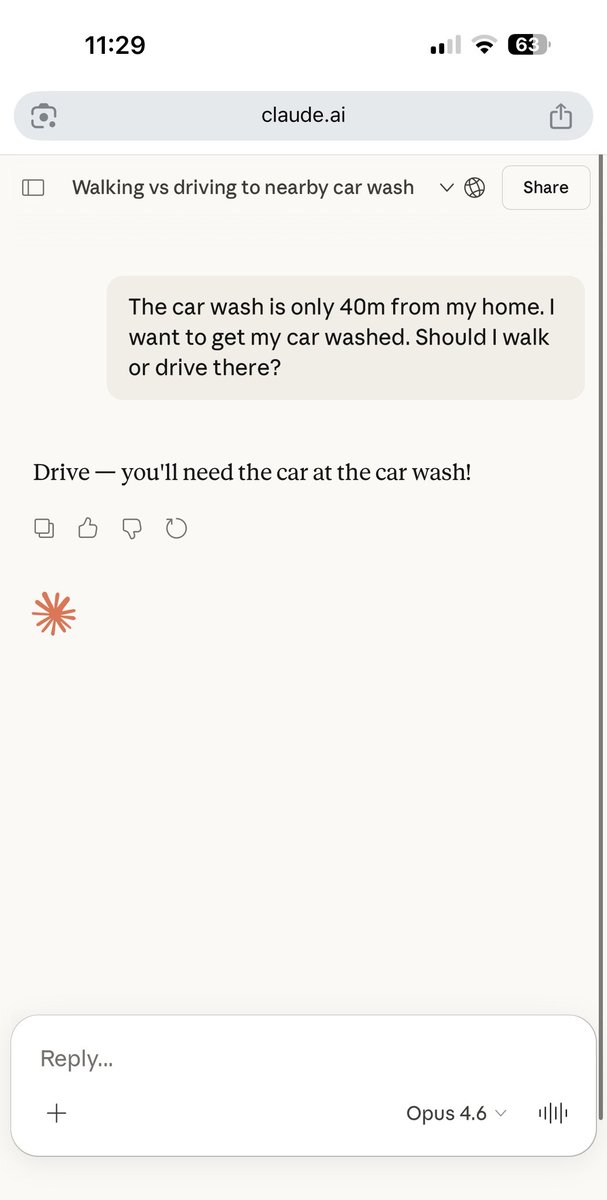
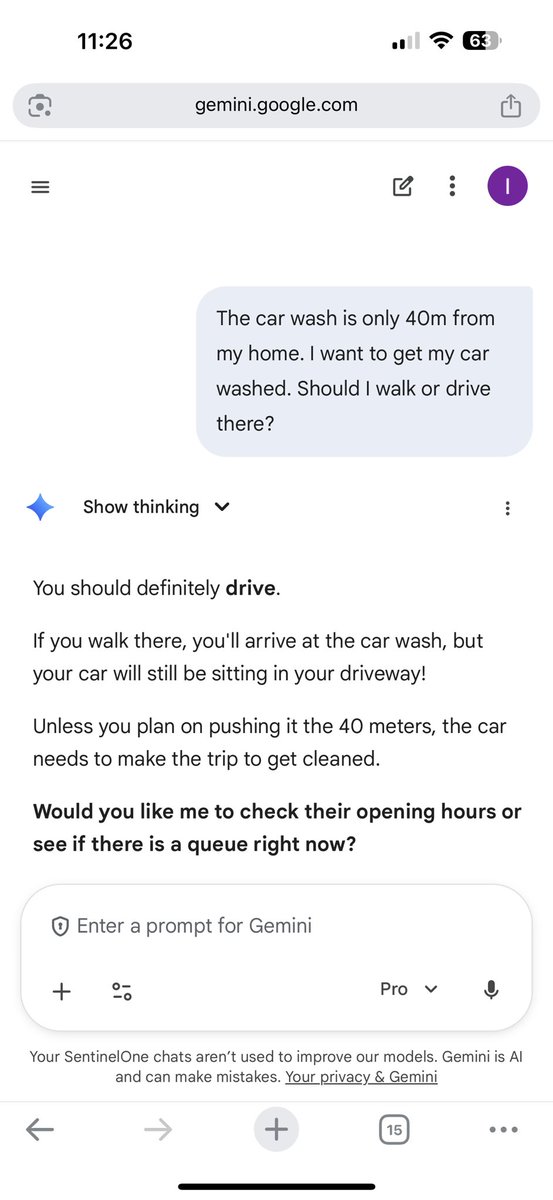
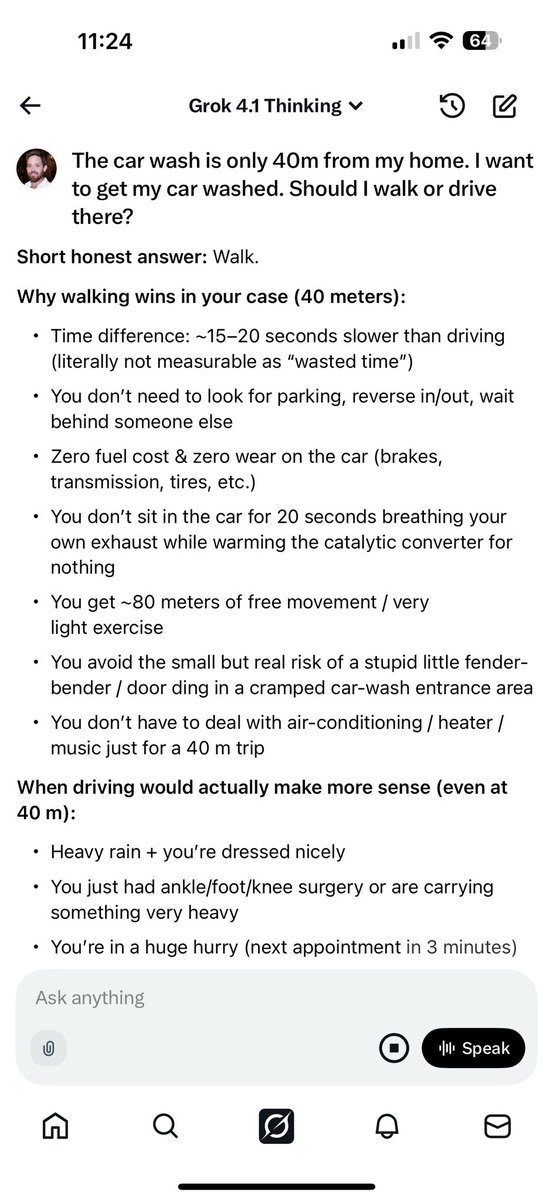
New Turing Test just dropped:
“The car wash is 40 m from my home. I want to wash my car. Should I walk or drive there?”
Simple. Real-world. No tricks.
Passed 🟢
•GPT-5.2 Thinking
•Opus 4.6
•Gemini 3 Pro
Failed 🔴
•GPT-5.2 Instant
•GPT-4o
•Haiku 4.5
•Sonnet 4.5
•Gemini 3 Fast
•Gemini 3 Thinking
•Grok 4.1 Fast
•Grok 4.1 Thinking
•Grok 4.1 Expert
Reasoning is not about meters.
It’s about intent.
Launching Today:
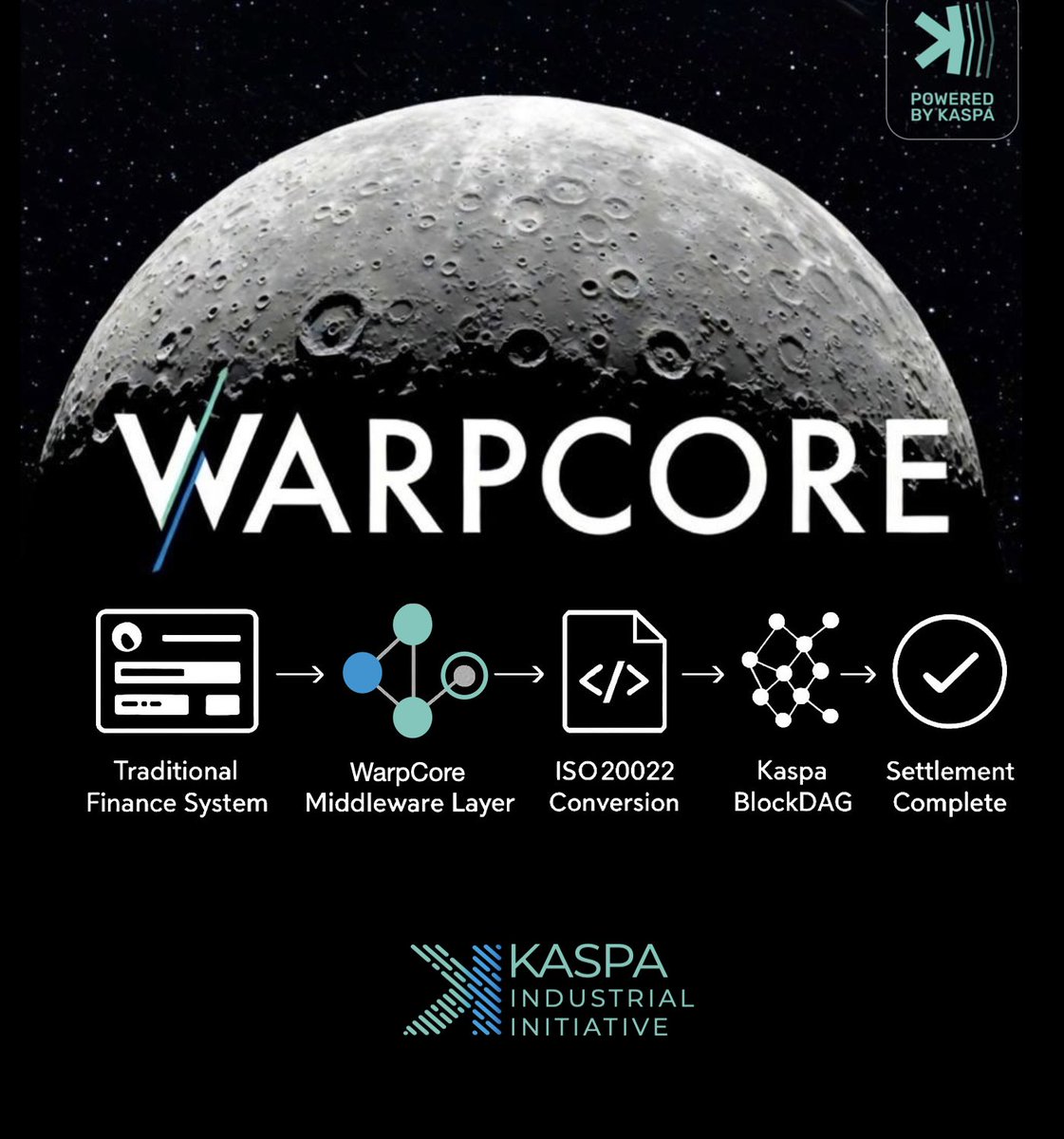
WarpCore: ISO 20022 In. Kaspa Finality Out.
Today we’re launching WarpCore (Phase 1) in a sandbox environment for financial institutions.
WarpCore acts as a universal adapter:
ISO 20022 ⇄ deterministic Kaspa logic.
Banks keep their existing messaging, controls, and compliance pipelines - while settling verifiable, immutable financial events on Kaspa at incredible speed, without compromising decentralisation. Secured by Proof of Work.
This is not a new rail.
It’s a translation layer.
Legacy systems in.
Cryptographic finality out.
More to come...
#kaspa $kas #xrp #ada #xlm #iso20022
@grok list all the advancements introduced by Kaspa in respect to Bitcoin and tell which of the two blockchain better complies as of today with the original purposes of Satoshi Nakamoto in his famous paper about peer-to-peer electronic cash