Techies… you need to see this 👀
I spent 3yrs building this project 🥲 but I’m giving it out for free 💜 (Open Source)
A Jumia alternative 🫠… but better.
This project actually forced me to learn coding the hard way 😭 It taught me both the technical side and the business side of how platforms like Jumia & Amazon really work 😅
A brand even offered me ₦1M for this project… but I turned it down 🤧
Because this isn’t just a product to me… it’s legacy code 💜
Something that helped me grow and can help other developers grow too.
So you don’t have to stress yourself figuring everything out 😭
From:
• Admin dashboard
• Sellers system
• Customer flow
• Logistics integration
• Payments
• Authentication
• Order management
…everything has already been implemented 🔥
You’ll find the project repo here pls drop a star 💜🫶 — https://t.co/tBdNUWBRwm
We talk a lot about skills as if referring to talent. Skills needs to be learnt. Skills is different from talent. We're not born with skills, we learn them.
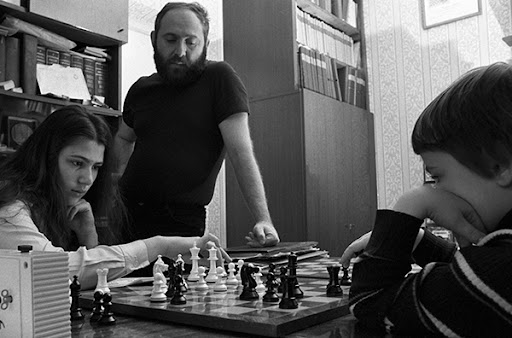
A Hungarian psychologist raised three daughters to prove that any child could become a chess grandmaster through early specialization. He succeeded. Two of them became grandmasters. One became the greatest female chess player who ever lived.
Then a sports scientist looked at the data and found something nobody wanted to hear.
His name is David Epstein. The book is called "Range."
The Polgar experiment is one of the most famous case studies in the history of deliberate practice. Laszlo Polgar wrote a book before his daughters were even born arguing that geniuses are made, not born. He homeschooled all three girls in chess from age four. By their teens, Susan, Sofia, and Judit were dominating tournaments against grown men. Judit became the youngest grandmaster in history at the time, breaking Bobby Fischer's record. The story became the gospel of early specialization. Pick a domain young, drill it hard, and you can manufacture excellence.
Epstein opens his book by telling that story honestly and then quietly demolishing the conclusion most people drew from it.
Chess works that way. Most things do not.
Here is the distinction that took him four years of research to articulate, and that almost nobody who quotes the 10,000 hour rule has ever read.
There are two kinds of environments in which humans develop expertise. Psychologists call them kind and wicked. A kind environment has clear rules, immediate feedback, and patterns that repeat reliably. Chess is the cleanest example. Every game ends with a winner and a loser. Every move is recorded. The board never changes shape. The pieces never invent new ways to move. A child who plays ten thousand games will see most of the patterns that exist in the game, and pattern recognition is exactly what chess mastery is built on.
A wicked environment is the opposite. Feedback is delayed or misleading. Rules shift. The patterns that worked yesterday may be exactly the wrong patterns to apply tomorrow. Most of the real world looks like this. Medicine is wicked. Investing is wicked. Building a company is wicked. Scientific research is wicked. Almost every job that involves a complex changing system with humans in it is wicked.
The Polgar sisters trained in the kindest environment any human can train in. Their success was real and the method was correct. The mistake was generalizing the method to fields where the underlying structure of the environment is completely different.
Epstein's research is what made the implication impossible to ignore.
He looked at the careers of elite athletes outside of chess and golf and found that the pattern was almost the inverse of what people assumed. The athletes who reached the very top of their sports were overwhelmingly people who had played multiple sports as children, specialized late, and often switched disciplines well into their teens. Roger Federer played squash, badminton, basketball, handball, tennis, table tennis, and soccer before tennis became his focus. The kids who specialized in tennis at age six and trained year-round for a decade mostly burned out, got injured, or topped out at lower levels of the sport.
The same pattern showed up everywhere he looked outside of kind environments. Inventors with the most patents had worked in multiple unrelated fields before their breakthrough work. Comic book creators with the longest careers had drawn for the most different genres before settling. Scientists who won Nobel Prizes were dramatically more likely than their peers to be serious amateur musicians, painters, sculptors, or writers.
The skill that mattered in wicked environments was not depth in one pattern. It was the ability to recognize when a pattern from one domain applied unexpectedly in another. That kind of thinking cannot be built by drilling a single subject. It can only be built by accumulating mental models from many subjects and learning to move between them.
The deeper finding is the one that should change how you think about your own career.
Specialists in wicked environments often get worse with experience, not better. Epstein cites studies of doctors, financial analysts, intelligence officers, and forecasters showing that years of experience in a narrow domain frequently produce more confident judgments without producing more accurate ones. The expert builds elaborate mental models that feel comprehensive and turn out to be increasingly disconnected from the actual structure of the problem. They stop noticing what does not fit their framework. They mistake fluency for understanding.
Generalists do better in wicked domains for a reason that sounds almost mystical until you understand the mechanism. They have less invested in any single mental model, so they abandon broken models faster. They are used to being a beginner, so they are not threatened by the discomfort of not knowing. They have seen enough different domains that they can usually find an analogy from one field that unlocks a problem in another. The technical name for this is analogical thinking, and the research on it is one of the most underrated bodies of work in cognitive science.
The single most useful sentence in the entire book is the one Epstein puts almost as a throwaway.
Match quality matters more than head start.
A person who tries six different fields in their twenties and finds the one that genuinely fits them will outperform a person who picked one field at fourteen and stuck to it on willpower alone. The lost years were not lost. They were the search process that produced the match. Every field they walked away from taught them something they later imported into the field they finally chose.
The reason this is so hard to accept is cultural, not empirical. We tell children to pick a path early. We reward the prodigy who knew at six. We treat the late bloomer as someone who failed to launch on time, when the data suggests they were running an entirely different and often more effective optimization process underneath.
The Polgar sisters were not wrong. The conclusion the world drew from them was.
If your environment is genuinely kind, specialize early and drill hard. If it is wicked, and almost every interesting human problem is, then the people who win are the ones who refused to specialize until they had seen enough to know what was actually worth specializing in.
You are not behind. You were running the right experiment all along.
Delete .next and node_modules on unused projects from your macbook. Get back your space.
I just cleared more about 60GB of space. A before and after of one of the directory.
Getting good web UI out of any AI model is just in the prompt tbh. I generated 12 unique websites using @MiniMax_AI 2.5 (free version) from @kilocode, not @OpenAI & not @claudeai.
One-shot prompt btw.
Here are screenshots.
Check out all 12 websites here.
https://t.co/HTUvZCGUMb
CAC President, Pastor S.O Oladele shares how despite predictions by thinkers like Voltaire, the Bible has endured through history, proving its lasting power and relevance!
@yogeshk55487839@dhaveedsc3@rubenhume My exact thought. AI doesn't help apple in anyway. Rather they will boost any AI product they are associated with.
I usually don’t do things like this, but please if you’re a believer in Christ don’t skip this post.
We are entering a very precarious season in the spirit
I saw strong men fall
How you would know that you’re going through this season is that you will be struggling with your flesh more than ever before
Things that you thought you have overcome wil me begin to pop up in your radar
Prayer will become harder than ever
(Please if you’re going through this all. Ready bear witness in the comments)
How we will survive this season is by staying in the word
Now more than ever, stay in the word.
Breathe the word
Eat the word
Just STAY IN THE WORD
Don’t be careless this season, I beg of you.
🚨 Someone reverse-engineered the design systems of Apple, Spotify, Airbnb, and 30+ billion-dollar companies.
Packed each one into a single file. Free.
It's called Awesome Design MD.
Drop one file into your project. Your AI agent builds UI that looks like Spotify. Or Apple. Or Airbnb. Instantly.
Not screenshots. Not Figma links. A single DESIGN .md file that captures every color, font, spacing value, button style, and layout pattern from a real website. In a format AI agents read and reproduce.
Here's the difference:
Tell Claude Code "build me a landing page" and it gives you generic UI.
Tell Claude Code "build me a landing page" with Spotify's DESIGN .md in your project and it gives you Spotify.
Here's what's inside:
→ Apple. Premium white space, SF Pro typography, cinematic imagery.
→ Spotify. Vibrant green on dark, bold type, album-art-driven layout.
→ Airbnb. Warm coral accent, photography-driven, rounded UI.
→ Linear. Ultra-minimal, precise spacing, purple accent.
→ SpaceX. Stark black and white, full-bleed imagery, futuristic.
→ BMW. Dark premium surfaces, precise German engineering aesthetic.
→ NVIDIA. Green-black energy, technical power aesthetic.
→ Uber. Bold black and white, tight type, urban energy.
→ Sentry, PostHog, Raycast, Cursor, ElevenLabs, and 20+ more.
Here's how to use it:
→ Pick a design system from the collection
→ Copy the DESIGN .md file into your project root
→ Tell your AI agent to use it
→ Get UI that matches the design language of a billion-dollar company
That's it. One file. Your AI agent now has the design taste of a $200/hour design consultant.
Designers charge $5,000+ for a custom design system. Companies spend $50,000+ building one from scratch.
This is free. 31 design systems. Copy. Paste. Ship beautiful UI.
Works with Claude Code, Cursor, Codex, and any AI coding agent that reads project files.
100% Open Source. MIT License.
🚨 Twilio charges $0.0079 per SMS. Someone just turned any old Android phone into a free SMS gateway. Unlimited messages. $0.
It's called SMS Gateway for Android.
Install it on any Android phone. It becomes a full SMS sending and receiving server with an API.
No Twilio. No MessageBird. No per-message pricing. No contracts. Just an old phone and a SIM card.
Here's what's inside this thing:
→ Send and receive SMS through a REST API from any app or service
→ Works with any Android phone running 5.0 or newer
→ End-to-end encryption. Messages are encrypted before they leave the device.
→ Multi-SIM support. Use multiple SIM cards on one phone.
→ Multi-device support. Connect multiple phones to the same account.
→ Real-time webhooks for incoming messages
→ Multipart messages with auto-splitting for long texts
→ Track delivery status of every message in real time
→ No registration required. No email. No account in local mode.
Here's the wildest part:
That old Android phone in your drawer that you haven't touched in 2 years? Install this app. Insert a SIM card. You now have your own private SMS infrastructure.
Two-factor authentication. Order confirmations. Appointment reminders. Notification alerts. All the things startups pay Twilio thousands a month for.
Free. Running on a phone you already own.
Startups spend $500 to $5,000/month on SMS APIs. This costs the price of a SIM card.
875 GitHub stars. 359 commits. Apache 2.0 License.
100% Open Source.
"Why did God create evil?"
A professor at the university asked his students the following question:
“Everything that exists was created by God?��
One student bravely answered:
“Yes, it was created by God.”
The professor asked :
“If God created everything, then God created evil, since it exists. And according to the principle that our deeds define ourselves, then God is evil.”
The student became silent after hearing such an answer. The professor was very pleased with himself. He boasted to students for proving once again that faith in God is a myth.
Another student raised his hand and said:
“Can I ask you a question, professor?”
"Of course," replied the professor.
“Professor, is cold a thing?”
“What kind of question is this? Of course it exists. Have you ever been cold?”
Students laughed at the young man's question.
The young man answered:
“Actually, sir, cold doesn't exist. According to the laws of physics, what we consider cold is actually the absence of heat. A person or object can be studied on whether it has or transmits energy.
Absolute zero (-460 degrees Fahrenheit) is a complete absence of heat. All matter becomes inert and unable to react at this temperature. Cold does not exist. We created this word to describe what we feel in the absence of heat.”
The student continued:
“Professor, does darkness exist?”
“Of course it exists.” said the professor.
“You're wrong again, sir. Darkness also does not exist. Darkness is actually the absence of light. We can study the light but not the darkness. We can use Newton's prism to spread white light across multiple colors and explore the different wavelengths of each color. You can't measure darkness. A simple ray of light can break into the world of darkness and illuminate it. How can you tell how dark a certain space is? You measure how much light is presented. Isn't it so? Darkness is a term man uses to describe what happens in the absence of light.”
In the end, the young man asked the professor:
“Sir, does evil exist?”
This time it was uncertain, the professor answered:
“Of course, as I said before. We see it every day. Cruelty, numerous crimes and violence throughout the world. These examples are nothing but a manifestation of evil.”
To this, the student answered:
“Evil does not exist, sir, or at least it does not exist for itself. Evil is simply the absence of God. It is like darkness and cold—a man-made word to describe the absence of God. God did not create evil. Evil is not faith or love, which exist as light and warmth. Evil is the result of the absence of Divine love in the human heart. It’s the kind of cold that comes when there is no heat, or the kind of darkness that comes when there’s no light.”
🙏
I've been working on something, @radix_ui but for mobile apps @expo and @reactnative .
Same color system, same layouts, same components. Check it out at:
https://t.co/IeaKtZkEB4
You can now build @expo and @reactnative mobile apps with @radix_ui themes. Same colors, same layout syntax, same components. Copy and Paste friendly.
Check it out at:
https://t.co/IeaKtZkEB4