We’re talking a lot about long running/horizon agents now but owning the full job and getting these learning loops right is so important to enabling agents to do work over hours or days, through a complex logic chain with many in between decisions and handoffs
Great read @seema_amble. The four axes for a vertical AI market are the most useful part.
I’d add a fifth: can the decision be verified, or only reviewed? (Provable, not plausible)
Most vertical AI still depends on an expert catching what’s wrong. In consequential work, parts of the decision can have a hard proof boundary: what was feasible, which constraints applied, what bound the outcome, and whether a better alternative existed.
IMHO,That changes the moat. It is no longer just the learning loop. It is also the accumulated institutional context, decision logic, and decision traces that make the next decision more governable and more provable.
In the midst of the Claudeforce announcement and the debate around systems of record, focused AI native startups can win by leaning into their data asset, depth, learning loops, and ability to work across systems and parties https://t.co/cHPqJIiKjH
I’ve been sitting with @JayaGup10 and @ashugarg's thesis on Context Graphs.
https://t.co/cBXFjm3nx4
They nail the problem in one sentence:
"By the time a decision lands as final state in a system of record, the why is gone."
If you’re in the world of mathematical optimization, this isn't just a metadata problem. It’s a compounding value problem.
We’ve been climbing the same analytics ladder for twenty years. You know the rungs:
Descriptive: What happened? (The rearview mirror).
Predictive: What’s going to happen? (The crystal ball).
Prescriptive: What should we do? (The Solver).
In the enterprise, we treat Prescriptive Analytics—optimization—as the final boss. We spend millions on solvers to tell us exactly how to move capital, schedule ships, or run a factory.
But there’s a massive, quiet cliff between the prescription and the actual decision.
We get the answer from the model, type the result into a database, and then—for some reason—we flush the reasoning down the toilet.
Optimization is a "Why" Machine
In mathematical optimization, we aren't just guessing. Every decision comes with a literal, mathematical proof.
When a model plans production across a facility, it doesn't just return a number. It returns a shadow price for every single constraint. That’s the precise, quantified cost of that constraint on your objective.
If a capital constraint has a shadow price of $0.33, it means every additional dollar of capital improves your returns by exactly 33 cents. That isn’t a "recommendation." It’s a certificate.
The problem? Most systems report that certificate once, use it to make the call, and then delete it.
That is the equivalent of Google recording a click and then immediately deleting the user's history. Even in the "Don’t be evil" era ;) , throwing away that much signal would have been a cardinal sin. You’ve done the hard work of generating the data; you’ve just decided not to compound it.
Closing the Loop (HITL)
The "Context Graph" thesis posits that the compounding loop enterprise software has always lacked is finally buildable because agents can now sit in the "write path." They can capture the reasoning at the exact moment a decision becomes binding.
In optimization, that reasoning is "structured by construction":
The Shadow Price is the "why" (The quantified cost of the bottleneck).
The Reduced Cost is the "what if" (The explanation of the road not taken).
The Slack is the "margin" (The measurement of how close you are to the edge).
The Human-in-the-Loop is the judgment.
This is where the magic happens. The agent doesn't just present a result; it presents a structured argument. The human then reviews the "proof"—the shadow prices and constraints—and decides to either accept the trade-off or break the rule.
That interaction—the human’s reaction to the math—is the highest-fidelity data point you can capture. It’s the moment the "Institutional Ceiling" actually rises.
From a Log to a Topology
If you only save the reasoning for one run, you have a log. But when you link that reasoning across every query, every entity, and every human override, you have a Context Graph.
Think of it as a topology of your firm's institutional reasoning.
A "diversification limit" or a "safety policy" is no longer just a row in a database. In a Context Graph, that rule is a node connected to every decision it ever influenced.
It knows which experts consistently override it.
It knows the exact Alpha it has cost the firm over the last four quarters.
It knows which market conditions make that rule a "safety net" versus a "performance drag."
A shadow price on a single run is just a data point. But the same constraint binding with a high shadow price across twelve consecutive runs? That’s a chronic cost center. This is where HITL turns insight into Alpha. By trending the "why," you give the human expert the mathematical evidence to finally question a legacy mandate. You aren't just recording decisions; you're using the machine to help the human raise the institutional ceiling.
Inference vs. Calculation
The "ceiling" for AI is often institutional—domain-specific reasoning that frontier models can’t replicate because it was never captured.
But in optimization, that reasoning is already encoded in the constraint graph. Every policy limit, every regulatory mandate, and every operating covenant is right there, expressed as math.
The question isn’t whether we can capture this reasoning. The solver already does it. The question is whether we’re going to keep throwing it away.
If you’re building context graphs for operational decisions, ask yourself one thing: Is your "why" an inference or a calculation?
Google built a trillion-dollar empire by using the Ad Engine to infer intent from a single click. It’s a brilliant, probabilistic guess. But in the optimization world, you don't have to guess. The math has already handed you the calculation.
You aren't trying to predict the signal—you’re just finally deciding to keep it.
Deterministic proof. Readable translation. Structural provenance. Institutional memory.
Two of four is a feature. Three is a product. All four is infrastructure.
The missing layer in PE capital allocation
https://t.co/uXLKrno13p
#DecisionInfrastructure#ContextGraph
As competitive as this IPL may be… but when u see a friends son #ArjunTendulkar take the field it is a matter of such happiness and joy. Wish Arjun all the best and @sachin_rt what a proud moment!! Wow!
Meet @OscilarInc, a company @sackulkarni and I founded with the goal of solving one of the biggest challenges facing businesses and consumers today: how to protect online transactions from fraud, risk and theft https://t.co/6deXt46h1B
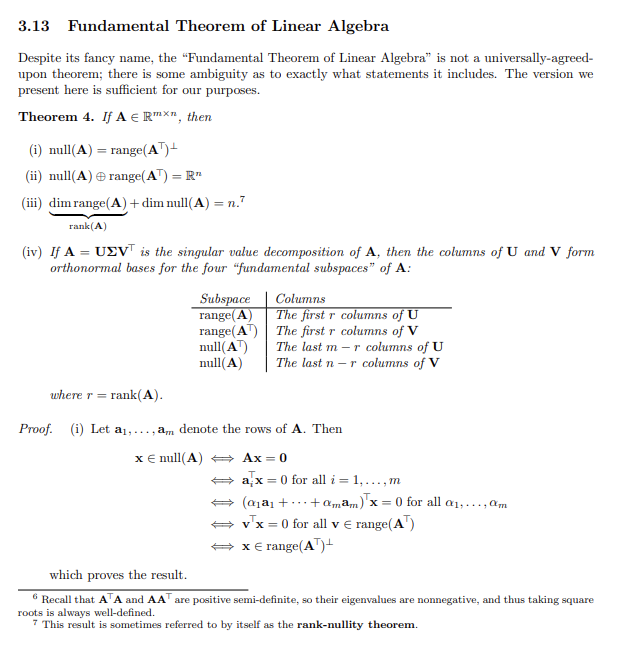
Mathematics for Machine Learning -- a 47-page introduction from UC Berkeley 🚀
• Linear Algebra
• Calculus and Optimization
• Probability
A 100% free resource!
Source: https://t.co/8ja5gtUsYX
Research Engineers are the people training and tuning state-of-the-art models like GPT-3, DALL-E, Imagen, Alphafold, etc
I spent 100s of hours coaching and mentoring junior and mid-career REs.
Here’s how you become an RE at a top-tier institution (Google, Meta, OpenAI,…) 🧵
The newly created Disinformation Board should review this tweet, or maybe they need to form a new Non Sequitur Board instead. Raising corp taxes is fine to discuss. Taming inflation is critical to discuss. Mushing them together is just misdirection.
This @awscloud blog shows how to frame real-world optimization problems taken from portfolio management and machine scheduling as maximum independent set problems. Learn more. #AWS#Quantum https://t.co/xhHLOsfiaW
Next time you're at @LGAairport, check out @WHSmith's new retail store equipped with our Just Walk Out technology.
This checkout-free shopping experience lets travelers quickly grab what they need and get back to their gate. https://t.co/5CWymwZzbf