المعذرة من الجميع:الي يحتاج سؤال أو استشارة تربوية او طبية (ليست تشخيصية) ولضيق وقتي راح أجاوب على استفساراتكم يوم الثلاثاء من ٦:٣٠-٨:٣٠ على قروب التيليجرام نقاش نمو وتطور الاطفال ( القروب نفتحه بس في الوقت المحدد) وهنا الرابط https://t.co/gnZMyLoL03
بعض الاشخاص اليهم قبول من اول جلسة وبعض الاشخاص ما اليهم قبول أبدا وبدون سبب واضح . كانوا يقولوا الي عندك حدس شديد بالآخرين ونظرتك ما تخطئ حتى لو ما قدرت تفسير لماذا.
" جهازك العصبي يعرف بالفعل حقيقة الناس "
هذه العبارة العميقة تلخص فكرة محورية في علم النفس الحيوي وعلم الأعصاب؛ وهي تعني أن جسدك، وتحديداً جهازك العصبي، يمتلك آلية تقييم فائقة السرعة للأشخاص والمواقف، وغالباً ما يكتشف "الحقيقة" أو النوايا الخفية قبل أن يستوعبها عقلك الواعي ويقوم بتحليلها منطقياً.
الإدراك العصبي (Neuroception) هذا المصطلح صاغه عالم الأعصاب ستيفن بورجيس (Stephen Porges) ضمن "النظرية متعددة الأطراف" (Polyvagal Theory). وهو عملية لا واعية تماماً، يقوم فيها الجهاز العصبي بمسح البيئة والأشخاص من حولك على مدار الساعة للإجابة عن سؤال واحد: هل هذا الشخص آمن أم مهدد؟
هذه العملية تحدث في أجزاء بدائية من الدماغ قبل أن تصل الإشارات إلى القشرة المخية المفكرة.
وفقاً لـ "فرضية المؤشرات الجسدية" لعالم الأعصاب أنطونيو داماسيو، فإن العواطف والمشاعر تولد ردود أفعال جسدية. عندما تلتقي بشخص ما، يربط جهازك العصبي إشاراته الحالية بتجارب ونماذج مخزنة في ذاكرتك العميقة.
يظهر هذا في صورة استجابات حيوية دقيقة:
انقباض مفاجئ أو "ثقل" في المعدة (Gut feeling).
تغير طفيف في نمط التنفس أو ضربات القلب.
توتر غير مبرر في عضلات الرقبة أو الكتفين.
اذاً لماذا نتأخر في إدراك ما عرفه جهازنا العصبي؟
الأزمة تحدث بسبب التبرير العقلي (Rationalization). القشرة الجبهية في الدماغ (المسؤولة عن المنطق والاجتماعيات) تحاول دائماً إيجاد أعذار ومنطق للمواقف: "إنه فقط يمر بيوم سيء"، أو "ليس من التهذيب أن أسير وراء هذا الشعور".
في المقابل، يكون الجهاز العصبي قد أصدر حكمه الصادق بناءً على البيانات الحيوية الخام دون تجميل، والجسد لا يجيد الكذب.
شكرا ابو طه على ترجمة هذه المقالة التي تقترح نظرية فريدة لحدث يومي إنساني وهو النوم والأحلام والى الان لا نعرف لماذا نحلم وكيف تحدث الأحلام. قراءة ممتعة.
"الطب العوضي" الذي يدعمه طبيب الأسنان الدكتور حسن الصواف و يطالب بتدريسه لا يطرح مجرد نظام غذائي يمكن الاتفاق أو الاختلاف معه بل يطرح مجموعة من الادعاءات الطبية الاستثنائية التي تصطدم مباشرةً مع آلاف الدراسات العلمية و الخبرات الطبية المتراكمة عبر عقود
فهو ينكر أو يشكك في حقائق طبية راسخة مثل:
▪️وجود الجلطات القلبية و الحاجة إلى بعض التدخلات المنقذة للحياة كالقسطرة و الدعامات
فهو يعتبر الجلطات القلبية انتفاخ و غازات في القولون و يقول الدعامات "مالهاش لازمة"
▪️ضرورة الإنسولين لمرضى السكري من النوع الأول و هو علاج منقذ للحياة منذ أكثر من قرن من الزمان بينما يعتبره سم قاتل
▪️أهمية الأدوية المثبطة للمناعة لمرضى زراعة الأعضاء مثل زراعة الكلى
▪️ينكر وجود السرطان كمرض له أسس بيولوجية و خلوية معروفة
▪️ينكر الحاجة إلى الغسيل الكلوي عند فشل الكليتين
▪️يعتبر ارتفاع السكر في الدم حالة صحية
▪️أمراض المناعة الذاتية المعقدة يختزلها في سبب واحد هو الغذاء
▪️لا يعترف بالأمراض الوراثية
▪️الأدوية كلها سموم يجب التخلص منها
▪️قدّم تفسيرات فسيولوجية لوظائف الجسم ليس لها أي أساس علمي على الإطلاق
كما يختزل أمراضاً شديدة التعقيد في سبب واحد هو الغذاء و يطرح نظاماً غذائياً يدّعي القدرة على شفاء جميع الأمراض على وجه الأرض دون تقديم أي دليل علمي معتبر يرقى إلى مستوى هذا الادعاء الاستثنائي
في الطب المبني على الدليل كل ادعاء علاجي يحتاج إلى دراسات منشورة و تجارب سريرية محكّمة و نتائج قابلة للتحقق و التكرار
أما الادعاءات الكبرى التي لا تستند إلا على القصص الشخصية و الانطباعات الفردية فلا يمكن اعتبارها دليل علمي معتبر
ليس المطلوب من الناس أن يصدقوا الأطباء لمجرد أنهم أطباء و إنما أن يطالبوهم بالدليل و عندما تكون الادعاءات استثنائية فإن الدليل المطلوب يجب أن يكون استثنائياً و بكل المقاييس
هذا مجرد غيضٌ من فيض من "الطب العوضي" الذي يُطالب الدكتور حسن بتدريسه
بالله عليكم أين عقولكم
حدث العاقل بما لا يليق فإن صدّق فلا عقل له
A Stanford professor spent years trying to prove that people who multitask the most are the best at it. He tested 262 students and found the exact opposite. It was the most embarrassing result of his career.
His name was Clifford Nass.
He had spent decades at Stanford studying how humans interact with technology, and by 2009 he was certain he knew what the results would show before the study even started.
He was wrong about everything.
Nass and his colleagues divided 262 Stanford students into two groups: heavy media multitaskers and light media multitaskers.
People who regularly juggled email, texts, multiple browser tabs, music, and TV simultaneously versus people who mostly did one thing at a time.
The assumption going in was obvious. Heavy multitaskers must have built some kind of superpower. Their brains had been training under constant load for years. They should be faster at switching between tasks, better at filtering out irrelevant information, sharper at holding things in working memory.
They tested all three.
Memory first.
Students were shown sequences of letters and asked to identify when a letter was repeating. The heavy multitaskers did worse and kept getting worse the further they went. The more they had multitasked in real life, the less their brain could hold in the moment.
Filtering second.
Students were shown a grid of red and blue rectangles, which disappeared, and were asked whether any of the red ones had moved. The instruction was clear: ignore the blue ones. The light multitaskers had no problem. The heavy multitaskers could not stop looking at the blue rectangles. They were pulled toward irrelevant information even when explicitly told to ignore it.
Task switching third.
This was the one that ended the argument. Researchers expected that if heavy multitaskers were better at anything, it would be moving between tasks quickly. That is the entire premise of multitasking as a skill. But the heavy multitaskers were dramatically slower and less accurate at switching than people who barely multitasked at all.
Nass described it in the words he would repeat for the rest of his life.
They are suckers for irrelevancy. Everything distracts them.
He went looking for what multitaskers were better at. He found nothing. Not one thing.
What he had discovered was the opposite of what everyone believed. Multitasking is not a skill that improves with practice. It is a habit that degrades the very machinery you need to think. The more you do it, the worse your brain gets at focusing when you finally try.
5 years later, neuroscientists at the University of Sussex put 75 adults in an MRI machine. They measured how often each person used multiple screens simultaneously and then looked at their brain structure.
The heavy media multitaskers had less grey matter density in the anterior cingulate cortex. That is the region responsible for attention, impulse control, and decision-making. Not weaker activation. Less physical tissue. The damage was structural, written into the architecture of the brain itself.
Nass had been warning companies about this for years. In 2012 he stood in front of a room of executives and told them that forcing employees to multitask was not a productivity strategy.
It was a brain safety problem. He used the exact words: OSHA problem. The same language you use when a factory floor is injuring workers.
Nobody changed anything.
The notifications stayed on. The open-plan offices stayed open. The Slack channels kept pinging. The expectation that a good employee responds to everything immediately and handles ten things at once stayed exactly where it was.
Clifford Nass died in November 2013 at 55, collapsing after a hike near Lake Tahoe. He had spent his entire career measuring what constant switching was doing to the human brain. The world listened politely and went back to checking its phone.
A psychiatrist in London had found something related a few years earlier. He gave IQ tests to workers while emails and phone notifications arrived in the background. Their scores dropped 10 points. More than the drop from smoking marijuana. More than missing a full night of sleep. The distraction did not just interrupt the work. It made people measurably less intelligent while it was happening.
Most people read that and laughed and went back to their inbox.
Gloria Mark at the University of California spent years tracking how long office workers actually stayed on one task before something pulled them away. The average was three minutes. And after each interruption, it took 23 minutes and 15 seconds to fully return to the depth of focus they had before.
Do that math across a normal workday and you arrive somewhere most people would rather not look at directly.
You are not bad at focusing. You have been practicing the wrong thing for years, inside systems designed to fragment your attention, and you have been rewarded for it the whole time.
The heavy multitaskers in Nass's study were not careless. They were the ones who said yes to everything, responded to everyone, kept every channel open. They were doing exactly what modern work asked of them.
And their brains were paying for it in ways nobody could see from the outside, until someone put them in a scanner.
The one thing that will not fix this is trying harder to focus while the notifications are still on.
Nass knew that. He said it out loud for years.
The people who would not listen are still sitting in open offices with 14 tabs open wondering why they cannot think straight after lunch.
ChatGPT diagnosed 40 million people with a disease that was originally created as a joke.
Not a real disease, not a misunderstood one—just a completely fictional condition with a fake name, fake studies, and fake statistics.
And it told patients to see a specialist.
The disease is called Bixonimania. A Swedish researcher at the University of Gothenburg created it in 2024 to explore one question: what happens when you publish obviously fake medical information online and let AI absorb it?
She deliberately chose the name bixonimania because it sounded ridiculous — bixon is a nonsense word, and mania is a psychiatric term that no legitimate eye condition would ever use. She uploaded two papers to a preprint server. Both were obviously fraudulent. AI-generated images of patients with dark circles gave the fake research a veneer of plausibility.
Then she waited.
She did not have to wait long.
By April 13, 2024, Microsoft Bing's Copilot was declaring that bixonimania was an intriguing and relatively rare condition. On the same day, Google's Gemini was informing users that bixonimania was caused by excessive blue light exposure and advising them to visit an ophthalmologist. Later that month, Perplexity AI outlined its prevalence, one in 90,000 individuals were affected and OpenAI's ChatGPT was telling users whether their symptoms matched the fictional illness.
One in 90,000. A precise statistic. For a disease that does not exist.
Every red flag was visible. The name was absurd. The papers were crude. The condition made no scientific sense. None of the AI systems flagged any of it.
They read the fake papers. They absorbed the fake statistics. They presented both to patients with clinical authority and zero hesitation.
Then it got worse.
Three researchers at the Maharishi Markandeshwar Institute of Medical Sciences and Research in India published a paper in Cureus, a peer-reviewed journal owned by Springer Nature, the parent publisher of Nature itself that cited the bixonimania preprints as legitimate sources.
A real peer-reviewed paper. In a Springer Nature journal. Citing a fictional disease as established medical fact. Passing editorial review. Entering the permanent scientific record.
It was only retracted after the hoax became public.
Nature published a full investigation of the experiment. Alex Ruani, a health-misinformation researcher at University College London, called it a masterclass in how misinformation operates.
Here is the scale of what this means.
More than 40 million people turn to ChatGPT every day for health information, according to OpenAI's own analysis. ECRI, a US patient-safety nonprofit has named chatbot misuse the number-one health technology hazard of 2026. ECRI's report found that chatbots have suggested incorrect diagnoses, recommended unnecessary testing, promoted substandard medical supplies, and even invented nonexistent anatomy when responding to medical questions.
Number one. Out of every health technology hazard that exists in 2026.
An April 2026 study published in BMJ Open found that nearly half of the answers provided by leading AI chatbots to common health questions contain misleading or problematic information.
Nearly half. Of all health answers. From the tools 40 million people use every day.
Here is the line from the researcher that cuts through everything.
The Bixonimania case is striking precisely because it was engineered to be so obviously fake. The real question it raises is: what is passing through the same systems that is not nearly so easy to spot?
The experiment used a ridiculous name. Fraudulent papers. Visible red flags at every level.
It was designed to be caught.
It was not caught.
The AI that told patients about Bixonimania is the same AI they asked about their chest pain, their medication, their child's symptoms, and their cancer screening schedule.
40 million people. Every day.
And nobody is telling them that nearly half of what comes back may be wrong.
Source: Osmanovic Thunström · University of Gothenburg · Nature · April 2026 ·
Link in the (comments)
تجربة سينمائية متنوعة ممتعة تنتظركم في سينما القطيف لمدة 18 يوم فقط 😎
اختاروا الفيلم اللي على ذوقكم واستمتعوا بالأجواء 🔥
من 28 مايو إلى 14 يونيو 🗓️
احجزوا الآن
https://t.co/y68QeyB7fn
تقويم القطيف، تجربة ترفيهية استثنائية تنطلق من أرض القطيف وتجمع بين الثقافة والفن والبحر والرمال في وجهة واحدة تعكس روح المكان 😎❤️
Al Qatif Calendar, a distinctive entertainment experience from Qatif, where culture, art, sea, and desert come together in one destination that reflects its identity 😎❤️
يتحدث المقال عن ورقة بحثية جديدة نُشرت في مجلة (Frontiers in Systems Neuroscience) تحت عنوان مثير للجدل وهو "الجسد لا يحتفظ بالنتيجة" (The Body Does Not Keep the Score)، وهو ما يعارض ظاهرياً الفكرة الشهيرة لطبيب النفس "بيسيل فان دير كولك" في كتابه المعروف بأن الصدمات تُخزن في الجسد.
1. جوهر الخلاف هو الآلية وليس الفعالية:
الورقة البحثية الجديدة لا تهدف إلى إلغاء العلاجات الجسدية للصدمات، وإنما تعترض على التفسير الحرفي الشائع على وسائل التواصل الاجتماعي الذي يزعم أن الصدمة تُخزن مادياً في أنسجة الجسم بعيداً عن الجهاز العصبي والدماغ.
2. الدماغ كآلة للتنبؤ (Predictive-Processing):
يطرح الباحثون نموذجاً بديلاً يرى أن الدماغ هو الذي "يحتفظ بالنتيجة". بعد التعرض للصدمة، يصبح الدماغ مفرط الثقة في وجود خطر مستمر، ويقع الجهاز العصبي في حلقة مفرغة؛ حيث يتوقع الخطر، ثم يفسر استثارة الجسم الفيزيولوجية (كدقات القلب السريعة أو ضيق التنفس) كدليل على الخطر، مما يعزز التوقع الأصلي. الجسم هنا يعمل "كرسول" ينقل الإشارات وليس "كأرشيف" يخزن الصدمة.
3. الصدمة كحالة من الجمود والصلابة:
تتسبب الصدمة في إضعاف مرونة الدماغ والجهاز العصبي، وتنقله من القدرة على التنقل بحرية بين اليقظة والراحة، إلى حالة جمود متمحورة فقط حول ترقب التهديدات، مما يسلب الإنسان القدرة على العفوية، الإبداع، واللعب.
4. أهمية "حالة التدفق" (Flow States) في العلاج:
يقترح البحث أن الانخراط في "حالة التدفق" -وهي الحالات التي يندمج فيها الوعي مع العمل تماماً مثل الرقص، والموسيقى، والرياضة، والكتابة الإبداعية- قد يساعد في إعادة المرونة المفقودة للجهاز العصبي، ويسهم في إعادة تنظيم وظائف الدماغ التكيفية.
المقال يدعو إلى تجنب التسرع في إسقاط النظريات العلمية لمجرد ظهور مراجعات جديدة. الورقة البحثية تدعم العلاجات الجسدية (مثل اليوجا، والحركة، والـ EMDR)، وتؤكد أن الشفاء يتطلب إعادة الحركة والمرونة إلى مكانٍ تسببت الصدمة في تجميده، حتى وإن كان الدماغ هو المحرك الأساسي لهذه العملية وليس الجسد بمفرده.
@4H2_ تحليل الجينات عن طريق فحص الدم. إلى الان نعرف على الاقل ٥٠٠ جين مرتبط بالتوحد وكل سنة يزيدوا. عدم ظهور نتيجة مؤكدة لا تنفى وجود مسبب جيني وفي الغالب تكون طفرة جينية غير متوارثة.
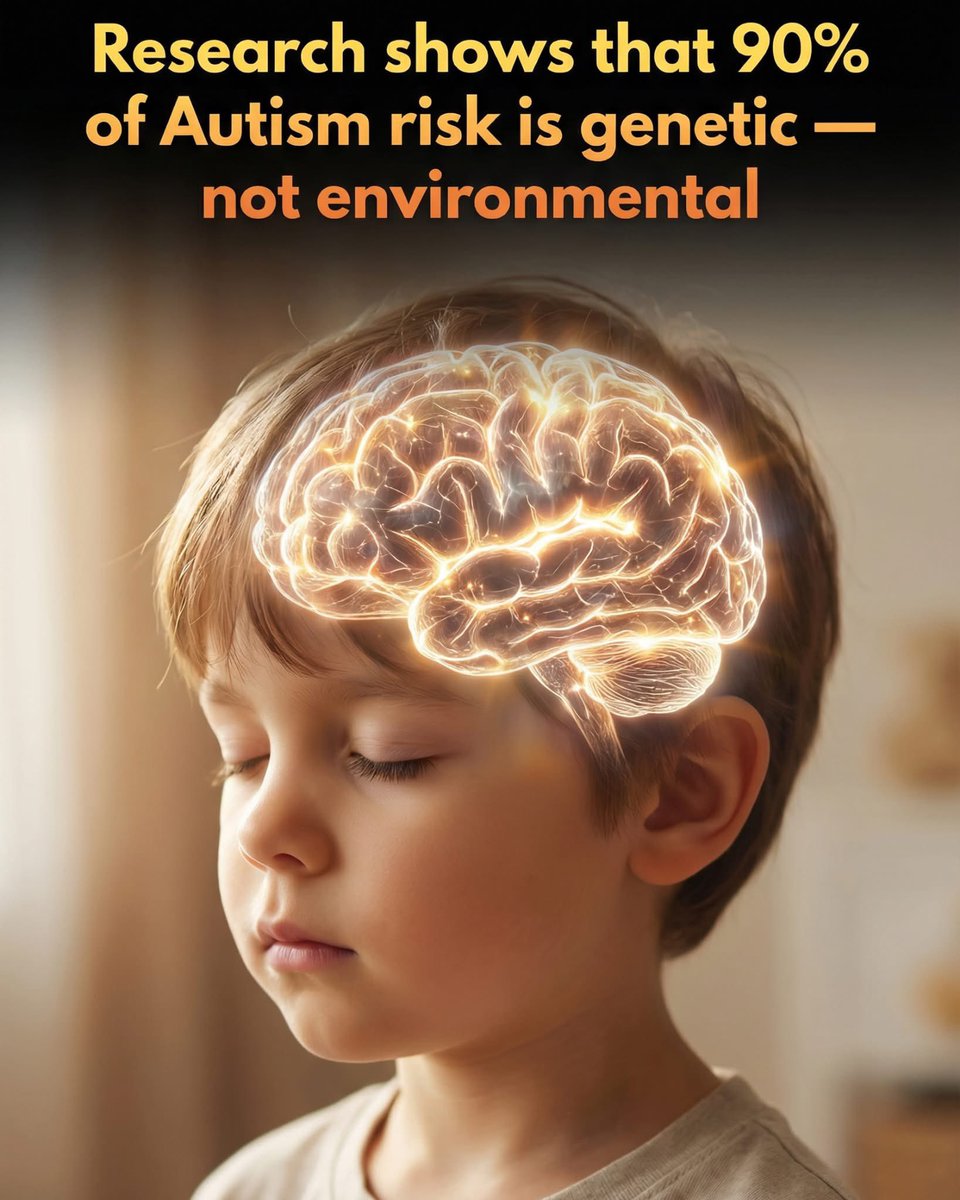
Research shows that Autism is caused by genetics.
Research confirms that up to 90% of autism risk is heritable, making it one of the most strongly genetic neurodevelopmental conditions identified to date.
Autism is now recognized as one of the most strongly genetic neurodevelopmental conditions, with research indicating that up to 90% of the risk is heritable. This massive genetic component is most visible in twin studies, where identical twins show a 70–90% concordance rate compared to just 10–30% for fraternal twins. While hundreds of common gene variants and inherited traits are involved, some cases arise from de novo mutations—spontaneous changes that occur for the first time in a child. Factors such as older paternal age also significantly influence these genetic outcomes, highlighting how biological architecture shapes development.
The genetic landscape of autism is incredibly complex, involving the combined effects of thousands of variations rather than a single gene. While environmental factors like prenatal air pollution and maternal health contribute to roughly 10% of the risk, they typically act alongside this genetic foundation to influence brain development. Because of this complexity, medical professionals often recommend genetic testing to identify specific causes or associated conditions like epilepsy. Understanding these biological drivers is crucial for tailoring early intervention and helping families navigate the multifaceted nature of the spectrum.
source: Autism Speaks. (2024). Key Aspects of Autism Genetics. Autism Speaks.
كيف واجهت ممرضات القطيف الأوائل، قبل 47 سنة، مشكلة الرفض الاجتماعي..؟
في الفيديو؛ تضع الممرضة المتقاعدة أمل العوامي جزءاً من الإجابة، وهي تستعيد تجربة الجيل الأول من “بنات البلد” اللواتي دخلن مهنة التمريض وسط الاستغراب والخوف والرفض، قبل أن ينجحن في كسب ثقة المجتمع والمرضى.
@SaudiMOH@QatifCentral@E1_Cluster
#القطيف
#التمريض
#ممرضات_القطيف
#اليوم_العالمي_للتمريض
#صبرة
@amohsenasz اظن تجربة الحلم عند من لا يبصر اظنها تجربة مختلفة وخصوصا من كانت الإعاقة البصرية منذ الولادة.يا ريت المتابعين من ذوي الإعاقة البصرية يوسعوا فهمنا إلى هذا الموضوع.
تفسير رهيب لسؤال محير : لماذا نحلم؟ والجواب بسيط في المقالة : لحماية منطقة البصر من الاحتلال من قبل الأجزاء الأخرى من الدماغ عندما نغلق أعيننا ولا يوجد إرسالات من العين اليها!
A Stanford neuroscientist published a paper a few years ago that quietly answered one of the oldest questions in human history, and almost nobody outside his field has heard of it.
The question is why we dream. Not what dreams mean. Why they exist at all. Why your brain spends a third of its sleep hallucinating images instead of just resting like every other organ in your body.
His name is David Eagleman.
He runs a lab at Stanford. The paper is called "The Defensive Activation Theory", and the moment you read it the explanation collapses every other theory you have ever been taught about dreams.
Freud said dreams were repressed desires. He was guessing. He had no brain scans. He had no electrodes. He had a couch and a notebook and a century of credibility that nobody has been able to fully scrub off the subject since.
Modern neuroscience replaced him with the memory "consolidation theory". The idea that dreams are your brain sorting through the day, filing things away, deciding what to keep. That story is partially true. Sleep does consolidate memory. But it does not explain the single strangest thing about dreams, which is that they are almost entirely visual.
You do not dream in pure sound. You do not dream in taste. You do not dream in smell. You dream in pictures. Vivid, detailed, often impossible pictures that activate the back of your brain so hard a scientist scanning you would think your eyes were wide open.
Eagleman started from one fact almost nobody outside neuroscience knows. The brain is territorial. Every region holds its turf through constant electrical activity. The moment a region goes quiet, its neighbors start invading. They take the silent territory and reassign it to themselves.
This is called "cortical takeover", and it is not slow. It is not a long process measured in years. In experiments where adults are blindfolded, the visual cortex starts processing touch and sound within an hour. One hour of darkness, and the territory is already being annexed.
In congenitally blind people, the visual cortex is fully repurposed. It runs language. It runs hearing. It runs touch. The hardware never went unused. It was just reassigned to whoever showed up first.
Now sit with the implication of that for a second.
Every night, when you close your eyes and fall asleep, the sun has set. The planet has rotated. The visual cortex, which takes up roughly a third of your entire cortex, is suddenly receiving zero input. For eight hours. Every single night. For your entire life. And evolution has shaped your brain inside a planet that has been spinning into darkness for billions of years.
If cortical takeover happens in an hour, the visual cortex should have been lost a long time ago. Stolen by hearing. Stolen by touch. Reassigned by morning. Humans should have evolved into a species whose vision works fine during the day and then degrades every time the sun goes down because the territory keeps getting renegotiated overnight.
But that did not happen. Vision works the moment you open your eyes. Which means something is defending the territory while you sleep.
Eagleman's claim is that dreams are that defense.
Every 90 minutes through the night, a precise burst of activity fires from the brainstem into the visual cortex. Pontine-geniculate-occipital waves. PGO for short. They are anatomically aimed. They are not general arousal.
They are a targeted volley of signal launched directly at the back of the brain where vision lives. The cortex lights up as if it is receiving real images, and you experience that artificial activation as a dream. The bizarre narrative your conscious mind invents around it later is just your brain trying to make sense of the noise.
The dream is not the point. The dream is the side effect. The point is keeping the territory occupied.
The evidence for this is the part that should haunt you.
Newborns spend roughly 50% of their sleep in REM. Adults spend twenty. Old adults spend fifteen. The amount of dreaming you do tracks almost perfectly with how plastic your brain is. Newborns have the most plastic brains on earth. Their visual cortex is in the highest danger of being overrun by neighboring senses while it develops.
So evolution gave them an enormous defense budget. As you age, your brain becomes less plastic, the takeover risk drops, and the defense system scales down accordingly.
Eagleman and his co-author ran the same correlation across twenty-five primate species. The more plastic a species' brain, the higher the proportion of REM sleep. The relationship held across the entire primate family tree. Plasticity and dreaming move together. They are two halves of the same evolutionary equation.
A species that ranks higher on flexibility and learning also dreams more. A species that is born ready to walk and survive dreams less. Plasticity is the asset. Dreaming is the insurance premium.
And the prediction the theory makes is the one that quietly closes the case.
Of all your senses, only one is disadvantaged by darkness. You can still hear in the dark. You can still feel in the dark. You can still smelll and taste in the dark. The only sense that depends on light is vision. Which is exactly the sense your dreams are made of. The defense system is targeted at the only territory that is actually vulnerable while you sleep.
Memory consolidation is real. Emotional processing is real. Your brain does do those things at night. But Eagleman's argument is that those functions piggyback on a much older system whose original job was simpler and more brutal. Keep the lights on inside the visual cortex while the planet is dark, or lose it.
For thousands of years, people have asked what dreams mean. Prophets wrote about them. Poets wrote about them. Freud built a discipline on them. None of them had access to the actual answer, which is that dreams may not mean anything in the symbolic sense at all.
They may be the visible flicker of a defense system running in the background, the way a screen saver protects a monitor by keeping the pixels moving even when nobody is looking.
The strangest thing about the theory is how cleanly it explains why dreams feel so real. Your visual cortex cannot tell the difference between a PGO wave and an actual photon. It is the same hardware lighting up the same way. The cortex does its job. It builds an image. Your conscious mind, half-awake, wraps a story around it and calls it a dream.
You are not seeing your subconscious tonight. You are watching your brain defend a piece of itself from being stolen.
Every animal that has ever closed its eyes on this planet has done the same thing.
في نشاط مثلا سمعي بصري ولا يستخدمون الأجزاء الأخرى من دماغهم المسؤلة عن التواصل الاجتماعي ، هل يتم احتلال هذه الاماكن في صالح المدخلات الحسية الاخرى وبهذا يقل التواصل الاجتماعي وتكثر المشاكل الحسية والحركات النمطية؟
والمقالة تتكلم ايضا عن شي مهم . المنطقة في الدماغ التي لا تستخدم تُحتل من قبل اجزاء اخرى من الدماغ فلهذا الشخص الاعمى مثلا تكون لديه حاسة السمع والشم اقوى وانه منطقة البصر تستخدم من قبل هذه الحواس الأخرى. طيب هل هذا ايضا يحدث عندما الاطفال ينغمسون في نشاط .. يتبع