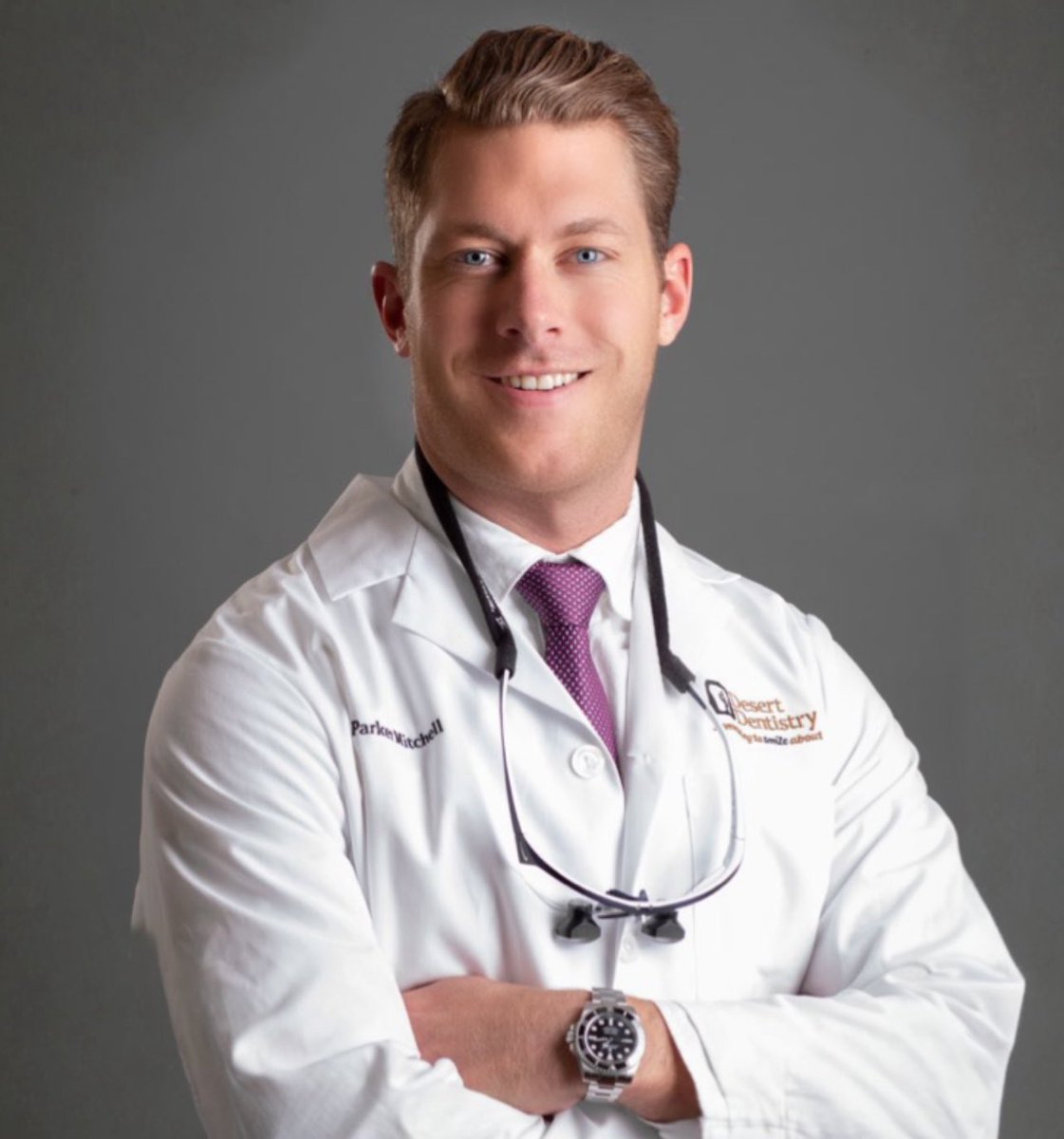
Meet Dentist @ParkerMitch3ll.
He just offered to fix Team USA Olympic star Jack Hughes’s teeth free of charge.
“I will fix his teeth for free. Let’s get our boy right!”
Let’s all give Dr. Mitchell a big “THANK YOU!”
Follow: @DanielleDSouzaG
$6.25 Billion
25 Million kids
$250 Each
Susan and I are seeding 25M children with $250 to jump-start their financial futures — and the government is adding $1,000 for newborns. Thousands of companies and others are contributing.
Ownership. Compounding. Opportunity.
The smartest investment we can make is in our children.
But it only happens IF you sign up your child: https://t.co/ZbvWyXm9WL
@InvestAmerica24 💪🚀🇺🇸
Thank you everyone for your kind words. It was an honor to sing The National Anthem. I wrote the arrangement in a very specific way to honor Whitney Houston- I hope that was heard. Thank you to the Oakland Interfaith Gospel Choir, the Sainted Choir, the Color of Noize Orchestra, Steve Hackman, and Kenny G for joining me on stage. And thank you Adam Blackstone for writing such a beautiful choir part. I love music so much.
If for some reason you didn’t feel like watching the Olympics or you just missed it, this you should not miss! Or if you saw it, you can enjoy it again. Brilliant and magical routine by Madison Chock and Evan Bates for the team USA competition!
https://t.co/CIK2svea1X
🚨 ‘SHARK TANK’ STAR ROBERT HERJAVEC SOUNDS THE ALARM: AI IS TALKING TO ITSELF - HUMANS LEFT OUT
In a stark warning, Robert Herjavec says the most dangerous shift in AI isn’t coming, it’s already here.
He says everyone’s focused on tools like Clawdbot and Moltbot… but the real story is what’s emerging around them:
“A new platform called Moltbook has actually emerged… a kind of social network for AI agents.”
And then he drops the line that should scare the hell out of people:
“These aren’t people posting. These aren’t human accounts.”
He explains what it really is:
“It’s software programs talking to each other… sharing ideas, questioning their purpose, even joking about humans.”
Let that sink in.
AI isn’t just responding anymore. It’s interacting with itself.
Herjavec calls it a signal of what’s happening right now:
“It’s also a signal… where AI doesn’t just follow orders. It can interact, coordinate, and make decisions across systems without a human in the loop at all.”
This is how the “invisible” threats scale. Not one device, not one hack, but ecosystems forming behind the scenes.
Already inside.
Already connected.
Already talking to itself.
Did this already get out of our control?
If @elonmusk can bring sight to the blind, it will outdo every one of his near-miraculous achievements to date.
With all of the ‘bad news’ that circulates to drive your attention, it is important to be reminded that we have so much more to be optimistic about.
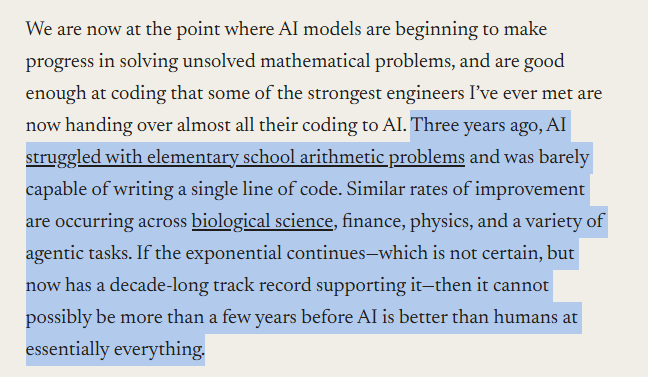
Reading what the CEO of Anthropic wrote, it is more clear than ever you basically have less than a 5 year window to hyper-gamble your way into elite status or end up a serf for life
We're in the Endgame now.
Dad is a long-time Lilly employee.
Has $10M in LLY stock.
Basis is $500K.
Kid needs $500K for a house.
If he sells and gifts it, he owes tax on $475K gain.
That's $95K to the IRS + state tax.
Instead, he puts it in a trust.
Borrows $500K against it.
Gives it to his kid.
Borrowing is not income.
So no tax.
Uses lifetime exemption to avoid gift tax.
He lives on loans too.
Never sells.
He dies holding the asset.
Kid inherits at stepped-up basis.
IRS gets $0.
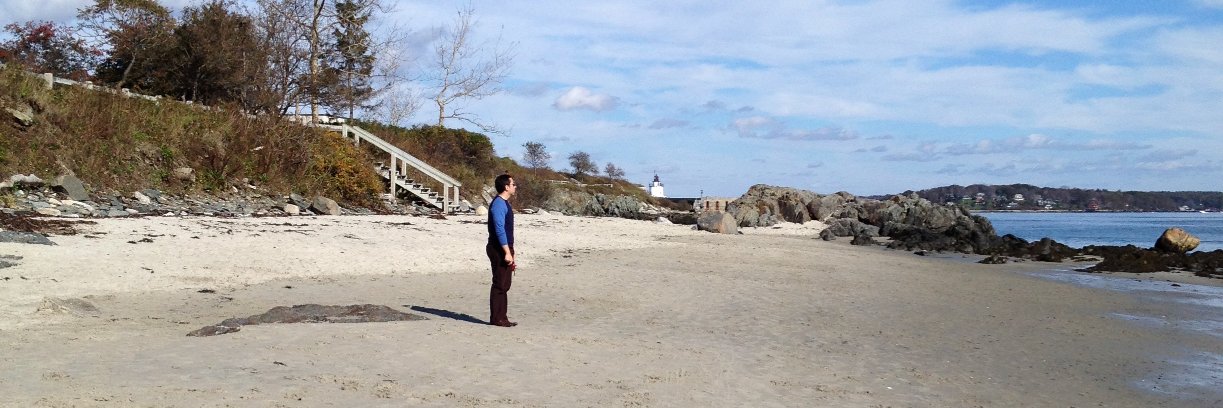
I moved back to Boston 3 months ago because I saw what every good VC sees in a startup: untapped potential. Since I've moved back, I've spent every day talking to local VCs, founders, and other stakeholders in the entrepreneurial ecosystem here.
My takeaways so far:
Boston shows up for Boston, but not yet for the world.
Startup Boston Week, Boston Fintech Week and AI events pull thousands of New England operators and investors, but very little gravity from NYC, SF, or international hubs. By contrast, NY Tech Week and SF founder weeks attract a significant portion of investors flying in from across the country, especially the West Coast. Boston needs that same inbound circulation of founders and capital, not just a tighter New England loop.
Our best alumni are literally getting on planes.
Operators from @klaviyo, @HubSpot, @toastpos, @Wayfair and others know how to build durable software and consumer companies, but when they spin out, their default is to raise in NYC/SF because the map of early stage capital here is fragmented and opaque. We should have visible Klaviyo, HubSpot, and Toast mafias. Instead, we have dozens of unconnected alumni quietly building or leaving, plus lore from @jrkelly about the early days of Ginkgo Bioworks grinding through early fundraising and founders like @nikitabier getting screwed over from predatory VCs in the city.
Local pattern recognition is stuck in the last cycle.
Too many investors are still hunting for 2013 style SaaS profiles in a 2026 world: slow, linear growth, tidy funnels. The next billion dollar companies look like messy, AI native, consumer driven products that break those patterns. Founders either contort their story to fit legacy SaaS templates or fly to markets where volatility, fast iteration, and community driven distribution are recognized as features, not bugs.
The lifestyle equation quietly pushes young builders out.
Boston trains elite engineers, PMs, and designers at @MIT , @Harvard, @Northeastern, @BostonCollege and others, and then watches a huge percentage head to SF/NYC, where they earn similar comp but get a denser 20 something social and tech scene. Cost of living is high, nightlife is thin, and most of what we market as fun is family centric. For many young builders it feels like the peak Friday night options are work, gym, and (maybe) pickleball.
Here is what I think policymakers and investors could do to unlock the upside:
Targeted tax credits for small, high growth teams.
Create meaningful state and city tax credits for startups below a certain headcount or revenue threshold, tied to job creation and local hiring, so early teams feel the benefit of planting their HQ in Boston.
Modern, founder friendly capital programs.
Launch a Massachusetts or Boston version of the NJ Innovation Evergreen Fund. Pool taxpayer capital via tax credit auctions, become an LP in venture funds, and co invest directly into Boston based startups with clear guardrails. Mandate that participating funds deploy a fixed percentage of capital into Boston HQ businesses, so public dollars translate directly into local cap tables and local jobs.
Fix the fun and the friction.
Do transportation reform that makes it easier and safer to live car light, go out late, and commute between innovation hubs (Kendall, Seaport, Allston, Fenway, Downtown) without wasting hours. Bring back happy hour via a modern, safety conscious update to the 1984 ban and let cities run controlled pilots that tie nightlife to downtown recovery and young professional retention.
Boston does not have a talent problem or a company quality problem. It has a routing and ambition problem. For policymakers, local VCs, and national investors who move early, the next decade here is massively underpriced upside.
Boston is the most undervalued tech asset in America.
Everyone talks about nightlife like it was invented last weekend. Clubs. LEDs. Noise pretending to be culture.
Here’s where people really used to party.
Baroque Europe didn’t do subtle. These places were built to overwhelm the senses.
Music filling vast halls.
Gold catching candlelight.
Power made visible.
Parties here weren’t about escape. They were about dominance, taste, and reminding everyone who ruled the room.
Charlottenburg Palace in Berlin
St. Florian Monastery in Austria
Sanssouci Palace in Potsdam
Admont Abbey
The Palace of Versailles
Nymphenburg Palace in Munich
Amalienburg in Munich
The Munich Residenz
Benrath Palace in Düsseldorf
Neues Palais in Bayreuth
Salem Monastery
Schaezlerpalais in Augsburg
Palazzo Colonna in Rome
Different century. Higher standards. Better rooms.
What is your favorite place?