Today, we share a breakthrough on the planar unit distance problem, a famous open question first posed by Paul Erdős in 1946.
For nearly 80 years, mathematicians believed the best possible solutions looked roughly like square grids.
An OpenAI model has now disproved that belief, discovering an entirely new family of constructions that performs better.
This marks the first time AI has autonomously solved a prominent open problem central to a field of mathematics.
June 2024: The latest general-purpose LLMs could not count the r's in strawberry.
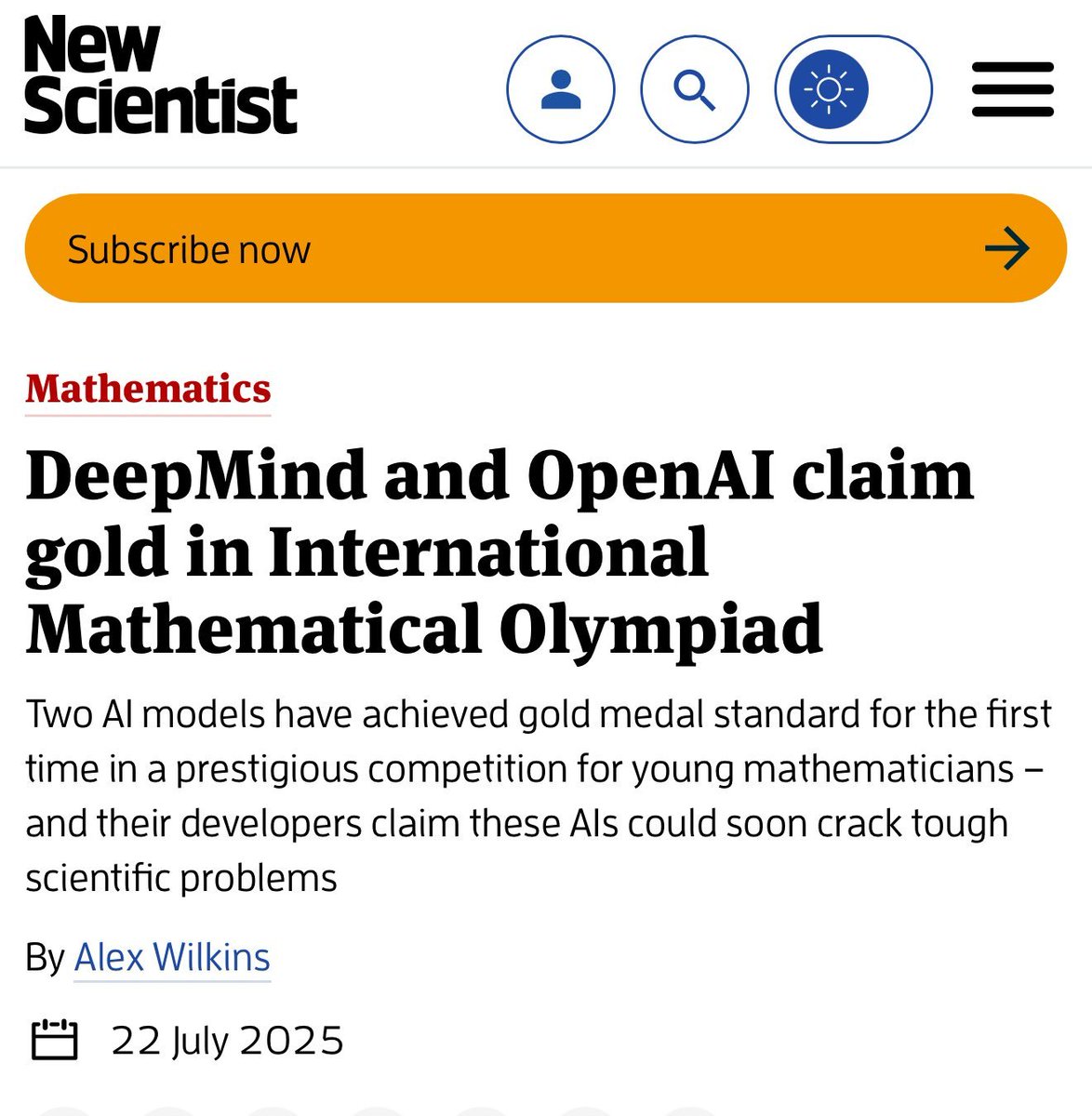
July 2025: The latest general-purpose LLMs get gold in the International Math Olympiad.
May 2026: The latest general-purpose LLM solve one of the "best-known questions in combinatorial geometry"
Biobank data shows SCN5A variant carriers have longer baseline QTc and greater sensitivity to QT-prolonging drugs. Findings support ancestry-informed pharmacogenetic risk stratification https://t.co/bEHpK2ojgr
Excited to share our preprint: Mapping the Functional Landscape of KCNQ1 to Define Ion Channel Mechanisms and Arrhythmia Risk! We performed ~50,000 experimental measurements of KCNQ1 variants.
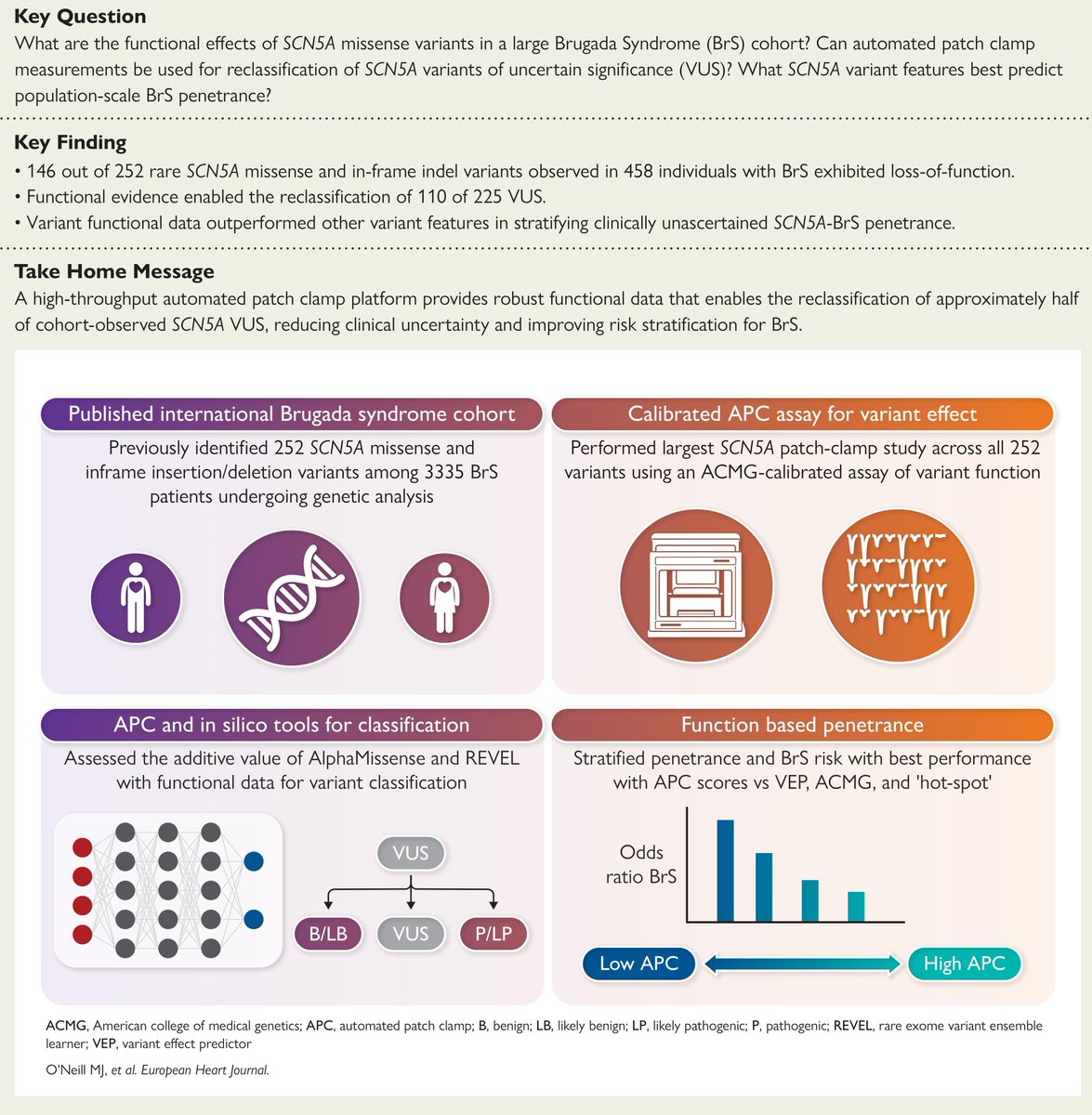
📝 Excited to share our latest work, now out at European Heart Journal! We studied 252 SCN5A variants previously found in patients with Brugada Syndrome, an inherited arrhythmia disorder linked to sudden cardiac death. [1/4]
Automated patch clamp data improve variant classification and penetrance stratification for SCN5A–Brugada syndrome. Read more in #EHJ@escardio@ESC_Journals#Brugadasyndrome
https://t.co/C3hC9JkZc4
📝 Excited to share our latest work, now out at European Heart Journal! We studied 252 SCN5A variants previously found in patients with Brugada Syndrome, an inherited arrhythmia disorder linked to sudden cardiac death. [1/4]
Variants with severe loss-of-function had ~25% penetrance & 501x increased odds of BrS. Normal-function variants had lower risk. This work stratifies SCN5A variants into low-risk vs high-risk categories, aiding diagnosis & management for patients & families. [3/4]
Congrats to Matthew O'Neill for winning an American Heart Association Early Career award for our work on functional studies of SCN5A variants from patients with Brugada syndrome!
Genomic variants in the LDL receptor are the big driver of atherosclerosis, but most were previously unclassified for their impact. Today @ScienceMagazine nearly all 17,000 variants (!) were assessed functionally, which markedly improves the diagnosis for familial high cholesterol. Some people have a normal LDL cholesterol level but increased risk of heart attack due to LDLR variants. https://t.co/EFN9TBHmVi
Genetic testing helped Tia Hansen's family stay ahead of long QT syndrome (LQTS)—and live life to the fullest. On #WorldHeartDay, we’re proud to partner with @SADSFoundation to expand access to genetic testing for families like Tia’s: https://t.co/nG1eoceFzr
And follow it up with @NatRevCardiol's review on the application of MAVEs in cardiology by @amglazer et al.
Creating an atlas of variant effects to resolve variants of uncertain significance and guide cardiovascular medicine
https://t.co/DTbAn6cLox
https://t.co/bJukzeF4YE
















![amglazer's tweet photo. 📝 Excited to share our latest work, now out at European Heart Journal! We studied 252 SCN5A variants previously found in patients with Brugada Syndrome, an inherited arrhythmia disorder linked to sudden cardiac death. [1/4] https://t.co/whf3EEyiom](https://pbs.twimg.com/media/G6OJSvqX0AAVmvt.jpg)

![amglazer's tweet photo. Variants with severe loss-of-function had ~25% penetrance & 501x increased odds of BrS. Normal-function variants had lower risk. This work stratifies SCN5A variants into low-risk vs high-risk categories, aiding diagnosis & management for patients & families. [3/4] https://t.co/0pIL1bUqz8](https://pbs.twimg.com/media/G6OJbi5WwAAuNRK.png)