I wrote a full guide for economists who have never used Claude. Mental model, setup, hard rules, FAQ on the Dropbox mistake, common failures.
Take a look and tell me what is still missing.
https://t.co/98FD3Hhbo7
We also find that these effects grow with greater exposure to teachers and are partly shaped by peer dynamics and students’ beliefs.
Overall, the study highlights the key role of teachers as institutional agents in shaping social preferences.
Excited to share that I’ll be presenting our study, “Institutional Transmission of Social Preferences”, joint work with @GiannolaMichele and Julen Zarate Pina
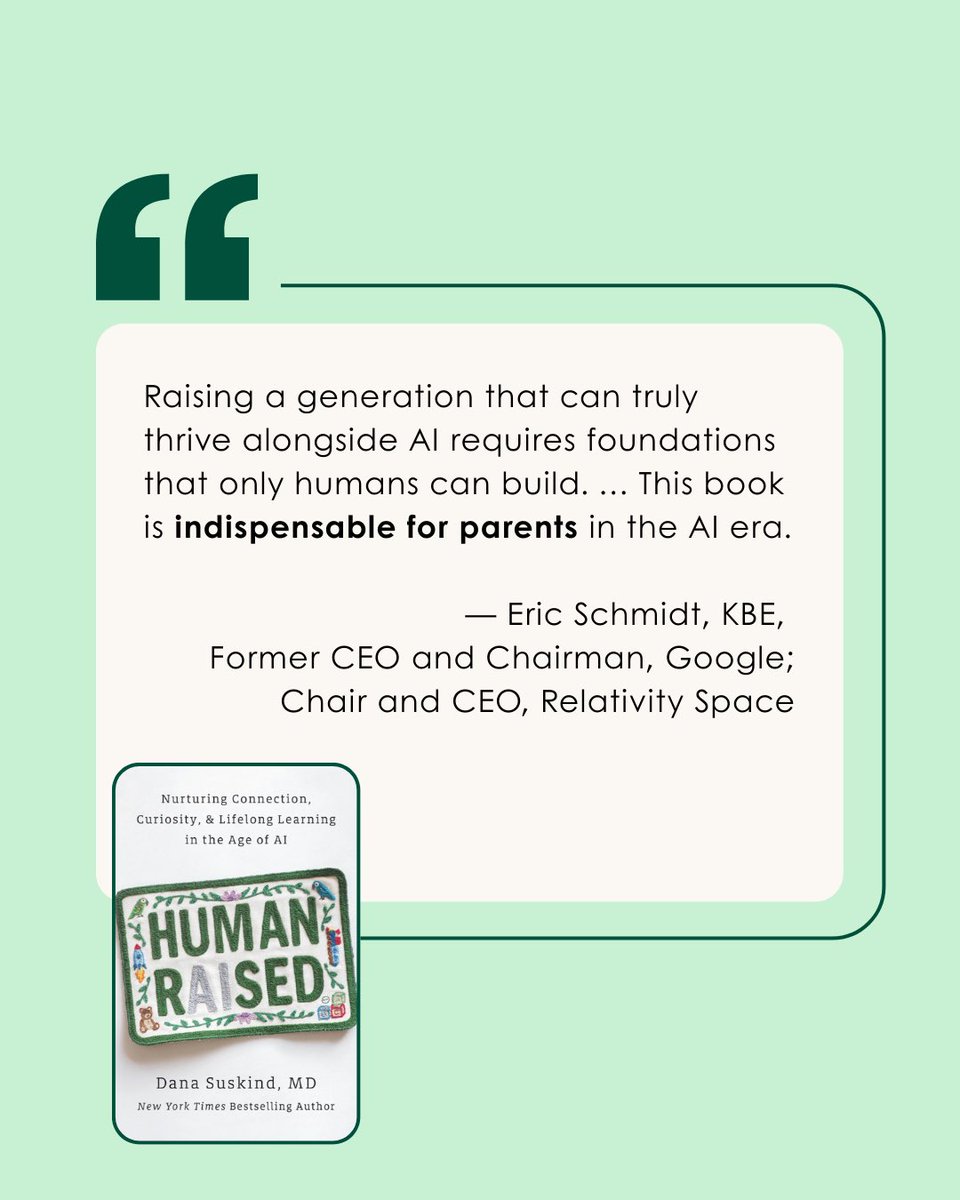
I’m grateful to @ericschmidt for endorsing my forthcoming book, HUMAN RAISED. My hope is we can talk about AI not as a force for good or bad, but as a tool that we can use when it supports human flourishing and avoid when it supports human replacement.
From field experiments to policy interventions at scale.
My latest commentary @ScienceMagazine - after reading @Econ_4_Everyone hard to think of anything else!
https://t.co/5xhOi3gEV9
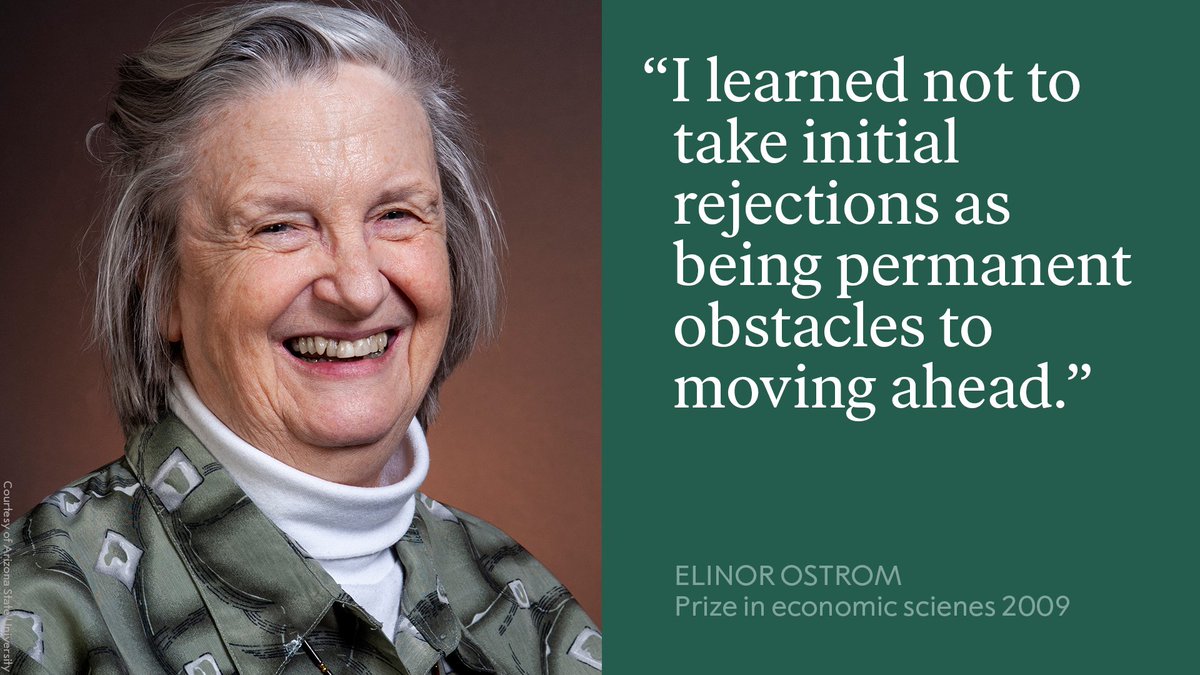
When Elinor Ostrom applied for a PhD in economics she was turned away. Undefeated she took on a different doctorate and in 2009 was the first woman to receive the prize in economic sciences.
Learn more: https://t.co/UE2jLwdmzX
#InternationalWomensDay
Almost 1 Y post-release, the #Menopause#Penalty paper is still generating press attention! https://t.co/JkcFm9SmUE Tx @PatyOrtegaM@eleconomista
The economic costs of menopause are real — affecting employment + reliance on social transfers.
📄Paper:
https://t.co/e5ck5pogFf
Data from over 5000 CFOs and CEOs in the UK, UK, Germany, and Australia predict AI will reduce their firms employment by almost 1 percent and raise productivity by 2 percent, from @iyotzov, Jose Maria Barrero, @I_Am_NickBloom, Philip Bunn, Steven J. Davis, Kevin M. Foster, Aaron Jalca, Brent H. Meyer, @mizenpaul, @mnavarrete42, Pawel Smietanka, @GregoryThwaites, and Ben Zhe Wang https://t.co/renoFDhoUT
Excellent tool for social science research. Those working with LLMs know how sensitive output is to non-instrumental, subtle differences in prompts. GABRIEL is a wrapper that generates standardized prompts for classification of qualitative data, eg labeling tilt in speeches.