Nota bene. I "mercati" non votano, non hanno una regia o un capo. Servono solo a dare un prezzo alle cose. Se minacci di non restituire quanto prendi a prestito, chi ti presta del denaro chiede un rendimento maggiore. Se crede alla tua minaccia, finirà per non prestartelo più.
This is genuinely incredible and says SO SO MUCH about the perception of China in the West.
This is the #1 news show in France, and the host - David Pujadas - asks the pundits around the table (a sample of the top media figures in France) if they can name 3 living Chinese people.
That's it: they just need to say the names of 3 living Chinese people, anyone. This should be extremely easy.
Yet not of a single one of them can name a single Chinese beyond Xi Jinping. They do not know a single living Chinese person beyond the president.
That's the level of ignorance of China we're dealing with in the West today, in 2026.
This is the source for the video: https://t.co/9UnWyu63g8 Aired live yesterday 28th of May 2026.
If you have an aspiring economist or political economists in your family or broader friends network, please steer them to our programs at GMU (BA/BS; MA; PhD). We would love to have them join the conversation on the liberal principles of political economy and justice. DM for info
Affluenza complessiva alle 15 intorno al 60%, in discesa di circa 5 punti rispetto al 2020. Ma nel 2020 c'erano insieme regionali e referendum. La partecipazione tutto sommato ha tenuto.
Attualità e criticità del pensiero giuridico di Bruno Leoni
27 maggio 18.00 - Milano
Perché il pensiero giuridico di Bruno Leoni è ancora attuale?
Con @amingardi Emanuele Tuccari Antonio Masala @MauroHGrondona Paola Chiarella
INFO👉https://t.co/hzRku9O9KT
Se non la conoscete, vi segnalo “The Curious Task”, la newsletter su Substack curata da @amingardi, politologo, storico delle dottrine politiche e direttore generale dell'Istituto Bruno Leoni. Mi piace la sua rubrica “Una domenica, un libro”: https://t.co/0a2M1JPXgX #daleggere
🟠Featuring Free Open Access Content
Out Now: Hayek’s Living Legacy in Economics, Philosophy and Policy, edited by Alicja Sielska, Joanna Turowska, and Krzysztof Turowski
Learn more: https://t.co/6sl9GCHpJC
Read a free chapter: https://t.co/ZmqcehAnqI
@PerBylund@PhilWMagness
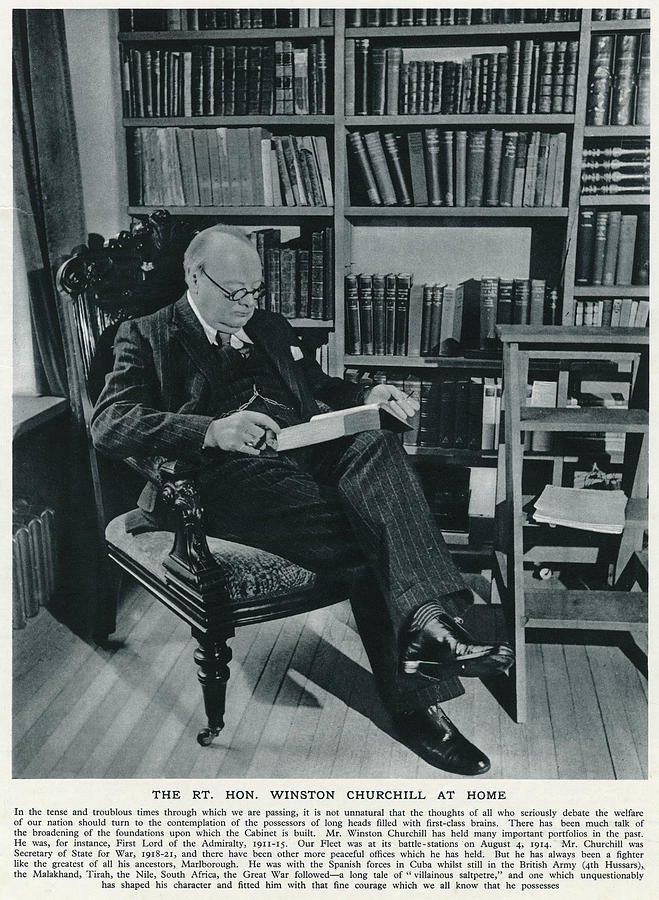
"If you cannot read all your books, fondle them—peer into them, let them fall open where they will, read from the first sentence that arrests the eye, set them back on the shelves with your own hands, arrange them on your own plan so that you at least know where they are. Let them be your friends; let them, at any rate, be your acquaintances."
- Winston Churchill
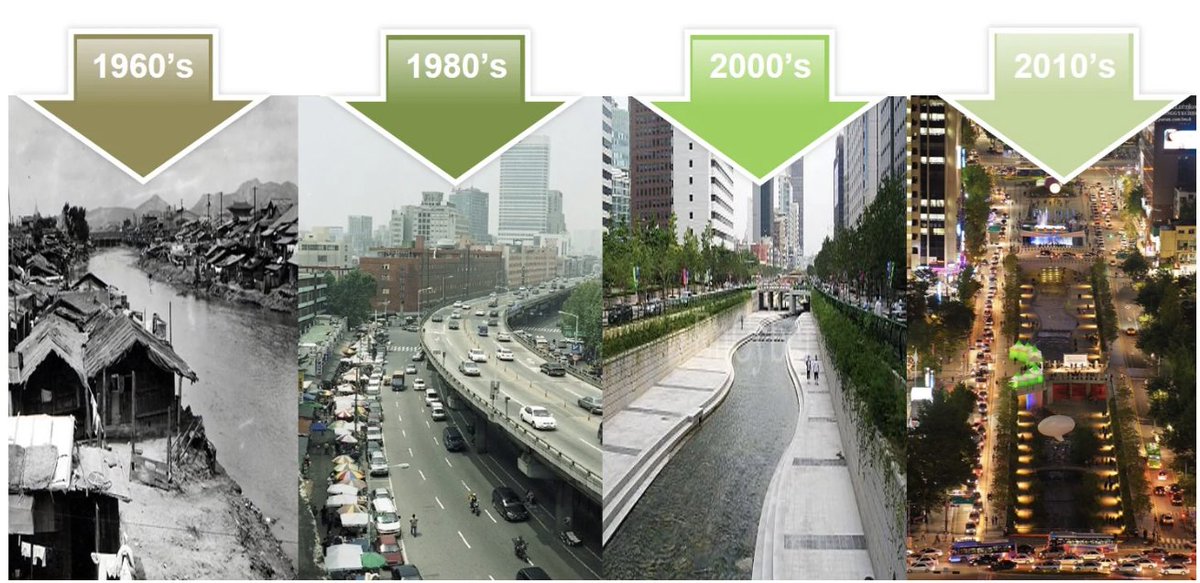
A fundamental lesson from my posts these last two weeks on modernization, industrial policy, and development is that development economics should be about understanding why South Korea got rich but Bolivia did not.
The current field has largely given up on that question. Sharply identified RCTs on small micro programs are a fine way to publish in the AER and get tenure at a fancy university, but a profession that knows everything about microfinance impact evaluations and almost nothing about industrialization has misallocated its own intellectual capital on a pretty heroic scale.
Four images of Seoul:
"There are about 70% more bookstores now than there were six years ago in the United States. After 20 years of declining numbers, they’re coming roaring back."
"Since 2020,... American Booksellers Association membership has grown from 1,900 to 3,200."
https://t.co/XTUijwVQQn
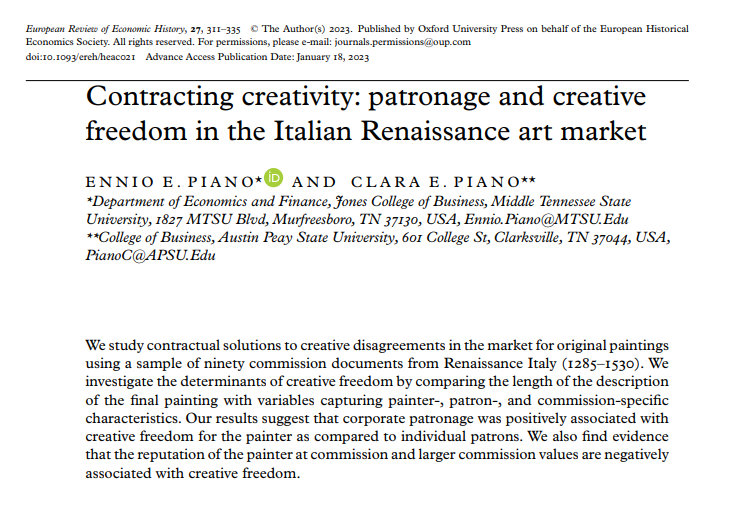
Reading this paper by Ennio and Clara Piano is utterly fascinating. The TLDR is: arts need markets to thrive and diversify.
Renaissance art was not "pure genius". The organization of it contract design under uncertainty. Patrons and painters bargained over creative control, and contracts revealed alot about the art market.
The higher the price of the commission, the lesser the freedom to the artist. More famous artists had some form of penalty as patrons feared they would reuse old ideas. Products were hard to define ex-ante and so you needed to specify inputs in contracts (materials, figures, composition, staff even)
Artists and patrons negotiated and designed contracts that traded off between "control" over the work and the "payment" for the work. The market that emerged thanks to these contracts created a rich gradient of options for different art products.
Adam Smith spiega perché le stelle aiutano a ragionare. La sua storia dell’astronomia ha posto le premesse per “La ricchezza delle nazioni”. Un’indagine sulla meraviglia e sull’urgenza di dare ordine al mondo. L'articolo di Gilberto Corbellini e Alberto Mingardi
truly one of the most amazing developments in trans-Atlantic tech policy over the past 20 years is the way that Europe set out to regulate US tech giants into the ground, but only made them more dominant as a result.
This Economist headline really says it.
I put together a short practical guide for economists who want to use Claude Code, but who haven't gotten around to trying yet.
The goal is to reduce the start-up costs by using Claude Code within VS Code.