The Auschwitz of the Caucasus- Shusha Prison Through the Eyes of Lithuanian War Journalist Richardas Lapaitis
A witness to horror
@Anewz_tv
https://t.co/7cOMxxYyuH via @YouTube
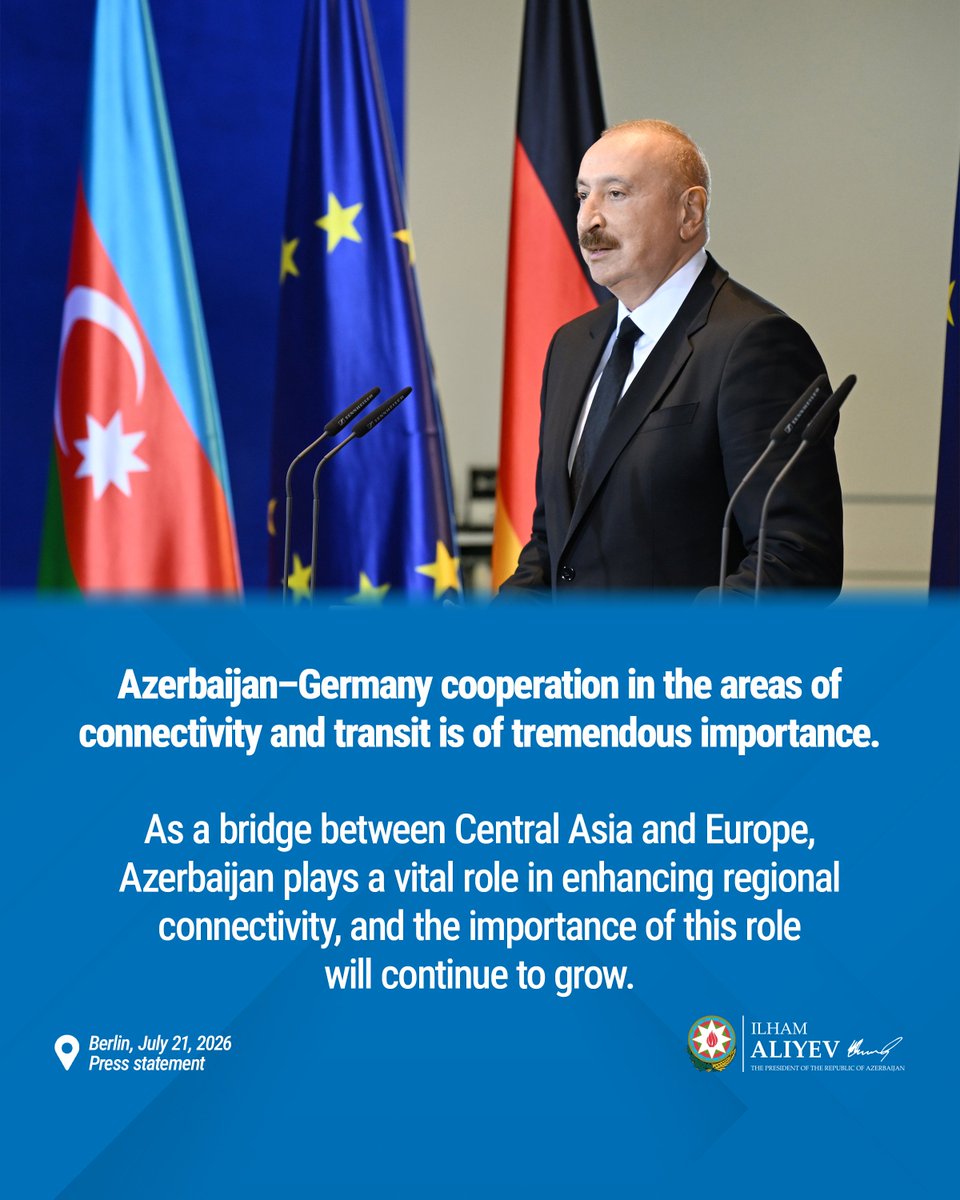
A Joint Declaration on Strategic Agenda for Bilateral Partnership was signed yesterday in Berlin. It is the 1st bilateral document ever signed by President of Azerbaijan & Federal Chancellor of Germany in the history of 🇦🇿🇩🇪 relations, elevating our ties to a new strategic level
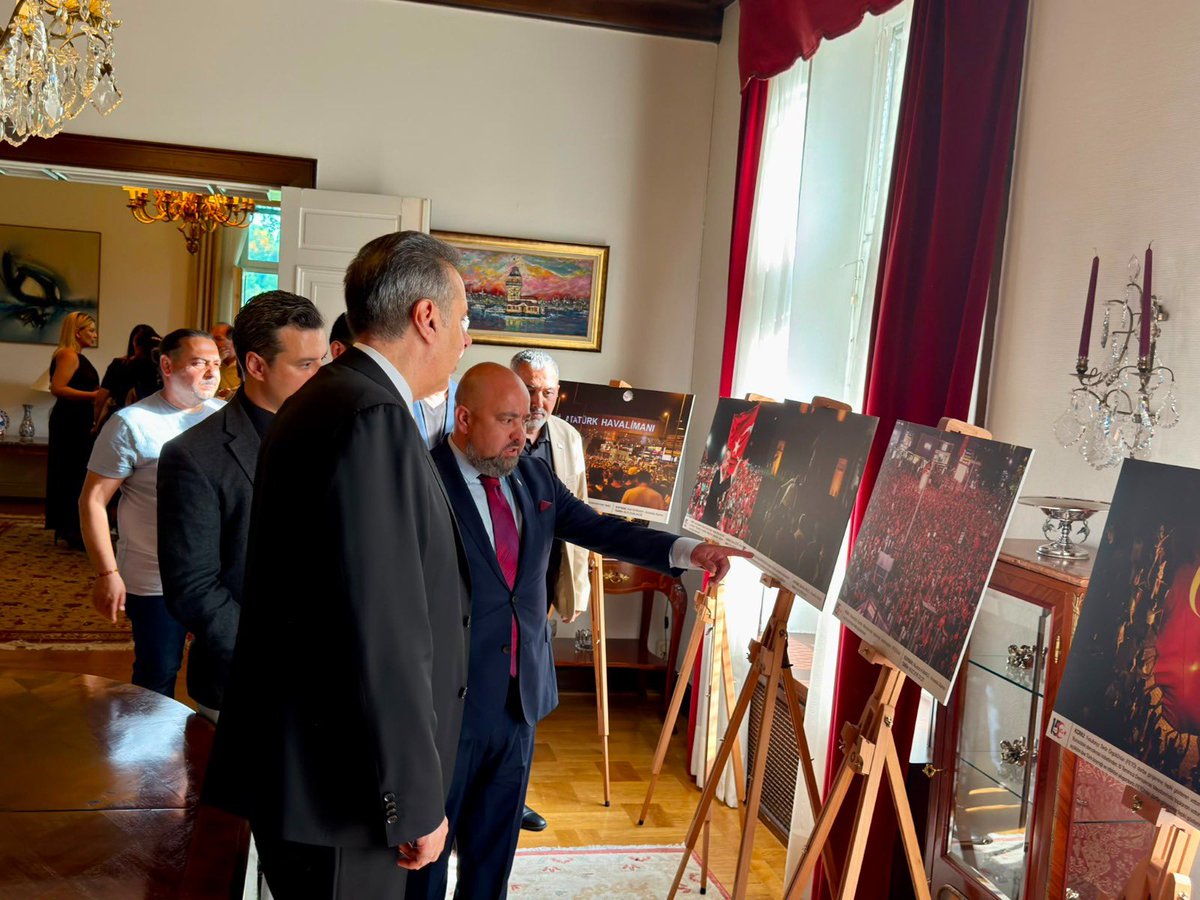
İletişim Müşavirliğimizle @TRpressofficeSE, 15 Temmuz Demokrasi ve Millî Birlik Günü’nde Büyükelçiliğimizde vatandaşlarımızın katılımıyla bir anma programı gerçekleştirerek, özel bir sergi düzenledik.
Şehitlerimizi rahmetle, gazilerimizi şükranla andık.
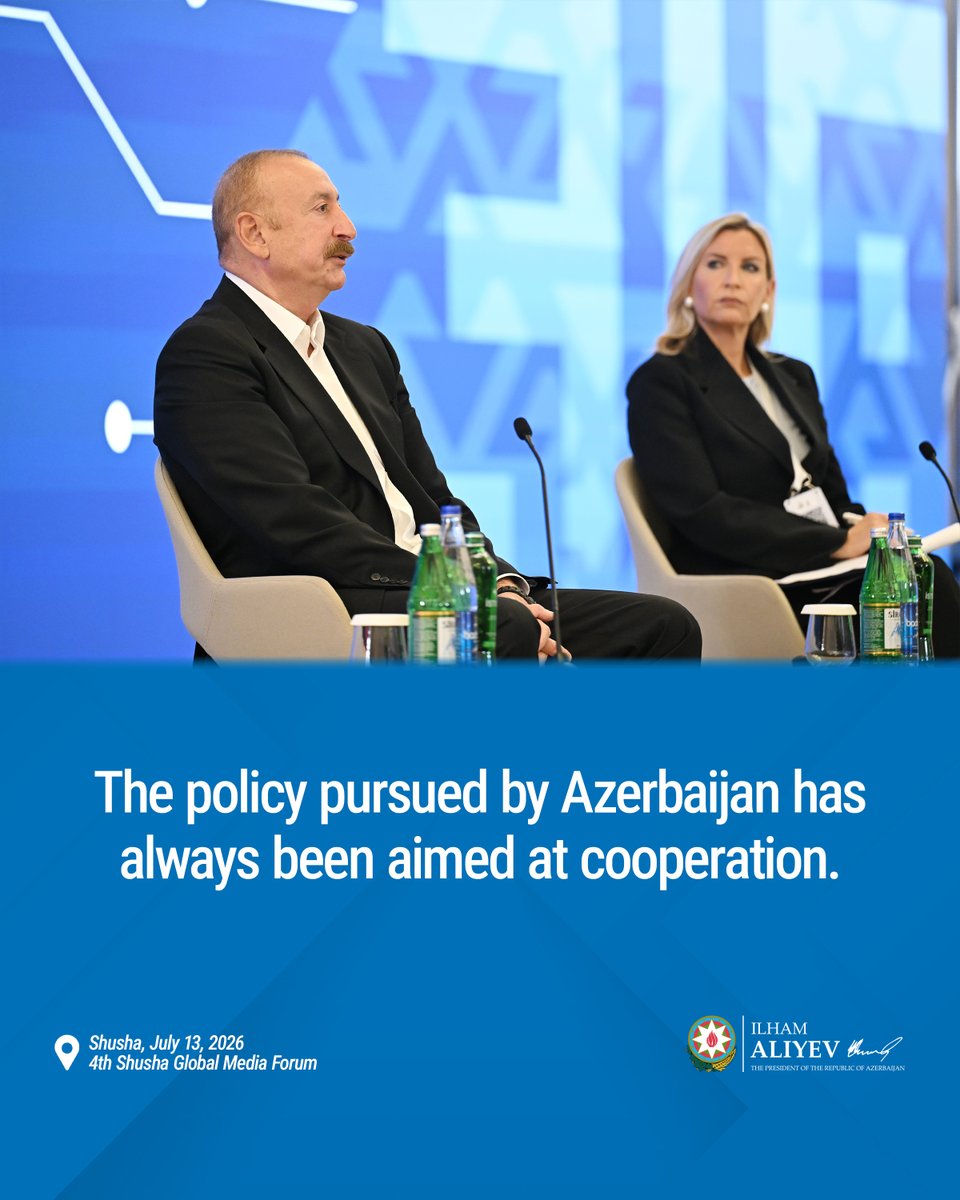
The meeting of President Ilham Aliyev with the participants of the 4th Shusha Global Media Forum, under the theme “The Mission of the Media in Promoting Peace: Restoring Truth and Rebuilding Trust”
https://t.co/b0Gxrf0l5c
#ShushaGlobalMediaForum
A milestone for #Azerbaijan🇦🇿 at the #UN.
In just 11 days, Azerbaijani candidates were elected to three UN human rights treaty bodies, each receiving the votes of over 2/3 of UN membership:
✅ Fuad Zarbiyev — Human Rights Committee (131 votes)
✅ Farid Adilov — Committee on the Rights of the Child (130 votes)
✅ Elgun Safarov — Committee on the Elimination of Discrimination against Women (133 votes)
🇦🇿 Azerbaijan will now be represented in 5 of the 10 UN human rights treaty bodies—ranking 2nd (together with China) globally among all UN Member States in terms of national representation.
Was pleased to attend the 2026 Earth&East Festival at the Nerdrum Museum in Stavern, 🇳🇴 on behalf of Embassy of 🇦🇿, where rich 🇦🇿 culture was demonstrated, shared with the audience the importance of cultural bridges between 🇳🇴 and 🇦🇿, in the spirit inspired by Thor Heyerdahl.
.@Anewz_tv: A new documentary by Swedish filmmaker Mikael Silkeberg traces a cultural journey from Scandinavia to Azerbaijan, exploring how memory, tradition and heritage have preserved the identity.
https://t.co/rVTyjoH98P
Happy to share The Homeland in Memory, a new documentary by 🇸🇪 filmmaker Mikael Silkeberg exploring the cultural heritage, traditions and collective memory of @QAicmasi.
Proud to see this important cultural story, the first of its kind, come to life, and invite everyone to watch it.
About the film
The Homeland in Memory, directed by Swedish filmmaker Mikael Silkeberg, is a 55-minute documentary that traces a cultural journey between Scandinavia and Azerbaijan, exploring how memory preserves identity beyond geography.
The film opens in Sweden, at Uppsala University Library, where Silkeberg encounters a rare 17th-century manuscript - an early translation of the Gospels into Azerbaijani, written in Latin script with French orthography. Preserved far from the Caucasus, this fragile text becomes a powerful symbol: even across centuries and distance, cultural memory endures.
The journey continues in Stockholm, where Silkeberg meets Swedish author and historian Bengt Jangfeldt. Through a brief conversation on the Nobel brothers’ activities in Baku during the late 19th century and the broader Swedish presence in Azerbaijan, the film highlights an often-overlooked chapter of Scandinavian–Caucasian relations.
From this point, reflections on Nordic engagement with the Caucasus evoke the writings of the Norwegian Nobel Prize laureate in literature Knut Hamsun and the memoirs of Danish diplomat and businessman Erik Biering in the late 19th century - voices that sought to understand a region situated at the crossroads of Europe and Asia.
Silkeberg then travels eastward, following not only a geographic route, but a deeper search for continuity.
At its core, the film presents Western Azerbaijan as a cultural landscape sustained through memory - a world of places, traditions, and meanings carried across generations. Through archival maps and testimonies, it reveals a geography that persists not on political borders, but in cultural consciousness.
This continuity finds its most vivid expression in the ashig tradition, where poetry, music, and storytelling converge. The legacy of Ashig Alasgar, born in the Goycha region, forms a central thread throughout the film. His verses preserve landscapes, emotions, and a sense of belonging that transcends physical absence. Through the sounds of saz, balaban, and zurna, and through collective expressions such as yalli dance, memory becomes a shared and living experience.
The film further explores how identity is safeguarded through literature and visual art. In Baku’s cultural institutions, manuscripts, poetry, and artistic works form a cultural map that resists erasure. From classical literary figures to the visual heritage of Mirza Gadim Iravani, art emerges as a durable vessel of historical continuity.
Material culture adds another dimension. Carpets from the region are presented as encoded archives, where patterns, colours, and compositions reflect a worldview shaped by history, environment, and belief. The documentary also introduces the traditional costumes of Western Azerbaijan and explores the region’s culinary heritage, visually capturing the preparation of traditional dishes and demonstrating how everyday cultural practices carry memory across generations.
Reflective in tone, The Homeland in Memory brings together archival discoveries, literature, music, visual art, traditional craftsmanship, landscapes, and personal testimony into a cohesive narrative.
Ultimately, the film poses a universal question: when a historical homeland cannot be physically reached, how does culture ensure that it is never truly lost?