After moving to the U.S. for a sabbatical, I started noticing how school structure, social life, and parental time quietly shape children’s mental health.
My two cents are here:
👉 https://t.co/y88cKVgl1s
Closing the mental health treatment gap: Evidence from national implementation of digital parent training. The secret sauce? A screening procedure conducted at the right time for the entire population. Proud to take part in this. @voimaperheet https://t.co/5MrfrWl0v6
@EikoFried Well, I checked ai capabilities to recover the plate number (used LetsEnhance), and it didn't work. I guess it is impossible to recover something that wasn't really captured at the first place. :-/
Our new sys_rev: Only one intervention was examined both in research and real-world "settings". The transition resulted in an inability to replicate positive results. Led by one of my PhD students, Mayan Cohen. #implementationscience#digitalhealth
https://t.co/Oy2sa8CrUg
Implementation science in behavioral health focuses too much on asking why efficacious interventions don’t work in reality. We could advance much more by asking what was wrong and biased in the research that found it to be efficacious. #mentalhealth#behavioralsciences
Proper product design can significantly boost user engagement in unguided digital interventions📣
We achieved a 69% completion rate in a digital parent training program, compared to 28% using the standard eLearning platform.
Details in this paper: https://t.co/5ls1oIIiwf
A great opportunity for those looking to deploy inexpensive #digitalhealth interventions using common survey platforms. DON'T MISS OUT!
Time: Nov 21 10am EST.
More details and registry link : https://t.co/YPRCtHg9x2
#mentalhealth#isrii
@ohadsamet If one sees a behavior he dislikes and this brings him to think the person is Jewish and/or talk against her, this is antisemitism by definition. It doesn't matter that he was angry. I do not see victimization in recording such people and showing their face to the world.
@ohadsamet Not entirely. It could signal one's belief in rituals to feel safe, such as following obsessive patterns. In this case, it wouldn't necessarily mean that they believe it will stop infection, but just make them feel less anxious.
I am very excited to chair this event showcasing how to build a #digitalhealth intervention almost for free. Truly remarkable opportunity to learn from creative researchers who built complete digital interventions on survey platforms. Help us spread the word!
📢FREE WEBINAR📢 Oct 24, 2003
Want to learn about low cost $$, DIY ways to build and test digital interventions?
Join us on Oct 24 10am (EST) for this free webinar
https://t.co/pYVuvkkjQo
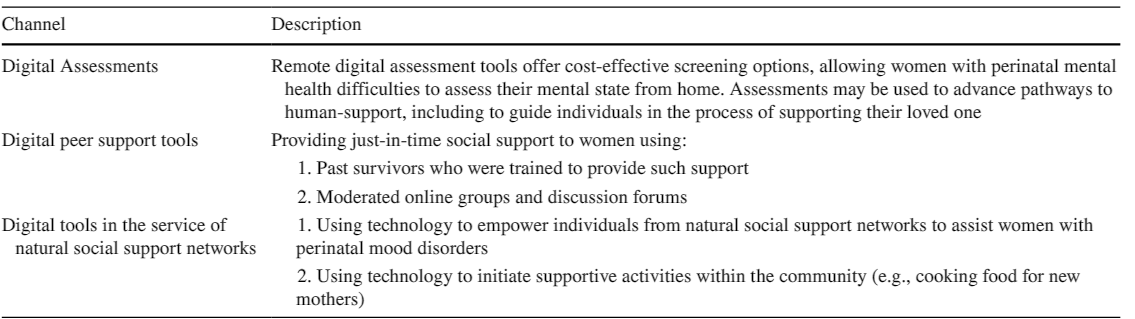
In this paper I reviewed #digitalhealth tools for social and peer support in perinatal #mentalhealth. Loneliness and lack in support are extremely related with this condition. To help, we must target the right mechanisms of change: https://t.co/oL865qExjW
Important paper below. I believe there is almost no room for wait list control when studying a #digitalhealth intervention, as there is an interaction between treatment and trial setting that boosts treatment effect but does not impact those who get nothing. @JohnTorousMD
Control conditions in #digitalhealth tools/apps RCTs dramatically influence results. Sometimes a waitlist condition makes sense but often not. Led by @SGoldbergPhD, we propose a ready-to-deploy typology to pick the right one. New [+free] in @npjDigitalMed
https://t.co/mpMzUd3Gnf
e-Therapeutic Alliance: Integrating facets unique to the digital space contribute above conventional factors to understanding alliance. A new paper by @OhadAshur, my talented PhD student. #digitalhealth#mHealth#eHealth#mentalhealth
https://t.co/oHimpu2Vkr
@steveschueller @SD_RISEMHLab @draguilera @NIMHgov LOVE to see peer support embedded within the intervention and being researched in this magnitude. We really need more of these funded by grant agencies. Well done!🤟









![JohnTorousMD's tweet photo. Control conditions in #digitalhealth tools/apps RCTs dramatically influence results. Sometimes a waitlist condition makes sense but often not. Led by @SGoldbergPhD, we propose a ready-to-deploy typology to pick the right one. New [+free] in @npjDigitalMed
https://t.co/mpMzUd3Gnf https://t.co/1sZrSqKp66](https://pbs.twimg.com/media/F7Sty5XWUAAaFAs.jpg)