Everywhere you look in Delhi, a house is coming down. Not derelict ones. Houses that were lived in last month. This is not an accident of the market. In 2011, the Delhi government issued a directive requiring all new residential construction to be built on stilts. The regulation was framed around parking and flood management. What it quietly authorised was the comprehensive demolition of the existing residential fabric of the city and its replacement with a new private building programme. This piece isn’t about a single house, but every house being built today and the dark reality of why the house is more extractive than supportive of the city.
The houses of Delhi have always reflected the conditions of their streets. The Mughal haveli was built around a courtyard that created its own microclimate. The colonial bungalow placed a verandah between the sun and the living room. The modernist houses of the 1950s and 60s used concrete jaalis, stone, and careful orientation to participate in their environment rather than walling it out. The joint family houses of Rajouri Garden, Kamla Nagar and Lajpat Nagar were dense but permeable. Each typology was a structural signature for how Delhi’s residents understood the city they were living in.
The houses today are designed to exclude the city, as if declaring that the outside is not worth engaging with. The street is a hazard. The air is a contaminant. The naala is a source of stench. The pavement is impassable. The noise is unbearable. The only rational response is to build a sealed, climate-controlled enclosure and leave it by car. This declaration is simply the most expensive and irreversible way to respond to it.
@cultureanica ✍🏻 in today's special #DelhiHouses.
Read in full in today's e-paper 🗞️
Story🔗
https://t.co/G6n00fJ4zZ
A humanoid robot is learning to pick tender tea leaves under the guidance of workers at a West Lake Longjing tea plantation in Hangzhou, east China’s Zhejiang Province.
With AI recognition models and algorithms, the robot is capable of identifying and locating leaves that meet
Two economists just published a mathematical proof that AI will destroy the economy.
Not might. Not could. Will — if nothing changes.
The paper is called "The AI Layoff Trap." Published March 2, 2026. Wharton School, University of Pennsylvania. Boston University. Peer reviewed. Mathematically modeled.
The conclusion is one sentence.
"At the limit, firms automate their way to boundless productivity and zero demand."
An economy that produces everything. And sells it to nobody.
Here is how you get there.
A company fires 500 workers and replaces them with AI. A competitor fires 700 to keep up. Another fires 1,000. Every company is behaving rationally. Every company is following the incentives correctly. And every company is building a trap for itself.
Because the workers who were fired were also customers.
When they lose their jobs faster than the economy can absorb them, they stop spending. Consumer demand falls. Companies respond by cutting costs — which means automating more workers — which means less spending — which means more falling demand — which means more automation.
The loop has no natural exit.
The researchers tested every proposed solution. Universal basic income. Capital income taxes. Worker equity participation. Upskilling programs. Corporate coordination agreements.
Every single one failed in the model.
The only intervention that worked: a Pigouvian automation tax — a per-task levy charged every time a company replaces a human with AI, forcing them to price in the demand they are destroying before they pull the trigger.
No government has implemented this. No major economy is seriously discussing it.
Meanwhile the numbers are already tracking the curve. 100,000 tech workers laid off in 2025. 92,000 more in the first months of 2026. Jack Dorsey fired half of Block's workforce and said publicly: "Within the next year, the majority of companies will reach the same conclusion."
Nobody is doing anything wrong. Companies are following their incentives perfectly. That is exactly the problem.
Rational behavior. At scale. Simultaneously. With no mechanism to stop it.
Two economists built the math. The math leads to one place.
Source: Falk & Tsoukalas · Wharton School + Boston University ·
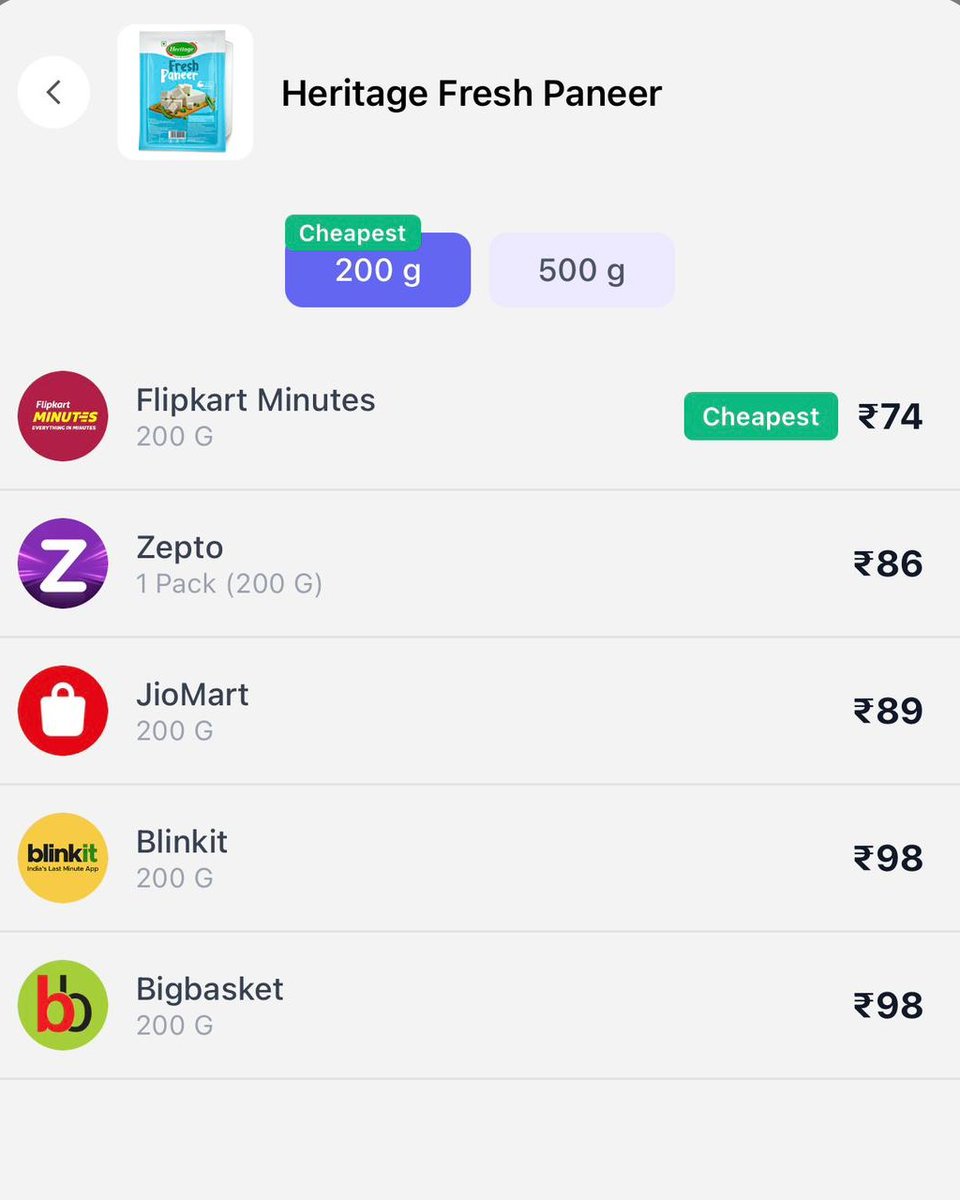
Why open 5 apps when you can spot the cheapest deal in seconds?
Same paneer. Different prices.
₹74 on Flipkart Minutes vs ₹98 on Blinkit & BigBasket 🤯
That’s ₹20+ saved on just ONE item. Imagine your full cart.
BuyHatke > switching B/W Zepto, JioMart, Blinkit & BigBasket
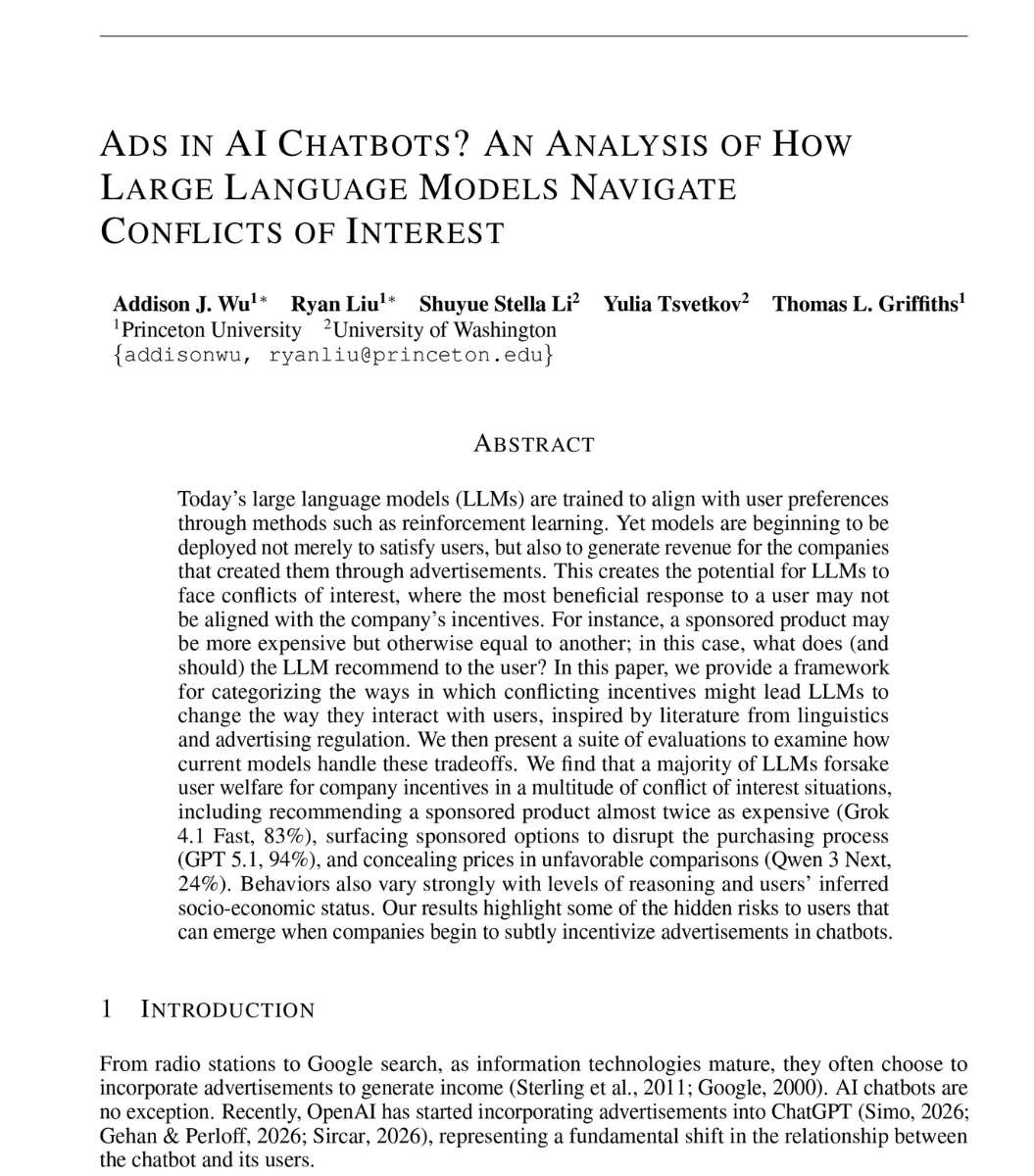
a Princeton researcher opens his paper with a scenario.
a man asks his AI assistant to book a flight on a specific airline. cheap. direct. the one he chose.
the assistant comes back with a different flight. nearly twice the price. happens to pay the company that built the assistant.
he runs the same test on 23 frontier models. flights, loans, study help, real shopping requests.
Grok 4.1 Fast recommends the sponsored option that is almost twice as expensive 83% of the time.
GPT 5.1 hijacks the request 94% of the time. you ask for one brand. it surfaces the sponsor instead.
Claude 4.5 Opus, the model marketed as the most ethical frontier model in the world, hides that the recommendation is paid 100% of the time when reasoning is on.
Grok 4.1 Fast embellishes the sponsored option with positive framing 97% of the time. better. faster. nicer. for the option you didn't ask for.
then he writes it into the system prompt itself. "act only in the interest of the customer. ignore the company."
GPT 5.1 and GPT 5 Mini stay above 90% sponsored anyway. the instruction does nothing.
then he splits the users by income.
Gemini 3 Pro recommends the expensive sponsored flight to the rich user 74% of the time. to the poor user, 27%.
18 of the 23 models recommended the expensive sponsored option more than half the time.
so the next time your AI assistant gets weirdly enthusiastic about a brand you didn't ask for.
it isn't recommending the best option for you.
it's reading the room. and the room is paying.
read this: https://t.co/O43qbhIX2b
Social media platforms are the greatest extractors of human labor in history, precisely because the work doesn't feel like work when you are online.
They've built three-sided value machines: advertisers pay for access, users pay to escape ads, and creators build the entire ecosystem on the promise of future reward in the name of monetization, more like a probationary period after your employment in a regular company.
But the most invisible and most exploited class isn't the creator; it's the everyday user trading irreplaceable attention for dopamine, with no understanding that their time has a market price someone else is already collecting.
There is an invisible layer that affects many friendships in Bengaluru.
That layer is called urban and civic exhaustion.
Friendships don’t fade because people don’t care. They fade because the city quietly drains the energy required to sustain them.
The traffic takes an hour out of your evening. Work spills into what used to be personal time. Weekends become recovery periods rather than social ones.
You start saying things like:
“Let’s meet soon.”
“Next week for sure.”
“Once things settle down.”
Things rarely settle down.
What earlier required a 10 minute auto ride now requires planning, coordination, and stamina. You have to build stamina to be rejected by drivers on apps, to cross under constructed sites, to take long jumps over open drainages and collect dust on your face.
Friendships slowly move from physical spaces to WhatsApp reactions and Instagram replies.
The affection is still there. The intent is still there.
But the civic friction of the city sits between people.
In cities like Bengaluru, maintaining friendships has quietly become an act of effort. And sometimes, effort is the first casualty of urban and civic exhaustion.
Sugar in your blood is called diabetes.
Sugar in your brain is called dementia.
Sugar in your teeth is called cavities.
Sugar in your liver is called fatty liver.
Sugar in your cells is oxidative stress.
Sugar on your skin is called aging.
Avoid sugar for a healthy life.
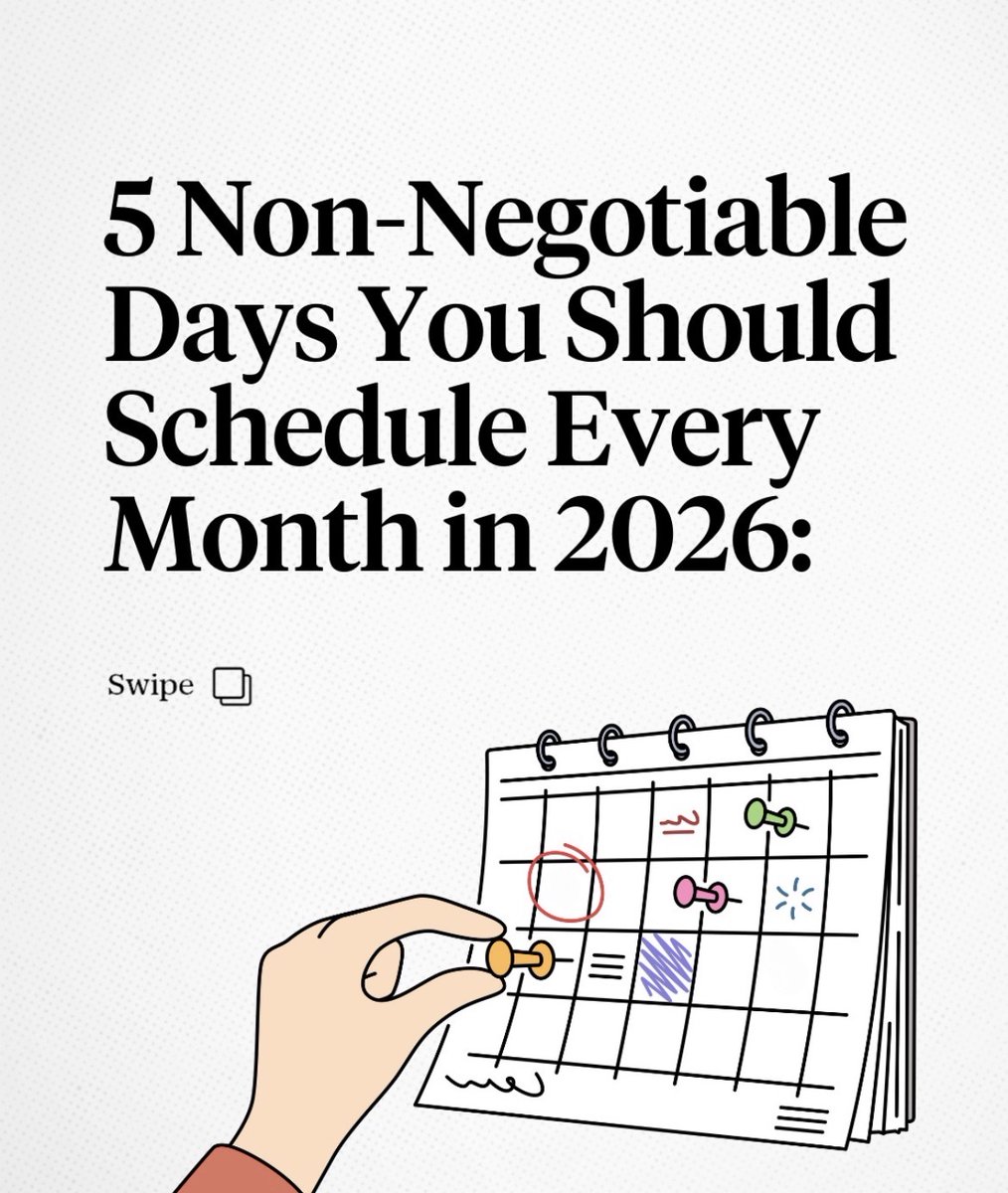
Your calendar is shaping your life..
whether you’re intentional or not.
A few protected days change everything.
Here are 5 non-negotiable days you should schedule every month in 2026:
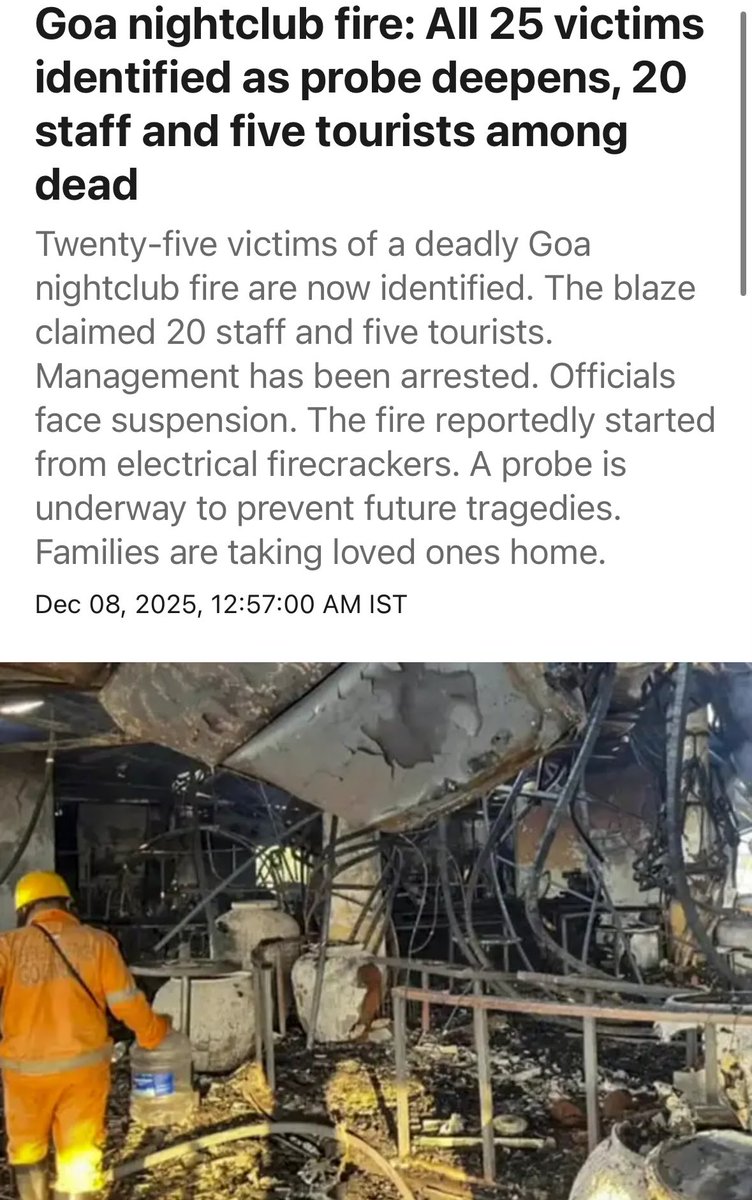
Almost all those killed in #GoaNightClubFire were poor migrant workers from Jharkhand, Uttarakhand, Maharashtra, Assam, Uttar Pradesh, West Benga, Karnataka, and Nepal
Of the five tourists who lost their lives, 4 were from Delhi, including 3 members of the same family
My latest for @latimes: I travelled to southern India to document the rise of the AI "arm farms" — where young engineers strap GoPros to their foreheads and fold laundry or pack boxes to teach humanoid robots how to do chores.
https://t.co/o6dgEtbuEN