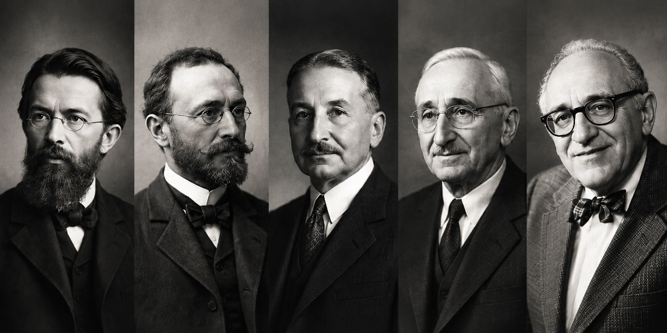
The intellectual case against Marxism was won more than a century ago. The most rigorous and devastating blows came from the Austrian School of economics – but the strange part is that hardly anyone is taught the winning arguments.
Carl Menger’s subjective theory of value, developed in the 1870s, undermined the labour theory of value on which Marx built his entire system. Eugen von Böhm-Bawerk then delivered a systematic demolition of Marx’s economics, exposing the contradictions in the theory of surplus value and the so-called transformation problem. Ludwig von Mises went further still, demonstrating that rational economic calculation is impossible under socialism because without private property and market prices there is no way to allocate resources efficiently. Friedrich Hayek later extended this into the knowledge problem: the information required to run a complex economy is dispersed and cannot be centralised. And Murray Rothbard showed how Marx misunderstood the nature of capitalism by replacing voluntary exchange and entrepreneurial creation with a false theory of exploitation based on labour value and class conflict.
These were not minor objections. They struck at the theoretical foundations of Marxism and, in the case of Mises and Hayek, correctly predicted the chronic waste, shortages, and eventual collapse of socialist economies. History confirmed their arguments on a civilisational scale.
Yet in universities, media and political debate, these critiques remain marginal. Marx is still widely taught as a serious economist and social theorist. His errors are softened, historicised, or treated as interesting starting points. The Austrian responses are rarely given equal weight. Students can pass through entire programmes in the social sciences without encountering Böhm-Bawerk’s critique or Mises’s calculation argument in any depth.
This neglect is not accidental. It reflects a deeper intellectual preference for theories that pathologise markets and legitimise expanded state power. The result is a public discourse that continues to recycle Marxist categories long after their economic foundations were shown to be unsound. The cost of that selective memory is still being paid.
@MadPaki@piersmorgan He didnt want innocents dead, no one does. But human shields and terror infrastructure in civilian areas means there is collateral damage unfortunately. Israel guards against excessive civilian deaths.
Consultant - Advocacy and Research
Remote (preferably based in the Hague, with field missions as required)
Deadline: July 31
https://t.co/Oc46WXhG4I
NOTE: 65 Euros/hour for 20-30 hours/week
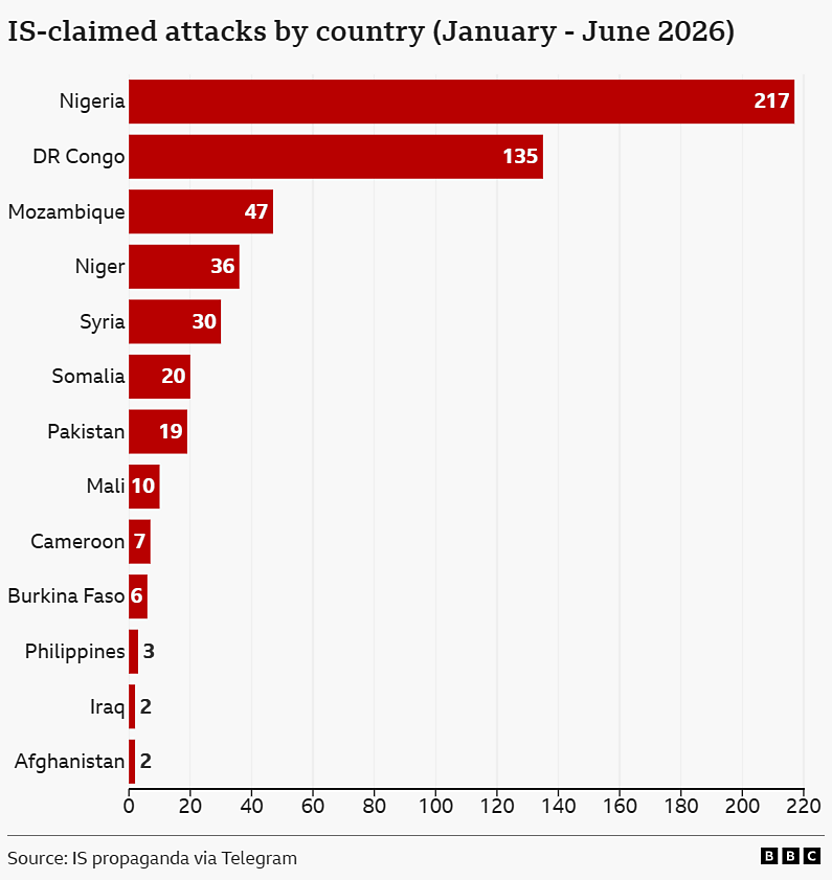
Our team at BBC Monitoring has published a data-driven analysis of IS/ISIS activity and messaging in the first half of 2026, marking 12 years since the group's "caliphate" declaration. While the full report is behind a subscription wall, here are some key findings 🧵
https://t.co/PyRaePew19
The School of Law is currently looking to fill two positions at the Wits Law Clinic managing the delict and labour law units
Find out about the requirements and how to apply here: https://t.co/MOjl2eM0uO