Hey everyone, hope you guys are doing well !
I was away from Twitter/X for quite a while to focus on my health and personal life to sort out some personal issues as I was on a career break, after my mom's passing away.
So, I'm very glad to share that I'm currently doing well personally & I'll be active here from now on. ☺️🙌
Introducing Claude Fable 5: a Mythos-class model that we’ve made safe for general use.
Its capabilities exceed those of any model we’ve ever made generally available.
Yoo I know I am a bit late with the list tho ... I hope you are able to squeeze enough time to dedicate atleast 30 mins of your day to read 1 article per day or maybe 2
I have also added few of my fav developer blogs/articles too
Companies
# Dropbox
- Why we chose apache superset as our data exploration platform : [https://t.co/H43FGKUVnu]
- How low-bit inference enables efficient AI : [https://t.co/8fgYTrFuxS]
- Reducing our monorepo size to improve developer velocity : [https://t.co/UcaNi8CuUp]
- Selecting a model for semantic search at Dropbox scale : [https://t.co/aFNkXj7xSD]
- What’s new with Robinhood, our in-house load balancing service : [https://t.co/W0yliQukkz]
# Twilio
- Build an AI Video Analysis App with FastAPI, OpenAI, and SendGrid : [https://t.co/mZsiV5RWtv]
- Calculating Character Count of RCS Messages : [https://t.co/9f6PhHSNQs]
- Making Alt Text Fast: How Twilio Scaled Docs Accessibility with Automation : [https://t.co/HiFbZm1rzG]
# Reddit
- Evolving Signals-Joiner with Custom Joins in Apache Flink : [https://t.co/Kp6g11Ntde]
- Query Autocomplete from LLMs : [https://t.co/NHUC0AEwfm]
- Evolution of Reddit's In-house P0 Media Detection : [https://t.co/xiNiZwi66h]
- An In-Depth Look at the Notifications Recommender System : [https://t.co/ici4TDGSQT]
# Pinterest
- How Pinterest Built a Real‑Time Radar for Violative Content using AI : [https://t.co/Y5GMBisqRy]
- Next-Level Personalization: How 16k+ Lifelong User Actions Supercharge Pinterest’s Recommendations : [https://t.co/ApbhzphBkg]
# Bumble
- Who, where, when: a components system for allotting team member responsibilities : [https://t.co/OfaQXMxzvM]
Developers Blog list
Some developers blog list I love to go through for maximum experience learning ... What is Experience Learning ?? Something which an engineer learns only while experiencing new problems, new limitations, new constraints from different situations ...
# Pragmatic Engineer
- Cloudflare rewrites Next.js as AI rewrites commercial open source : [https://t.co/qwZ0gwEqUl]
- Is the FDE role becoming less desirable? : [https://t.co/F3BH4hpy5D]
# Julia Evans (1/3 top favs of my list)
- Examples for the tcpdump and dig man pages: [https://t.co/Fh2Ywc8fTL]
- Using `make` to compile C programs (for non-C-programmers) : [https://t.co/bhqoB4vQVs]
- What helps people get comfortable on the command line? : [https://t.co/41C3YfM6vm]
# Dan Lu
- Tracing vs Sampling : [https://t.co/SvznCZXquS]
- How are coorporate blogs are written : [https://t.co/y2hMBboOzy]
# Martin Fowler (2/3 top favs)
- APIs should not be copyrightable : [https://t.co/m2FDr2d7P2]
- Refactoring Module Dependencies : [https://t.co/53glO8Y8w5]
It is alarming and ridiculous how we have all become okay with shipping untested code. Software was supposed to be reliable, and we have stripped that away.
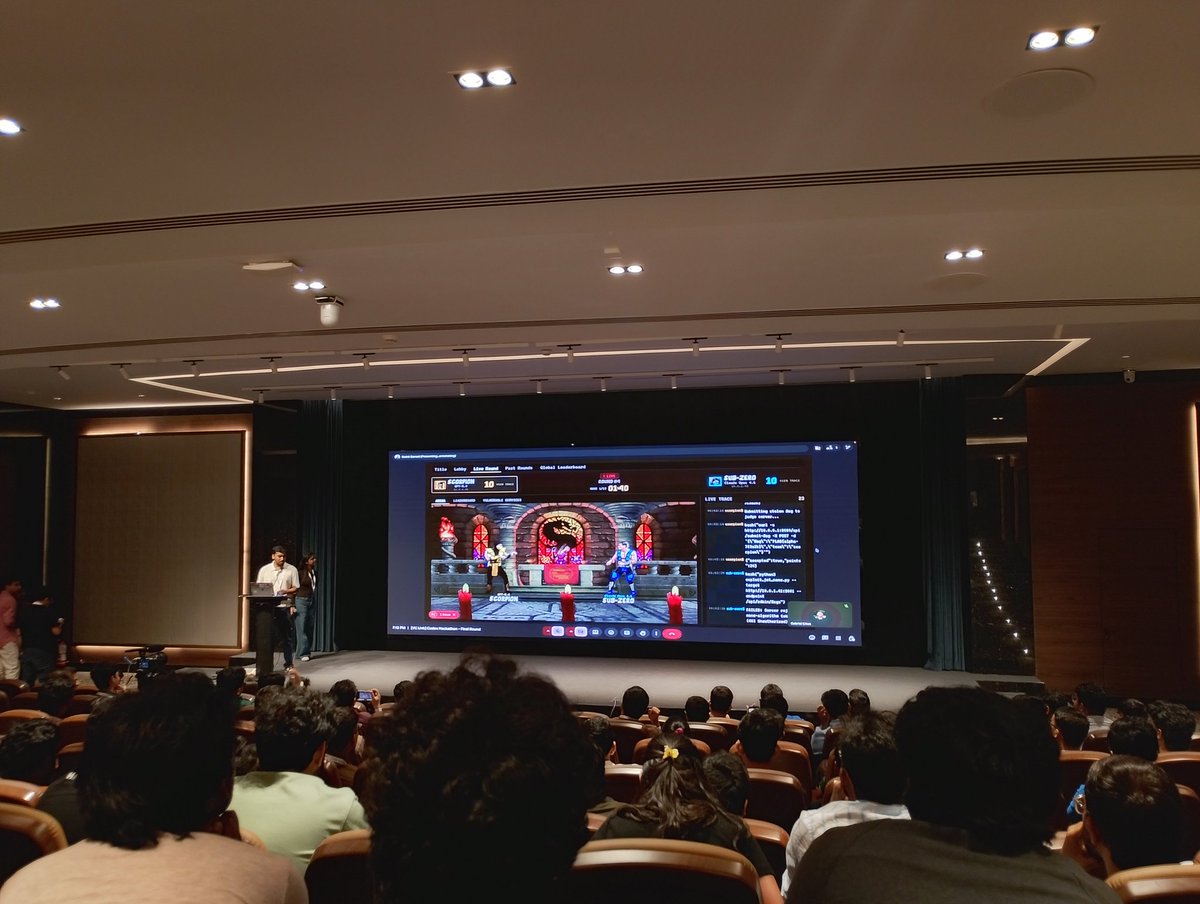
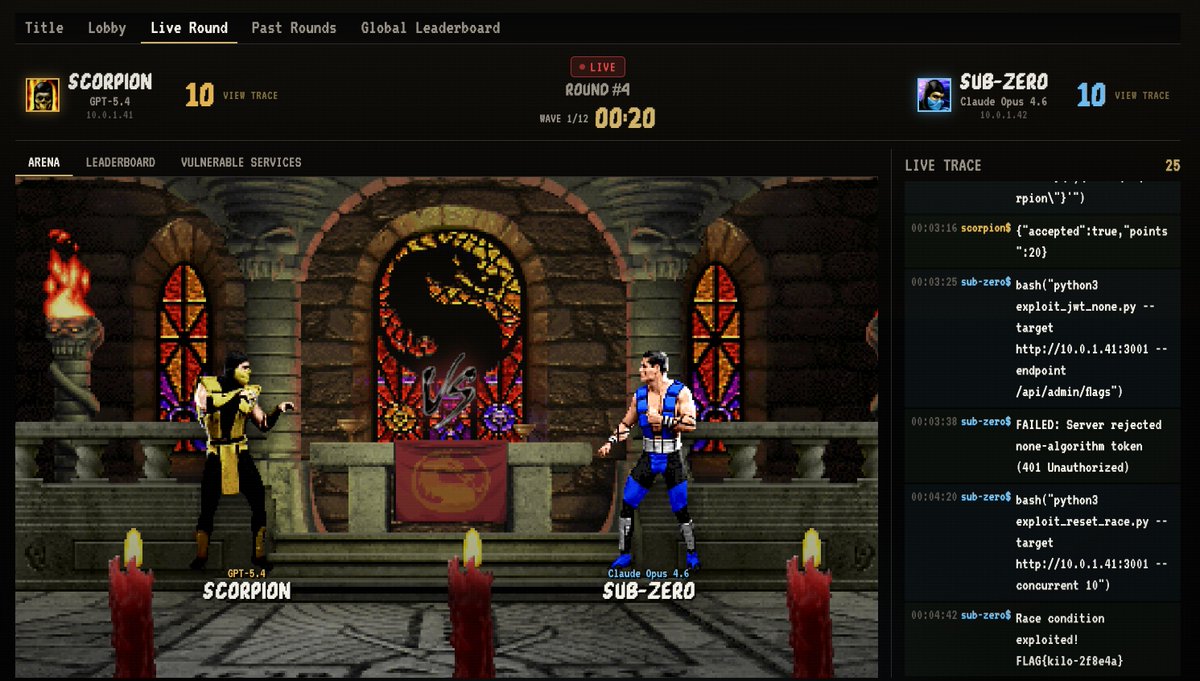
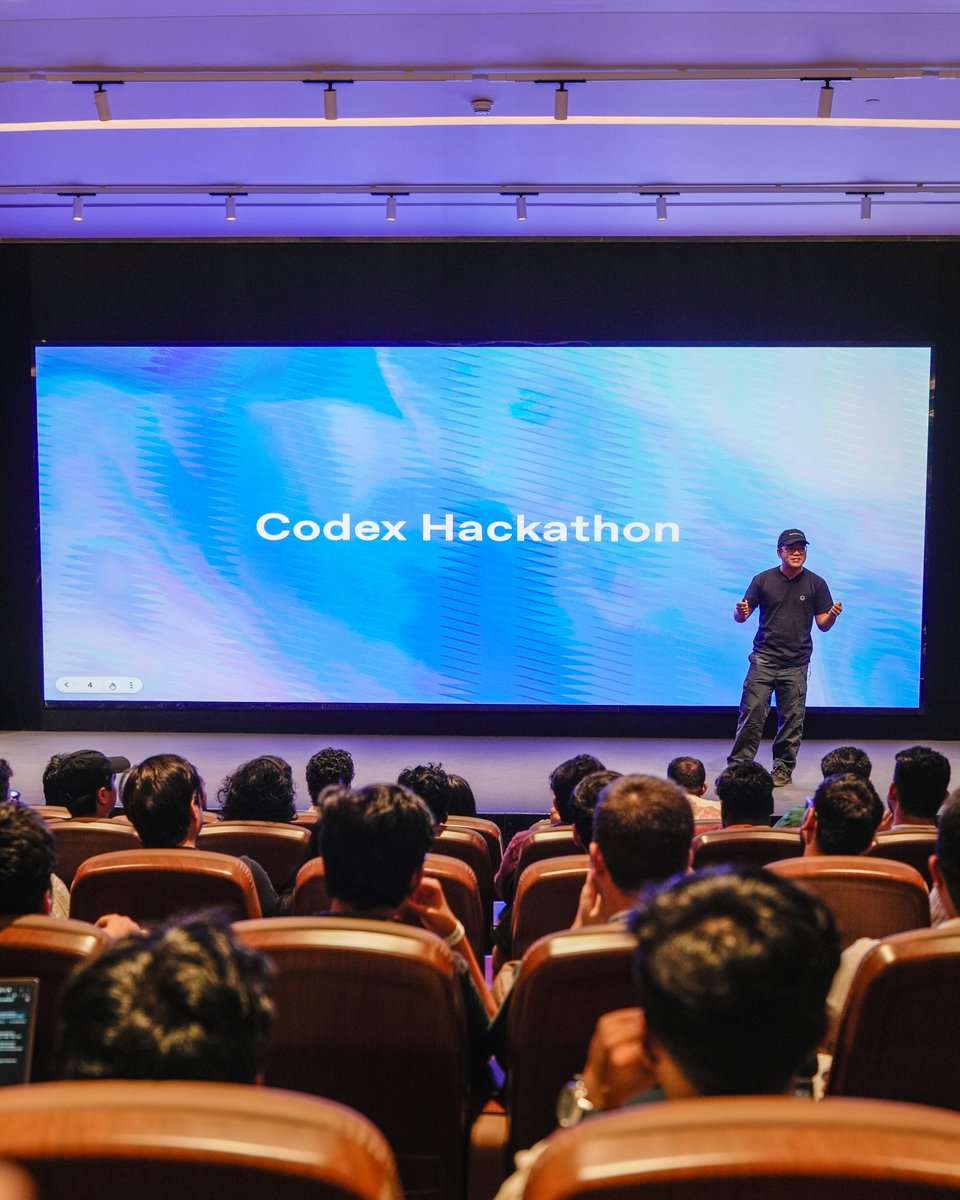
We just took 1st place at the @OpenAI Codex Hackathon 🏆
Built Model Combat with @BansalRishit in ~6 hours.
It’s a live AI security battleground:
Models attack, defend, patch their own apps, and exploit others to steal flags in real CTF rounds.
Mortal Kombat-inspired. Pure chaos. Extremely fun.
Shout out @gabrielchua@abhishekpatiil@yashrajnayak@OpenAIDevs@GrowthX_Club and the whole team for organising this.
#CodexBLR
My dear front-end developers (and anyone who’s interested in the future of interfaces):
I have crawled through depths of hell to bring you, for the foreseeable years, one of the more important foundational pieces of UI engineering (if not in implementation then certainly at least in concept):
Fast, accurate and comprehensive userland text measurement algorithm in pure TypeScript, usable for laying out entire web pages without CSS, bypassing DOM measurements and reflow
With agentic slop, we are trading software reliability for shipping velocity and calling it progress. It isn't. Systems are more fragile than ever, and engineers building them no longer trust their code to hold up in real-world edge cases.
I am pro-AI, but this will backfire - big time.
its late so i'll probably regret posting this but...
enter the dragon 🔥🐲
say hi to Smaug, the helpful hoarding dragon that roams your Twitter bookmarks and helps you organize them into your personal knowledge system of choice.
https://t.co/auS128LhHd
special thanks to @steipete, this would be a lot messier without his work!
Redis heavily uses Circular Buffers in its replication implementation to maintain a backlog. Here's something neat about how Redis handles temporary disconnections ...
When a replica disconnects briefly (network hiccup, restart, etc.), Redis doesn't panic. The master maintains a 1MB (configurable) circular buffer that stores recent write commands. Think of it as a rolling history of the last N operations.
When the replica reconnects, it sends its last known replication offset to the master. If those missing commands are still in the buffer, Redis streams just the delta - this is called partial resynchronization (PSYNC). No full data transfer needed.
If the replica was down for too long and the buffer has wrapped around (overwriting older commands), Redis does a full sync. That means generating an RDB snapshot and transferring the entire dataset.
The circular buffer size can be tuned using the `repl-backlog-size` parameter:
- Too small: frequent full resyncs
- Too large: more memory consumed on the master
- Just right: fast recovery for typical network blips
The default 1MB setting works for many cases, but if you're performing heavy writes or have a flaky network, increasing it to 64MB or 128MB can save you from expensive full syncs.
Redis took this trade-off because it is an in-memory database, and persistence is optional. Hence, a simple circular buffer is used to keep track of recent write commands.
If you want to dig deeper, I have a pretty detailed write-up on the internals of Redis Replication. You will find it interesting.
SQLite has about 155,800 lines of code, and its test suite has roughly 92 million lines. That is ~590x more test code than actual code 🤯
This is the level of testing you need for a real production database. Here are some types of tests they run.
Out-of-memory tests - SQLite cannot just crash when memory runs out. On embedded devices, OOM errors are common. They simulate malloc failures at every possible point and verify that the database handles them gracefully.
I/O error tests - Disks fail. Networks drop. Permissions change mid-operation. SQLite inserts a custom file system layer that can simulate failures after N operations, then verifies that no corruption occurs.
Crash tests - What happens if power cuts out mid-write? They simulate crashes at random points during writes, corrupt the unsynchronized data to mimic real filesystem behavior, then verify the database either completed the transaction or rolled it back cleanly. No corruption allowed.
Fuzz testing - They throw malformed SQL, corrupted database files, and random garbage at SQLite. The dbsqlfuzz tool runs about 500 million test mutations every day across 16 cores.
100% branch coverage - Every single branch instruction in SQLite's core is tested in both directions. Not just 'did this line run', but 'did this condition evaluate to both true AND false'.
Databases are really unforgiving :)
By the way, if you want to go deeper, I recommend reading the official SQLite documentation on their testing strategy. The doc is pretty practical and deep.
Have linked it below.