AMPHORA will revolutionise quality assurance and treatment follow-up in radiotherapy by maximising tumour irradiation with a minimum damage to healthy tissue.
Each year, advances in #focusedultrasound technology bring us closer to our goal of improving the lives of millions worldwide.
In 2021, we saw the addition of 11 new indications, both in preclinical & in #clinicaltrials.
Learn more ⬇️ https://t.co/MZipffrnNc
The AMPHORA closing meeting included a discussion on the future of AMPHORA, where the technical advisory board and the patient group representative provided helpful advice on future target indications and target applications.
Have you checked out our feasibility study on proton range verification with #ultrasound imaging using injectable radiation sensitive #nanodroplets?
https://t.co/RIkxWUCnyk
It's here: estimation of #quantitative_ultrasound parameters — attenuation and backscatter coefficient.
We proposed a linear least squares method to perform fast and accurate coefficients’ estimation.
https://t.co/LQhWWT0UOJ
We transitioned to real-time high-frame-rate #ultrasound_imaging during irradiation in a #proton_beam to detect individual vaporization events and localize them with an accuracy beyond the ultrasound diffraction limit. https://t.co/Mjr6sCRHNk
A significant challenge within AMPHORA was reaching an optimal radiation response; our contrast agents required temperatures of around 50 °C, 13 °C higher than body temperature. This was technically complicated to achieve and unsafe for patients. Solution: https://t.co/0MrpGXsxGi
#Ultrasound_contrast_agents are a possible candidate for radiation dose monitoring. We investigated the size distribution and #acoustic_response of two commercial formulations, SonoVue/Lumason and Definity/Luminity. https://t.co/dyWMUqjl69
Our #neural_network called BubbleNet overlays the vaporisation distribution on #ultrasound images of the patient’s anatomy. Viewable on a screen by clinicians, this helps them see where, and in what quantities, irradiation is being delivered.
https://t.co/kgiiTcbbO5
#Quantitative_ultrasound methods aim to estimate the acoustic properties of the underlying medium. Check out our advanced method for attenuation estimates: https://t.co/RZT5IE28Rb
#tissue_characterization
Improving #radiotherapy.
Ground-breaking potential of polymer-shelled PFB nanodroplets to enable in vivo carbon ion dosimetry and range verification.
https://t.co/xmzZJBgOxU
Better #cancer treatment is on its way.
AMPHORA's outcome now described in the ‘Results in Brief’ section of the European Commission’s CORDIS website. @CORDIS_EU see https://t.co/Zgtf6BXlHH
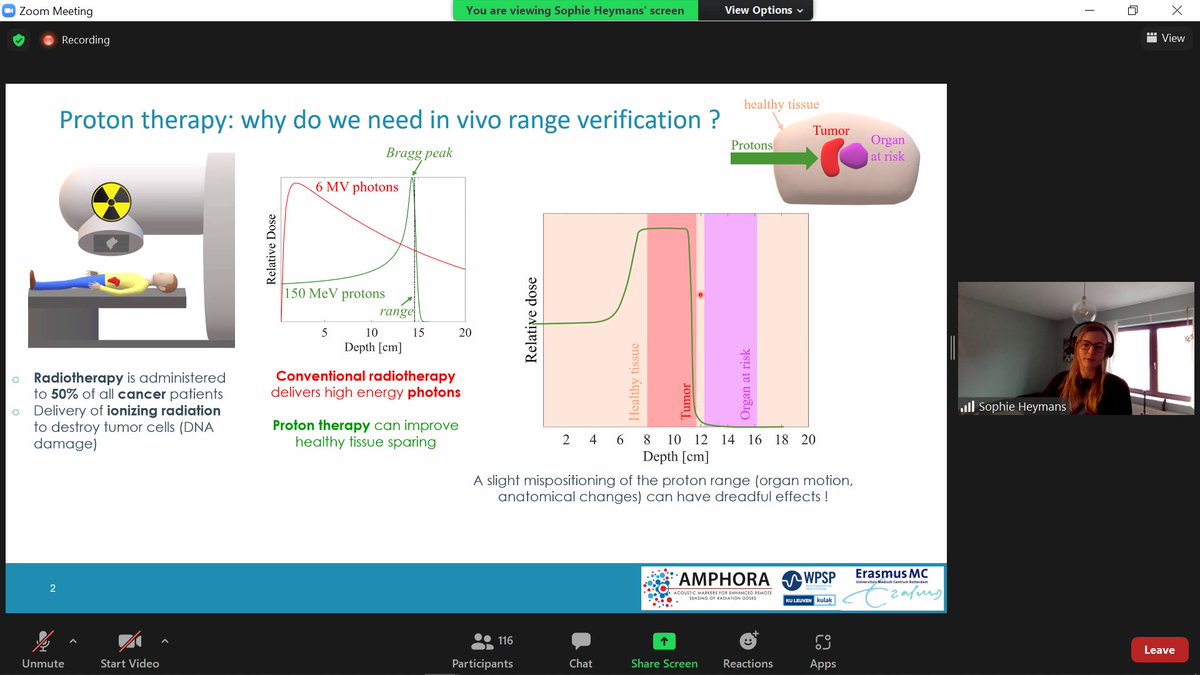
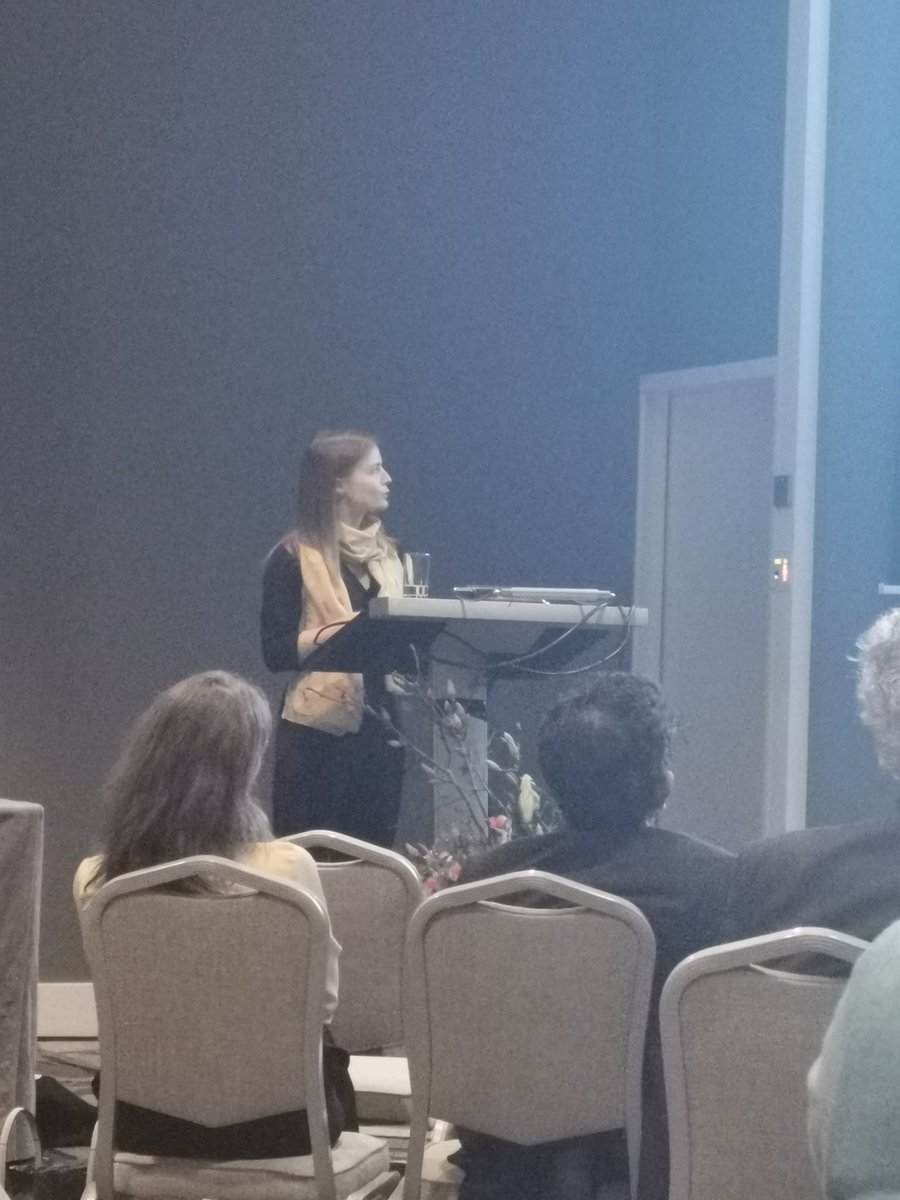
Sophie Heymans shared her exciting research on acoustic modulation of the degree of superheat and how it enables nanodroplet vaporization by protons at body temperature at the 27th European Symposium on Ultrasound Contrast Imaging hosted by ErasmusMC, NL.
Wonderful news! Proof of concept successfully tested at physiological temperature: nanodroplets were vaporised into gas-core bubbles using proton radiation and were detected with ultrasound. Ultrasound contrast correlated to proton range. https://t.co/NhmA9oP0Z6
Find out how Fraunhofer IBMT has developed a platform with 1024 parallel transmit and receive channels for real-time volumetric ultrasound research. It will firstly be used for therapy monitoring by tracking radiation-sensitive ultrasound contrast agents.
https://t.co/n2snkowfdF