Kehidupan kita ini tiada yang sempurna, setiap perjalanan adalah ketentuan dariNya. Oleh itu, setiap perbezaan bukan ruang untuk menghina, setiap kekurangan bukan peluang untuk mencaci, dan setiap kelemahan bukan lapangan untuk mengeji.
A speaker asked PhD students: “How long is a PhD?”
Most people answered: 3-5 years, 48 months etc.
"Stop thinking of it in years or months." She said.
"..think in weeks..
That is where your time actually goes."
This applies to any academic project.
- thesis.
- paper.
- grant.
- conference abstract.
- research report.
Most people plan the final deadline.
Very few plan the weeks.
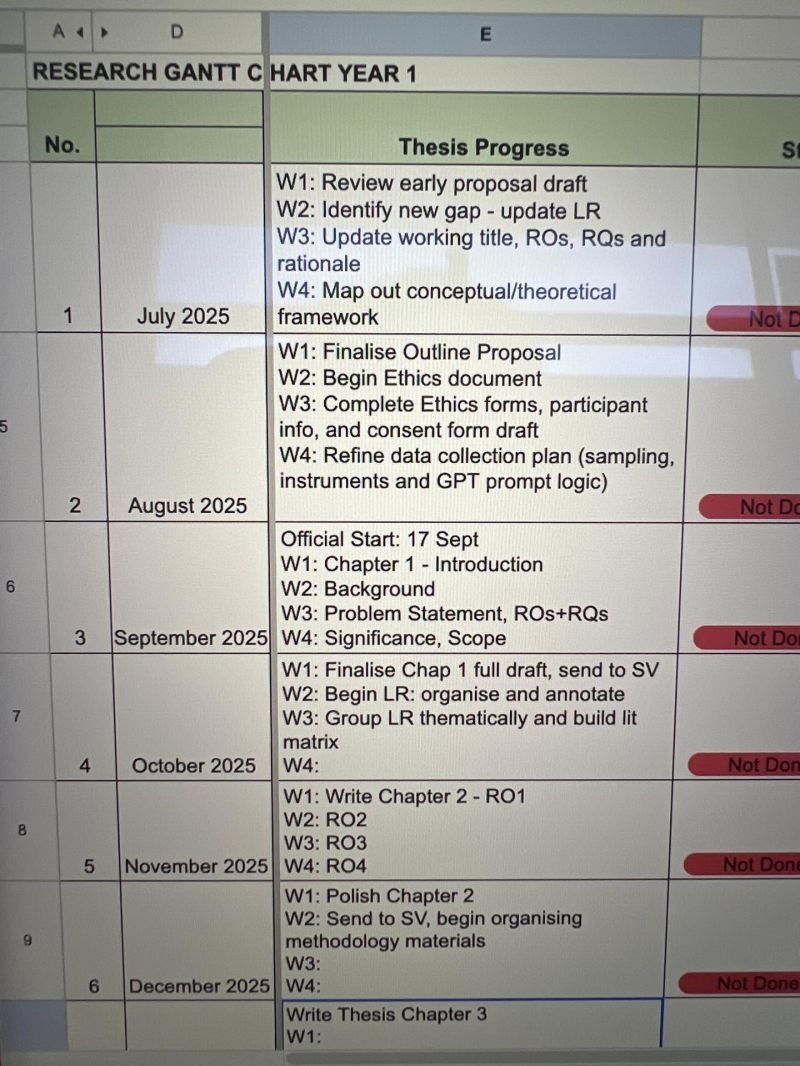
A simple Excel sheet can fix a lot of this.
Make 3 columns:
- Week
- Main task
- Status
Then break the project down like this:
Week 1: finalize topic
Week 2: organize key readings
Week 3: write outline
Week 4: draft first section
Week 5: revise argument
Week 6: send for feedback
Week 7: edit based on comments
Week 8: prepare submission
Nothing fancy.
But suddenly the project is not one big scary thing.
It is just this week’s task.
And that makes it much easier to see when you are falling behind.
I've started to not only ask myself:
“When is this due?”
But also:
“What needs to be done by Friday?”
-----------------------
Useful find? Pass it on!
🔄 Retweet
Receive exclusive FREE tips on using AI in research ⤵️
🔗 in bio
& follow + 🔔
I test AI tools to simplify your research & analysis
(& 𝘤𝘰𝘯𝘥𝘶𝘤𝘵 𝘵𝘳𝘢𝘪𝘯𝘪𝘯𝘨𝘴 𝘰𝘯 𝘵𝘩𝘦𝘮)
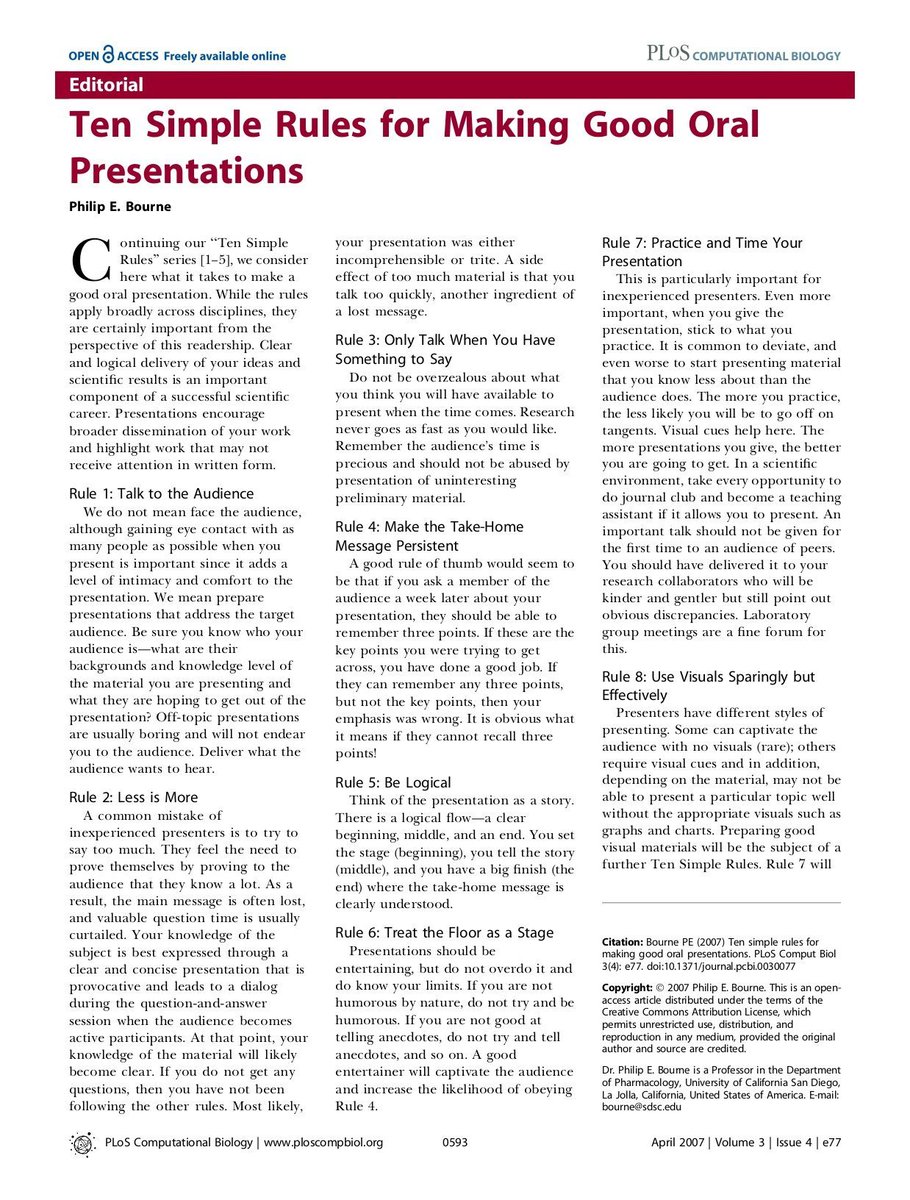
Instead of watching an hour of Netflix, watch this 2 hour hour Stanford lecture will teach you more about how LLMs like ChatGPT and Claude are built than most people working at top AI companies learn in their entire careers.
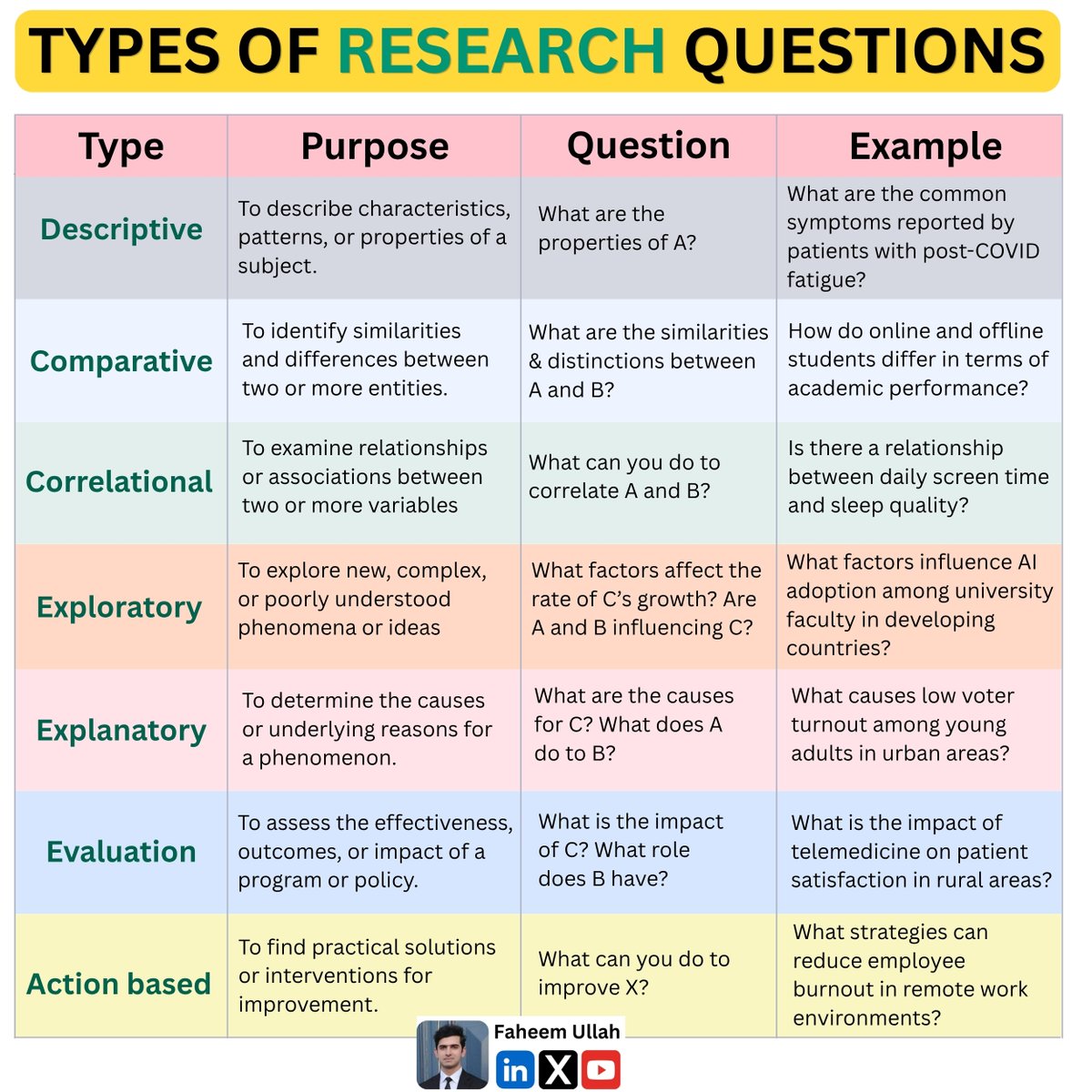
7 types of research questions every researcher must know
1 - Descriptive research questions
2 - Comparative research questions
3 - Correlational research questions
4 - Exploratory research questions
5 - Explanatory research questions
6 - Evaluation research questions
7 - Action based research questions
An MIT professor spent his entire career studying uncertainty.
Before he passed, he condensed everything into a single one-hour lecture.
No jargon. No fluff. Just a simple explanation of how prediction really works.
Soon after, he was gone.
This is that lecture.
The core idea is powerful: Prediction isn’t about being right— it’s about understanding probabilities.
Most will scroll past.
A few will see it and never think the same way again.
Save this.
Instead of watching an hour of Netflix, watch this 2 hour hour Stanford lecture will teach you more about how LLMs like ChatGPT and Claude are built than most people working at top AI companies learn in their entire careers.
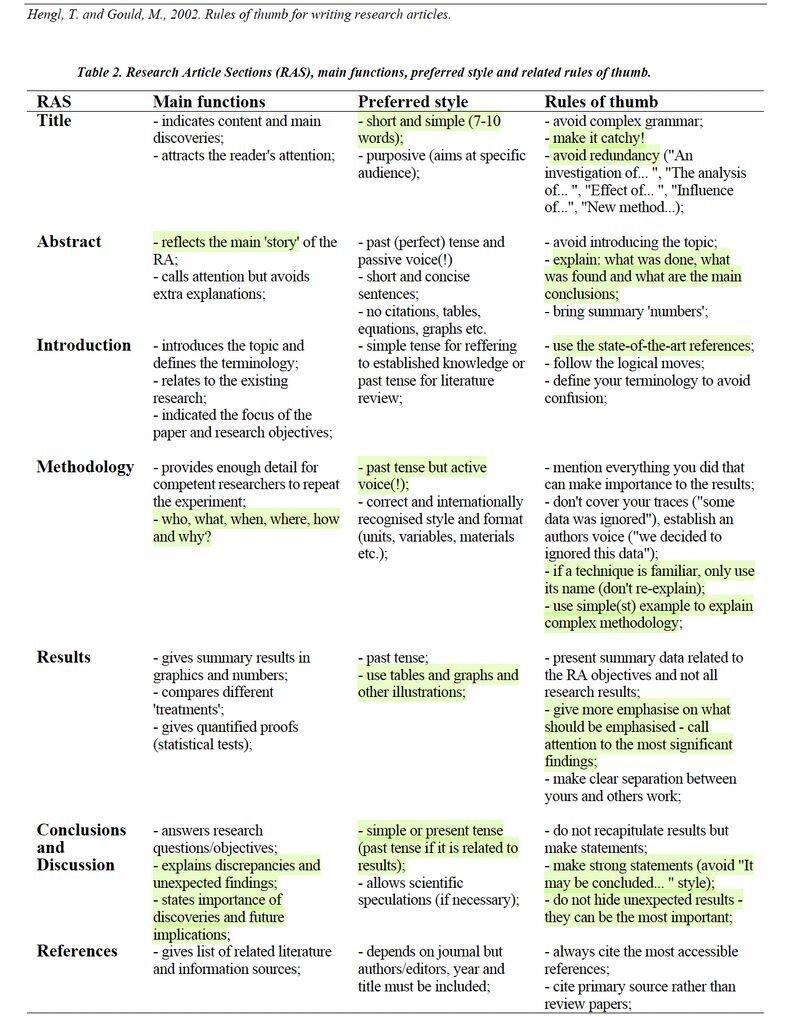
Golden rules for writing research that gets published
Save it for your next manuscript & Retweet to help your network!
— Pick concrete words over abstract ones
— Write for your readers, not yourself
— Use your natural voice, then polish
— Tell a focused story - stay on track
— Own your work and decisions
— Make confident statements
— Cut unnecessary words
— Keep examples simple
— Stay self-aware
𝗪𝗵𝗮𝘁'𝘀 𝘆𝗼𝘂𝗿 𝘁𝗼𝗽 𝘁𝗶𝗽 𝗳𝗼𝗿 𝗰𝗹𝗲𝗮𝗿 𝗿𝗲𝘀𝗲𝗮𝗿𝗰𝗵 𝘄𝗿𝗶𝘁𝗶𝗻𝗴?
----------------
𝗙𝗼𝘂𝗻𝗱 𝗶𝘁 𝘂𝘀𝗲𝗳𝘂𝗹?
🔄 Retweet (& like)
+ follow + 🔔
I test AI tools to simplify your #research & #analysis
(& 𝘤𝘰𝘯𝘥𝘶𝘤𝘵 𝘵𝘳𝘢𝘪𝘯𝘪𝘯𝘨𝘴 𝘰𝘯 𝘵𝘩𝘦𝘮)
Your literature review does not need 200 papers. It needs 30.
The right 30. In the right order.
Most PhD students spend a year learning this the hard way.
A weak discussion section can make a solid study look intellectually shallow. A strong discussion section should do at least 5 things well:
A lot of researchers think the discussion section is where you:
→ repeat the results
→ add a few references
→ mention limitations
→ write “more research is needed”
That is not enough.
The discussion section does something much more important:
It tells the reader where we now are on the road of science because of this study.
That is a much higher standard.
A strong discussion section should do at least 5 things well:
1️⃣ Show what the study actually taught us
Not what you hoped it would show.
Not what sounds exciting.
What did we genuinely learn?
2️⃣ Place the findings in context
How do the results fit with:
→ past research
→ current evidence
→ the wider direction of the field?
3️⃣ Avoid two common traps
The paper is clear about these:
→ overplaying significance
→ underplaying useful lessons
Both weaken the credibility of the paper.
4️⃣ Help the reader understand the real contribution
Most studies move knowledge forward only incrementally.
That is fine.
But the author must show how far the study moved the field, if at all.
5️⃣ Give grounded recommendations
Not dramatic claims.
Not casual leaps into practice.
Recommendations should be realistic, justified, and proportionate to what the study actually did.
That is what makes a discussion section strong.
Helping the reader answer one serious question:
What changed in our understanding because of this study?
That, to me, is the real work of a discussion section.
⸻
💬 What do you think weakens a discussion section faster: repeating results, overclaiming significance, or vague recommendations?
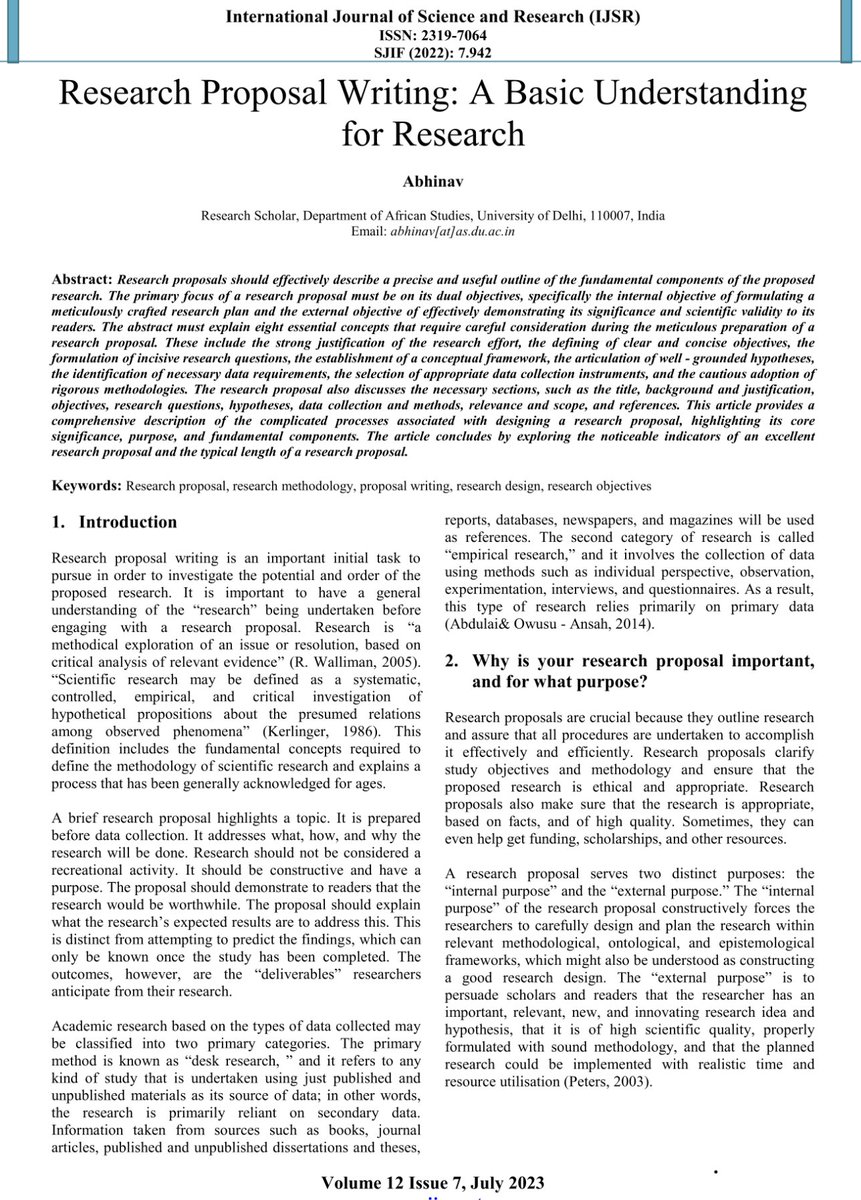
I used to treat research proposal like paperwork.
A box to check before the "real" research begins.
That's backwards!
Your proposal IS the research.
At least the thinking part of it.
Your proposal has two jobs:
- One faces inward (forcing YOU to think clearly about your design).
- The other faces outward (convincing a reviewer that this work matters and you can pull it off).
Most researchers only write for one audience.
The good ones write for both.
Now, here's my rough checklist:
- Does the title tell me exactly what this study is about in under 15 words?
- Can I explain the research gap to a friend over coffee without losing them?
- Are my objectives using verbs like "determine" or "compare", not "understand" or "explore"?
- Do my research questions pass the "so what" test?
💬 what would you add?
Page: 1/4
Every strong thesis I've examined follows the same structural logic.
Every weak one invents its own.
After examining 45 theses, that is a pattern I cannot unsee.
Panduan Niat Puasa Enam Syawal & Puasa Qada
Rebutlah ganjaran besar yang dijanjikan bagi mereka yang berpuasa enam hari di bulan Syawal, sebagai kesinambungan ibadah selepas Ramadan.
Semoga perkongsian ini membantu dan memudahkan urusan ibadah kita semua.
#ustazwadiannuar #uwakongsi