“DAD, HOW GOOD WAS PAT MCAFEE
IN HIS PRIME ON THE #COLTS?”
The most entertaining punter in football history; @PatMcAfeeShow… was a legit football player.
🥹🥹�
When 102-year-old World War II veteran Wally King asks you to have a beer at the Stop Bar in Sainte-Mère-Église in Normandy, you have a beer (or two) with Wally King at the Stop Bar in Sainte-Mère-Église in Normandy. What an honor! Wally flew 75 combat missions in the Second World War in P-51 Mustangs and P-47 Thunderbolts. He was shot down in April of 1945, parachuting out of his P-47 over Germany and becoming a POW before then evading both German and Soviet forces on his way to freedom. Legend!
I’ve been fortunate enough to travel to Normandy with Wally three times for D-Day commemoration events with the Best Defense Foundation over the past few years. We always have a blast! 🇺🇸
📍 Indianapolis Indiana | Carmel High School’s indoor facility is better than a number of NFL and Division I football facilities I’ve seen. Absolutely first class.
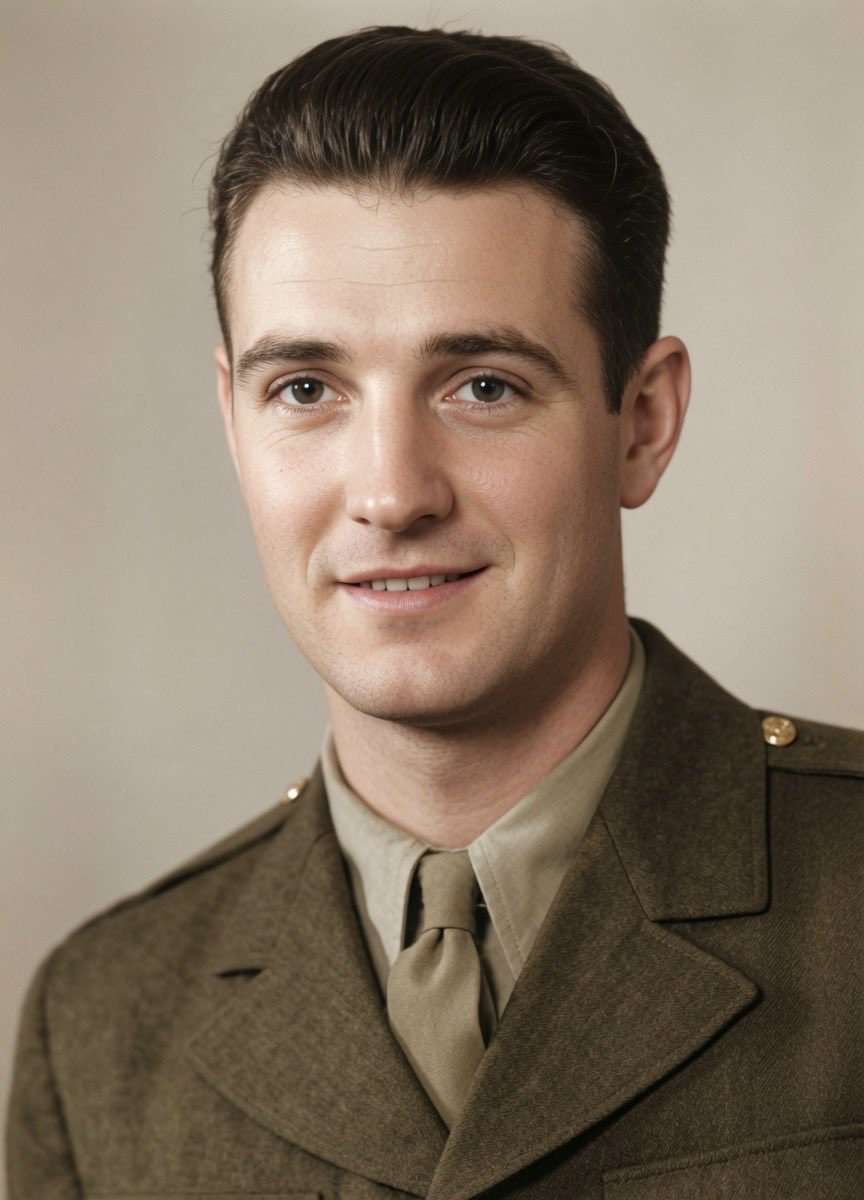
🇺🇸 Most Badass Americans You Don’t Know D-Day Edition: John J. Pinder Jr.
Technician Fifth Grade John J. Pinder Jr. landed on Omaha beach on his birthday. He didn’t make it off.
Born June 6, 1912, in McKees Rocks, Pennsylvania, Joe Pinder was the oldest of three children. His father worked in the steel industry.
He graduated as valedictorian of Butler High School in 1931.
Pinder spent the next several years as a right-handed pitcher in the minor leagues.
He played six seasons in the farm systems of the Cleveland Indians, New York Yankees, Washington Senators, and Brooklyn Dodgers.
In 1941 he won 17 games and was still chasing a shot at the major leagues when the war came.
He entered the Army in January 1942 after Pearl Harbor.
Assigned as a radio operator with the 16th Infantry Regiment, 1st Infantry Division, he fought in North Africa and Sicily.
In Sicily he earned a Bronze Star for staying at an observation post under fire.
On June 6, 1944, Pinder landed with the first waves on Omaha Beach on his birthday.
Communications were shattered. His job was to get a working radio ashore.
He made it off the landing craft. They were 100 yards off the beach.
Then he was hit. A round tore into his face after only a few steps off the boat.
Pinder held the torn flesh of his face together with one hand, carried the radio with the other, and delivered the radio to his unit, while wading thru waste deep water.
That should have been enough. It wasn’t.
Weakened and bleeding, he turned around and went back into the surf and fire three more times to salvage communication equipment.
He even recovered another workable radio.
On the third trip machine gun fire hit him again, this time in the legs.
Still he kept going.
Weakening but exposed on the beach, he helped get the radios working so the men around him could call for support.
While doing so, he was hit for the third time and killed.
Medal of Honor. Posthumous.
It was presented to his father on January 26, 1945.
Pinder was initially buried in Normandy.
In 1947 his family brought him home to Grandview Cemetery in Burgettstown, Pennsylvania.
He was the only professional baseball player awarded the Medal of Honor in World War II.
John Pinder is an American Badass
Thank you, John! 🫡🇺🇸
Eighty-two years ago today, freedom stood on the edge of extinction, and Allied forces stormed into hell to help save the world.
We will never forget the courage, the sacrifice, and the blood spilled on that fateful day.
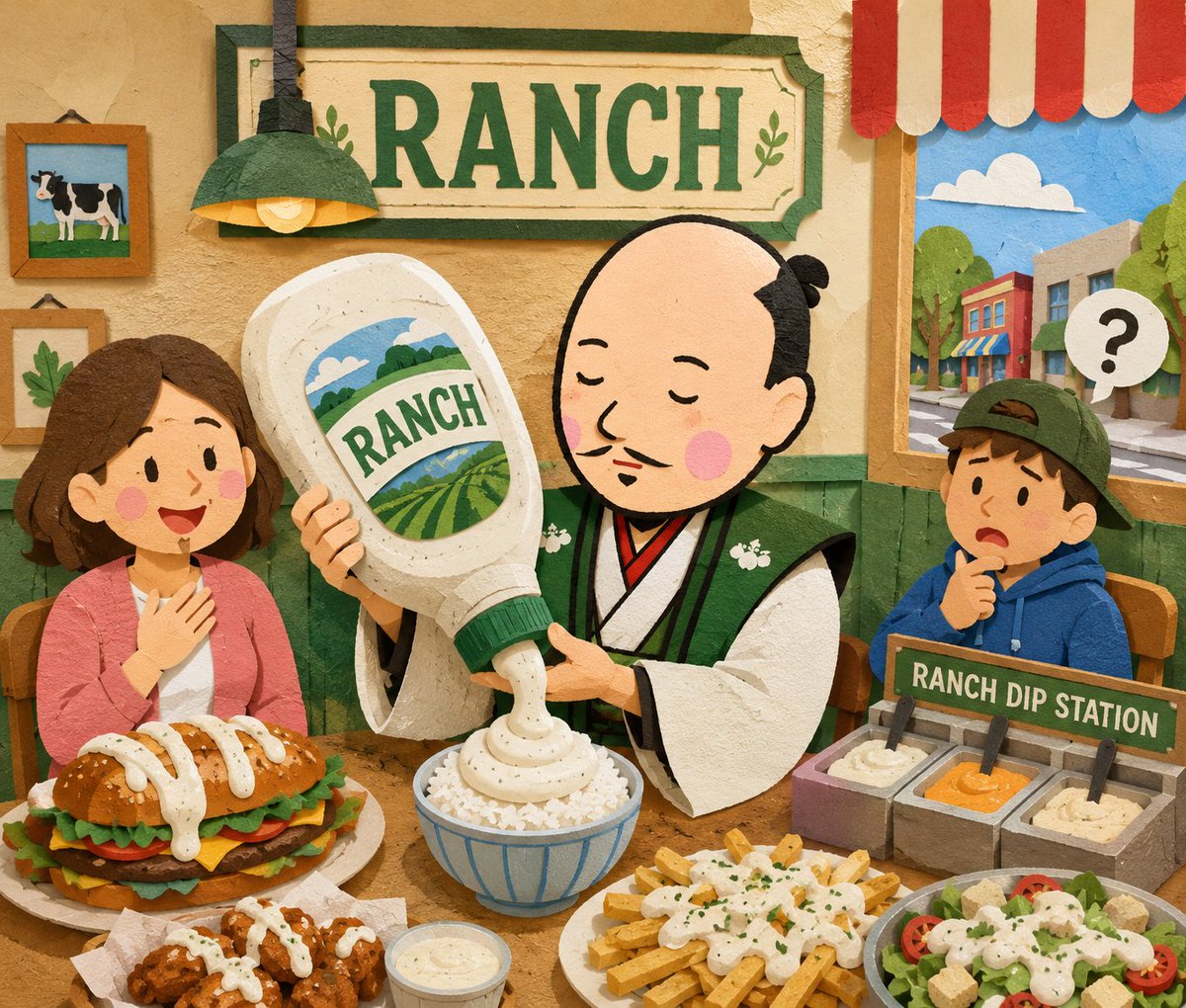
USA. There is a white sauce here that the people pour upon everything, with the devotion of a sacred rite. I have become a believer.
I noticed it slowly. A bowl of it beside the vegetables. A cup of it beside the bread. Beside the meat. Beside the other sauce. Children dipped fruit in it. A grown man beside me poured it onto a slice of pizza that already had a sauce of its own, closed his eyes, and sighed like a man coming home.
I asked its name. They told me with a small reverence: ranch.
For it is written that every great people anoints its food with one sacred thing — a drop of gold pressed from olives, a paste of beans aged in cedar. This nation has chosen a cool white elixir, and it anoints not one dish but all dishes, holding nothing back. For to leave a single food unblessed would be the deeper impiety.
So I anointed. Everything. The vegetable, yes. But also the rice. The egg. The morning fish. I would not be the one barbarian who left his plate unblessed while a whole nation dipped in joy around me.
And here my heart rose, and I declared the thing a calmer man would not:
"I will pour this holy elixir upon every food beneath the heavens — the noble and the humble, the savory and the sweet — until I find the one dish it cannot improve. And on that day I will know I have reached the very edge of the world, for everything within it has been made better by ranch."
The teenager refilling the dip station watched me anoint a bowl of rice.
"...that's a lot of ranch, my guy."
"It is the correct amount," I told him, "for a god."
I have not yet found the dish it cannot improve. I have stopped looking. So I brought a great vat of it to the next gathering and set it at the center of the table, and the whole room descended upon it with cries of joy, and a woman I had never met looked at me and said, "okay — YOU get it."
I have never felt more accepted.
So tell me, America.
You call it ranch. A condiment. A thing on the side.
I call it the one sauce a whole nation agreed to love together —
and I dip, with all of you,
gladly.
We're not stopping with the Bears. We're heading to Cincinnati tomorrow to see how the Batesville Bengals sounds to them. We are Indiana. We are a football state. We are unstoppable.