The crisis in Crimea continues, with conditions worsening. After Crimea's occupation head, Sergey Aksyonov, claimed steps were being taken to address the situation in a recent Telegram post, hundreds of locals flooded the comments, challenging his narrative. 🧵Translations:
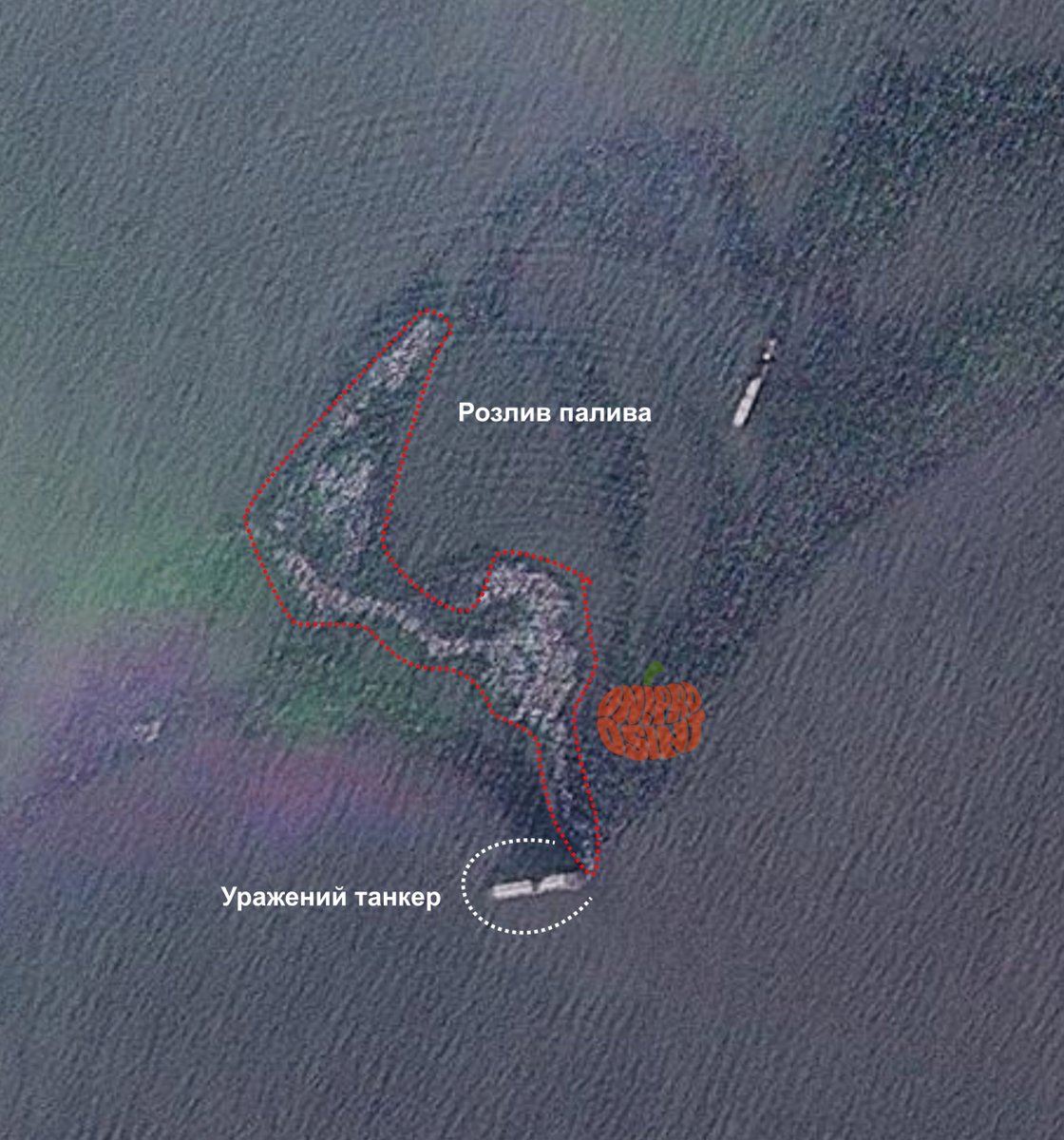
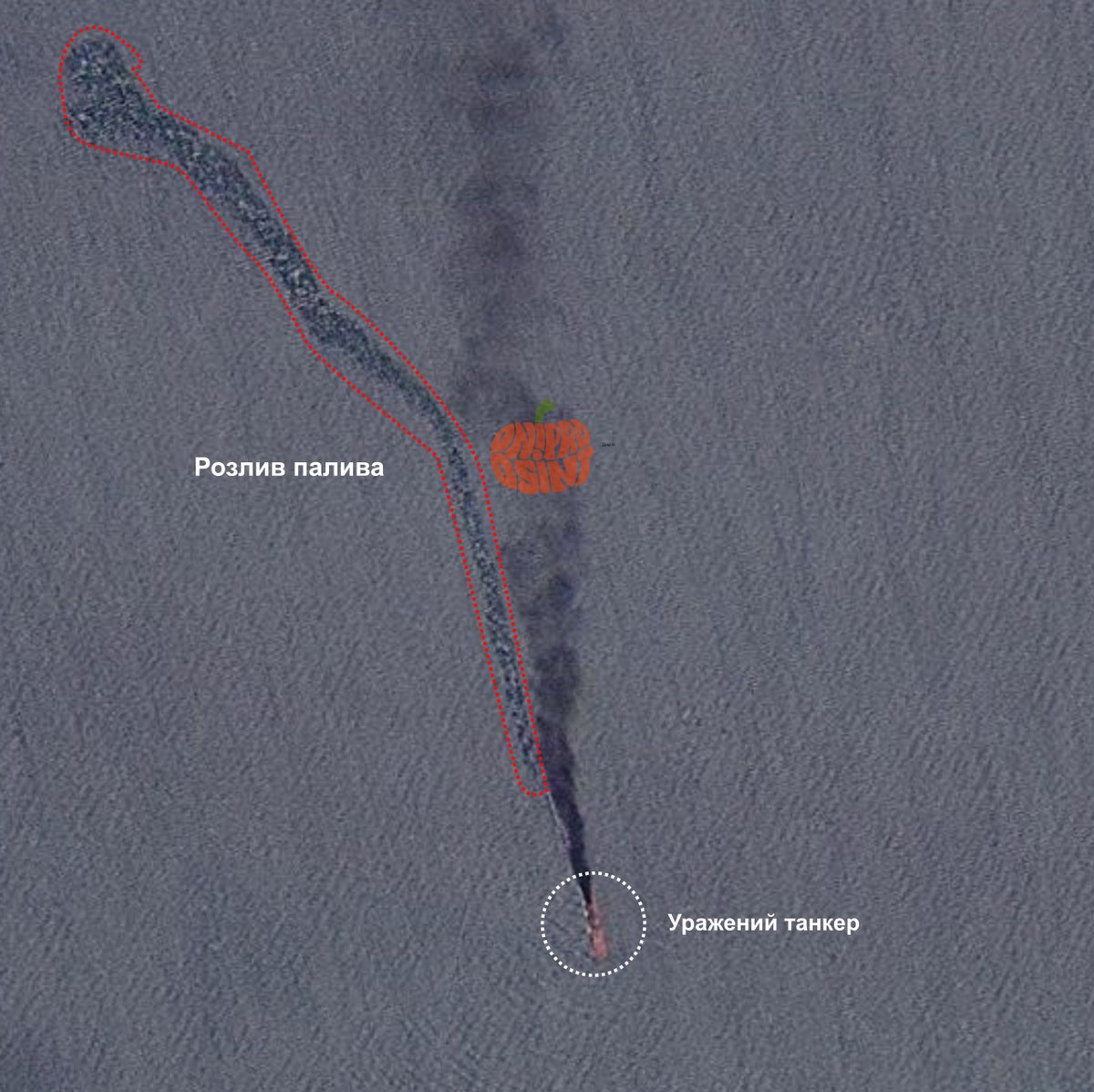
Unmanned Systems hit 15 vessels last night, 7 tankers, 5 dry cargo, 2 tugs and one ferry.
Some repeats are noticable such as the SKS One ferry which has been hit multiple times in Kerch.
Also nine substations across Crimea
Another day of russia's human safari in Kherson.
A man was simply smoking in the yard of his own home.
A russian drone operator chose to kill him.
No battlefield. No military target. Just the systematic hunting of civilians.
This is everyday life in Kherson.
📽 andry_boxer
Fresh footage from the night of July 11 in the Azov Sea shows the successful engagement of another 28 ships. In total, 76 vessels were hit between July 6 and 11.
A devastating blow to Russia's merchant fleet in the Azov and Black Seas and its ability to transport oil products, delivered by the UAV units "Kairos," "Ptakhy Madyara," "K-2," the 1st Center, "Raid," "Nemesis," and "Rarog."
Morning footage shows the aftermath of the strike on the oil depot in Azov, Russia’s Rostov region. The facility remains on fire, with protective netting visible around parts of the site but failing to prevent the damage. #Ukraine
Ukraine’s Unmanned Systems Forces said their drones struck 48 Russian vessels near Crimea over 120 hours. Thirteen were hit overnight on July 10: 10 tankers, a cargo ship, a ferry, and a tug. All identified tankers were part of Russia’s sanctioned shadow fleet. The operation also struck five substations in occupied Crimea and 41 military targets across Crimea and southern occupied territory. #Ukraine
Ukrainian forces are continuing to obstruct Russian shipping in the Sea of Azov and the Black Sea. Last night an additional of 14 ships, most of them fuel tankers, have been hit.
The Russian losses are absolutely staggering.
Nizhnekamsk in Tatarstan, Ufa in Bashkortostan and Saratov, three Russian refineries have been struck in the last 24h alone and are burning.
It is undeniable at this point that Russia is completely losing the drone war. Russian refineries are falling like flies.
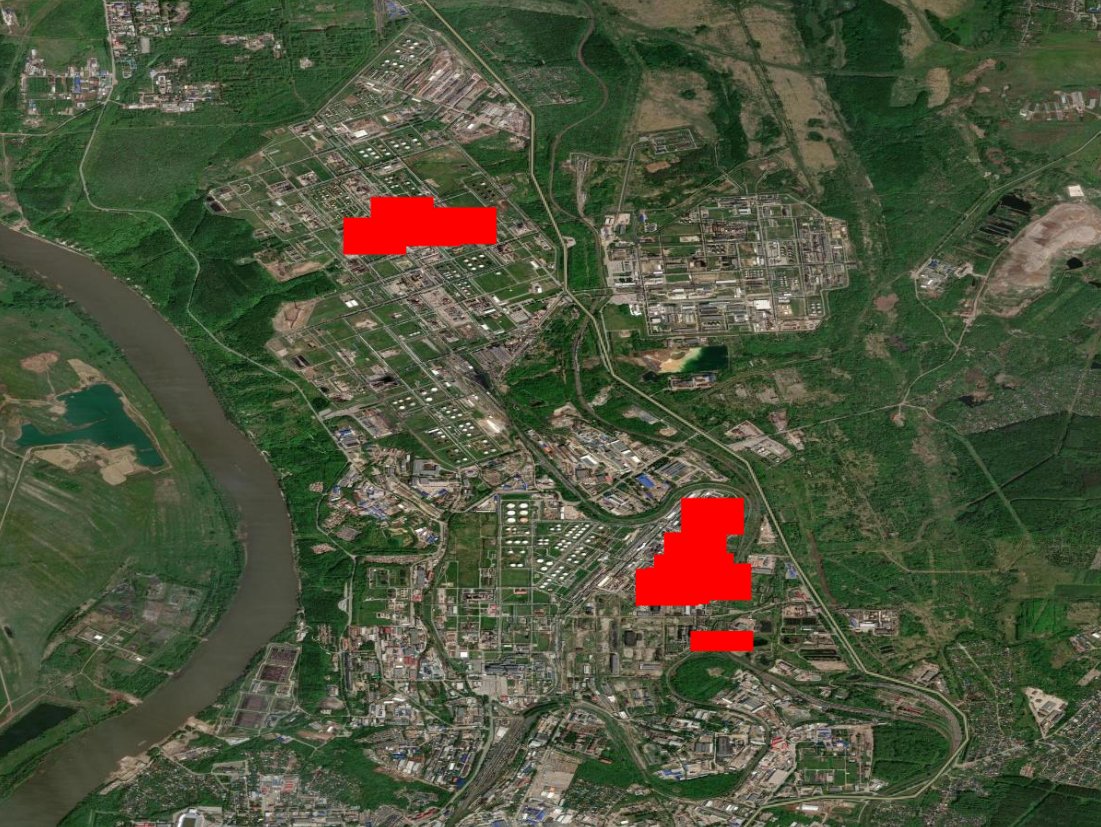
Judging by NASA FIRMS data from all 3 Russian refineries hit by Ukrainian Forces last night, the days of striking one valuable section of an oil facility per night are over.
Satellite imagery confirming multiple hits on each of the Saratov, Nizhnekamsk and Ufa refineries.
❗️Nine more Russian shadow fleet tankers struck in the Sea of Azov last night!
That makes 21 tankers struck within 72 hours: 19 shadow fleet tankers, 1 bulk carrier and 1 ferry.
That is beyond impressive!
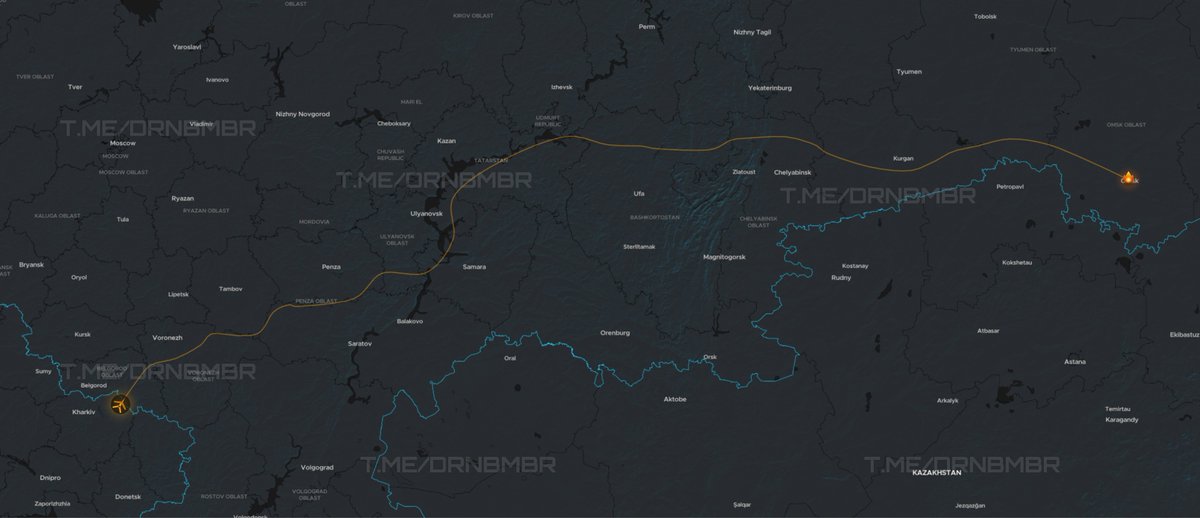
❗️Drone Route to the Omsk Oil Refinery
After analyzing Russian monitoring channels and local chat groups, we reconstructed the following route.
Kazan was the last point where the Russians still had any meaningful air defense coverage and radar tracking. Once the drones passed that area, all information about them disappeared. Russian monitoring channels simply "lost" the drones and from that point onward issued only yellow alerts (potential UAV threat without confirmed tracking). This says a great deal about the actual state of Russian air defenses along the rest of the route.
The drones covered approximately 2,800–3,000 km, depending on the estimate. The strike involved upgraded FP-1 attack drones equipped with redesigned wings that were longer and featured a modified aerodynamic profile.
According to eyewitness reports and available footage, there were seven impacts at the Omsk Oil Refinery, including hits on two distillation columns. Russian forces reportedly deployed an A-50 AEW&C aircraft to provide radar support and a Su-57 fighter in an attempt to intercept the drones. Based on currently available information, only one out of eight drones was shot down.
There was no meaningful air defense around the target. No surface-to-air missile launches or air defense systems were observed in operation—only small-arms fire. The drones approached the facility with little interference, arriving one after another.
Even the protective netting that Russian forces had installed around parts of the refinery proved ineffective.
They were well aware that this facility was a potential target. It was the only major refinery that had not yet been struck and one of Russia's key fuel production sites, supplying many regions across the country. Either they did not believe Ukrainian drones were capable of flying more than 2,500 km, or they placed too much confidence in those protective nets.
I won't go into detail about the route itself. I'll simply say that it reflects a well-planned and carefully executed long-range strike operation. I have not yet seen any detailed Russian analysis of the mission, and there is no reason to reveal our own.
Excellent work. ⚡️