@autocar Can we have crowd funding and a case against higher than normal ethanol blending in fuels. You guys are experts and leaders in field. Why don’t we do a movement against this?
I'm seeing lot of heated discussion between Allopathic Doctors and Indian chess grand master Vidit Gujrathi. This is because Vidit chose to call his family members practicing ayurveda and so on as Doctors. I saw that tweet. It was simply wishing his family members happy Doctors day.
No one forces anyone to trust ayurveda, homeopathy and so on. You may be comfortable with some branches and may be averse to some other. Each to his own.
For 5 years, I was vomiting many times a day. My everyday life was miserable. Saw many Gastroentrologists. They were kind and sincere. But no amount of their treatment was able to cure me. I gave up hope of ever getting cured.
Seeing my severe suffering, a friend referred me to Dr.V.R.Seshadri, an ayurvedic physician in Chennai. Believe it or not, with few ayurvedic medicines, he completely cured me in less than 6 months. My everyday vomiting stopped and has never recurred.
Whether we want to take treatment or not, when Indian Medical Association recognises a stream, it is perfectly fine to call an ayurvedic physician a Doctor.
📘 The 4-Step Approach: A Structured Roadmap for Diagnosing Fibrotic Lung Diseases
This approach was born from clinical challenges I repeatedly faced while interpreting high-resolution CTs in fibrotic lung disease—especially in distinguishing idiopathic pulmonary fibrosis (IPF) from other ILDs. Based on the radiologic classification of usual interstitial pneumonia (UIP), the 4-Step Approach is not just a method; it is a mindset for reading HRCTs with confidence and clarity.
Over the years, I’ve refined this approach into a practical, stepwise process that is now the foundation of my new book and ILD practical course.
⸻
🔍 Step 1: Don’t Miss Honeycombing — Even if Minimal
Subtle honeycombing is easy to overlook but critical to identify. This step alerts the reader to meticulously examine areas for honeycombing, which can be the deciding factor between typical and probable UIP.
Missed honeycombing = missed diagnosis of typical UIP.
⸻
📐 Step 2: Define the Fibrosis Pattern
This step focuses on determining the distribution pattern of fibrosis. Many misinterpret probable UIP as non-UIP simply because honeycombing is absent. This step helps:
•Avoid mislabeling probable UIP as NSIP
•Recognize truly indeterminate for UIP, a commonly underreported but crucial pattern
⸻
🔎 Step 3: Detect Non-IPF Features or Coexisting ILDs
The key question: Could this be something other than IPF, or a coexisting ILD?
Step 3 reminds the HRCT reader to:
•Search for subtle features of alternative diagnoses (e.g., PPFE, HP, Sarcoidosis, NSIP, CPFE)
•Recognize mosaic attenuation, centrilobular nodules, or PPFE patterns
This step often reveals diagnoses mimicking UIP or existing alongside it.
⸻
🧬 Step 4: Look for CTD-ILD Clues
CTD-ILD can present with patterns indistinguishable from UIP.
This final step encourages a focused search for radiologic signs of connective tissue disease, even if not mentioned in the patient history. It:
•Prevents misdiagnosis of NSIP or other fibrosing ILD
•Supports clinicians in identifying autoimmune-related ILDs
•Enhances radiologist–pulmonologist collaboration
⸻
📚 The 4-Step Approach is Not One-Size-Fits-All
It adapts to the variability of ILD cases, helping radiologists think systematically and avoid premature conclusions. Each step builds upon the previous one, reinforcing diagnostic accuracy and confidence.
⸻
🎉 Now Featured in My New Book
This approach is the core of my newly released book:
“Challenging Cases in Interstitial Lung Diseases: A High-Resolution CT Approach”
Available now in print and ebook format.
It includes:
✅ 30 real-life ILD cases with HRCTs
✅ Application of both 4-Step and Expert Approaches
✅ Key radiologic signs and disease breakdowns
✅ Free video access to all 30 cases
⸻
🧑🏫 And Taught in My New ILD Practical Course
This course offers live interpretation of real UIP cases using the 4-Step Approach, with full explanations and take-home lessons. It’s ideal for radiologists and pulmonologists looking to sharpen their ILD reading skills.
Thank you for the support and encouragement that made this journey possible. I hope this approach becomes a valuable tool in your ILD practice, just as it has in mine.
#ILD #Radiology #HRCT #UIP #Pulmonology #Fibrosis #CTDILD #Radiologist #MedicalEducation #BookLaunch #4StepApproach #IPF #LungDisease #HRCTEducation
They were our national carriers
They are close to everyone of us
Disturbed with the tragic accident involving @airindia
Mind with the departed souls, BJMC colleagues and injured ones
Such a sad day for world aviation
Waiting for the official answers
This must be rectified
Pearl : For colistin sensitivity we should always check the method employed. Broth microdilution is the gold🥇 standard.
VITEK2 is not recommended(CLSI) as colistin tends to adhere to plastic most of these systems are not optimised for colistin. Sensitive must be confirmed.
🏆We wish to warmly congratulate Professor Ajay Duseja (Chandigarh, India), who has been honoured with a prestigious EASL Recognition Award for his exceptional contributions to the field of hepatology, particularly in the area of metabolic dysfunction-associated steatotic liver disease (MASLD).
In his words:
"It is a proud moment for me, my family, my department, and my country to receive this award. I am deeply grateful to EASL for this honour. My four decades of service with INASL have enabled me to advance the discipline of hepatology, and I remain committed to working even harder for my country, my institution, my department, and INASL."
@ajay_duseja@AleksanderKrag@DebbieShawcros1
🏆We wish to warmly congratulate Professor Ajay Duseja (Chandigarh, India), who has been honoured with a prestigious EASL Recognition Award for his exceptional contributions to the field of hepatology, particularly in the area of metabolic dysfunction-associated steatotic liver disease (MASLD).
In his words:
"It is a proud moment for me, my family, my department, and my country to receive this award. I am deeply grateful to EASL for this honour. My four decades of service with INASL have enabled me to advance the discipline of hepatology, and I remain committed to working even harder for my country, my institution, my department, and INASL."
@ajay_duseja@AleksanderKrag@DebbieShawcros1
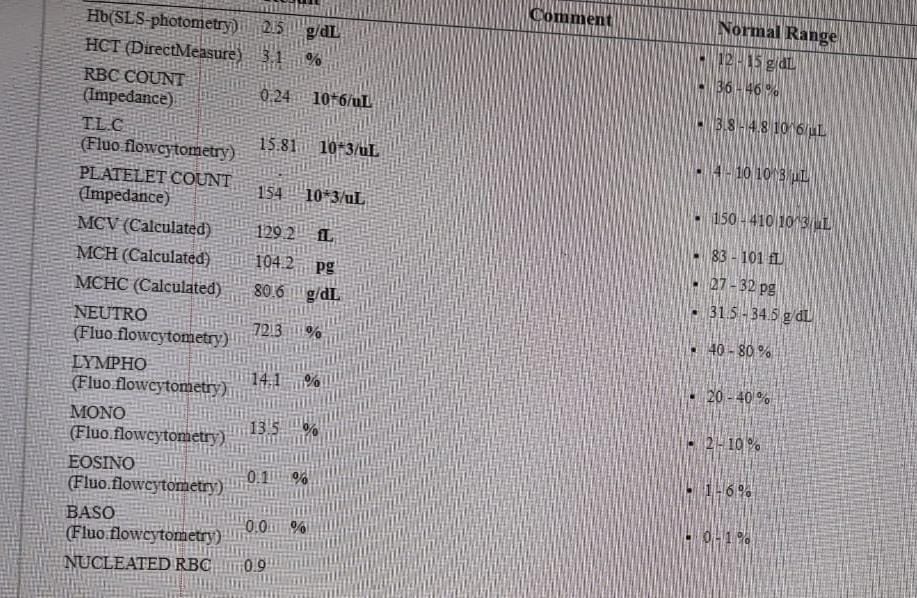
#hemtology 101;
A patient presents with symptomatic anemia; you get a CBC done and found this 👇 ;
If you know the indices well, the diagnosis is almost done (will just need a smear f/b etiological evaluation) ...(1/n)
@rabihmgeha@ASanchez_PS@nihardesai89@WilliamAird4
Do you know what is the average life expectancy of doctors in India?
It's just 59 years!!
Almost 10 years less than the life expectancy of an average Indian!
A thread 🧵
https://t.co/s3S4h2iWF2
Vehicles with larger mass need better braking distance. That s the principle behind limiting speed and a separate slow line. Why don’t you make them aware, make stricter rules while shamelessly collecting such a humongous tax from us. Aren’t you accountable for this? @nitingadkar
HCC 101!
For the longest time, HCC was a bit of a blackbox to me.
So for today’s ROVER presentation, I started off with a 5-slide summary of HCC basics: a 20,000 foot overview.
Sharing here. Short thread 🧵 1/6.