📜 Glorious Past of Nalanda University
"नालंदा विश्वविद्यालय" 📜
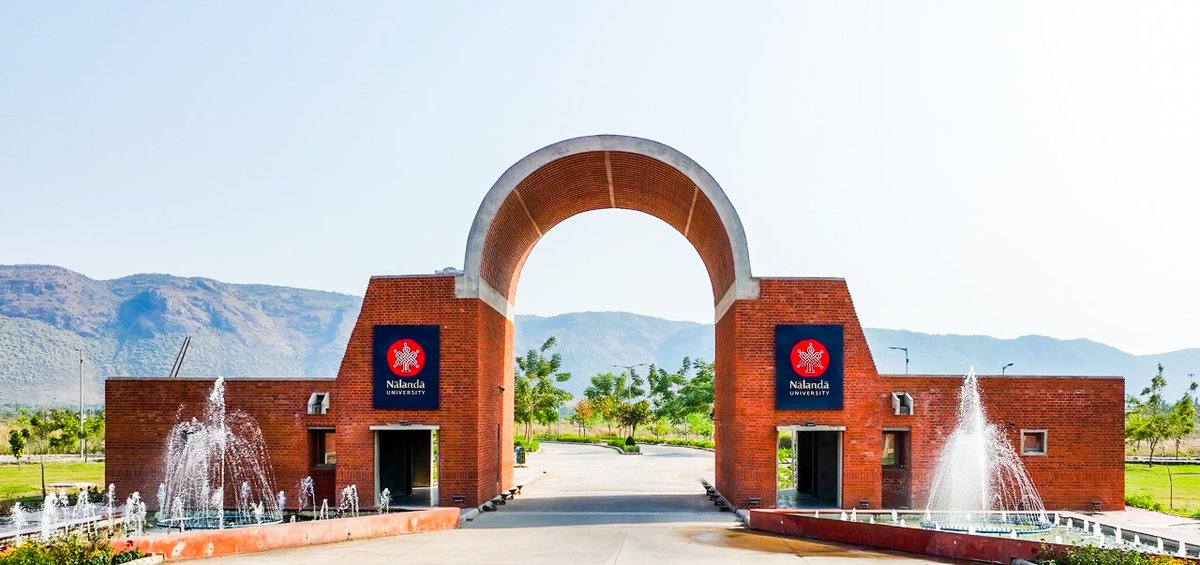
📍 Nalanda University, located in the Indian state of Bihar, is an ancient center of higher learning that has left an indelible mark on the world of education. Established in the 5th century CE during the reign of the Gupta Dynasty, Nalanda is often considered the golden age of Indian history.
📍 The university's origins can be traced back to a legend where 500 merchants purchased the land for 10 kotis (old currency form) of gold pieces and gifted it to Lord Buddha. It was here that Lord Buddha preached under a Pāvārikāmbavana (mango grove of Pavarika) for several years.
📍 Nalanda University flourished for over 800 years, from 427 CE to 1197 CE, and was home to 10,000 students and 2,000 teachers. It was the first residential university in the world, providing accommodation for both students and teachers. The campus had eight separate compounds, 10 temples, meditation halls, classrooms, lakes, parks, and a nine-storey library.
📍 The library, known as Dharmaganja (Treasury of Truth), had the capacity to house an astounding 9 million books and manuscripts. It was a treasure trove of knowledge, attracting scholars from across the world.
📍 Nalanda University was a beacon of knowledge and wisdom, fostering an environment of diverse learning, research, and international cooperation. It was a melting pot of cultures, with students from countries like Korea, Japan, China, Tibet, Indonesia, Persia, and Turkey coming to study there.
📍 The university's curriculum was extensive, covering various subjects such as astronomy, medicine, logic, mathematics, and philosophy. Nalanda was renowned for its Buddhist studies, with many prominent Buddhist scholars and philosophers associated with the institution.
📍 Nalanda University's legacy was not just limited to its academic achievements. It also played a significant role in shaping the intellectual and cultural landscape of the world. The university's influence can be seen in the spread of Buddhism and the development of educational institutions across Asia.
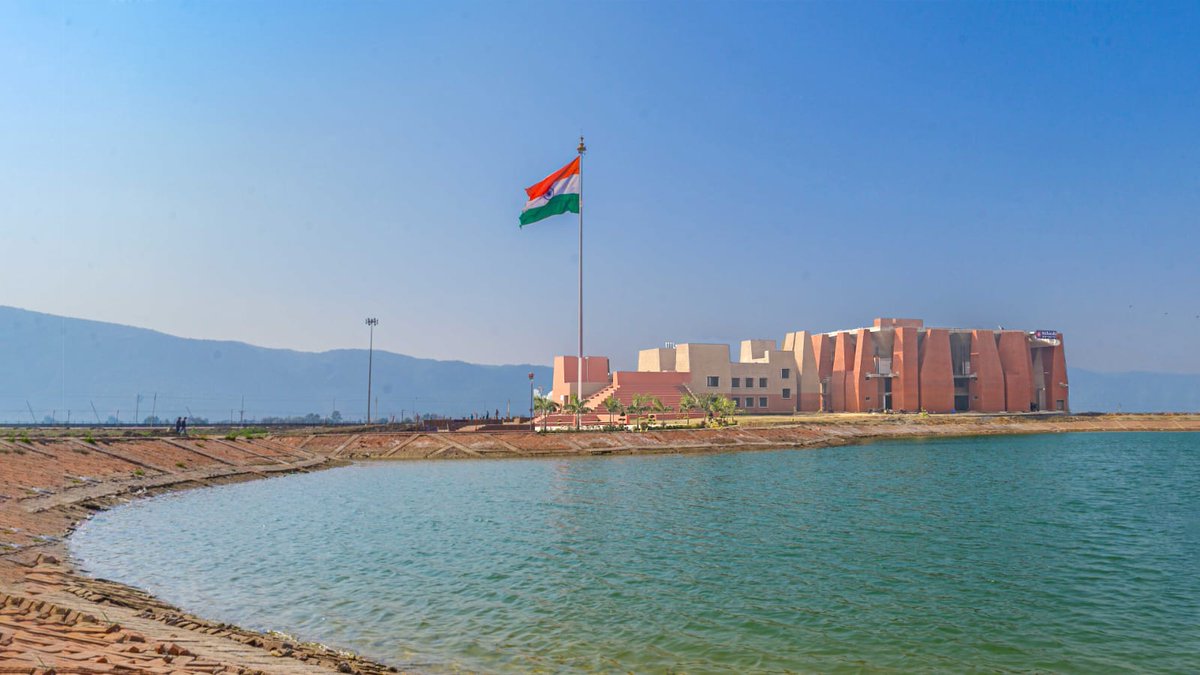
📍 The modern Nalanda University, established in 2010, aims to carry forward the essence of the original institution by fostering an environment of diverse learning, research, and international cooperation. It strives to recapture the spirit of ancient Nalanda while adapting to the needs and challenges of the contemporary world.
📍 Nalanda University is a testament to the enduring value of education and the preservation of intellectual heritage. It serves as a symbol of India's commitment to education and global collaboration, and its legacy continues to inspire generations of scholars and learners.
🇮🇳 India in Space – Major Achievements 🇮🇳 🚀
1️⃣ Founded one of the world’s leading space agencies – Indian Space Research Organisation (1969)
2️⃣ First Indian satellite: Aryabhata 🛰️
3️⃣ First lunar mission: Chandrayaan-1 (confirmed water molecules on Moon) 🌕
4️⃣ First Asian nation to reach Mars orbit on maiden attempt: Mars Orbiter Mission 🔴
5️⃣ First mission to soft-land near Moon’s south pole: Chandrayaan-3 🌘
6️⃣ Record 104 satellites launched in a single mission (2017) 🚀
7️⃣ Indigenous heavy-lift rocket: GSLV Mk III
8️⃣ Reliable workhorse rocket: PSLV
9️⃣ Navigation system: NavIC 🧭
🔟 Commercial arm: Antrix Corporation / NewSpace India Limited 🌍
1️⃣1️⃣ Upcoming human spaceflight mission: Gaganyaan 👨🚀
1️⃣2️⃣ One of the most cost-effective space programs globally 💰
1️⃣3️⃣ Strong satellite program for communication, weather & disaster management 🌦️
1️⃣4️⃣ Deep space missions with indigenous technology 🛰️
1️⃣5️⃣ Rapidly growing private space ecosystem 🚀
🇮🇳 India’s Global Firsts & Big Achievements 🇮🇳
1️⃣ First Asian nation to reach Mars orbit on maiden attempt 🚀
2️⃣ Chandrayaan-3 first to soft land near Moon’s south pole 🌕
3️⃣ World’s largest democratic election 🗳️
4️⃣ World’s largest constitution 📜
5️⃣ Largest biometric ID system – Aadhaar 🆔
6️⃣ Fastest-growing major economy (multiple recent years) 📈
7️⃣ World’s largest vaccine manufacturer (by volume) 💉
8️⃣ Biggest diaspora population globally 🌍
9️⃣ One of the world’s largest rail networks 🚆
🔟 Largest milk producer globally 🥛
1️⃣1️⃣ One of the largest IT services exporters 💻
1️⃣2️⃣ Major global pharma supplier (generic medicines) 💊
1️⃣3️⃣ International Solar Alliance founder ☀️
1️⃣4️⃣ Largest digital payments adoption growth (UPI revolution) 📲
1️⃣5️⃣ One of the oldest continuous civilizations 🏺
1️⃣6️⃣ World’s largest school meal program (Midday Meal) 🍛
1️⃣7️⃣ Record-breaking space missions at low cost 🛰️
1️⃣8️⃣ One of the largest road networks 🛣️
1️⃣9️⃣ Major global startup ecosystem 🚀
2️⃣0️⃣ Nuclear triad capability nation 🔱
They’re barely making money. This will only lead to costlier deliveries or businesses shutting down. It’s not as if people like @deepigoyal are living ultra-luxurious lives. You’re going after the wrong people.
Very well written @deepigoyal Every word is true. It beggars belief that a Champagne Socialist who married a film star and had a designer wedding in Udaipur and a first wedding anniversary in Maldives has the audacity to then shed crocodile tears around alleged exploitation of gig workers. Aam Aadmi my foot
It’s less about helping gig workers and more about elites trying to soothe their conscience by appearing to uplift the downtrodden, without making any real effort or sacrifice.
Last one on this topic, and I have been holding this in myself for a while.
For centuries, class divides kept the labor of the poor invisible to the rich. Factory workers toiled behind walls, farmers in distant fields, domestic help in backrooms. The wealthy consumed the fruits of that labor without ever seeing the faces or the fatigue behind it. No direct encounter, no personal guilt.
The gig economy shattered that invisibility, at unprecedented scale.
Suddenly, the poor aren't hidden away. They're at your doorstep: the delivery partner handing over your ₹1000+ biryani, late-night groceries, or quick-commerce essentials. You see them in the rain, heat, traffic, often on borrowed bikes, working 8–10 hours for earnings that give them sustenance. You see their exhaustion, their polite smile masking frustration with life in general.
This is the first time in history at this scale that the working class and consuming class interact face-to-face, transaction after transaction. And that discomfort with our own selves is why we are uncomfortable about the gig economy. We want these people to look our part, so that the guilt we feel while taking orders from them feels less.
We aren't just debating economics. We are confronting guilt. That ₹800 order might equal their entire day's earnings after fuel, bike rent, and app cuts. We tip awkwardly, or avoid eye contact, because the inequality is no longer abstract. It's personal.
Pre-gig era, the rich could enjoy luxury without moral discomfort. Labor was out of sight. Now, every doorbell ring is a reminder of systemic inequality. That's why debates explode. It's not just policy. It's emotional reckoning. Some defend the system (“they choose it”), others demand change (“this isn't progress, its exploitation”).
And here’s the uncomfortable twist: the unsaid ask of clumsy ‘solutions’ isn’t dignity. It is about returning to invisibility.
Ban gig work and you don’t solve inequality. You remove livelihoods. These jobs don’t magically reappear as formal, protected employment the next day. They disappear, or they get pushed back into the informal economy where there are even fewer protections and even less accountability. Over-regulate it until the model breaks, and you achieve the same outcome through paperwork instead of slogans: the work evaporates, prices rise, demand collapses, and the people we claim to protect are the first to lose income.
And then what happens?
The rich get their old comfort back. Convenience returns without faces. Guilt dissolves. We go back to clean abstractions and moral posturing from a distance. The poor don’t become safer, they become invisible again: back in cash economies, back in backrooms, back in shadows where regulation rarely reaches and dignity isn’t even debated.
The gig economy just exposed the reality of inequality to the people who previously had the luxury of not seeing it. The doorbell is not the problem. The question is what we do after opening the door.
Visibility is the price of progress. We can either use this discomfort to build something better (which we keep doing continuously as delivery partners are our backbone), or we can ban and over-regulate our way back into ignorance. One of those choices improves lives. The other simply helps the consuming class feel virtuous in the dark.
Irony is when a “movie critic” freely trashes a film for opposing her ideology, yet can’t even handle criticism of her own work and her circle instantly slips into victimhood.
To push someone like Anupama Chopra to withdraw a review is the absolute pits! Threatening and harassing everyone who disagrees with something as fleeting as a film is such a disgrace.
What next? Mannu lorry will accidentally run over their cars and bikes?
It’s shameful what this country’s public space has turned into. A space where I grew up to love films cautiously, see deeply and debate fiercely is now a blood curdling snake pit.
My heart goes out to each one of you critics taking the punches. FWIW, I’m with you.
🌆 Most Famous Skylines in the World
🏙️ 🇺🇸 New York City, USA: 1st place
🌇 🇭🇰 Hong Kong, China: 2nd place
🏗️ 🇦🇪 Dubai, UAE: 3rd place
🌉 🇸🇬 Singapore: 4th place
🏙️ 🇯🇵 Tokyo, Japan: 5th place
🌆 🇬🇧 London, UK: 6th place
🏙️ 🇨🇦 Toronto, Canada: 7th place
🌇 🇮🇳 Mumbai, India: 8th place
🏙️ 🇦🇺 Sydney, Australia: 9th place
🌃 🇪🇸 Barcelona, Spain: 10th place
🗿 Most Iconic Landmarks in the World 🗿
🗽 🇺🇸 Statue of Liberty, USA: 1st place
🗼 🇫🇷 Eiffel Tower, France: 2nd place
⛩️ 🇯🇵 Mount Fuji, Japan: 3rd place
🏛️ 🇬🇷 Acropolis of Athens, Greece: 4th place
🕌 🇹🇷 Hagia Sophia, Turkey: 5th place
🏯 🇨🇳 Great Wall of China: 6th place
🕍 🇮🇱 Western Wall, Israel: 7th place
🌋 🇮🇹 Mount Vesuvius, Italy: 8th place
🏰 🇩🇪 Neuschwanstein Castle, Germany: 9th place
🏜️ 🇯🇴 Petra, Jordan: 10th place
🏟️ 🇮🇹 Colosseum, Italy: 11th place
⛲ 🇪🇸 Alhambra, Spain: 12th place
🎢 🇦🇺 Sydney Opera House, Australia: 13th place
🗿 🇨🇱 Moai Statues, Chile: 14th place
⛪ 🇧🇷 Christ the Redeemer, Brazil: 15th place
🏰 🇬🇧 Tower of London, UK: 16th place
🏯 🇰🇷 Gyeongbokgung Palace, South Korea: 17th place
🏞️ 🇨🇦 Banff National Park, Canada: 18th place
🌄 🇺🇸 Grand Canyon, USA: 19th place
🌁 🇬🇧 Stonehenge, UK: 20th place
🏞️ 🇦🇷 Iguazu Falls, Argentina: 21st place
⛲ 🇻🇳 Ha Long Bay, Vietnam: 22nd place
🏯 🇮🇳 Taj Mahal, India: 23rd place
🏝️ 🇨🇳 Zhangjiajie National Forest Park, China: 24th place
🏜️ 🇪🇬 Pyramids of Giza, Egypt: 25th place
🏛️ 🇫🇷 Palace of Versailles, France: 26th place
🎡 🇦🇪 Burj Khalifa, UAE: 27th place
🛤️ 🇧🇴 Uyuni Salt Flats, Bolivia: 28th place
🏞️ 🇿🇦 Table Mountain, South Africa: 29th place