From the newspaper Sudoku and crossword to now wordle - puzzles have always had strong pull. Now mind sports have a serious audiences globally
Happy to back @matiks_play as they announce their $10M raise. India has some of the sharpest minds in the works - this can be a great India for the World story … look forward to the journey 👍
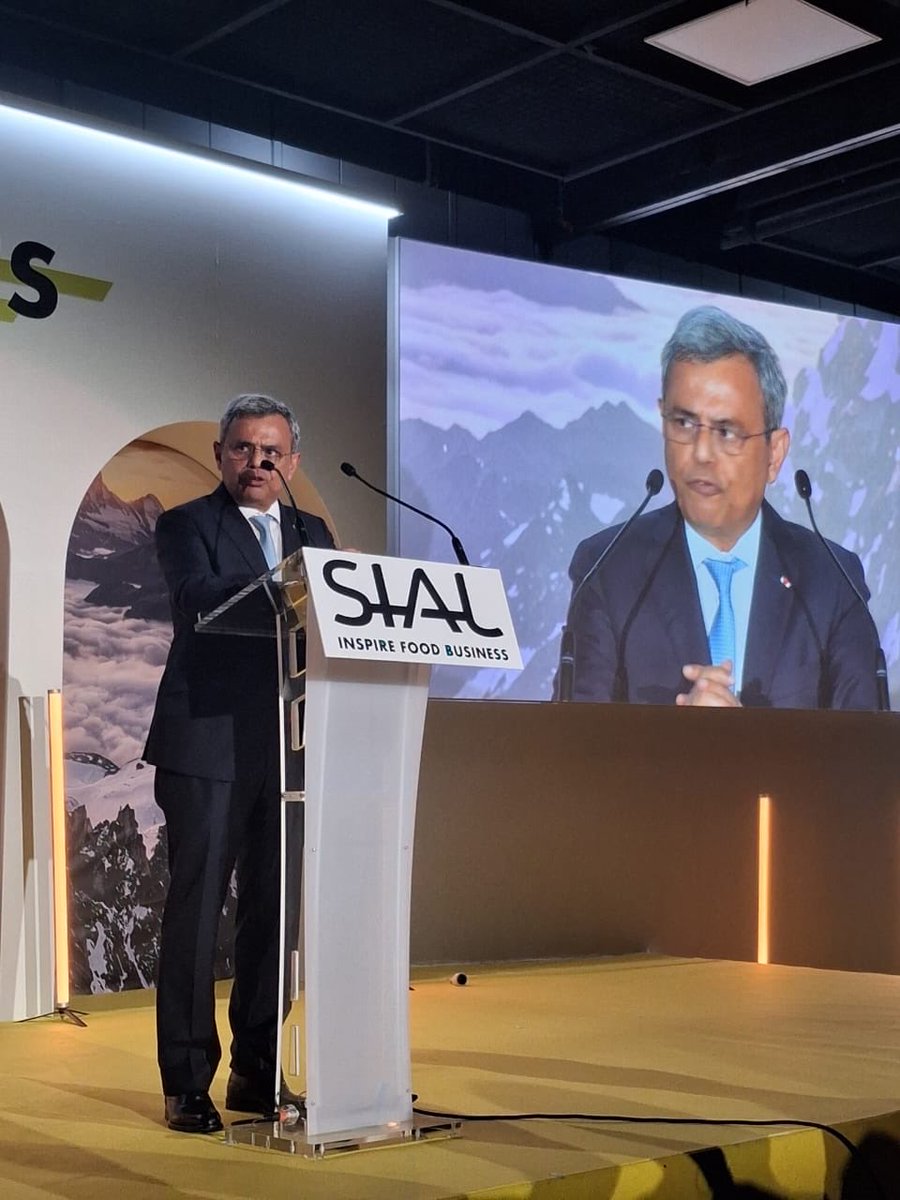
At the #SIALParis inauguration today, in the presence of French 🇫🇷 Minister Anne Genevard, & international audience, spoke about
- the new agricultural revolution in India, led by small farmers.
- our diversity, resilience, sustainability, organic, innovation and self sufficiency
- the rapid growth of food processing industry at global standards
- new opportunities for Indian farmers and MSMEs in our FTAs
- our SIAL theme ‘Feeding our Tomorrow’ 🇮🇳’s commitment to global food security.
- in the UN International Year of Woman Farmer 2026 women-led innovation & tech driven farming is empowering rural women and transforming lives.
I’ve always wanted to write fiction. My first novel #TheLionsShare will be published on November 23, initially in India, by Harper Collins (Fourth Estate).
For all who enjoyed #TheMoneyTrap, this is a darkly comic exploration of what I might have become. @HarperCollinsIN
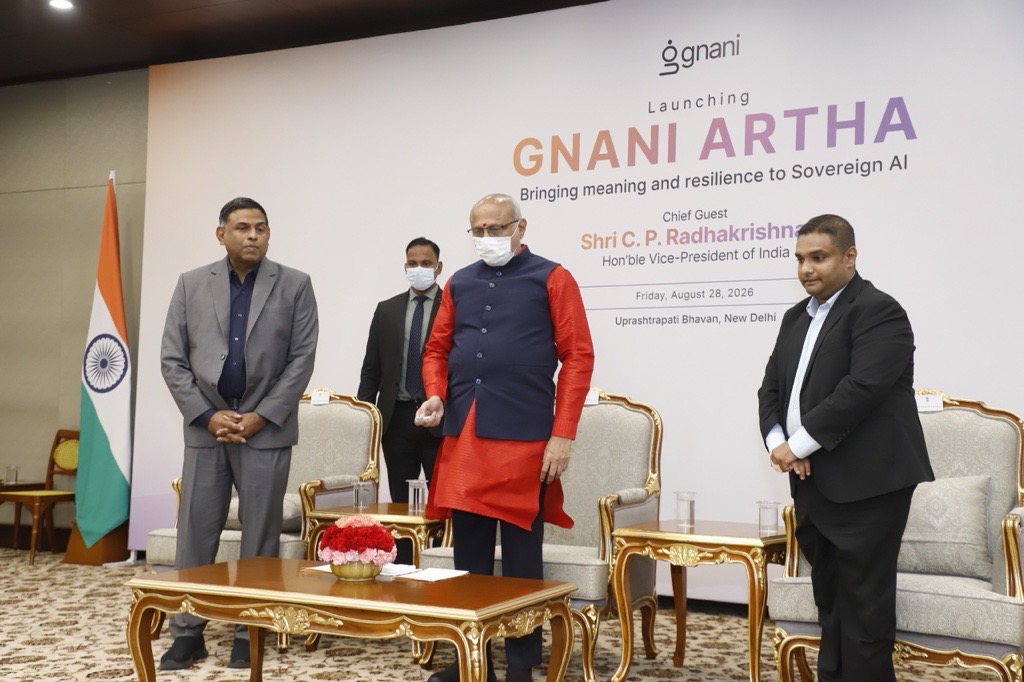
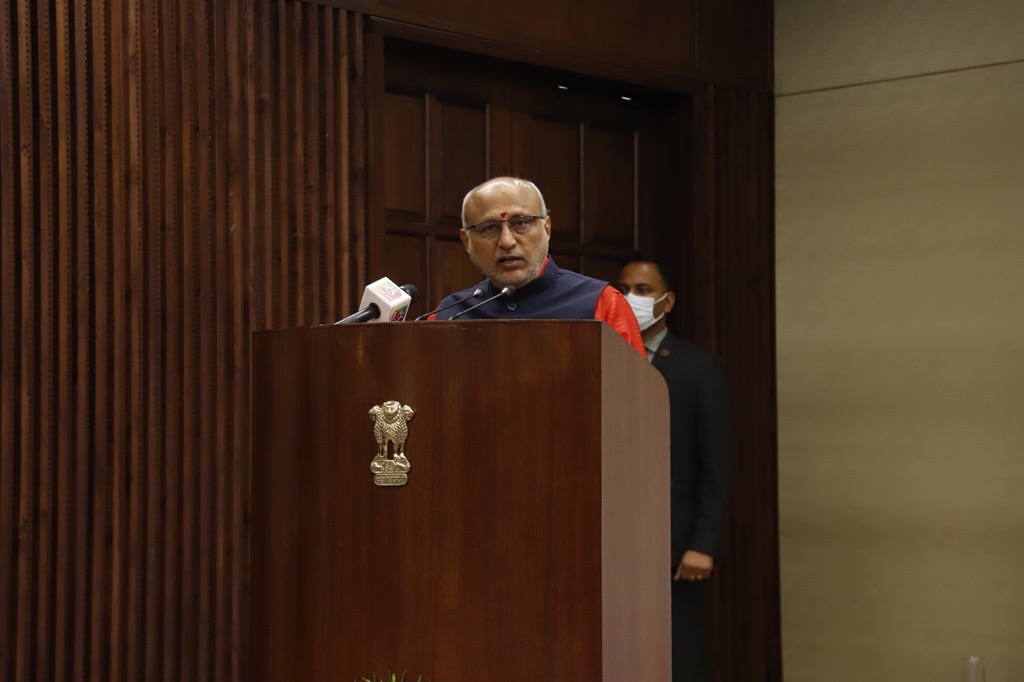
VP of India Shri @CPR_VP unveiled Gnani Artha last friday: our end-to-end sovereign AI stack.
Built on Gnani Evon 3.3, our 30B open-weights model trained natively in 11 Indian languages, and Gnani Plexus, our agentic platform.
Built in India. For India.
Just finished reading The Imitation Englishman by Devki Pande! A rip-roaring tale of Indians in the First World War, inspired by the author’s own great-grandfather, who travelled to Germany to study law in 1916. It was interesting how a subject of a British colony lived and studied in Germany during the War at a time when Indian soldiers were fighting the Germans in Europe and Africa. Blending historical research with family histories, the novel explores identity, colonialism, and the extraordinary choices Indians were forced to make during a period of global upheaval. If you read any book this year, let this be it!
This is a good oped in Sunday Times.
India has already created 12 million gig jobs without a government jobs guarantee, giant factories or taxpayer-funded payrolls. That is something to build on not something to be ashamed of. And for many, platform work is not exploitation but a dignified escape from low-productivity, low-paying alternatives.
Wage dynamics are revealing. A garment worker in a formal factory earns roughly ₹12,800 to ₹15,700 a month across Tamil Nadu, Karnataka, Gujarat and Haryana. OTOH,a platform driver can gross around ₹27,000, or roughly ₹19,000 after operating costs while retaining something a conventional factory job cannot offer.+ flexibility and the ability to enter the labour market almost immediately.
And the oped also points to the ideological contradiction of whose who have disdain only for 'gig jobs
These are same folks who celebrate MNREGA as dignified employment somehow regard a person freely choosing to deliver food, drive a cab or take platform work as being “exploited”.
MNREGA can pay as little as ₹252–₹336 a day in the states Yet the same people who defend guaranteed state-funded manual labour often want to regulate away flexible market-based work that workers themselves choose.
Protect workers with accident insurance, portable social security and transparent algorithms. And fight mindset regulating an imperfect but rapidly expanding source of opportunity out of existence.
Shiprocket IPO subscribed 102x. Congratulations @_saah1l@ShiprocketIndia this is so so well deserved. It is the consequence of more than a decade of effort. Of building a great business brick by brick. Of pricing the IPO right and leaving value on the table. Thank you for allowing us to invest. Ever onwards. To paraphrase what Winston Churchill said in another context. This is not the end. This is not even the beginning of the end. This is perhaps the end of the beginning. @InfoEdgeVC@kitty_agar
At Ashoka we have always told the placements team to not focus on the highest salary (even though that is what makes the headlines in the media and attracts eyeballs). What is more important is to ensure 100% placement at scale. Everyone from the graduating class at Ashoka who is seeking a job should get one. I am glad we are successful on this one. Also what is the lowest salary and the bottom quartile. That must be lifted. A significant number of Ashoka graduates join not for profits which do not pay as much as the private sector. This makes a focus on the bottom quartile all the more important. I suspect that Ashoka is doing better than most of the best liberal arts colleges in India on these metrics. The difference between Ashoka and other colleges is that we have a full time team drawn from the corporate sector for placements. Students don’t manage placements. Students are very capable but they change each year - so continuity is lost. Students managing placements can give you free labour in the placement cell but is a bad model.
The placement team has over the years done a tough concept sale in a slowing hiring environment. When industry is conditioned to hiring MBAs, Engineers, CA’s and B Coms the Ashoka placement team has gone out and convinced companies that Liberal Arts graduates bring perspective, critical thinking, better communication and analysis to the table and so are better in an AI world. It has taken some effort to convince recruiters about this but it has gotten done. Of course it helps a lot that the Ashoka graduate is good and very employable
Recd this message on an @AshokaUniv WhatsApp group.
Hi All,
As we wrap up the year for placements and higher education support for 2025-26, I would like to share Ashoka student achievements.
*Career Development Office*
We have achieved 100% placements with 425 offers in 153 organisations ( including 73 new recruiters).
Highest offer made was Rs. 42.5 lpa to UG’25, CS major.
Avg. CTC went up by 16.3% from 11.6LPA to *13.5LPA*
Median rose by 7.5 % from 10.6LPA to *11.4LPA*
60% of the placed cohort went to the following 4 top sectors :
1) BFSI (21%) Avg. CTC increased by 4% to 12.7LPA
2) Consulting (19%): Avg. CTC increased by 22% to 16.1LPA
3) Tech (10%) Avg. CTC increased by 29% to 15.1LPA
4)Data, Research and Analytics (10%): Avg. CTC increased by 21% to 13.5LPA
*Office of Post Grad*
130 students received ~400+ offers from top global universities.
Highlights include *24 Oxbridge admits* (up from 15 in ’25) and *24 Ivy League admits* (up from 13 in ’25).
Students received partial scholarships *(ranging from 10% to 80%)* across master’s programs at *Yale, Columbia, UPenn, Brown, Sciences Po, Oxford, Cambridge, LSE, Hertie, NUS* etc.
Students also earned 18 full-ride graduate masters scholarships (up from 8) including Rhodes, Gates-Cambridge, Inlaks, and Felix and 16 PhD admits, 12 fully funded.
I haven’t asked. However I am a member of an Ashoka Alumni Entrepreneurs group that has 98 members. I would imagine that perhaps 80 of them are entrepreneurs. Not every Ashoka alumnus who is an entrepreneur will be on that group. So perhaps there are around 150 alumni who are entrepreneurs. The first undergrad batch at Ashoka graduated in 2017 and had around 200 to 300 students. The current batch that is entering will have around 1000 students. The YIF class is older. So totally there must be 6000 or 7000 alumni. Many people go for entrepreneurship after their second degree and after working for some time (I did a PGDM and worked for five years before becoming an entrepreneur). So 150 entrepreneurs among Ashoka Alumni isn’t bad. Someone from Ashoka who has the accurate numbers may correct me here. I have given guesstimates
A well argued piece by my friend Amit Sinha (IIMA Class of 1993) about all the drama around campus reconstruction and the misguided IIMA Alumni who successfully ran a campaign to block the institute administration’s effort and held IIMA hostage https://t.co/J37FYSkRnp
IPOs are back. This is great news for the start up ecosystem. And for VCs it means exits.
It has been known for sometime that India is the best IPO market in the world for companies below a market cap of USD 4 billion or thereabouts.
It is also validation of what some of us have been saying for several years.
It doesn’t make sense for Indian Startup’s and founders to flip to an overseas domicile or to incorporate overseas - you run a serious risk of not getting an exit for your investor through an IPO for a long long time. Sure you can do a strategic sale but that would most likely mean your own exit too. So if your ambition is to stay in the company for the long run and go public India is the best place for a start up to domicile @InfoEdgeVC@DPIITGoI
https://t.co/KkMKjffrai
Info Edge’s letter to shareholders capturing our investment strategy and an update on our investments in startups in AI, Deeptech and Consumer Tech got published today. Link attached. Feedback is welcome.
https://t.co/6YHS09yPxH
Ashoka University has announced the appointment of Rishikesha T. Krishnan as its next Vice-Chancellor, effective 1 August 2026. Professor Krishnan is one of India's most respected academic leaders and has previously served as Director of both IIM Indore and IIM Bangalore. A noted management and policy scholar, his work on systematic innovation has had a significant impact across academia, industry, and public policy.
Sharing his thoughts on his appointment, Professor Krishnan said, 'Since its inception, Ashoka University has set high standards as a new-generation, research-driven institution. It is a great privilege to lead the University as its Vice-Chancellor at this critical yet exciting juncture in its evolution.’
Ashoka University warmly welcomes Professor Rishikesha T. Krishnan as its next Vice-Chancellor.
Read More: https://t.co/uWdU1xZF2h
(@rishikesha, @PramathSinha, @somakrc)
#AshokaUniversity
India’s fertility rate has fallen below replacement for the first time in the country’s history, declining from a TFR of 2.3 to 1.9 in just a decade.
Delhi’s fertility rate now sits at 1.2, lower than Finland’s.
Follow: @AFpost