I'm looking for a postdoc:
Project on Quantitative Disease Resistance: Use high-throughput phenotyping & transcriptomics to find QDR regulators in quinoa.
Think https://t.co/eno5SrK9td plus
https://t.co/KpipjebI6E
Start date TBD.
Experience w/ scripting req'd!
DM for details.
Abstract submissions for the 7th International Symposium on Tomato Diseases are open until the 15th of August. Hurry up as there will be no further deadline extension...
Hope to see many of you there in Brasília, Brazil in October!
https://t.co/bznV4zZegN
Just out!
The relationships of wild relatives of peanut in unprecedented scope & resolution.
Bringing together wild peanut field collectors, botanists, seed bank curators & researchers to characterize virtually all section Arachis collections ever made!
https://t.co/x4TC7kcRHB
@CharlesRLev @TrendsPlantSci@DanveC@ChristinaRossi_ @MoffettPeter Congrats! I would love to read it, however no access through INRAE ... could you send me a copy, please? Thank you! :)
The first paper of my PhD has been published in PLOS ONE! This work had some steep learning curves and I’m thrilled that it’s finally finished and out in the world. I’d like to wish a huge thank you to everyone who helped support me through this process.
https://t.co/H3lgWHZkqf
Disentangling plant response to biotic and abiotic stress using HIVE, a novel tool to perform unpaired multi-omics integration https://t.co/ADbhJ2urDr #biorxiv_plants
📢 Exciting News! 🌱 Just published a paper on #YamGenomics related to quality traits. 🧬 Our population genomics and candidate gene association study identified key genes influencing texture, starch content, and color.
https://t.co/vZWsHeay2l
A new high-fidelity reference genome for the quarantine species Meloidogyne enterolobii. We hope this and the associated annotation will be useful to the whole community. 🚨We found that the previous long-read genome was not M. enterolobii but M. incognita
https://t.co/XBpfFn2D1d
#RP_INRAE🧬💥 Révolution génomique chez les vers ! Mais lesquels ? Les nématodes à galles, qui sont responsables de 10% des pertes agricoles
🚀Une étude révèle la structure unique de leurs chromosomes : un début de piste vers des stratégies ciblées
▶️ https://t.co/pSDvTh88rS
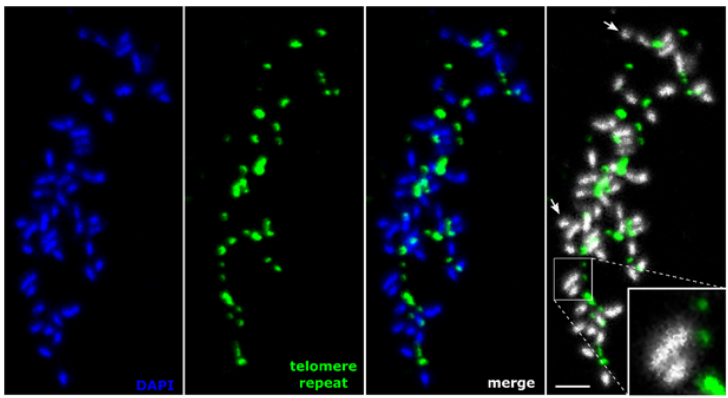
End of the beginning ? Chromosome ends of root-knot nematodes are quite different from everything else described so far in living forms...discover more by about their genomes by reading our paper just published in @NatureComms
https://t.co/Y3gMddlXpk
✔️15.5 Gb hexaploid (6 copies of each chromosome)
✔️85% repeat content
✔️40x fewer gaps*
✔️30x improvement in contig N50*
Discover @J_M_Aury & team assembled the most contiguous & complete chromosome-scale assembly of a bread wheat genome to date: https://t.co/oofoeH6AqG #PAG31