Reconditioning should have the same intent as training: a specific stimulus, emphasis, and coaching decisions
@AndersBraastad of @Glimt walks us through a simple drill with motorized resistance. A few steps in and out with eccentric overload to create a deceleration emphasis and more tissue stress
That’s the point of having complete control over the loading: you can match the stimulus to your coaching “why”
From there, the other variables are yours like rest, volume, reps, loading, movement pattern
Because reconditioning doesn’t have to be a lower standard of training, just a different set of constraints to work within
Snippet from 1080 Clinic at Bosön in 🇸🇪Sweden
Good luck in the second leg 👊🇳🇴⚽️
From a city of just 43,000, @Glimt continues to compete on the biggest stage of soccer, most recently at home with a win against Inter Milan in the Champions League knockout rounds. We’re proud to support a club that keeps pushing the standard while representing Norwegian football at the highest level
And a shoutout the Performance Staff for continuing to evolve, refine, and do what’s best for their athletes
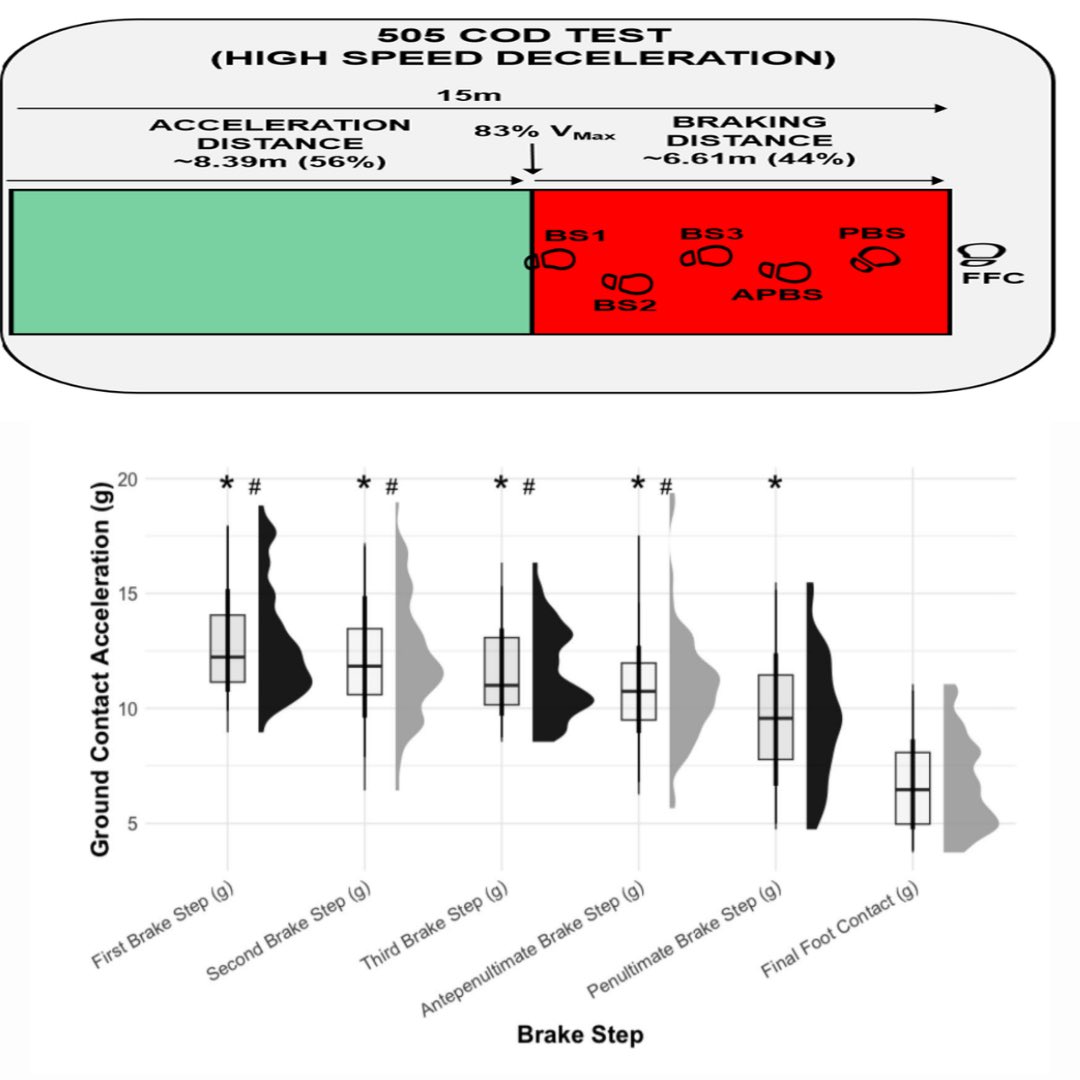
🚨 BRAKING step forces in a 505 change of direction test (high speed deceleration)
Here we show data on ALL braking steps…
🔎 Brake Step 1
🔎 Brake Step 2
🔎 Brake Step 3
🔎 APBS
🔎 PBS
🔎 FFC
Forces highest in early braking steps!!
Read here: https://t.co/lz2feXjvPs
The most important rule in training is also the least dramatic: be consistent.
It doesn’t sell books or rack up likes.
But it’s the one thing that makes everything else possible.
Injury ➡️ Rehab ➡️ Reflections
@AndersBraastad of @Glimt takes us through 4 return-to-play case studies (hamstring, adductor, quad, and return from external rehab) sharing how they used motorized resistance to create the exact stimulus each athlete needed all on the 1080 Sprint 2:
-Isokinetic force testing
-Heavy and light resisted sprints
-Assisted sprints with variable loading
-Lateral change-of-direction with a run-in-shuffle-out
Every exercise was measured. Every decision had context. Both quantitatively and qualitatively. Each case study was shared in an "injury, what we did, reflections" format. Real, applied, and ready for high-performance environments
Links to full replay 👇
1 week away ⏰⏳
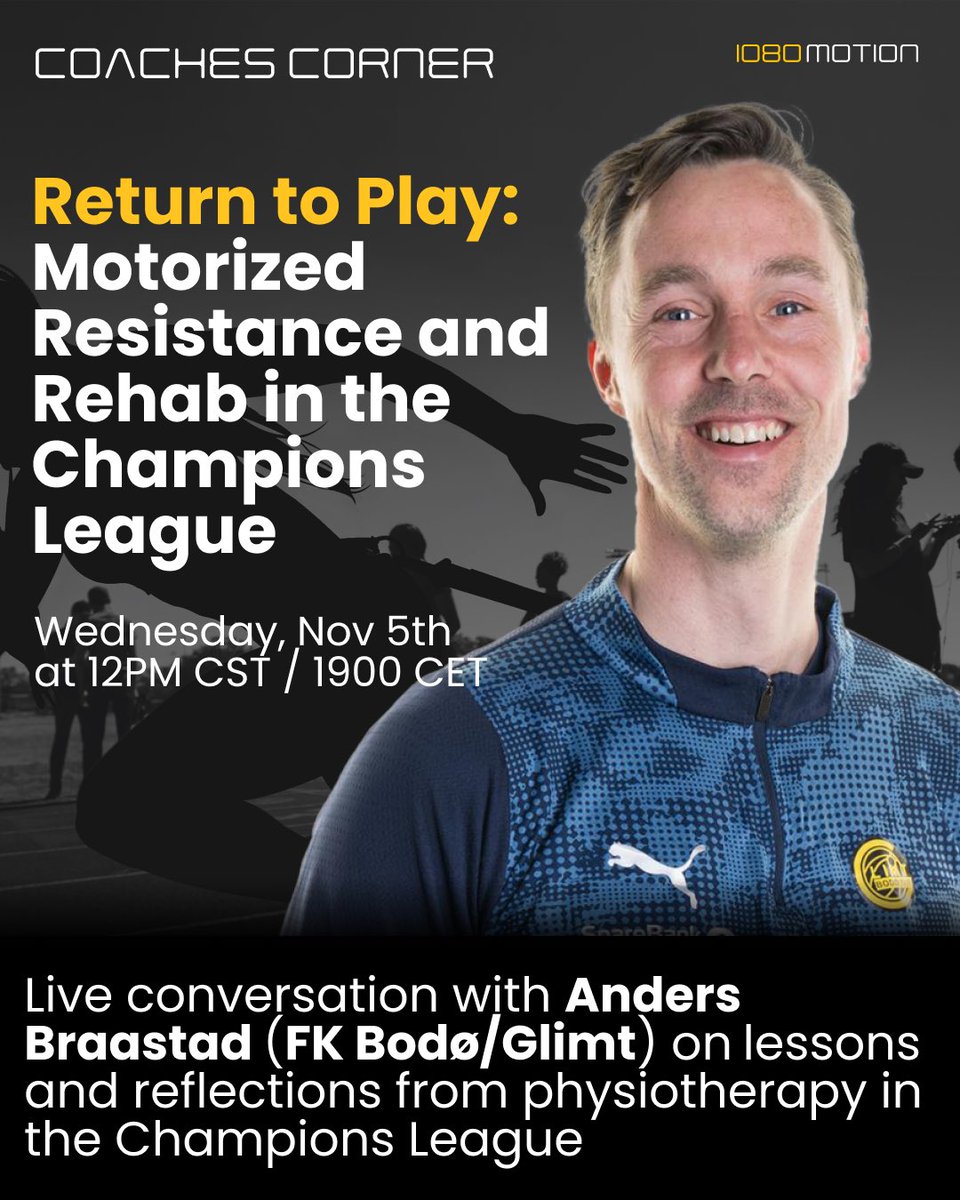
Join us and @AndersBraastad (Physiotherapist for @Glimt) for an elite conversation about athlete rehab and return-to-play in the Champions League
🔗👇 to sign up
Return-to-play in the Champions League ⚽
Join us for a live conversation with @AndersBraastad (Physiotherapist for @Glimt) as he shares how they use motorized resistance technology in their rehabilitation and return-to-play process
With real examples and visuals from their Champions League environment, this session will cover practical strategies for managing lower extremity injuries and guiding athletes back to sport
While grounded in elite soccer, these insights apply across all sports and settings, making it perfect for anyone working in rehab/RTP or high-performance environments
🗓️ Wednesday, November 5th at 12PM CST / 1900 CET
🔗👉 Sign-up: https://t.co/n62Knmcosd
📈 How Do Ground Reaction Forces Differ Across Sprint and Deceleration Tasks? 🏃♂️💨🛑
This chart compares vertical (left) and horizontal (right) ground reaction force profiles across:
🔴 Deceleration
🔵 Acceleration
🟡 Slow constant-speed running
⚪️ Fast constant-speed running
Key moments like touchdown (TD) and take-off (TO) are marked, showing how force production shifts based on the task📋
👣 The differences in force profiles highlight the unique physical demands of deceleration vs acceleration, and why targeted training is essential.
🔗 https://t.co/NgpB6UULWa
🚨 The 3 Phases of Ground Contact in Horizontal Deceleration 🏃♂️💥
Understanding how the body absorbs force during deceleration is key for performance and injury reduction. In this visual breakdown:
🔴 High-load and 🟡 moderate-load areas are highlighted across the lower-limb joints and muscles
➡️ Striped arrows = external ground reaction forces (GRF)
➡️ Solid arrows = joint contact forces
➰ Curved arrows = joint moments
Read the full breakdown here:
🔗 https://t.co/NgpB6UUe6C
🚨NEW🚨⚽️
“ It is not possible to change the posture in football with COD, chaos... This is not track and field"
YES ,YOU CAN!💥
STRUCTURE (Static) dictates FUNCTION ( Dynamic⚽️)
STRUCTURE > TECHNIQUE ( overrated ?) on APT
Enhance your STRAIN margin of safety with ⬇️ APT
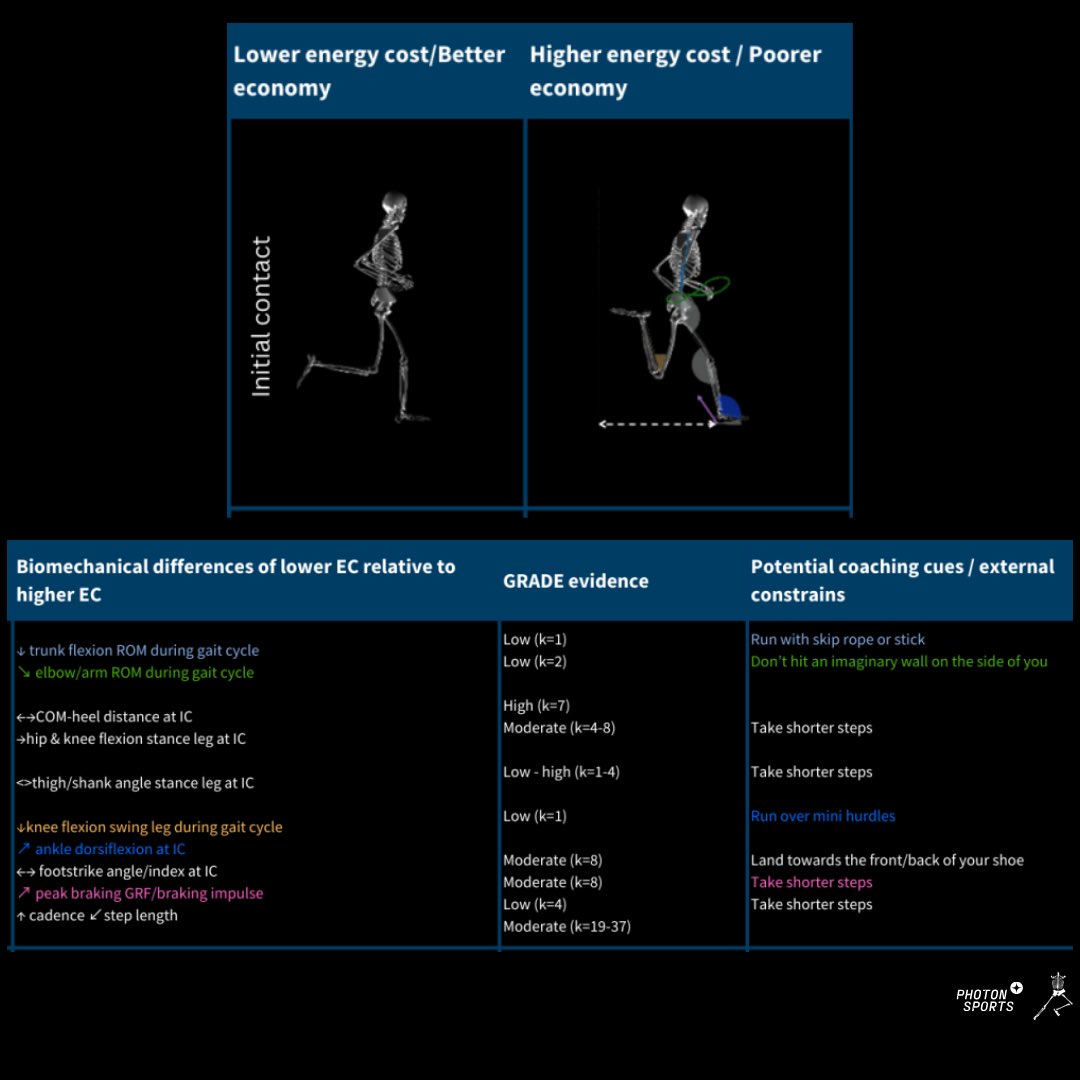
A schematic visualisation of the most important associations between running economy & biomechanics from meta-analyses and individual study results 🏃🔎
Read our latest blog to discover more⬇️
🔗https://t.co/z3an3QRytN
🚨 Just published in @sportsbiomechj
Relationships between knee and ankle strength and horizontal DECELERATION performance from different sprint distances.
Great to contribute to this one with @DrChrisBishop@BoyiDai et al. led by Zhili Chen.
https://t.co/EYbuGJuK0F
NEW BLOG POST❗️
The science and application of the Braking Performance Framework…
@DHMov highlights the importance of training eccentric strength qualities to improve braking ability & mitigate injury risk in athletes 🛑 🏃♂️ 💨
🔗https://t.co/45Q5pKPzyi
This is a good one. Well worth the read if you work in individual or team multidirectional team sports and want to structure how you approach deceleration in both training and rehab. Link: https://t.co/G2XUPbGSrN
🚨Published Today🚨
The Braking Performance Framework: Practical Recommendations and Guidelines to Enhance Horizontal Deceleration Ability in Multi-Directional Sports
By Damian J. Harper, Chris Cervantes, Matt Van Dyke, Martin Evans, Alistair J. McBurnie, Thomas Dos’ Santos, Ola Eriksrud, Daniel D. Cohen, David Rhodes, Christopher Carling and John Kiely
📲Hit the link below to read the full article for 🆓👇
🔗https://t.co/MuAbP6DD5A
⚖️Poor lumbopelvic control could be associated with HSI (hamstring strain injuries ) during High speed /sprint !
🔑 BFLh - Sacrotuberous Ligament- Pelvis
🚨Increases of Gluteus Med activation during sprint / high speed running as a injury risk factor