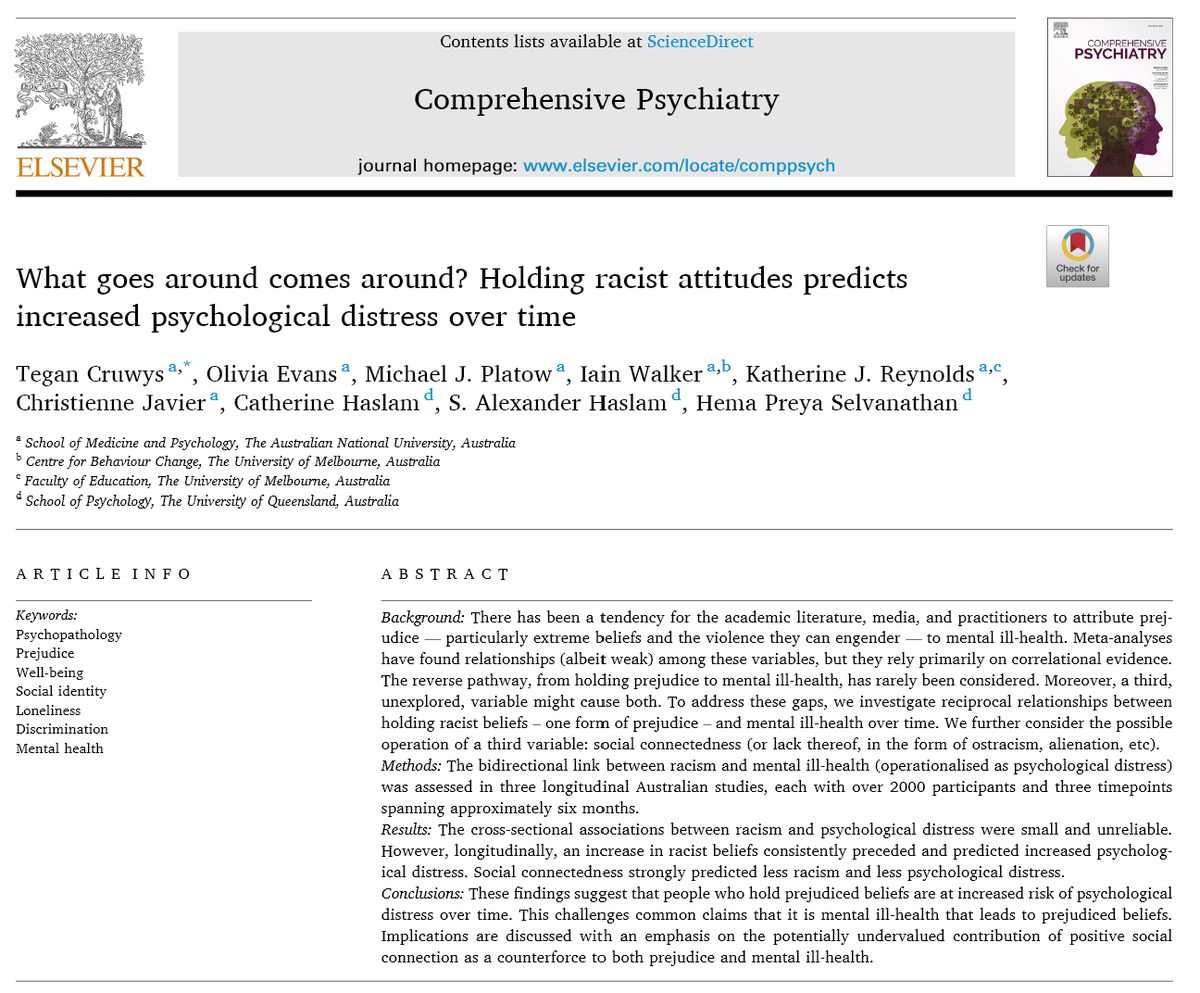
Being prejudiced is a risk factor for mental illness.
Longitudinal evidence: When people develop racist beliefs, they become more socially isolated—and end up more depressed, anxious, and distressed over the next 6 months.
Belonging is an antidote to bigotry as well as misery.
Breaking News: David Hockney, the English artist whose colorful paintings restored the human form to art, defying the abstract schools of the mid-20th century, died at 88. https://t.co/VhtDiEA61P
🚨NEW EPISODE🚨
Louis Theroux on The Settlers, The Manosphere & Tribalism
What links HS TikkyTokky and Daniella Weiss? How do extremists turn shamelessness into power?
Join @DalrympleWill, @tweeter_anita + @louistheroux
Link below👇
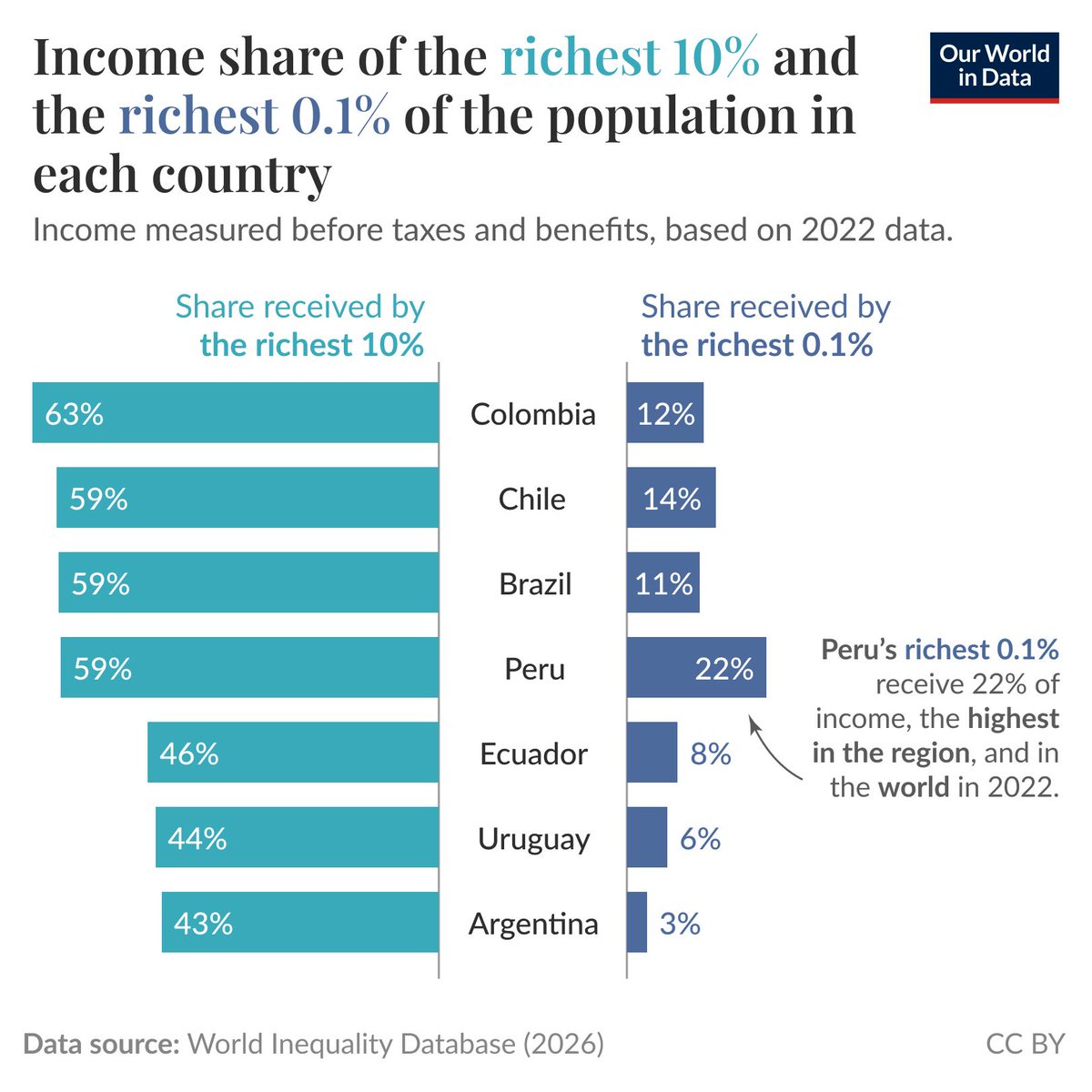
What is the most unequal country in South America? It depends on what metric you look at.
One way to measure income inequality is to look at the share of all income that goes to the top income earners.
The chart plots this for all seven South American countries with comparable 2022 pre-tax income estimates in the World Inequality Database.
The difference between the left and right bars is which earners they cover: the richest 10% on the left, the richest 0.1% on the right.
Looking at the left-hand bars, Colombia ranks top. It has the highest share going to the richest 10%, followed by Chile, Brazil, and Peru — in these four countries, the top 10% share earns more than half of all income. This is high relative to other countries around the world.
But looking at the dark blue bars on the right, the rankings change. Peru’s richest 0.1% receive about 22% of income, the highest in the region by far, and actually the highest in the world that year.
This chart shows just two metrics, but you would also get different pictures if you looked at Gini coefficients or the distribution of wealth instead.
So, what is the most unequal country in South America? It depends on what metric you look at.
This is a region with high inequalities, but different indicators will tell you different stories depending on which part of the distribution you examine, and how incomes are measured.
(This Data Insight was written by @EOrtizOspina.)