Our paper “Difference-in-Differences Designs: A Practitioner’s Guide” is now published in the Journal of Economic Literature. It took us a while but we are happy!
We put together a lot of material to make the paper useful in practice: https://t.co/30TbAgihlz
Hope you like!
Excited to release Reviewer: an open-source multi-agent reviewer for economics papers. Run it locally with Codex. It turns a PDF into a structured, high-quality report using a modular, highly customizable pipeline where every finding is traceable to an agent. GitHub in thread.🧵
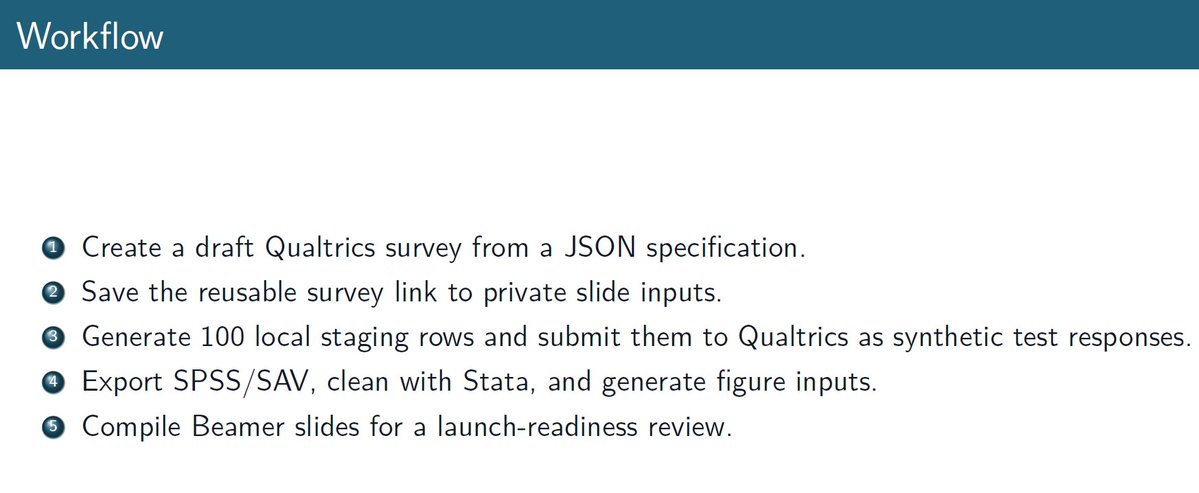
Do you run Qualtrics surveys? Then use my GitHub repo to automate the whole process with Codex! Tell Codex what you want to study, and it will create the survey, push to the survey to Qualtrics and generate synthetic responses, download and clean the data, and produce a set of slides summarizing the process.🧵with complete guided example!
This paper has been in the making for so long that eight children across the co-author group were born between the time we started and now!
But it is finally out, and you can check it at https://t.co/ZFSNCPrXsg
Thrilled to share our latest research uncovering that self-employed women may underreport income more than their male counterparts. This challenges long-held beliefs on gender and tax compliance. Excited for the discussions this will spark! #TaxEvasion
Self-employed women underreport their income to the tax authorities more than men do; a new study shows. 'We should perhaps reconsider assumed gender differences in this field,' says @NHHnor researcher @JulieBrunB. https://t.co/fiRDLr8gIw
Representative survey across *125* countries finds that 89% demand more action on climate change, yet they severely underestimate global support for action.. Correcting this pluralistic ignorance could be a powerful tool to spark action on climate change!
For all of those aspiring experimentalists who want to change the world partnering with organizations. Remember, the true cost associated with experiments is not the resource outlays to conduct them, it is the opportunity cost of not having that knowledge.
While you are planning #ASSA2024 Join me & Marie Connolly @CanJEcon for AEA/@econometricsoc (/CJE) Data Editors' Tutorials. Tutorial 1: Be reproducible and efficient from Day 1, even when data are confidential, a hands-on tutorial: https://t.co/smASSKtieM
Reminder: Using log(x+1) or arcsinh(x) is never coherent, and you probably want Poisson regression instead
This paper changed what I do and teach, and it's the rare econometrics paper that's actually clear and accessible. All applied social science researchers should read it!
📢📢New WP out! 📢📢
*Behavioral responses to wealth taxation: evidence from a Norwegian reform*
https://t.co/XLwgvFl6YF
How do you imagine a 🇳🇴 tax haven?
🧵Thread on the paper below..
(1/6)
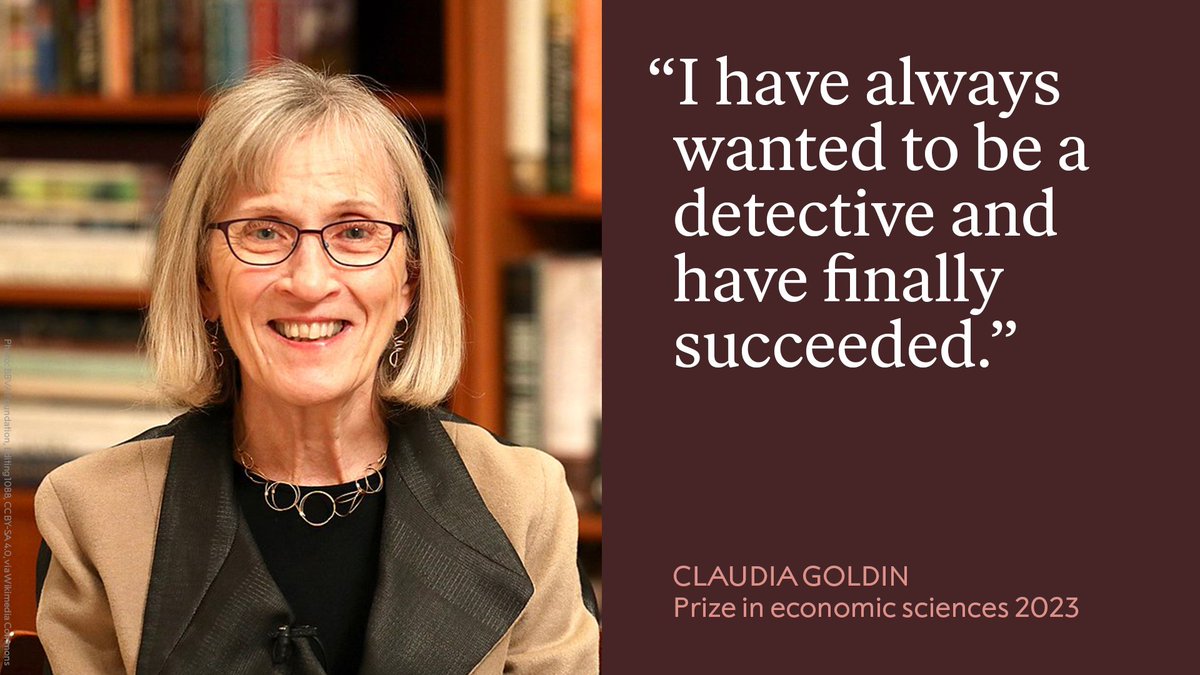
By trawling through the archives and compiling and correcting historical data, this year’s economic sciences laureate Claudia Goldin has been able to present new and often surprising facts. She has also given us a deeper understanding of the factors that affect women’s opportunities in the labour market and how much their work has been in demand.
The fact that women’s choices have often been, and remain, limited by marriage and responsibility for the home and family is at the heart of her analyses and explanatory models. Goldin’s studies have also taught us that change takes time, because choices that affect entire careers are based on expectations that may later prove to be false.
Her insights reach far outside the borders of the US and similar patterns have been observed in many other countries. Her research brings us a better understanding of the labour markets of yesterday, today and tomorrow.
#NobelPrize
Hi #EconTwitter!
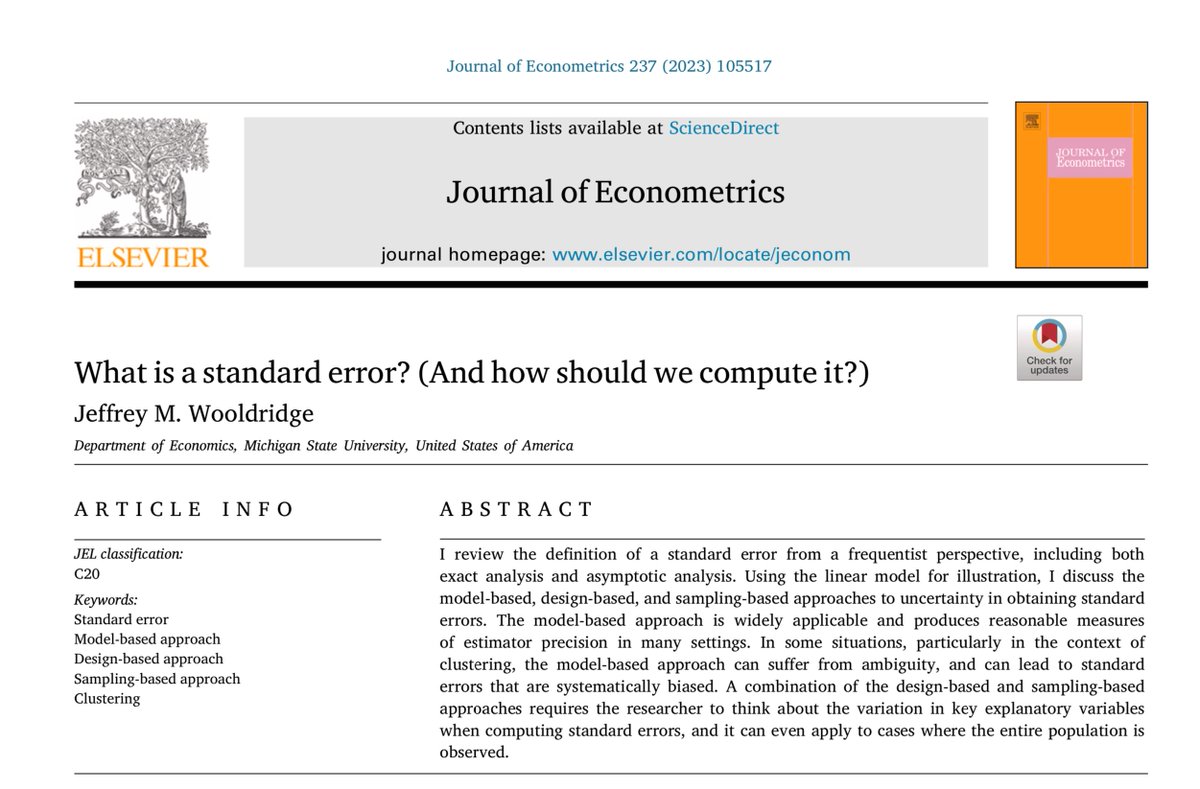
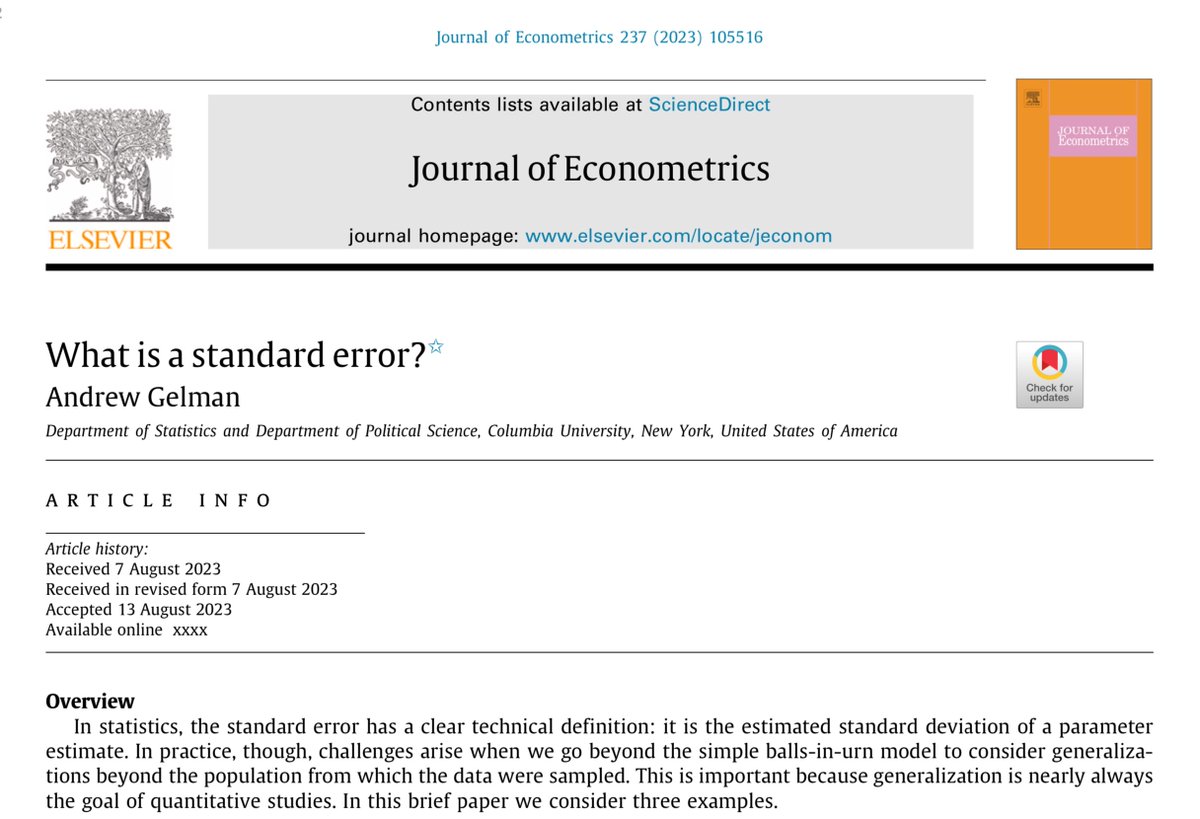
What is a standard error? 🧐😆
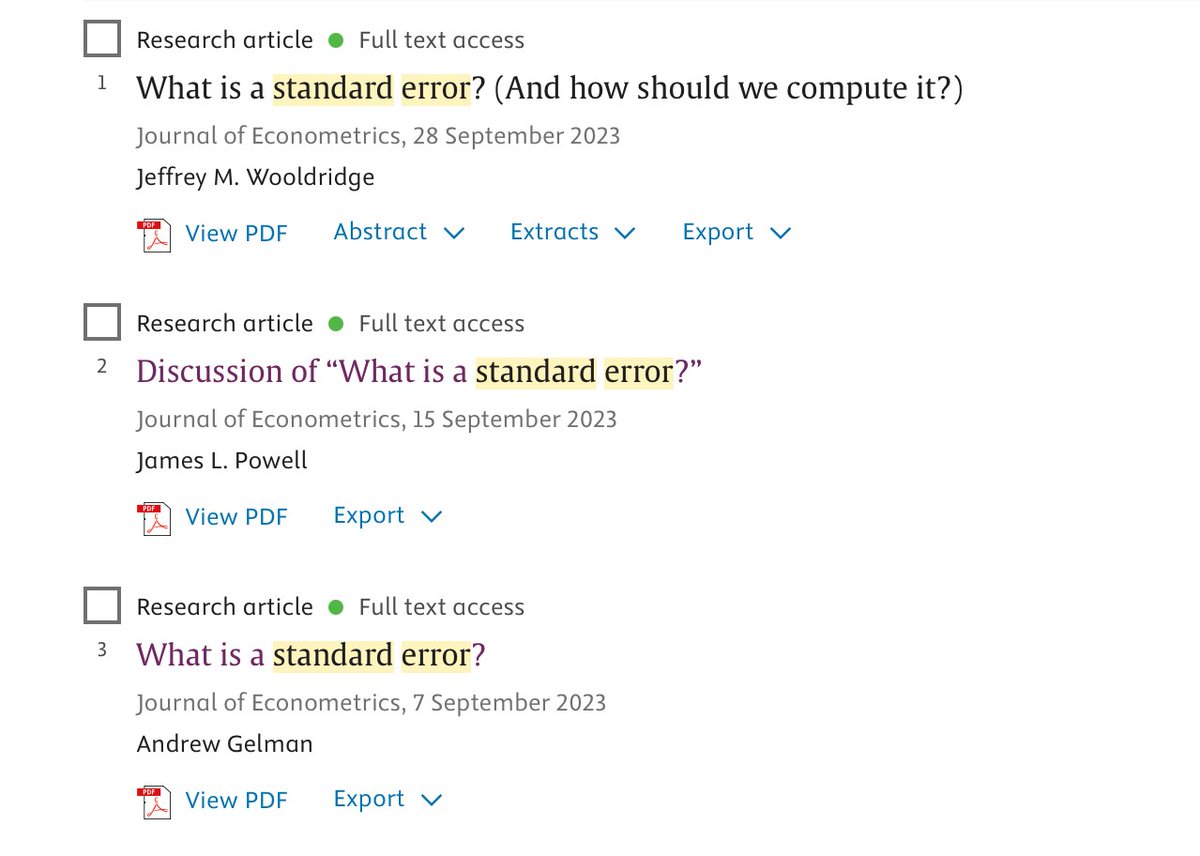
The "trilogy" of papers on the subject, published in @jeconometrics, is now completed.
Check out 👇these contributions by @jmwooldridge (@michiganstateu), Andrew Gelman @StatModeling (@columbia) and James Powell (@uarizona)!
Links:
Jeff's: https://t.co/3zvrXQHImr
Andrew's: https://t.co/vualqAMx6B
James': https://t.co/eOtJZRHXnP
#Econometrics
I'll be giving a webinar on causal inference on Oct 3 -- as a kind of preamble to an online DiD course on Oct 26-27. The webinar probably will run more like 90 minutes. Sign up here:
https://t.co/bM2ZmxZqLQ
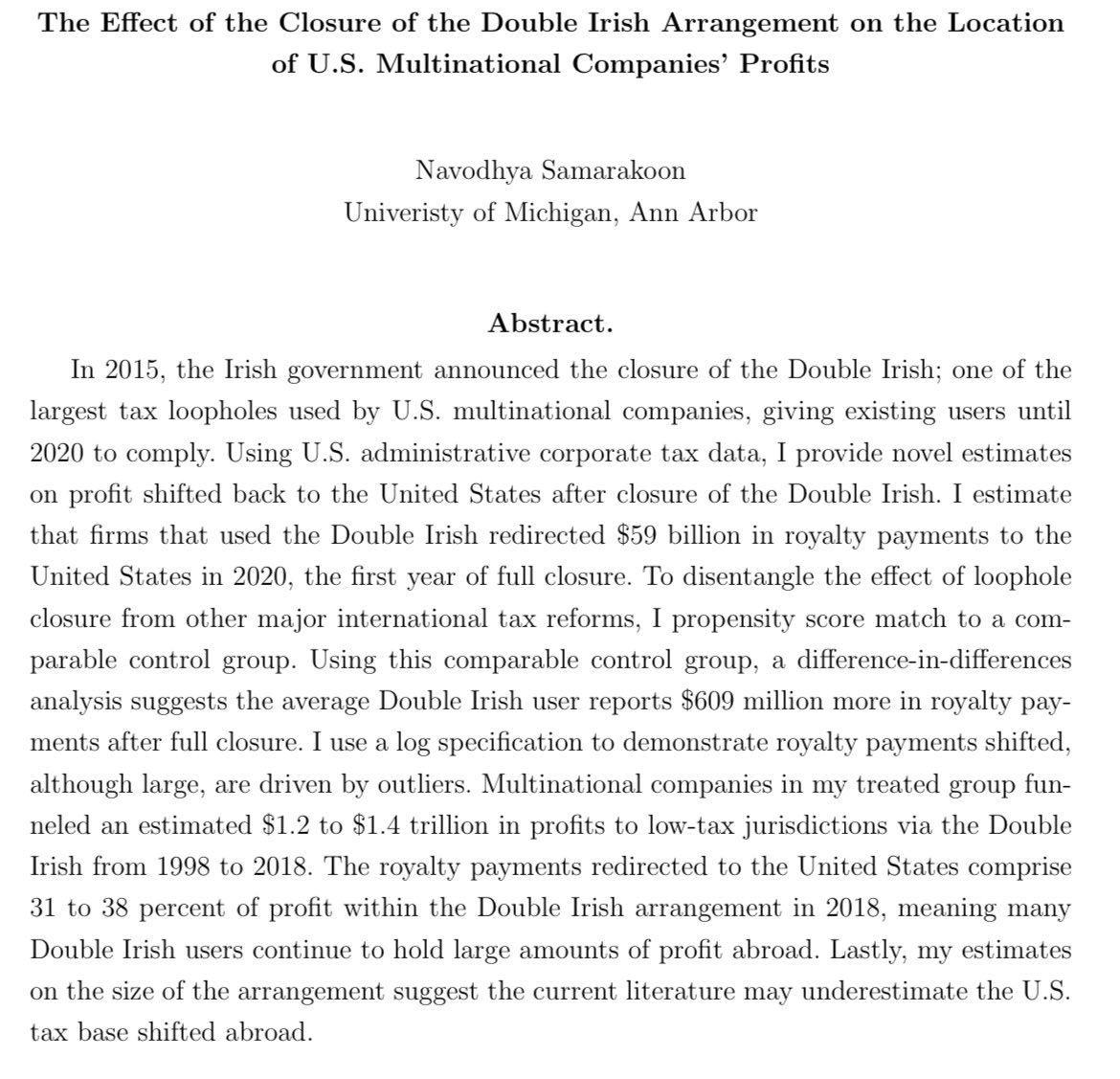
Super excited to share my first WP! Using US admin tax data, I study the changing tax planning architecture of firms that utilized the Double Irish, one of the largest tax loopholes used by US multinational companies, before and after it’s closure. A 🧵! 1/13
For prospective Ph.D. students: Is it a good or bad experience? It depends, but it will probably be both... You need to write at least three papers. Coming up with novel research is hard. If you do something "new", people might tell you it's too exotic.
On Tuesday in Oslo, I will give a talk on the potential and limits of human expertise.
And, I will discuss how one of the largest funds in the world makes use of an investment simulator to improve their decision-making, through individualized feedback.
https://t.co/mbJwdJcl77
Hi #EconTwitter!
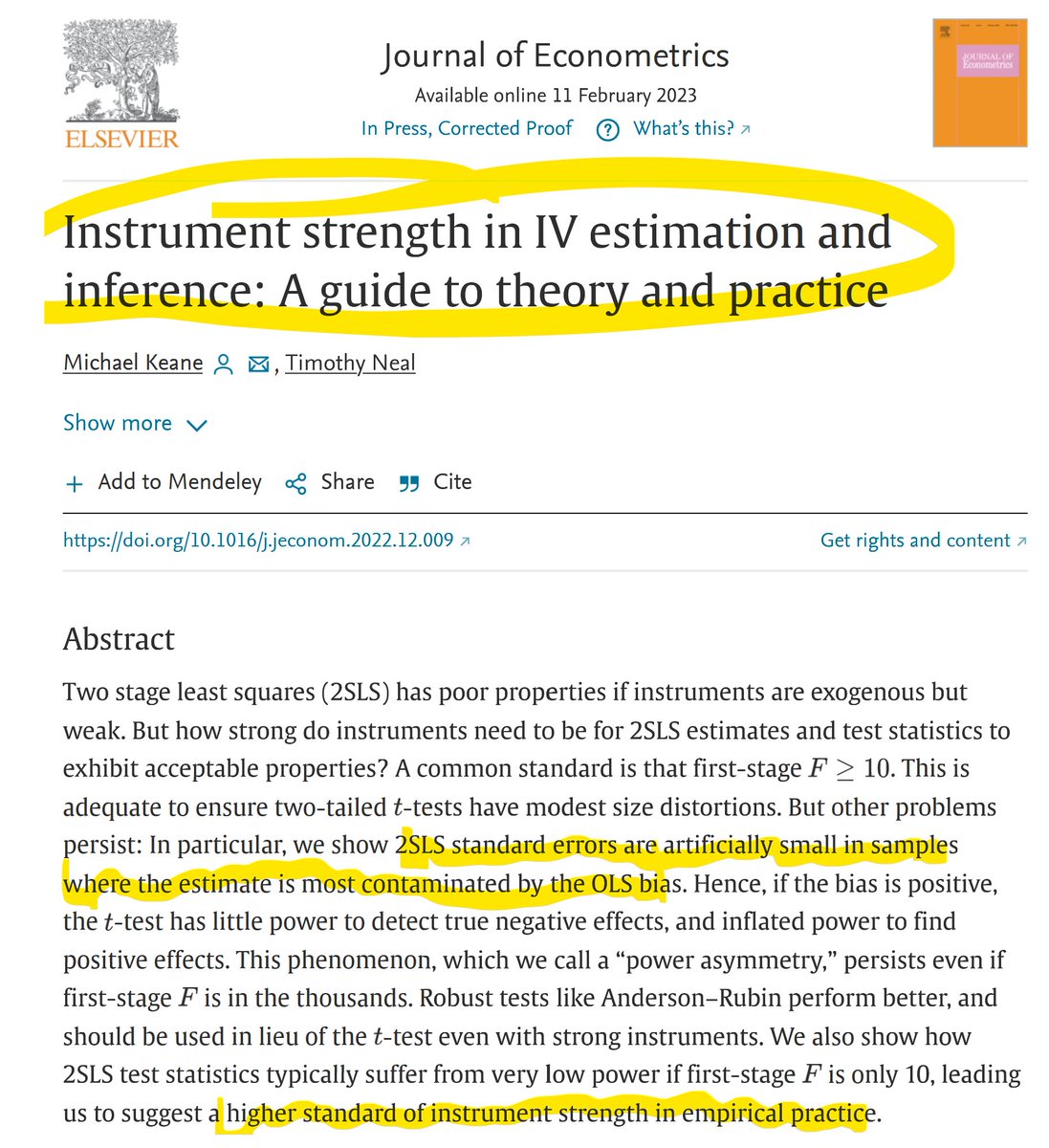
For economists interested in 𝐈𝐧𝐬𝐭𝐫𝐮𝐦𝐞𝐧𝐭𝐚𝐥 𝐕𝐚𝐫𝐢𝐚𝐛𝐥𝐞𝐬 estimation, here's a brand new @JEconometrics paper by M Keane and T Neal (@UNSW), showing yet again how problematic 2SLS inference can be.
A must-read for practitioners (and referees)!
The Rdatasets website now hosts over 2000 datasets in CSV format. All data are free and documented. Perfect for teaching or if you're just looking for some data to play with. https://t.co/DzoCkSzGJA #RStats#StatsTwitter#EpiTwitter#EconTwitter#PolisciTwitter