Don't get frightened by not knowing things. I have approximate answers, and possible beliefs, and different degrees of certainty about different things, but I'm not absolutely sure of anything. There are many things I don't know anything about. It doesn't frighten me. 🧠
Reflections on the Prisoners of Imperialist Propaganda
1/5. The compatible left intelligentsia is often critical of capitalism while condemning the anti-imperialist struggle, leaving ppl bereft of a clear project (other than an imaginary "Third Way").
https://t.co/BI66LW8LM4
@biabionica Acompanho o Lito há alguns anos, sempre ótimo. Graças ao seu canal consegui evoluir de "terror extremo" para "cagaço mortal" de voar. Ainda não cheguei no simples "medo"
Angela Davis, Judith Butler, Jairus Banaji, Ruth Wilson Gilmore and Rashid Khalidi are not complete idiots. They know that the CIA and Mossad, per mainstream reporting, are actively organizing mass terrorist sabotage operations inside Iran, including being behind the January terrorist operation. This is not some arcane hidden "tankie" conspiracy theory, it was literally reported in the New York times and elsewhere. They openly boast about it, and they say that they are still doing it.
So why come out with an article that casts the Iranian state as inherently evil and fascist and authoritarian and in need of destruction, particularly when it is being waged war on by Israel and their own US regime?
Ok, let's say Iran follows your prescriptions, and dismantles its entire coercive state apparatus. It abolishes the IRGC, the prisons, the police forces, all of it is abolished.
What do you think happens after that, you utter fucking depraved pseudo-radical frauds?
What happens after is Syria and Libya on steroids. Unless you are a liar, you know that too.
And of course Iran, like any other state least of all your own with its global genocidal Zionist empire, will never do that because it is not suicidal, and its first and foremost task is to protect the sovereignty of the nation and its people. There is nothing "purported" or "ostensible" or "pretend" about this, as you say in your vile letter: Iran is among the only active anti-imperialist forces in the world today. That's an objective fact, and your pseudo-radical word plays in The Guardian cannot obscure it. We can all see it with our own eyes.
But the sole purpose of your letter, its sole function, isn't to affect any geopolitical realities, it's much more modest and personal than that: it is to act as a certificate to launder yourselves in the Western pundit academic class as the Good Pseudo-Radicals, so you can keep getting lucrative invites to talk at Princeton and Harvard and Yale and sell your pseudo-radical status for cash, which Davis and others have been doing for decades now as they demand you vote for genocidal Zionist Democrats every election cycle. This same crowd always puts out those hectoring letters ahead of an election for this purpose; suddenly "lesser evilism" becomes a moral necessity over immediate abolition when it comes to maintaining their genocidal Zionist empire and its coercive institutions, because they greatly personally benefit from it.
E nós aqui na nossa pantomima quadrienal pra rodar a porta giratória entre os fascistas grosseiros, os que sabem usar os talheres e a esquerda que não ameaça o capital. Sorte da China que Mao prezava mais o povo do que a própria biografia
China refused to bail out the Evergrande CEO because he crossed the three red lines established by Xi Jinping.
These three red lines are a practical application of dialectical materialism, which the Communist Party of China employs to arrest unchecked capitalism. Here is what they entail:
It is both fascinating and unsettling to observe how quietly a qualitative and hence important restructuring of transatlantic societies is taking place.
I was once again a guest on @PLottaz ‘s Neutrality Studies. We spent an hour thoroughly dissecting and expanding upon the arguments in my latest essay on NATO 3.0, the Transatlantic Cage, and the Bunker State.
We discuss how the state is currently undergoing a massive shift in its role: moving away from being a provider of essential public services and toward becoming a pure security and military machine. We talk about Europe’s role as a "hub" within this system, acting essentially as a transnational arms factory and a "porcupine" (a term straight from the U.S. Army War College), all while the US retains strategic control.
The absurd thing is that none of this is happening in secret. The plans to divert civilian wealth into the arms industry, curtail parliamentary debate, and prepare for wars of attrition are all laid out openly on the table (as seen most recently at the NATO summit in Ankara). Nonetheless, these issues are barely being debated by the general public.
But this is not a fatalistic conversation. It comes down to this: we need to demystify these plans and structures. The US empire is not an all-powerful, flawless machine. It is man-made, and it is running up against material limits. Only when we truly understand this architecture can we begin to build genuine alternatives and counter-institutions.
If you’re interested in a deep dive away from the daily rapid news cycle and accompanying reactions, here is the conversation. I’m very curious to hear your thoughts on it:
https://t.co/SBfD2FJYkw
In 1949 Chinese life expectancy was around 35. By 1976 it was 67 – more than three decades gained in less than three decades, the fastest improvement ever recorded anywhere. Join us on 6 September to discuss what Mao's revolution actually built.
https://t.co/mLSSJsC4g7
JASON HICKEL on Chris de Ploeg's latest: "A furious book, unflinching and uncompromising. It reminds us that it is fruitless to appeal to capital, to imperial power, in moral terms. Our objective must be to defeat it."
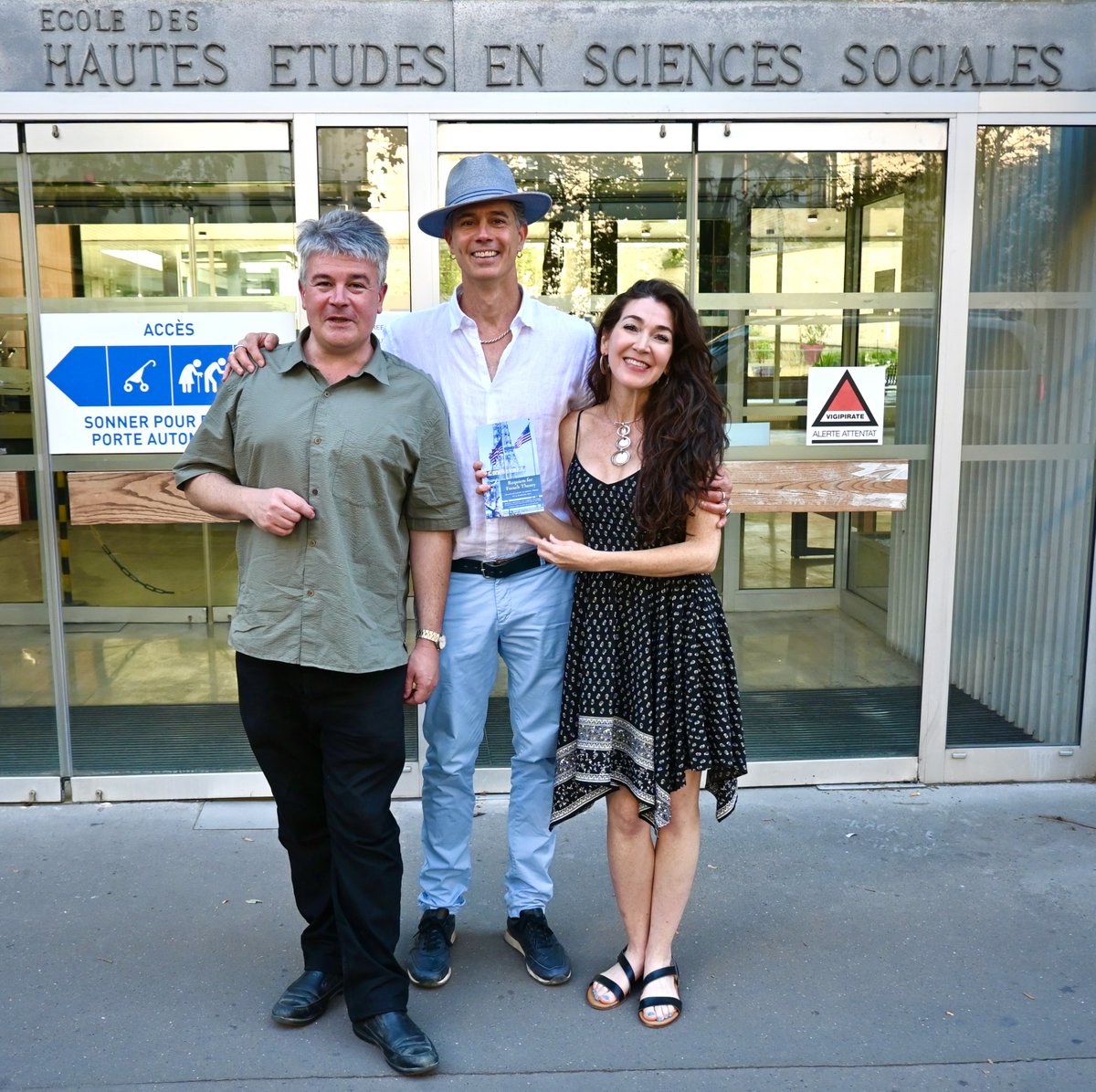
Excited to host my co-author, Aymeric Monville, in Philly this fall for some book launches! If you have ideas for venues on the East Coast or Montreal, please reach out. This will be "Requiem for French Theory" and/or "The Poverty of Left Nietzscheanism."
@monthly_review
The prevailing theory of why people in the post-Soviet world succumbed so quickly to various kinds of mysticism, pseudo-science, marketing, etc. is that, having been brought up on a diet of “Soviet propaganda”, they lacked the “media literacy” to critically assess the information confronting them in a “free” media environment. My long-running hypothesis is that the exact opposite is true.
Much of Soviet media programming was factual. It concerned questions of direct relevance to people's lives. How many tractors were delivered to this or that region? How much grain was harvested, how much steel produced? For a time it was fashionable in the West to mock such stories as the marks of a primitive society. But when supply chains falter and supermarket shelves empty, you realise how little you know about your own society's capacity to withstand hardship — how little grounds you have to assess your country's sovereignty.
Other Soviet programming answered direct social and cultural needs: children's education, travel, history, science and technology. And Soviet political commentary has largely stood the test of time; people still return to old Soviet reporting on the West for its correct analysis of racism, policing, imperialism, colonialism, and militarism.
This kind of programming aimed to cultivate an educated populace that shared common aims within the state. Of course, many Soviet citizens had developed a critical eye towards official narratives, especially in the USSR’s waning years. But, as an institution, television carried a certain weight. It was assumed, at least, that information ran through accountability mechanisms. Its purpose was not to deceive you as an individual, or to pit you against others in the marketplace. This also avoided the kinds of issues that are endemic to the US, where technologies of manipulation and deceit have produced a population that considers Fox News versus CNN — two mega-corporations representing factions of the same oppressing class — to be a legitimate axis of political antagonism. If this isn't an example of a population that is propagandized to the bone, then I don’t know what is.
In the 1990s, a heavy diet of capitalist propaganda was superimposed on the accumulated authority of the institution of socialist television. It targeted a people for whom the idea of being consumers was alien — and who were unaccustomed to the kind of ritual manipulation that capitalism had perfected. If Soviet television had any advertising at all, it was to show you what was available for sale, and where you could buy it, rather than to convince you to buy one product over another. Suddenly, all kinds of peddlers and charlatans appeared on the scene, pitching trash as treasure, and people fell for it en masse. Indeed, the data showed that people in the post-Soviet world were unusually susceptible to marketing — a mark, perhaps, of a high degree of institutional trust rather than gullibility.
Across the region, you can still see the extent to which older people look to television as authoritative, buying overpriced knock-offs through telesales channels because they offer “good deals” or “better quality”. My working hypothesis is that the collapse of the USSR is a case study in what happens when you introduce capitalist propaganda to a society used to trusting its institutions. The implication, of course, is that it is us in the West who dramatically underestimate the degree to which propaganda helps structure our worldview.