Our preferred (part) solution to preserve anon review: use alternative titles & abstracts
"Imagine a preprint goes viral on a social media platform...Many of the invited reviewers will have already seen—and indeed read—the submitted manuscript and know the authors’ identities."
Those interested in learned society journals - including finances, unpaid labour, in-kind support - might be interested in our article on the business history of @IsisJournal#histsci. https://t.co/qGmIwydUFy
If a cocktail party in an embassy lasts from 6pm to 8pm, does that mean there was 'peace' for two hours?
Or how else should one asses the temporality of diplomacy?
Read our own @andrepacher's theoretical piece in @SecDialogue here:
https://t.co/Mz6jHhmI85
Citation exchange service. One can earn scicoins by citing others' papers and use them to request citations to his/her own scientific work https://t.co/PozWUkAhGr
#citationrings#misconduct
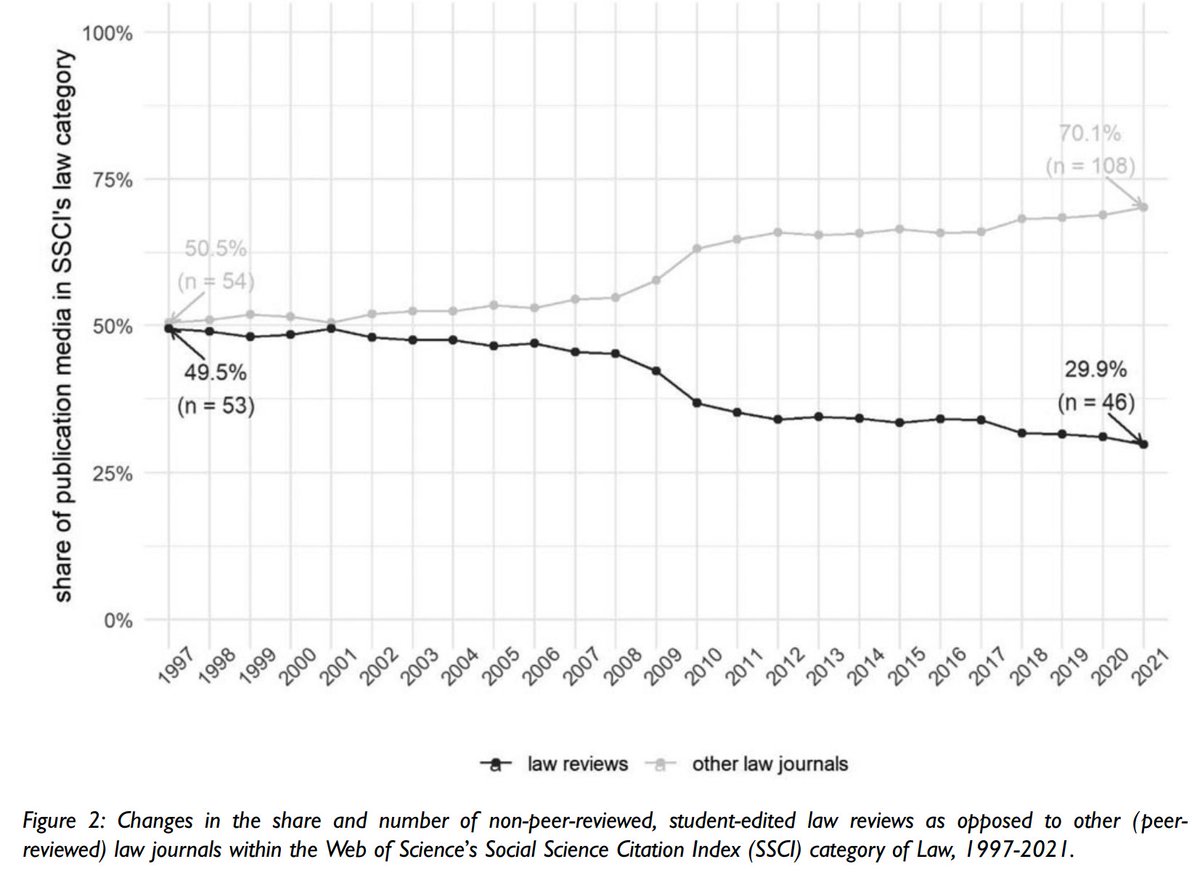
The share of student-edited law reviews has been declining (from 50% in 1997 to 30% in 2021) ...
... while peer-reviewed law journals are on the rise among all publication media in Web of Science's category of Law.
Source: https://t.co/ARhR2DaFT3
📚[Editor's Picks]
For this week, our editors recommend taking a look at the OOIR (@ObserveIR), where you can find trending papers from peer-reviewed science journals, including a list on History & Philosophy of Science research. 🔦
More at🔗https://t.co/EakPB4gLYt
Diplomacy is full of seemingly trivial phenomena – e.g., states decorating foreigners with honorific awards.
Evolutionary theory may explain why they are so ubiquitous – and why they are not so trivial after all.
Read @andrepacher´s new article here: https://t.co/QzvqRbxLNJ
"Non-strategic" bilateral diplomatic relations abound -- and despite their seeming triviality, they fulfil an important societal function: the function of peace...
... according to our own PhD candidate @andrepacher in a new paper in @ip_palgrave.
🔗https://t.co/t3KHUuNTCe
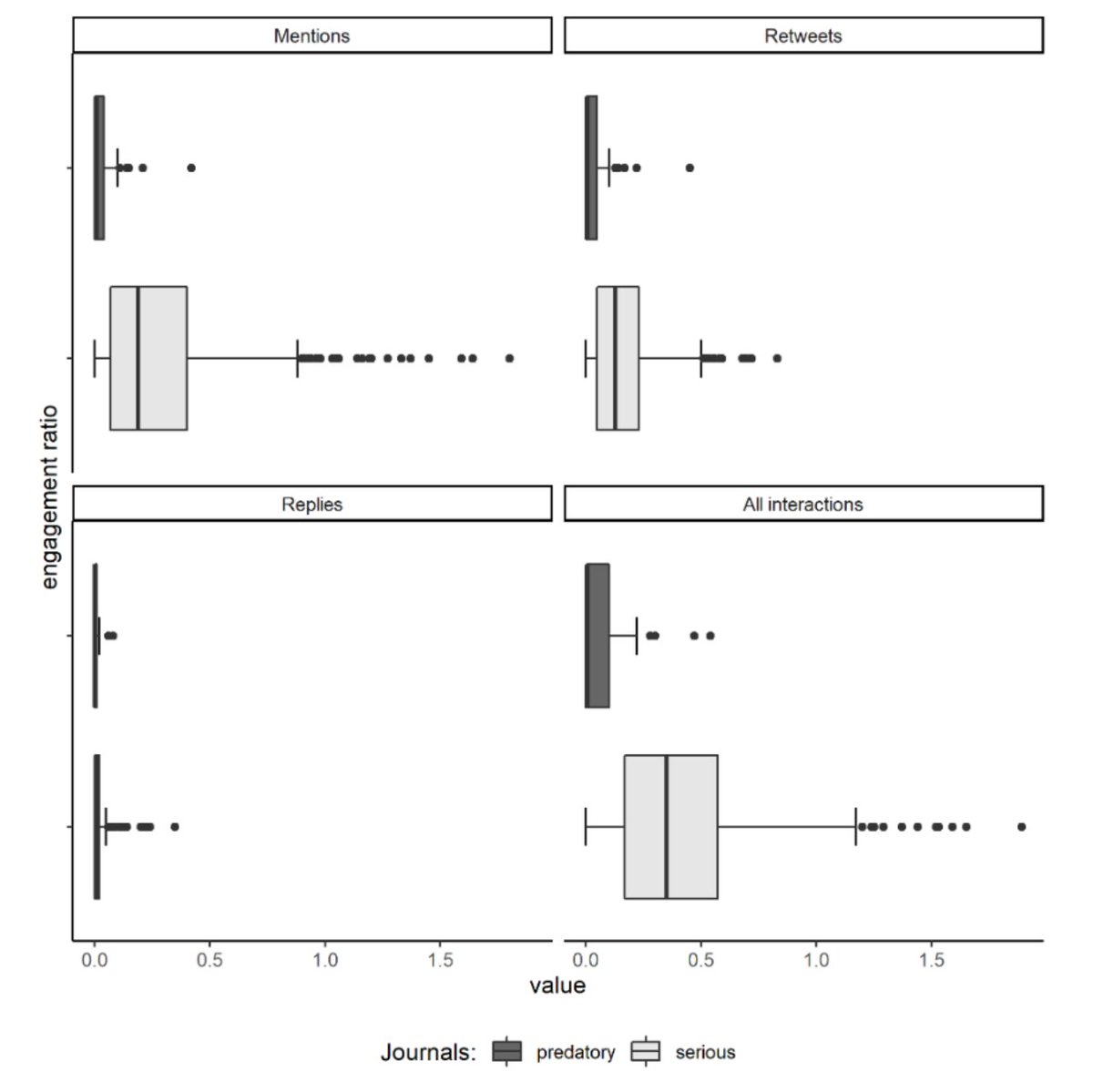
Numerous predatory journals have accounts on Twitter.
However, they are much less engaged with the community than the Twitter accounts of non-predatory journals.
(According to this preprint @MetaArXiv: https://t.co/WWApEYZpwv)
96% of all states use honorific awards.
They confer them on foreigners, rendering them an important tool of diplomacy. But why? Do they maximize power or profits?
Our own PhD candidate @andrepacher does not believe so. Read his paper @EuroJournIR at https://t.co/IeN3Nuymwn
📢 To all prospective contributors to SPSR: Effective immediately, word counts of manuscripts DO NOT include the bibliography. SPSR's editorial team strongly believes that authors should be allowed to cite all the literature that is relevant to your projects.
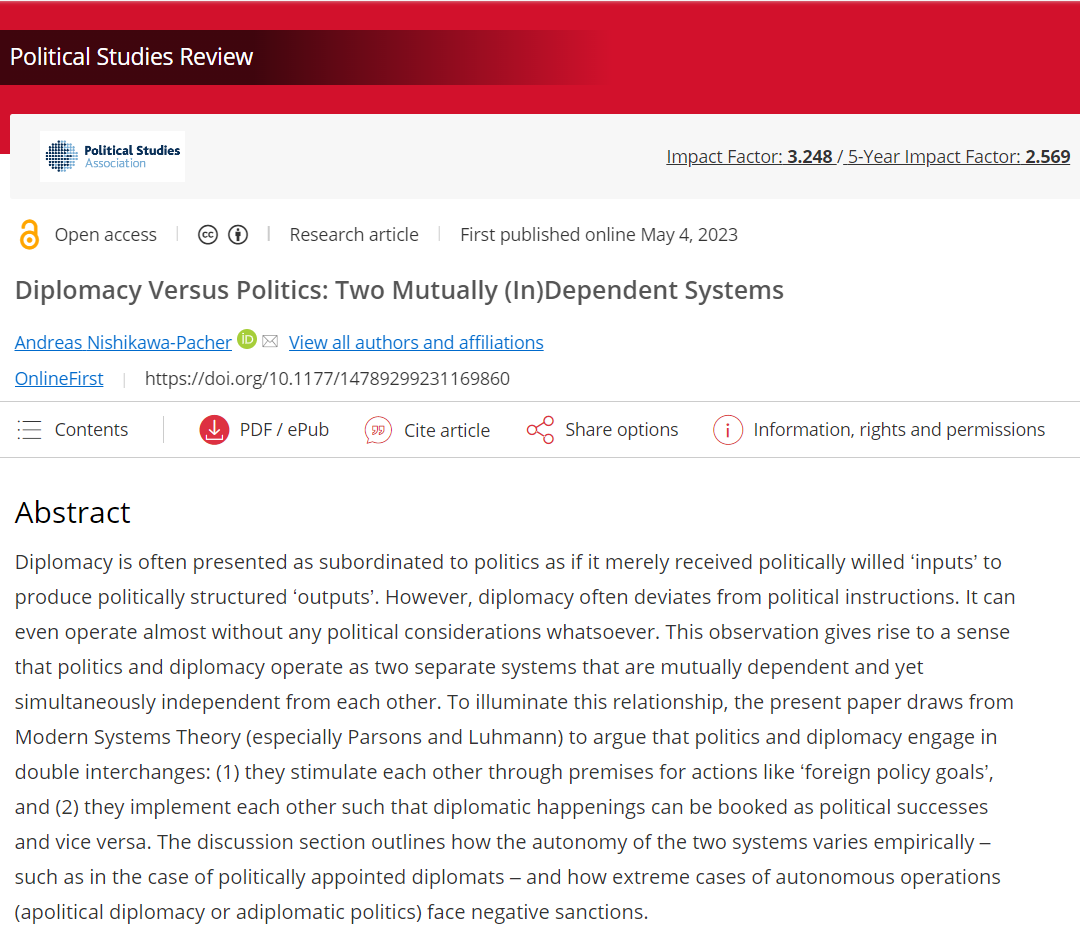
Is diplomacy merely the implementation of politics?
Or politics the implementation of diplomatic results?
Or do both systems operate autonomously?
A theoretical account by our PhD candidate @andrepacher (published in @polstudiesrev):
https://t.co/qVJ4ZpYX7X
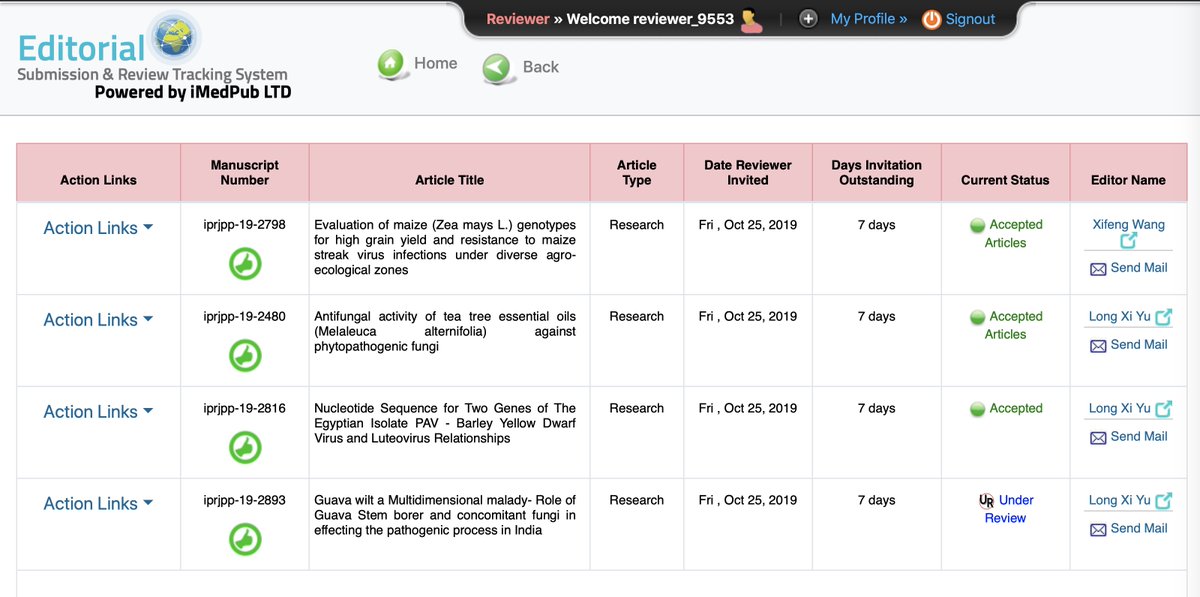
Just found out that I have a profile on @plant_pathology Research Journal of Plant Pathology and that I have reviewed (accepted) 4 papers for them. This is all FAKE. I never heard of these papers until today.
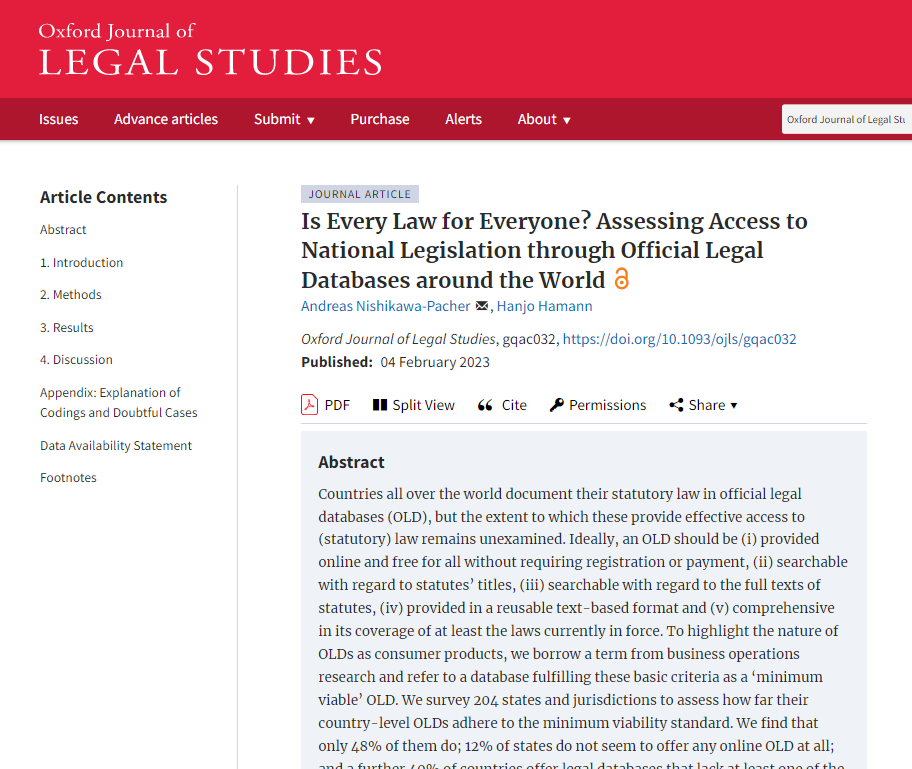
Accessing law is, from a global perspective, not easy.
More than 50% of the world's countries do not provide a legal database in a sufficiently high quality, according to a new study by our own PhD candidate @andrepacher (together with @HanjoHamann).
See https://t.co/07r7P8F5Ca
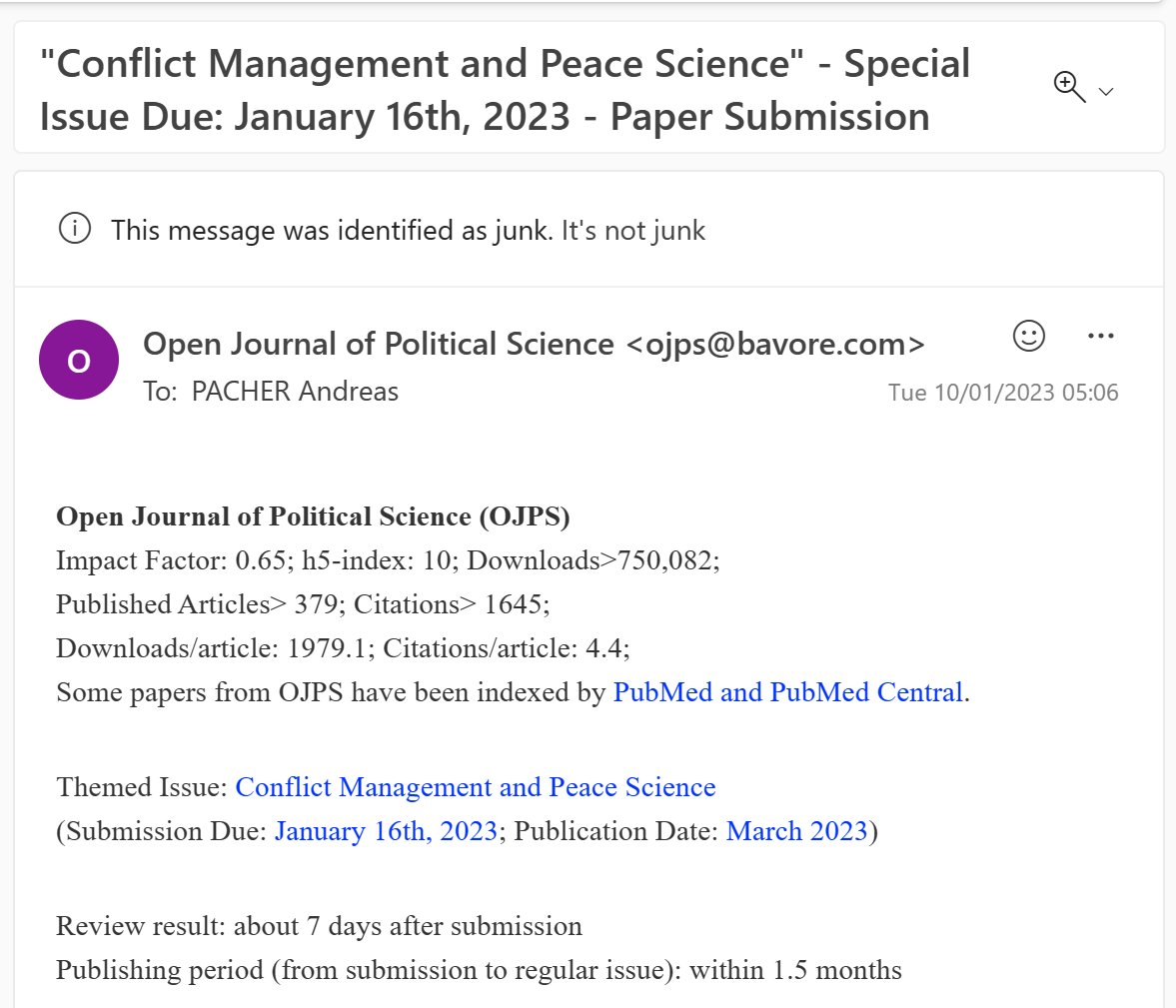
Do predatory journals publish special issues now that are deliberately named after reputable journals?
(The "Open Journal of Political Science" belongs to the predatory publisher SCIRP, and it calls for papers of a themed issue on the topic named after @cmpseditors)
"The rate at which states defend their allies in war has dropped from 81% during 1816–1944 to 7% in 1945–2016."
Interesting new finding in @II_journal at
https://t.co/D9JmyvbdW5 (by @soyounglee37)






![TapuyaLASTS's tweet photo. 📚[Editor's Picks]
For this week, our editors recommend taking a look at the OOIR (@ObserveIR), where you can find trending papers from peer-reviewed science journals, including a list on History & Philosophy of Science research. 🔦
More at🔗https://t.co/EakPB4gLYt https://t.co/ZdT4QwfrpE](https://pbs.twimg.com/media/F850PVxWkAAxLvG.jpg)