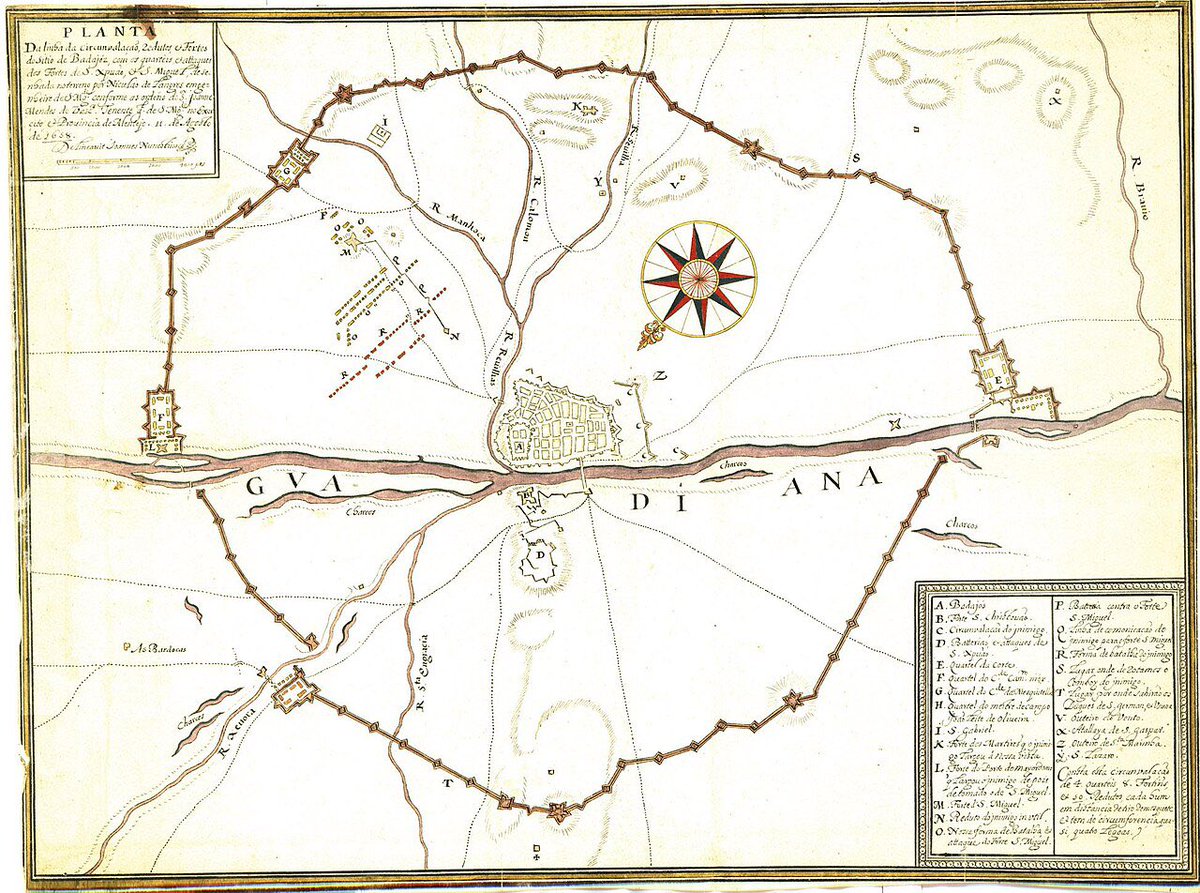
En 1658 los portugueses asedian Badajoz montando una línea de fuertes y reductos de casi veinte kilómetros de largo. Es flipante que todavía hoy se vean restos de la línea del cerco.
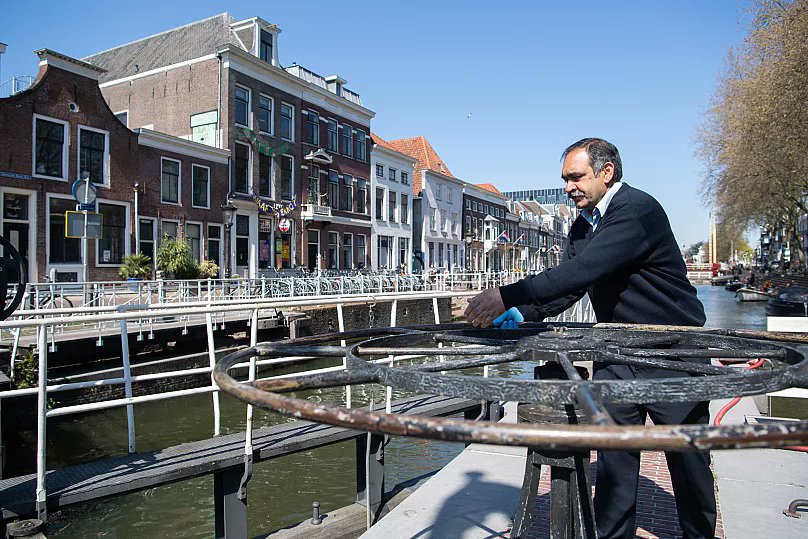
Migrating fish in Utrecht were getting stuck at a canal lock. Two ecologists fixed the problem with a doorbell.
It's called the Visdeurbe, or the "fish doorbell."
Every spring, fish migrate through the city's canals to spawn in shallow upstream waters. But the old Weerdsluis lock, built in the 1600s, stays mostly closed in early spring because boat traffic is low.
Fish pile up against the gate with nowhere to go. Predators find them, and many don't make it.
Two ecologists in Utrecht had an idea. Put an underwater camera on the lock, livestream it, and let anyone on Earth press a digital doorbell when they see fish waiting.
The lock keeper opens the gate when enough people have rung in.
In 2024, the doorbell was pressed 150,000 times by viewers from Germany, the US, the Netherlands, the UK, and dozens of other countries.
Over 20 million people tuned in to watch. Thousands of fish got through: perch, bream, pike, rudd, catfish, even eels.
You don't have to live in Utrecht to help. You can open your laptop right now and help a fish in the Netherlands get to where it's going.
The site is https://t.co/W2vgY5d2WB. Ring it.
Only one chance in this lifetime…
Like watching sunset at the beach from the most foreign seat in the cosmos, I couldn’t resist a cell phone video of Earthset. You can hear the shutter on the Nikon as @Astro_Christina is hammering away on 3-shot brackets and capturing those exceptional Earthset photos through the 400mm lens. @AstroVicGlover was in window 3 watching with @Astro_Jeremy next to him.
I could barely see the Moon through the docking hatch window but the iPhone was the perfect size to catch the view…this is uncropped, uncut with 8x zoom which is quite comparable to the view of the human eye. Enjoy.
Scientists have found that young stellar cousins of our Sun are calming down and dimming more quickly in their X-ray output than previously thought, according to a new study using @chandraxray.
READ MORE >> https://t.co/UVRS2pL7ig
@StarKiller99K Basically when season three dropped there were these edits made unironically by people about the mark variants the issue with sigma edits or ingeneral is it requires motion by all you have it comic panels what you tween it to parody
Basically this (also peak meme)
McDonald's Chicken Nugget Tetris (2023) has now been dumped and emulated. This is a significant achievement for me, as the game's microcontroller is quite modern, and tackling something like this was beyond my reach until now.
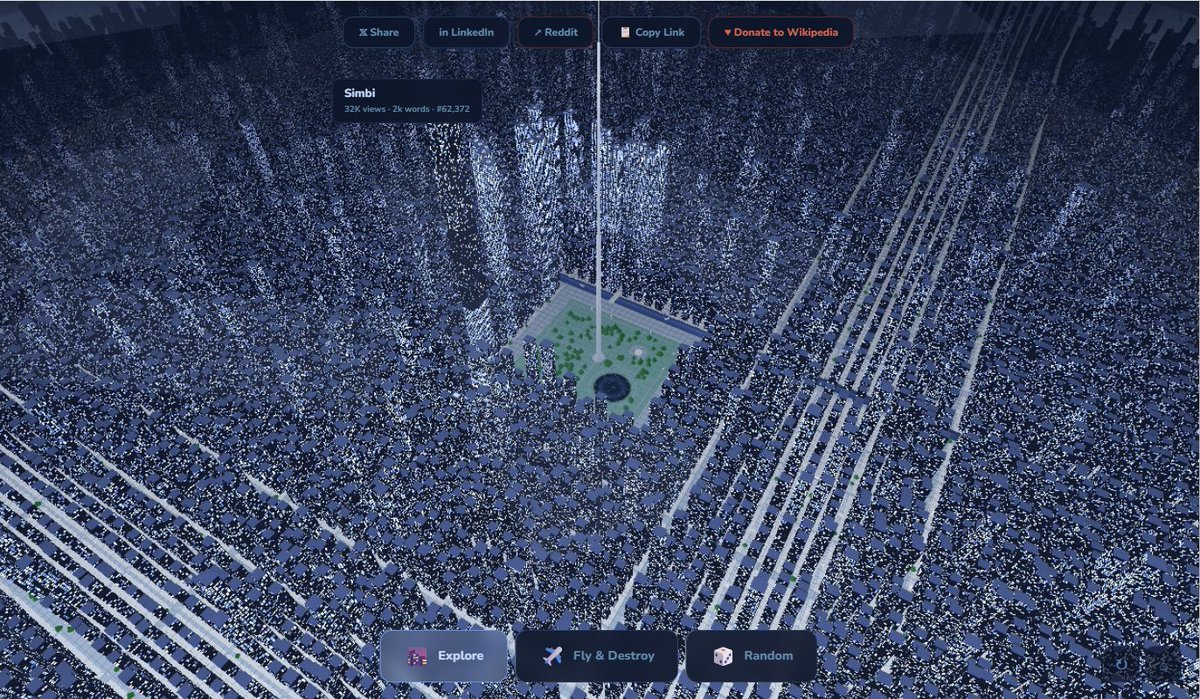
This website visualizes the 100,000 most popular Wikipedia articles as skyscrapers. I struggle to explain why but it is great fun. Have a guess what the most read article was in the last year! Source: https://t.co/2HJs3wGoNS
Most people assume that because Linux is free, the person who created it must not be making any money from it.
But that’s not how open source works.
Linus Torvalds doesn’t sell copies of Linux. There are no licenses to buy, no subscriptions, no product keys. Instead, he’s paid to maintain it.
For years, Linus has worked for organizations whose entire businesses rely on Linux staying fast, stable, and secure. Today, he works full-time at the Linux Foundation, which is funded by major tech giants like Intel, Google, IBM, and Microsoft.
And they’re not donating out of kindness.
They’re paying because their entire infrastructure depends on Linux.
Linux powers most of the internet, cloud platforms, Android devices, enterprise servers, supercomputers, and massive data centers around the world. If Linux has serious bugs or instability, it’s not just a technical problem; it’s a billion-dollar business problem.
So instead of “owning” Linux, these companies invest in the people who keep it reliable.
Linus’s job is to review code, approve what gets merged into the kernel, reject risky changes, and guide the technical direction of the system. Think of him less like a seller and more like the chief architect and gatekeeper. His expertise and judgment are what companies are really paying for.
Beyond that, he also earns from speaking engagements, recognition awards, and compensation from past roles. But the core idea stays the same: the money isn’t in selling Linux; it’s in maintaining trust in Linux.
That’s what many people miss about open source.
The business model doesn’t disappear. It simply shifts.
Instead of charging for access to software, companies pay for reliability, support, and long-term stability.
I actually ran it on my machine.
It’s a 35B parameter model that only activates 3B at a time. That’s the trick. That’s why it runs on your laptop.
On benchmarks, it’s trading blows with Claude Sonnet 4.5 and GPT-5 mini. Not Opus. Not GPT-5.
What actually impressed me? The speed is wild for a local model. No API key, no rate limits, no data leaving your machine.
What didn’t impress me? The moment you throw complex multi-file coding tasks at it, it falls apart. It can spot a bug but can’t hold the full picture of your codebase together. Writing quality gets repetitive, it is not actually Sonnet 4.5 level in real usage. Benchmarks and vibes are two different things.
But the real story is that the floor for what you can run locally just jumped two years ahead in a single release.
Open source is compounding.