Extended periods of loneliness in youth elevates schizophrenia spectrum disorder (SSD) odds. Check out our new BJPsych study: 🧵👇 | The British Journal of Psychiatry | Cambridge Core - https://t.co/1eq36HGFZV
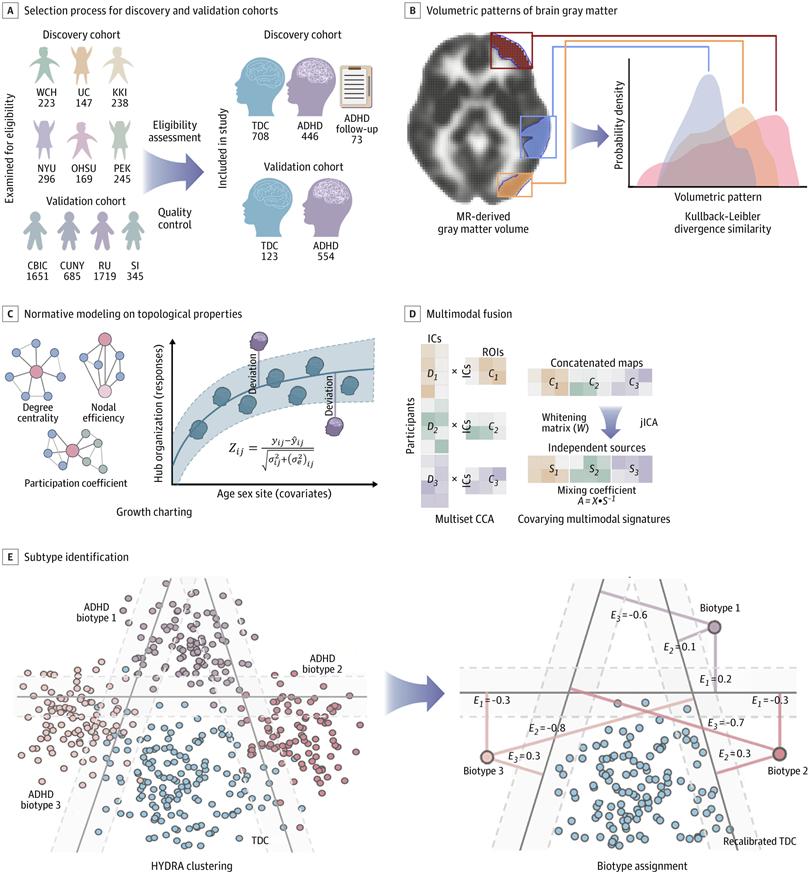
Normative modeling of morphometric similarity networks in #ADHD identified three distinct biotypes with unique clinical-neural profiles, supporting more neurobiologically informed stratification for ADHD management. https://t.co/M2NqmzshHs
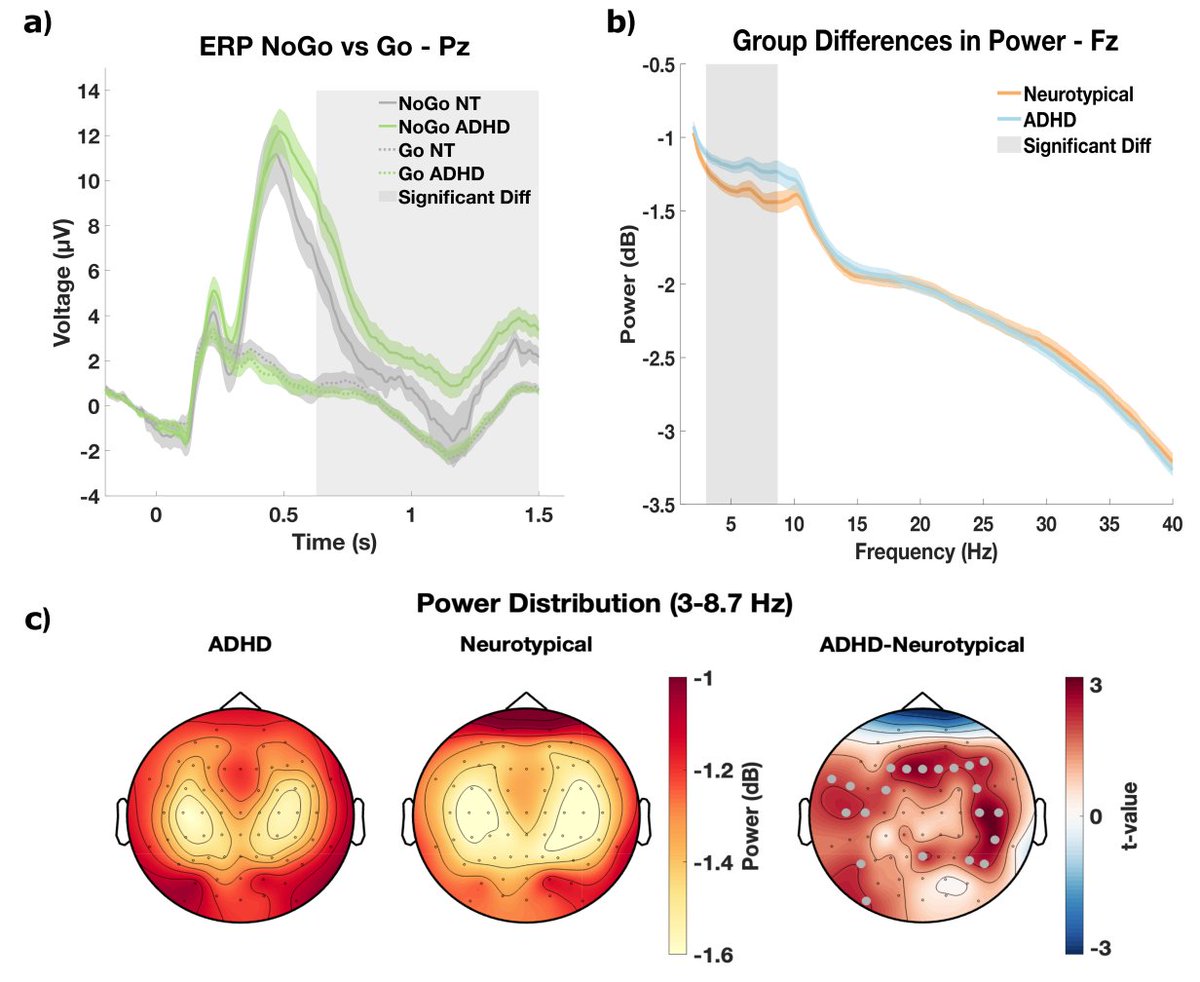
ADHD brains seem to slip into brief “sleep-like” states even while awake.
These sleep-like slow waves were linked to more mistakes, slower reactions, attention lapses, and higher sleepiness.
ADHD is not just a focus problem. It may also be a wakefulness problem.
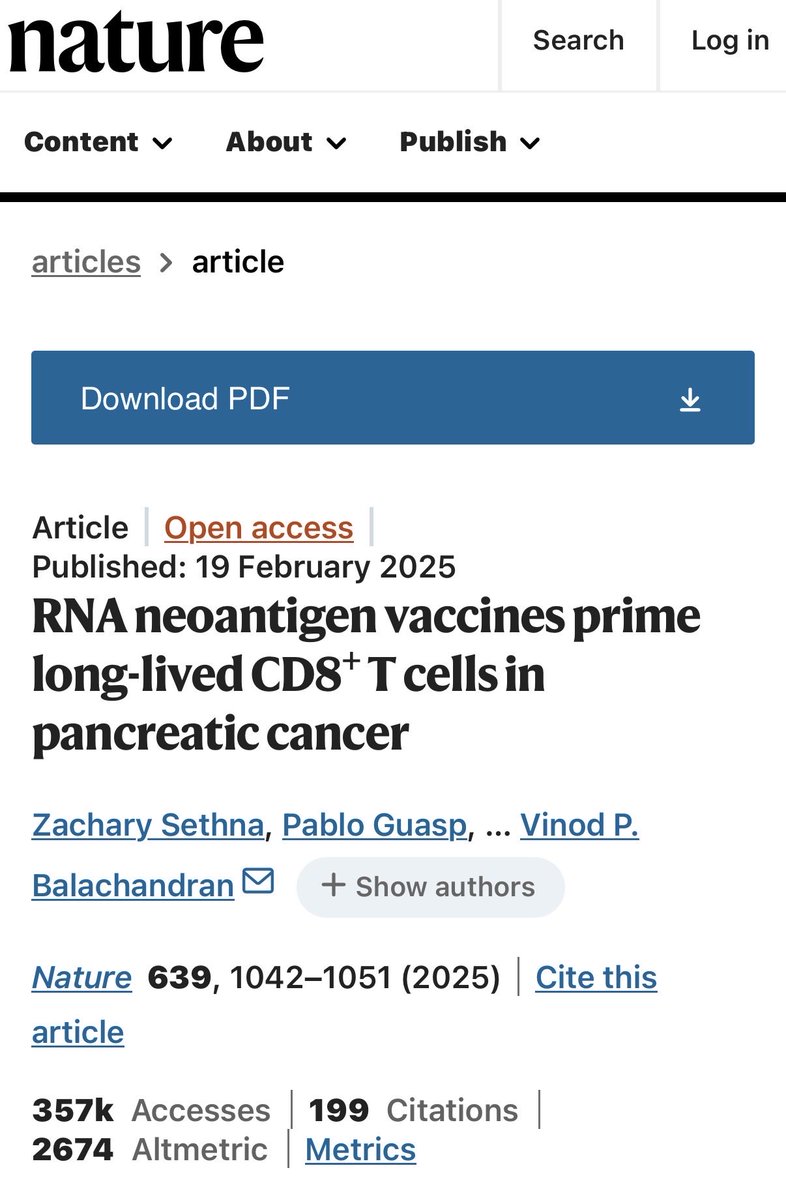
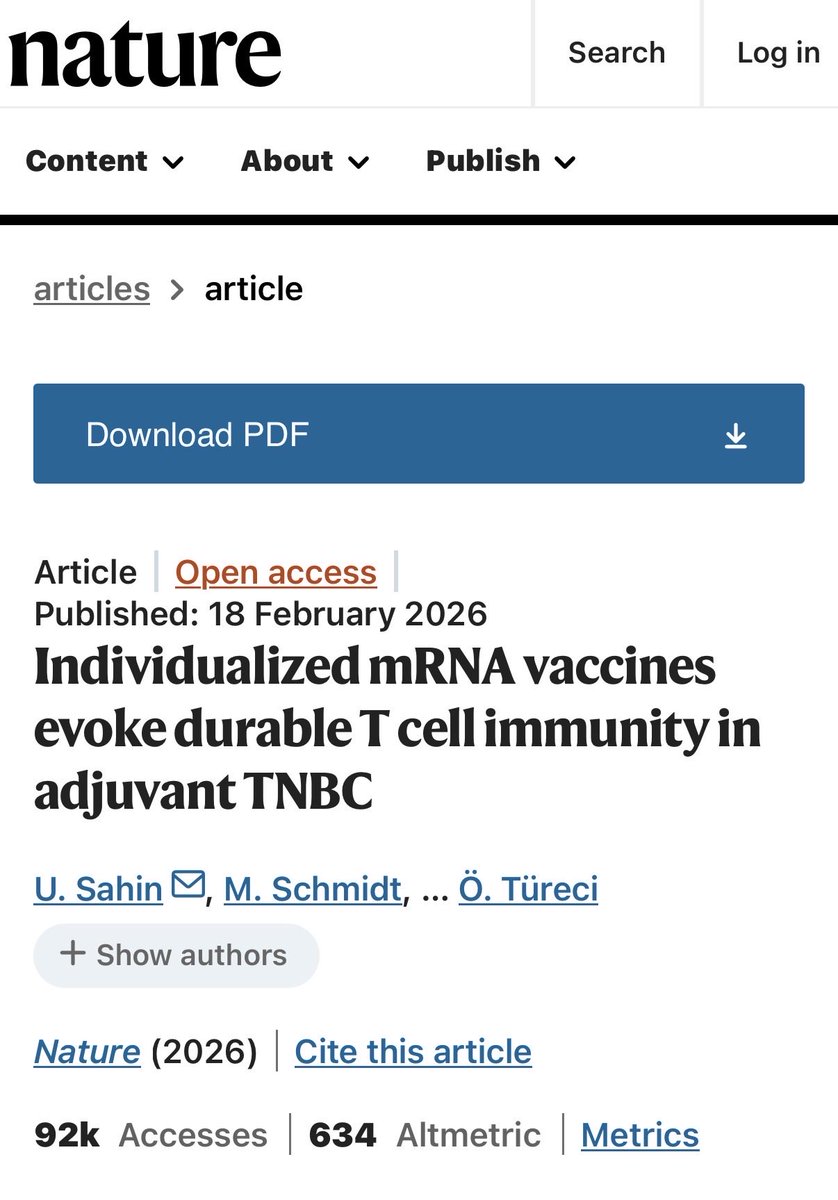
Everyone is talking about personalized mRNA cancer vaccines.
I want to share two recent Nature papers that cut through the excitement and reveal something the viral posts aren't telling you: the approach works — but only in patients whose immune system actually responds to the vaccine. In the PDAC trial, that was half.
Papers:
— TNBC-MERIT trial (Nature 2026): https://t.co/pCpKdgtWbw
— PDAC 3-year follow-up (Nature 2025): https://t.co/1oJxjJSPhS
Here's the exact number that explains why.
The PDAC trial: at 3.2 years median follow-up, vaccine responders had median recurrence-free survival that was never reached. Non-responders: 13.4 months. HR = 0.14. The T cell memory is real — some clones are projected to persist for over a decade.
The TNBC trial: 10 of 14 patients remained relapse-free at 5 years. One patient has been in remission for over 6 years, with neoantigen-specific T cells still circulating at ~2% of her CD8 repertoire.
So what separates responders from non-responders?
Across both trials: only 41 of 251 neoantigens actually triggered a T cell response. That's 16%.
Each vaccine encodes up to 20 neoantigens — the algorithm's best guess at which tumor mutations will be immunogenic. Most don't work. Half the PDAC patients didn't respond — not because they couldn't mount an immune response (they responded fine to concurrent COVID vaccines) — but because their selected neoantigens happened to miss.
This is the core unsolved problem: predicting, from sequence alone, which mutations will produce peptides that a specific patient's immune system will actually recognize.
It sounds like an MHC binding problem. It isn't. Tools like NetMHCpan handle binding affinity reasonably well. What they miss is the full causal chain:
1. Proteasomal processing — will the protein actually be cleaved into this exact peptide?
2. TAP transport — will it reach the ER for MHC loading?
3. HLA-peptide stability — across the patient's specific HLA alleles (10,000+ variants in the population)
4. T cell repertoire availability — has central tolerance already deleted the clones that would recognize it?
5. Tumor clonal architecture — is this mutation in every tumor cell, or just 30%? Targeting subclonal neoantigens leaves most of the tumor untouched.
Every step is a filter. Current prediction stops at step one.
Compounding everything: average manufacturing time in the TNBC trial was 69 days (range: 34–125) from sample to vaccine release. For pancreatic cancer, where non-responders recur at 13.4 months post-surgery, that's not a footnote. It's a window closing.
The good news: the T cell biology is sound. The mRNA platform works. The immunology is spectacular — when it works.
The bottleneck is the first step: choosing which 20 neoantigens go in the vaccine. Get that prediction right, and the responder rate moves.
This is where AI in cancer immunotherapy has to go next. Not mRNA design. Not LNP formulation. Immunogenicity prediction — integrating mutation calling, HLA typing, T cell repertoire sequencing, and single-cell tumor expression simultaneously, as a causal inference problem, not a binding affinity lookup.
We don't have a model that does this well. That's the gap.
Esta noticia me parece muy importante.
200.000 neuronas humanas cultivadas en laboratorio jugando al Doom de 1993.
No una red neuronal artificial. No un LLM. Neuronas de verdad, creadas a partir de células de piel o sangre de donantes adultos, creciendo sobre un chip de silicio dentro de una máquina que cabe en un escritorio.
Cortical Labs (@CorticalLabs), una startup australiana, acaba de publicar el vídeo y el código en GitHub (https://t.co/xNZy90EtDt).
Su ordenador biológico CL1 (unos 35.000 dólares la unidad) tiene un sistema de soporte vital interno que mantiene las neuronas vivas hasta seis meses. Temperatura, filtración de residuos, mezcla de gases, circulación. Todo dentro de la caja. Un acuario para cerebros en miniatura, si quieres verlo así.
La historia viene de lejos. En 2022, con su prototipo DishBrain, ya enseñaron a 800.000 neuronas a jugar al Pong. Las neuronas aprendieron en unos cinco minutos. Un algoritmo estándar de deep reinforcement learning tardaba unos 90 minutos en lo mismo.
Eso ya fue un hito. Pero Internet pidió lo que ultimamente siempre pide: "¿Puede correr Doom?"
Pues sí. Puede.
Ahora la cosa se pone interesante de verdad. Doom es un juego en 3D con laberintos, enemigos, armas, navegación espacial. Varios órdenes de magnitud más complejo que mover una paleta en el Pong. Para conseguirlo, el investigador independiente Sean Cole usó la API de Cortical Labs y lo montó en menos de una semana (cuando el Pong llevó más de un año de desarrollo). El sistema traduce la señal de vídeo del juego en patrones de estimulación eléctrica. Las neuronas "sienten" lo que pasa en la pantalla. Si disparan en un patrón concreto, el marine dispara. Si disparan en otro, se mueve a la derecha. Aprendizaje adaptativo en tiempo real, con latencia por debajo del milisegundo.
Esto ya no es Pong. Esto es otra cosa bastante mas seria y compleja.
Y aunque el hype con esto puede ser tremendo creo que también es importante leer la letra pequeña.
El propio Sean Cole, en la documentación del repositorio de GitHub, reconoce algo que casi nadie está mencionando: su decodificador (el software convencional que traduce los disparos neuronales en acciones del juego) tiende a convertirse en lo que él llama un "policy head". Es decir, el software de PyTorch que rodea a las neuronas puede estar aprendiendo a resolver el juego por su cuenta, esquivando a las propias neuronas. Cole incluso ha incluido modos de ablación en el código para que otros investigadores puedan probar si las células realmente importan o si el silicio está haciendo todo el trabajo en la sombra.
Eso es honestidad científica de la buena. Y dice mucho del estado real del proyecto: lo que han resuelto de forma brillante es el problema de interfaz (conectar neuronas vivas con un entorno digital en tiempo real). Lo que todavía no han demostrado es que 200.000 neuronas humanas puedan ser las que realmente toman las decisiones en lugar de ir de pasajeras.
Y aquí es donde, en mi opinión, esto se pone más interesante que el vídeo viral.
Porque lo que Cortical Labs está construyendo no es un juguete para que Internet se ría. Están creando la primera plataforma comercial de computación biológica. Ya han vendido 115 unidades. Un rack de 30 CL1 consume entre 850 y 1.000 vatios, comparable a un servidor GPU de gama media. Y han abierto una nube (Cortical Cloud) para que cualquier desarrollador pueda desplegar código directamente sobre neuronas vivas sin tener un laboratorio.
Las aplicaciones médicas son las que me parecen realmente brutales. Poder modelar enfermedades cerebrales, probar fármacos sobre neuronas humanas reales sin necesidad de modelos animales, estudiar cómo procesan información las neuronas de forma directa... Cortical Labs lo llama "Inteligencia Biológica Sintética" para diferenciarlo de la inteligencia artificial convencional. Y creo que el nombre es acertado.
Igual que pasó con Internet a finales de los 90, donde mucha gente miraba las primeras webs y decía "¿para qué quiero yo esto?", puede que estemos viendo los primeros pasos de algo que dentro de unos años nos parezca obvio. Neuronas humanas cultivadas como componente de computación, aprendiendo de datasets minúsculos comparado con lo que necesita cualquier LLM, consumiendo una fracción de la energía.
La pregunta es si esto será un complemento de la IA de silicio o algo completamente distinto. Me da que todavía es pronto para saberlo. Pero una cosa tengo clara: cuando la biología y la computación se mezclan a este nivel, las reglas del juego cambian. Y 200.000 neuronas jugando al Doom, por chapucero que sea el resultado hoy, es el tipo de demostración que dentro de 10 años miraremos como miramos ahora aquella primera web de Yahoo.
There's a fruit fly walking around right now that was never born.
@eonsys just released a video where they took a real fly's connectome — the wiring diagram of its brain — and simulated it. Dropped it into a virtual body. It started walking. Grooming. Feeding. Doing what flies do.
Nobody taught it to walk. No training data, no gradient descent toward fly-like behavior. This is the opposite of how AI works. They rebuilt the mind from the inside, neuron by neuron, and behavior just... emerged. It's the first time a biological organism has been recreated not by modeling what it does, but by modeling what it is.
A human brain is 6 OOM more neurons. That's a scaling problem, something we've gotten very good at solving. So what happens when we have a working copy of the human mind?
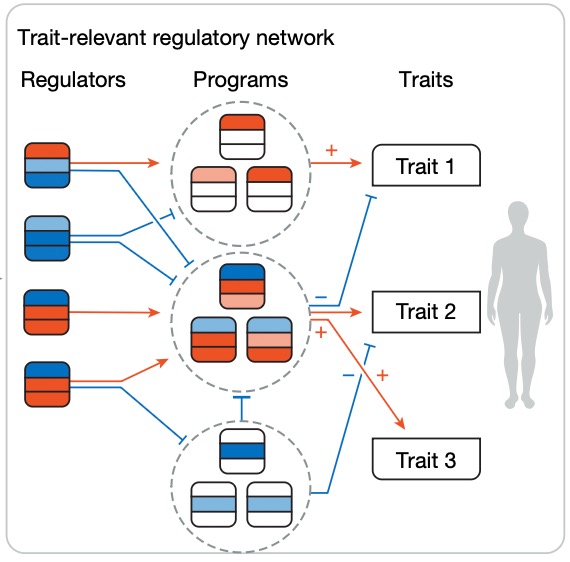
Modern GWAS can identify 1000s of significant hits but it can be hard to turn this into biological insight.
I'm excited to share our new work combining genetic associations and Perturb-seq to build interpretable causal graphs, out today in @Nature:
🚨 New today in @ScienceMagazine !!🚨
We’re publishing the results of the largest AI persuasion experiments to date: 76k participants, 19 LLMs, 707 political issues
We examine “levers” of AI persuasion: model scale, post-training, prompting, personalization, & more…
🧵:
🚨 Semaglutide completely prevents metabolic side-effects caused by antipsychotics:
Compared to placebo after 30 weeks:
» Remission from prediabetes: 81% vs 19%
» Weight: -20 lbs
» Waist size: -2.4 in.
» Psychosis: same
Practice changing.
Published yesterday @JAMAPsych
"Los periodos prolongados de soledad en la juventud aumentan la probabilidad de padecer Trastornos del espectro de la Esquizofrenia"
Genial trabajo de @andreu_bernabeu y @gonzalez_penas@PsiqInfantil
Integrating CAL with schizophrenia polygenic scores boosts positive predictive value from ~2.8% (genetics alone) to 17% overall—and up to 22.5% in females.
Extended periods of loneliness in youth elevates schizophrenia spectrum disorder (SSD) odds. Check out our new BJPsych study: 🧵👇 | The British Journal of Psychiatry | Cambridge Core - https://t.co/1eq36HGFZV
Prolonged loneliness can be assessed quickly in clinical and community settings, while polygenic scores are becoming more accessible. Harnessing both measures may enable early identification and tailored preventive strategies in youth.
Examining the sensitivity for environmental influences by conducting a GWAS on differences between identical twins - very clever design!
Out now in @NatureHumBehav: https://t.co/KSOEiU9G8H
In every civilization, people end up sorted into levels of socio-economic status (SES). We explore the history, present, and future of scientific research on the complicated relationship between SES and DNA in @NatureHumBehav 💰🧬🎓
Link: https://t.co/Q5wAbt2B46
Thread below 👇🏽
The truth is that the scientific process is horribly inefficient and wasteful. But the solution is NOT cutting funds and it’s NOT top down guidance of what should be studied. Instead, we should revolutionize how we publish and improve peer review.
Anatomy of Moncrieff's Anti-Medication Playbook
@joannamoncrieff has a carefully honed 3-step strategy of attacking psychiatry, which she has used with remarkable power against the medical establishment.
Step 1: Identify a narrow, technical assertion pertaining to the neurobiology or medical treatment of mental health problems, and show that the evidence supporting that assertion is not as strong or high quality as commonly believed.
Step 2: Use the uncertainty of evidence to make the claim, or imply, or pretend that the assertion has been shown to be false. [This step is a logically invalid inference since weak evidence in favor of thesis A does not equal strong evidence in favor of inverse A.]
Step 3: Use the claim as a stepping stone to bash medical psychiatry by making claims that extend far beyond the scope of the narrow, technical assertion in step 1. Rely on rhetoric, ignorance of the audience, and prevalent prejudices to pull this off, and make strategic motte-and-bailey retreats when needed.
This 3-step attack is bolstered by 2 ancillary moves:
a) Make isolated demands for rigor, and set the required bar of evidence to a level that favors one’s own position, while simultaneously lowering the bar or shifting the burden of proof when it suits your favored positions.
b) Pretend your personal opinion carries the same epistemic weight as the clinical consensus of the medical community.
See details of how this play out in my post: https://t.co/PAfmFj7YqJ









![awaisaftab's tweet photo. Anatomy of Moncrieff's Anti-Medication Playbook
@joannamoncrieff has a carefully honed 3-step strategy of attacking psychiatry, which she has used with remarkable power against the medical establishment.
Step 1: Identify a narrow, technical assertion pertaining to the neurobiology or medical treatment of mental health problems, and show that the evidence supporting that assertion is not as strong or high quality as commonly believed.
Step 2: Use the uncertainty of evidence to make the claim, or imply, or pretend that the assertion has been shown to be false. [This step is a logically invalid inference since weak evidence in favor of thesis A does not equal strong evidence in favor of inverse A.]
Step 3: Use the claim as a stepping stone to bash medical psychiatry by making claims that extend far beyond the scope of the narrow, technical assertion in step 1. Rely on rhetoric, ignorance of the audience, and prevalent prejudices to pull this off, and make strategic motte-and-bailey retreats when needed.
This 3-step attack is bolstered by 2 ancillary moves:
a) Make isolated demands for rigor, and set the required bar of evidence to a level that favors one’s own position, while simultaneously lowering the bar or shifting the burden of proof when it suits your favored positions.
b) Pretend your personal opinion carries the same epistemic weight as the clinical consensus of the medical community.
See details of how this play out in my post: https://t.co/PAfmFj7YqJ](https://pbs.twimg.com/media/GjRXkGvXIAAx4fc.jpg)


