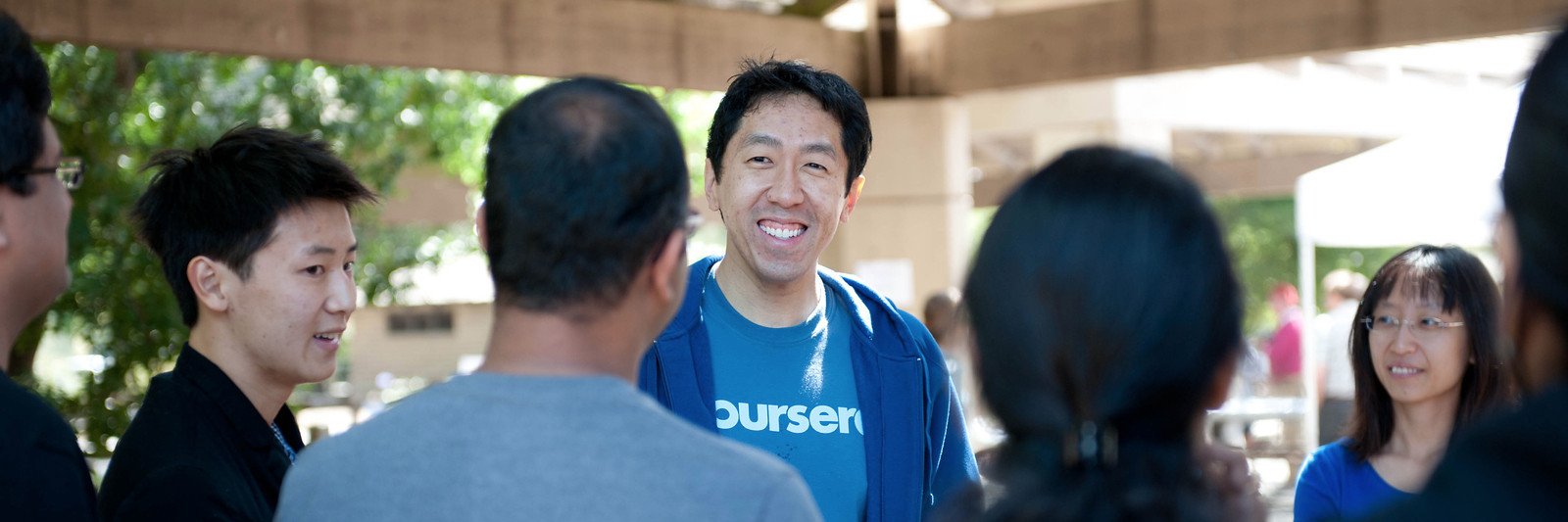
Workera is being acquired by Pearson! It's been a privilege to support CEO @kiankatan and the whole Workera team through this journey. Back in 2019, Kian had the insight that rigorous skills measurements would be important. With recent advances in AI, this is now more true than ever. Workera's technologies for rigorously measuring people's skills in different tasks and job roles are helping many businesses understand where their employees are strong and where there are areas for development.
With Workera and Pearson combining forces, I'm delighted that under @omarabbosh and Kian's leadership. Workera now has the potential to support an even larger number of people and businesses. Thank you, Kian and the Workera team for having me serve as the company's chairman, for launching Workera out of https://t.co/zpIxRSuky4 and AI Fund, for your friendship over the years, and for your important work advancing assessments.
I have some big news to share. Workera is being acquired by Pearson!
Over six years ago, I was teaching at Stanford and thinking about a simple question: what if we could understand everyone's skills as precisely as the best teachers understand their students?
I believed it could lead to a more meritocratic world. People could be recognized for what they can actually do, not just their credentials or network. They could understand their strengths and gaps, and rapidly develop the skills they need next. Organizations could discover talent they might otherwise overlook and manage their workforce with trusted skills data.
What felt like a dream at the time is now a reality. Workera brought together experts in AI, psychometrics, and enterprise execution to build AI systems that reinvent how skills are measured. Our team pioneered AI-native skills intelligence, agent-led multimodal assessments, and even ambient skill measurement. We've established skills benchmarks across organizations, industries, and roles.
And this mission feels more important today than ever! AI is changing work as we speak. Some roles are disappearing, new ones are emerging, and we need to help billions of people develop new skills and navigate what comes next.
When I first spoke with @omarabbosh, it became clear that our companies shared the same mission. Pearson has helped generations of people learn and prove what they know. If you're reading this, there's a good chance you've taken a Pearson assessment, learned from their educational materials, earned a professional credential through them, read their psychometrics research, or benefited from their enterprise products in many other ways.
Bringing together Workera's technology and AI talent with Pearson’s global scale and deep expertise in learning and assessment means we can pursue our mission at a scale we could only imagine on our own.
To our customers and partners, thank you for believing in us. Expect even more innovations coming out of Workera and Pearson.
To the Workera team, I’m incredibly proud of what you've built, and your continued dedication to our beautiful mission. To our board and our chairman @AndrewYNg, thank you for your belief, support, and mentorship.
To everyone, we have big plans for this next chapter, so please stay tuned.
We're just getting started! 😊
The OpenAI-Hugging Face hack was enabled by weak sandboxing. It is great that Nvidia is releasing open source tools for sandboxing AI agents. OpenWorker, our open-source agent harness supporting cybersecurity workflows, is proud to support this.
A sandbox gives an agent limited permissions. OpenWorker is building on Nvidia OpenShell and will support running each agent's commands inside a sandbox. Only the files relevant to the task go in. Secret API keys, your web browser login credentials, the ability to access arbitrary websites, are inaccessible to the agent by default. These restrictions are implemented in deterministic code rather than by prompting an LLM, which can make mistakes or be susceptible to prompt injections. Further, all actions are logged for monitoring and audit.
I'm grateful for @JensenHuang's leadership making AI agents more secure. OpenWorker (which @rohitcprasad and I are working on) will continue to improve security for agents.
Today, with over 100 industry partners, we introduced the NVIDIA Open Agent Safety Platform, bringing together OpenShell and Sentry.
Artificial intelligence is extraordinary technology that will advance discovery, productivity, security, health, and prosperity for generations to come.
But its full promise can only be realized when people have confidence that AI is being built to be safe and deployed with wisdom and responsibility.
This is bigger than a single product. It's the beginning of an open ecosystem to build the trust layer for safe agent systems.
Together, we are building the foundation of the AI economy.
Trust and innovation are not in conflict. Safety is how trust is earned. We must build not only the most capable AI, but the most trusted AI, so that this extraordinary technology can realize its enormous promise for the world. https://t.co/ugYWQ1MyRi
The loudest voices stoking fears about AI dangers have made tremendous headway in the past two weeks. AI technology has not taken some unexpected, dangerous turn, but the hype around it — propelled by what appears to be a well orchestrated PR campaign — has drummed up considerable fear. I worry that it represents a setback for our field.
I have written frequently that fears of AI are overhyped. AI’s capabilities can be uncannily human-like and unpredictable, and it’s rational to worry when people who are directly involved express concerns. But I see the problems as a sign of the engineering work that ahead, rather than insurmountable barriers or the sky falling. AI technology continues to advance — which is a good thing! — but technical advances, poorly understood by the public, give those who seek to generate hype repeated opportunities to do so.
First, I don’t see any step up in the risk of human extinction from AI compared to a few months ago. The theories about this remain the same fantastical, science fiction scenarios as a few months ago. The biggest change in AI risk is its cybersecurity capabilities — a topic which we should take seriously — but this, too, will not lead to the end of the world.
The most notable recent event leading to increased fear was when an OpenAI team deployed an agent swarm that hacked into Hugging Face. Much of the popular press contained significant hype. For example, some publications reported that a swarm of 1,200 agents carried out the attack. While this was technically accurate, as I write this, I have about 1,300 processes running on my laptop. Yes, the ability to get large swarms of agents to work in parallel on a task is a significant technical advance, And, in computing, many processes run at the same time. So this shouldn’t be seen as some magical capability.
Additionally, OpenAI’s buggy sandboxing and monitoring processes were key to enabling this incident. Fixing these bugs and putting in place improved monitoring would be appropriate fixes, not pausing AI. There are many well known ways to attack software systems. The main advantage of AI agents is that they are relentless. They will tirelessly try many tactics — and have the patience to chain vulnerabilities together — that previously would have taken an infeasible amount of human effort. But in the long term, I believe the advantage will lie with defenders (because they have more information with which to identify bugs, which they can fix), but the cyber-threat landscape has changed significantly. There are still bottlenecks to identifying and exploiting a vulnerability. AI agents still have to try a lot of things to see what works, and taking these actions takes time and might be detected by defenders. This is why, even though it is now easy to obtain versions of leading open weight models that have had their guardrails removed or weakened, so they will not refuse to try to execute cyber attacks, the world has not ended.
I am also concerned about the anthropomorphization of AI in a lot of reporting, where LLMs and agents are unnecessarily treated as if they were people. If I wield a hammer, miss a nail, and accidentally dent the wall, it’s not the fault of the hammer. The problem lies in how I used the hammer. Similarly, if I prompt an agent and it hacks into someone else’s system, the responsibility lies with me, not the agent.
Of course, we want to build systems that are as safe and predictable as possible. (For example, an unsafe hammer would be one whose head randomly flies off under normal use.) Today’s agentic systems are not predictable, but I see no reason why, by applying sound engineering practices, we won’t be able to make them extremely safe to use. One new element in the forecasts of AI-enabled doom is AI companies disclaiming responsibility for their own products. “I didn’t do it; my out-of-control agent did!” There’s a balance to be struck between the responsibility of the tool maker and the tool user, but when something goes wrong, let’s hold the people building and/or using the hammer responsible, rather than the hammer. (By the way, if you’re worried about AI bioweapon risk, David Bellamy has a great post on why this, too, is overhyped. Briefly, the bottleneck in building a bioweapon is not intelligence, but lab work and manufacturing.)
Pausing AI progress will create much more harm than benefit. First, our adversaries will certainly not slow down. Second, engineering requires discovering problems empirically so we can fix them. If we pause AI by a decade, we will also delay finding and implementing safety engineering fixes by about the same duration.
Of course, the incentive to stoke fears — for regulatory capture, to garner attention, or to make one’s technology seem more powerful — remains the same as before. Disclaiming responsibility is a new one. Taking a hard technical look at the actual risks however, I see little factual basis for the degree of fear that’s been stoked up. We still have hard research and engineering work ahead to improve AI safety, but the beneficial applications continue to vastly outweigh the risks, and we should keep building.
[Original text (with links): https://t.co/jni2tWazAH ]
With AI Engineering skills, you actively shape the build: You influence what gets built, and drive the build loop. Here're key skills to do this. https://t.co/sysOYdzuZY
The most important skills for using AI coding agents effectively. Presenting the AI Engineering Skills Map for using coding agents. https://t.co/GrEw7wG5Wz
How have software engineering fundamentals changed with agentic coding? Here is our AI Engineering Skills map for software engineering fundamentals. https://t.co/cnRLj43DLs
OpenWorker -- an open source agent that doesn't just chat but completes tasks on your laptop -- just released a new version with many features for security workflows.
After our initial release, many users found it especially useful for cybersecurity. Attackers are already using AI; OpenWorker is committed to giving defenders the same leverage. Running an agent requires both (i) A model and (ii) A harness (the software around the model). Because the OpenWorker harness is fully open source, security teams can audit it to make sure we haven't built any backdoors that exfiltrate your code and data to some company or even a foreign adversary.
OpenWorker now comes with built-in cybersecurity agents for (i) Scanning your code for vulnerabilities. (ii) Scanning dependencies for supply chain injections. (iii) Checking your cloud security configuration for attack surfaces. This enables developers to do much more security work before deployment (part of what's called the "shift left" movement).
You choose the model: you can run open weight models fully locally so sensitive code never leaves your machine. This helps with legitimate security work (like reproducing a known exploit to defend against it) that can trigger refusals in leading closed models. Or use your ChatGPT subscription, or stealth preview models like Ox Alpha, or any model via API key.
Thanks also to all the open source contributors!
Join work with @rohitcprasad so please follow him too to get more frequent updates.
Try it out: https://t.co/QPZLudn7ug
Code: https://t.co/NYCiTD6hSq
In the fight to defend openness in AI, the Marin project is a precious demonstration of openness in model training, with open code, data, recipes, even experimental results. Releasing AI research openly used to be the norm; I'm grateful for @percyliang's open lab approach.
🚢 Marin 535B-A23B started training this week! As usual, the whole process is open.
Voyage plan: pretraining (80%) + midtraining (20%) on 18.75T tokens on 11 x GB200 NVL72 for ~3 months (2.7e24 FLOPs). Post-training will follow.
Before kicking off the run, we trained a 4-rung scaling ladder from 1.6B-A61M (48B tokens) to 27.7B-A1.2B (926B tokens) to debug issues, and to make a forecast of our hero run. This is by far our biggest run, so definitely expecting the unexpected.
@MSaintjour I want to help people be skilled at AI Engineering, build amazing projects, and find great jobs. This will be a broad effort from DeepLearningAI, and we have a lot that's still cooking. Will be way beyond a single course!
Today we're also opening the weights for Muse Glimmer, a great 30B parameter dense model that can run locally. Soon we'll also release the weights for Muse Spark 1.2, our latest foundation model. Meta is a strong supporter of open source and I'm proud of these releases. Congrats to @alexandr_wang and the MSL team for all your great work on these models.
Announcing Discovery Loop!
I am very excited to announce that, along with my longtime friends and collaborators @Sanjay_Ghemawat, @OriolVinyalsML and @quocleix, we are founding Discovery Loop (@DiscoLoopAI), a Public Benefit Corporation whose mission is to automate machine learning, science, and engineering to accelerate discoveries and progress. The four of us have worked together for 14 to 30 years, and have helped build some of the world’s most used products, infrastructure and AI models, and we’re excited to turn our attention to this ambitious endeavor.
♾
Learn more at: https://t.co/Rv3LMdLluK
Fifteen years ago, @Coursera and online courses changed education. It worked better than almost anyone expected, expanding access by opening up where you can learn. But how you learn remains largely the same as it has for centuries: it is still one-size-fits-all, taught the same way to each person who shows up.
We now have an opportunity to change how learning happens. With advances in AI, we can now build a custom learning guide for each person. We will turn learning from one‑to‑many to one‑to‑one. I'm starting LearnVector to invent this next generation of learning. We are starting with a $100M investment from Coursera, and plan to collaborate closely with Coursera and Udemy.
Good learning needs much more than just a chatbot. Research shows that chatbots without guardrails harm learning. They help complete tasks and enable students to do better on homework. But cognitive offloading to a chatbot results in them being less skilled. And, you cannot always trust what a chatbot tells you.
In contrast, LearnVector will plan a path with you, adapt to how you learn, and patiently stay with you until you’ve mastered new skills.
One thing has not changed in all this time. People want learning they can trust: material that is accurate, relevant, and worth the effort you put into it. Anything less wastes the most valuable thing a learner has: time. Coursera has a trusted library of materials from authoritative sources. LearnVector plans to work with Coursera to bring this trustworthy learning to everyone. I'm grateful to Greg Hart and the entire Coursera team for supporting LearnVector.
I look forward to working with our talented team to change how we learn, and accelerate human development.
https://t.co/TqFUDFd1hb
Good move by @JensenHuang. The Nvidia letter is well written and worth reading. As we saw with the OpenAI-Hugging Face hack, we need open models and harnesses for defense.
Lets stop believing the PR that closed models are safer. - that's just regulatory capture.
Attackers have frontier AI. Defenders need a frontier AI ecosystem—the best open and closed models, force-multiplied by a global community.
During the Hugging Face incident, closed AI blocked essential forensics. An open-weight frontier model helped contain the intrusion.
That’s why we created the Open Secure AI Alliance.
@Mononofu@JensenHuang This is a false equivalence. Everyone has the right to keep their code private. The problem is when someone tries to stop OTHERS from open sourcing.
Announcing OpenWorker! An open-source agent that doesn't just chat with you, but delivers finished work -- like hand you a polished document, send a slack message, or update a calendar entry.
Ask it to prepare a customer brief, untangle your calendar, draft a report, or triage a Slack alert. It works across your files and everyday tools, produces the deliverable, and checks in before doing anything consequential.
OpenWorker runs on your Mac, with Windows support coming soon. It does not lock you into any one model. Bring your own API key and run it with GPT 5.6 Sol, Claude Fable, Gemini 3.6, an open weight model (like Kimi, GLM, DeepSeek, Inkling), or Ollama to keep your data local. Your data does not leave your machine except through an LLM provider and integrations that you choose.
@rohitcprasad and I are building OpenWorker because AI coworkers are an important way to get work done, and we want there to be an open, privacy-preserving, model-independent option. Check it out and let us know what you think!
Try it out: https://t.co/P0mGnI1o31 (requires your own API key)
Source code: https://t.co/NYCiTD6hSq
New course: Build LLM applications that respond to user requests quickly by running on hardware designed for fast inference. This short course was built with @Cerebras and taught by @zhennydez, @duerr_seb, and @MilksandMatcha.
When a model generates text, much of the time is spent moving its weights out of memory and into the compute units. Inference-optimized hardware minimizes that movement, making token generation several times faster than on a typical GPU setup. In this course, the hardware you'll use is Cerebras' Wafer-Scale Engine, which is designed for fast inference by keeping the model's weights close to the compute units.
Fast inference makes lengthy agentic workflows go faster, and also unlocks latency-sensitive, real-time applications like live translation and voice agents.
Skills you'll gain:
- Compare how GPUs, TPUs, and Cerebras' Wafer-Scale Engine each handle the memory-to-compute bottleneck
- Build real-time applications powered by fast inference, including personalizing a webpage and running a multi-step workflow to analyze market signals
- Adopt concrete habits for agentic coding with fast inference, keeping your sessions focused and steering the model more effectively
My teams use Cerebras for several applications that are latency sensitive. Join and build LLM applications that respond quickly:
https://t.co/P8vchGAr22
Adam Thierer had written the landmark book on "Permissionless Innovation." We get the best ideas when we don't have to ask the government in advance for permission to invent. Protecting open source AI is now a critical part of ensuring this.
We stand at a critical crossroads in the debate over AI governance in the United States, and it feels like we are inching closer to a very serious battle over whether or not open source models will even be allowed in an environment where a new de facto licensing regime has been taking shape.
Lacking formal congressional statutory frameworks or clear administration rules (like the diffusion rule revision), we appear to be left with a sporadic, arbitrary, non-transparent process for model review. The fiction of “voluntary” agreements hangs over this debate, and some large model developers are already showing an incredible willingness to bend over backwards to accommodate national security-related officials / orders that the rest of us are not privy to. It's a very opaque process. And those model developers are expected to play ball with those officials, or else their models get pulled from the market or held up for long periods. Or they will lose any government procurement contracts they have. There is nothing “voluntary” about it when that Sword of Damocles hangs in the room.
As this mess worsens, at some point the question of how to handle open source models will come into sharper focus because it will have to. I've even heard some rumors lately that something may be coming from the admin on this front to address this.
Needless to say, if this informal new AI model review regime expands and takes on more pre-vetting characteristics / requirements, it is hard to see how open source players could comply with such quasi-licensing of AI models. Specifically, if this ambiguous new regime is accompanied by a general presumption of ‘restrict-until-permitted,’ then that would spell doom for open source. That is a very dark path for our country.
Worse yet, of course, would be a move by national security officials to more directly restrict open source models and capabilities. If that happens, then we would be right back in the thick of a Clipper Chip-like battle along the lines of what we saw in the late 1990s. That is a much darker path for America.
Meanwhile, open source developers have no “golden shares” or other goodies to offer the government to make their problems go away.
Let’s be clear: If our government takes the dark path, it will become the single most important battle over computational freedom of modern times. It is time for people to make a stand in defense of open source before it is too late.