Every advancement in spine care starts with someone willing to share their experience.
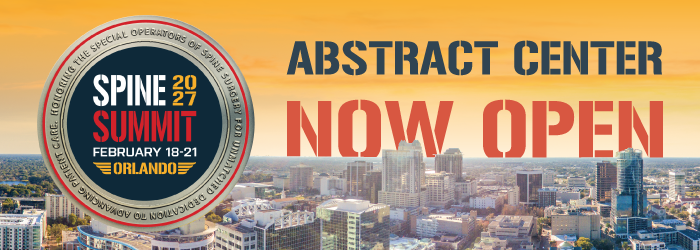
The 2027 #SpineSummit Abstract Center is now open.
Whether it's clinical outcomes, a novel technique, or basic science, we'd love to see your work.
Join us @spinesection February 18–21 in Orlando.
Submit by September 3:
https://t.co/1yflW35V4t
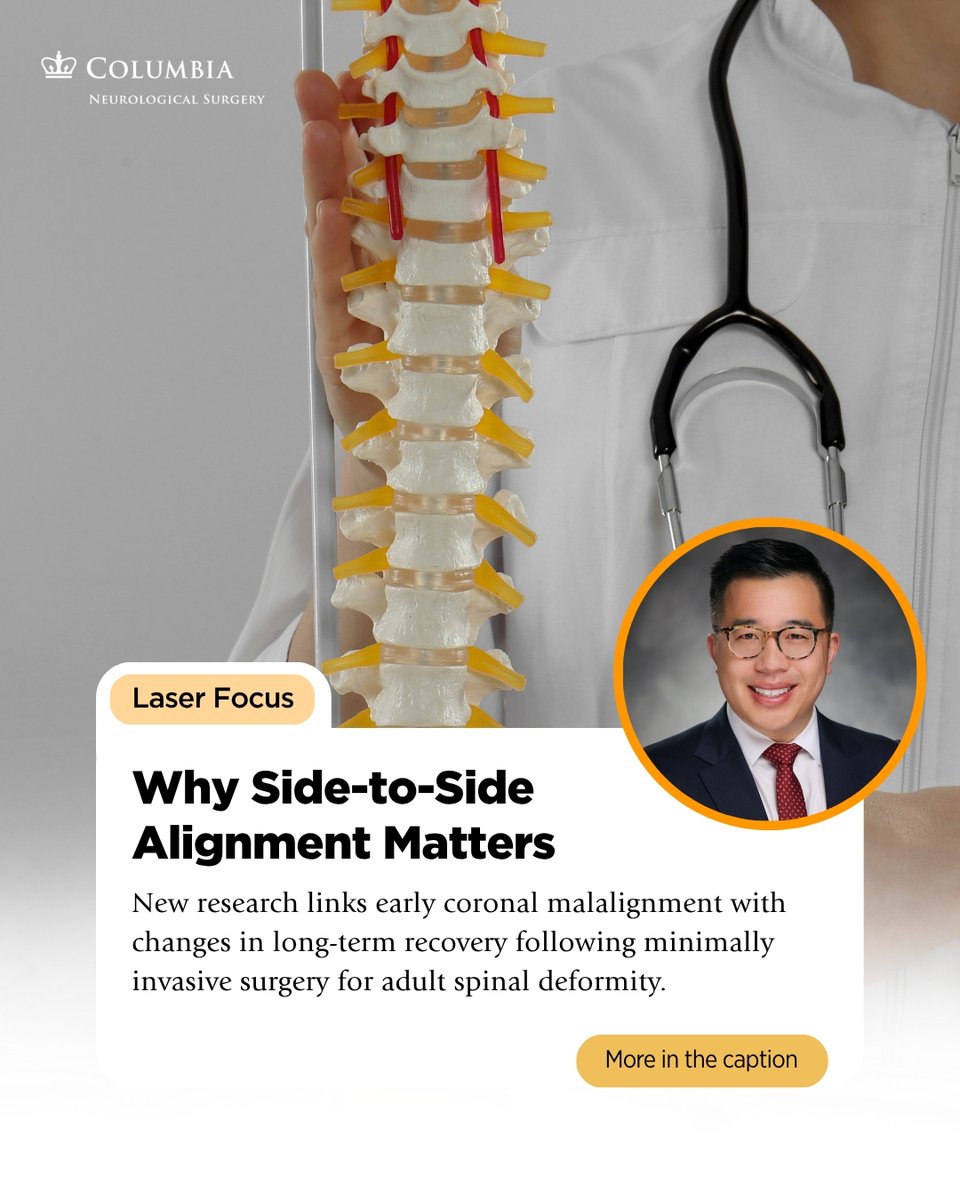
New research in @SpinePhilaPA76 from @AndrewChanMD, @DeanChouMD et al found that residual coronal malalignment after minimally invasive surgery for adult spinal deformity was associated with delayed changes in functional outcomes.
Read the study below.
https://t.co/JKDuEHXchr
We caught up with @MGBneurosurgery's Mark Richardson, MD, PhD, during #ResidentResearchDay to ask him how his residency training at UCSF prepared him for his career. He also shared some great advice for aspiring neurosurgeon-scientists.
Great time at the Neurosurgical Society of America Annual Meeting in Grand Cayman.
I had the opportunity to present on behalf of the QOD Spine CORe Study Group about the cost-effectiveness of minimally invasive lumbar spine surgery. Enjoyed the discussions afterward on improving value while delivering high-quality patient care.
Always great catching up with friends and colleagues, especially so many from the AANS/CNS @spinesection, QOD Spine CORe, and @ColumbiaNeuro.
Thanks to @DeanChouMD and the organizing committee for an outstanding meeting in an incredible setting.
#Neurosurgery #SpineSurgery #MIS #ValueBasedCare #HealthEconomics #QOD @NREFORG@AANSNeuro
Outstanding energy at the QOD / SpineCORe meeting during the AANS Annual Meeting as investigators, residents, medical students, fellows, and research coordinators from across the country came together to celebrate one of the most impactful collaborative research efforts in spine surgery.
Coinciding with #AANS2026, Journal of Neurosurgery: Focus released a dedicated SpineCORe™ special issue featuring 20 articles focused on cervical spondylotic myelopathy and grade 2 spondylolisthesis—highlighting the power of longitudinal, multicenter outcomes research driven through QOD data.
This special issue reflects years of collaboration, rigorous data collection, and thoughtful analysis from investigators nationwide—all with the shared goal of advancing evidence-based spine care and improving patient outcomes.
Behind every publication is an incredible team effort:
➡️ Principal investigators
➡️ Fellows, residents, and students
➡️ Research coordinators and clinical teams
➡️ National collaborators committed to high-quality outcomes science
A tremendous accomplishment for the SpineCORe™ and QOD community and a reminder of what can be achieved through collaboration, data, and shared purpose.
#DSPN #AANS2026 #QOD #SpineCORe #SpineSurgery #Neurosurgery #OutcomesResearch #TeamScience @AANSNeuro@CNSResidents@CNS_Update@andrewchanMD@DrDiGiorgio@eapotts@JNSPG_EIC@NREFORG@CheeragU
Presented at the @AANSNeuro Annual Scientific Meeting 2026 in San Antonio on MIS deformity—sharing nuances for ALIF + percutaneous screws and how to avoid complications.
Key pearls:
• Joystick technique → access steep L5–S1 with high-riding pubic bone
• Lateral surgery offset instruments → game changer in high sacral slope/high-grade slips and better than angled ALIF instruments
• Open collapsed discs methodically → release → distract → then trial
• Preserve endplates → curettes only
• Reduce slips → 2 screws down + rod-based “springboard” technique after navigated facet releases
Pitfalls:
• Overcorrection → stretch neuropraxia (if too much height) / early ASD (if too much lordosis)
• Hyperlordotic cages → iatrogenic foraminal stenosis, patient-specific cages can help as you can optimize both segmental lordosis and posterior disc height at the same time
Bottom line:
ALIF is the "Rolls-Royce" for L5-S1 and L5-S1 "plus" procedures. With proper planning + exposure, even steep angles and complex lumbosacral disc configurations shouldn’t preclude a safe ALIF.
#SpineSurgery #MIS #ALIF #SpinalDeformity #Neurosurgery #AANS2026 @ColumbiaNeuro #Scoliosis @spinesection
Enjoyed presenting at the @MedUnivSC Institute for Neuroscience Discovery (MIND) 2026 Conference in Charleston today on the evolution of minimally invasive (MIS) deformity surgery.
Adult spinal deformity remains one of the most complex challenges in spine care. Historically, deformity correction requires large, invasive operations with significant recovery and risk.
Today, advances in navigation, lateral interbody techniques, and patient-specific technologies are redefining what’s possible.
At MIND 2026, I discussed how a circumferential MIS approach—leveraging interbody correction and percutaneous, patient-specific rod rotation and reduction—can restore alignment while reducing morbidity in appropriately selected patients.
Thoughtful patient selection remains critical, but indications continue to expand. If a sufficient number of mobile disc spaces exist to achieve alignment goals, MIS deformity techniques can be applied. Preoperative planning software is helpful to confirm.
#SpineSurgery #MinimallyInvasive #SpinalDeformity #Neurosurgery #Scoliosis #MIND2026 #Scoliosis #MISScoloisis #MIS #MISDeformity @ColumbiaNeuro
Of all the things I do in neurosurgery, one of the most rewarding is watching my mentees succeed.
From seeing my undergraduates publish their first manuscripts, to my medical students finally carrying their years-long research projects to fruition, to the residents who grow so much from intern year to when they graduate chief year ready to take on the world, and even our fellows who take with them our minimally invasive and prone lateral/lateral techniques and tell me when they complete their first lateral cases in practice, it is an honor to play even a small part in the development of these fine young individuals.
That’s why today I couldn’t be more proud to see not one but TWO of my mentees, Harrison Howell and Vardhaan Ambati, match with me here at the Columbia Department of Neurological Surgery at NewYork-Presbyterian Hospital.
Harrison and Vardhaan worked so hard to get to this point—including tireless work on our research team—and now I get the opportunity to mold their spine clinical and surgical training.
Looking forward to the next 7 years!
@ColumbiaNeuro@Columbia
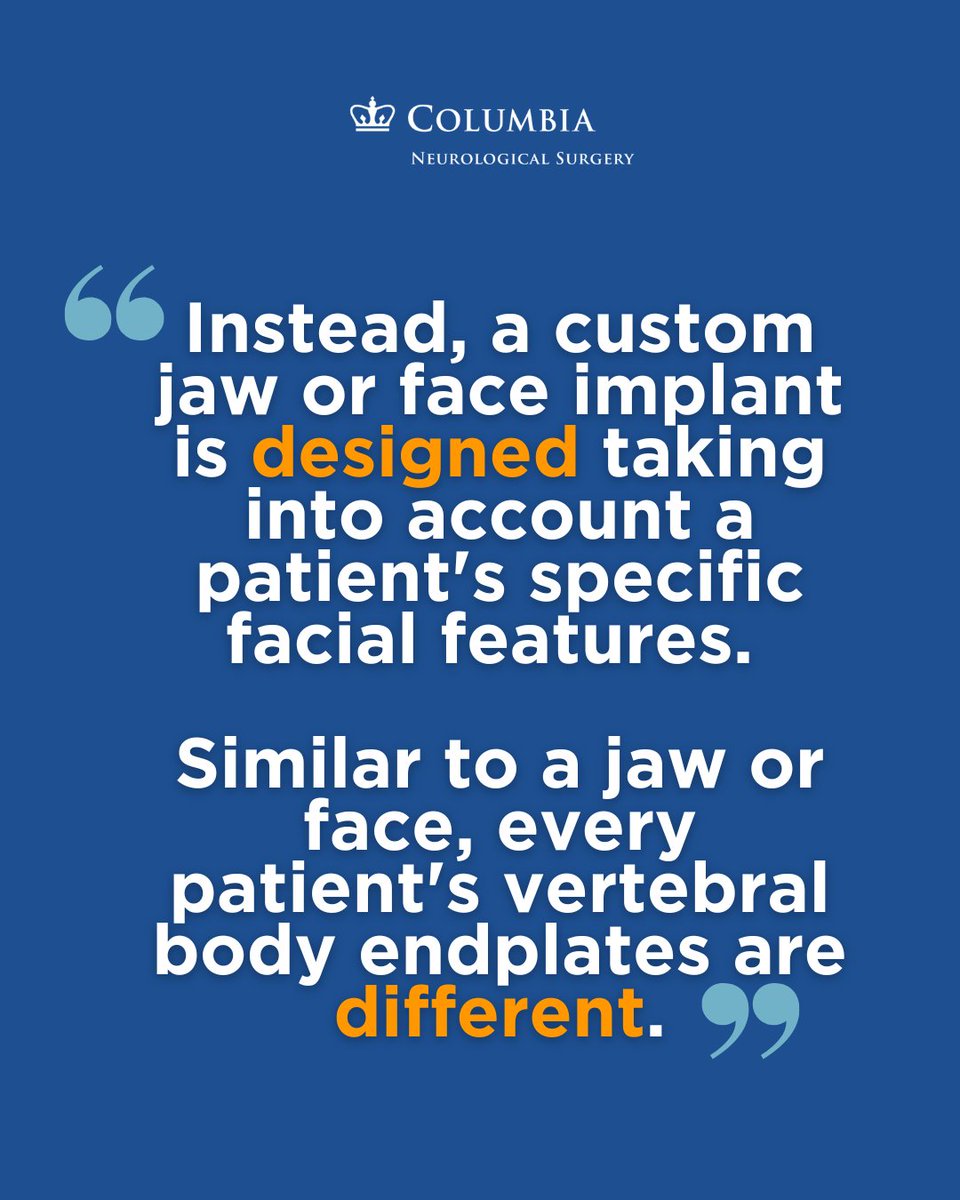
Having a cage perfectly fit to a patient’s unique anatomy is intuitive and makes sense.
The additional advantage not emphasized enough is the Carlsmed Aprevo platform allows me to virtually plan and “perform” the surgery ahead of time.
Then, in the operating room, I can get a predictable result in terms of disc height restoration and lordosis restoration by using the pre-planned, patient-specific cage.
Among a sea of spine surgical innovation - this is certainly one of the biggest leaps forward.
Happy to be able to offer it to my patients ✅
Last month, @andrewchanMD completed his 100th AI-powered, patient-specific spine implant using custom-designed cages.
A major step toward precision spine surgery at @nyphospital Och Spine, with @DeanChouMD also adopting the tech.
Learn more: https://t.co/L2zirkx6wW
@CARLSMED
Columbia Neurosurgery is heading to #SpineSummit2026 in Phoenix!
@andrewchanMD will direct a session on elevating safety in cervical spine surgery, and @DeanChouMD will moderate on deformity research and debate spine tumor management.
Learn more: https://t.co/6zcbuB0Ju1
🧠 Neurosurgeons: Heroes who conquer the impossible every day! 💪 Yes, the grind is real—50+ hrs/week, intense call—but the impact? Saving lives, pushing boundaries, & inspiring generations! #MedTwitter#Neurosurgery#WorkLifeBalance … https://t.co/DNfTYJ9MvS
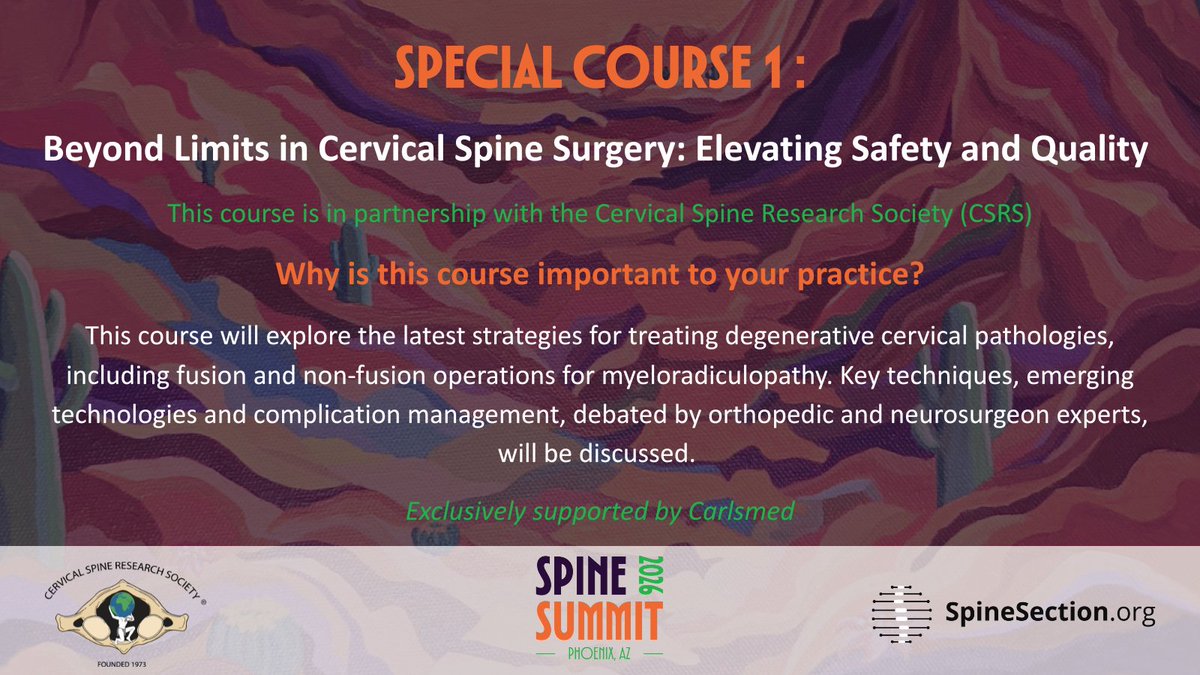
Special Course 1: Beyond Limits in Cervical Spine Surgery
Join me to explore cutting-edge cervical spine techniques—from fusion and non-fusion strategies to augmented reality and robotics.
Elevate safety and minimize complications through expert debates and practical insights with @CSRS_org at the 2026 #SpineSummit: https://t.co/wDdL3fqzao
@spinesection@RoryMurphy16
Adult spinal deformity surgery has high complication rates.
In this talk, @andrewchanMD makes the case for circumferential minimally invasive surgery using patient-specific, 3D-printed cages to achieve precise correction while reducing morbidity.
Watch: https://t.co/GKiepGY1rF
Do you think there are too many meetings?
A treat to be on the one and only @NSGYPodcast with my dear friends Drs. Mike Wang and @JPGK_MD for the hotly debated topic
New QOD study: Impact of discharge to subacute rehabilitation or home with health services on prolonged length of stay and increased inpatient expense following elective surgery for cervical spondylotic myelopathy.
https://t.co/UNN6XFP0ZL