We built a lightweight web application that helps chemists find inconsistencies and patters in reagents in their chemical reaction data. We applied it to USPTO for demonstration, but it will work with other reaction datasets, too. Try it yourself!
Code: https://t.co/qWOxaSOn5K
I am hiring 3 postdocs at #KAUST to develop an Artificial Scientist for discovering novel chemical materials for carbon capture. Join this project with @FaccioAI at the intersection of RL and Material Science. Learn more and apply: https://t.co/ePZrnacBhO
Find our poster at the #ML4LMS workshop at #ICML2024 in Vienna on Friday 26! Much gratitude to Dr. Djork-Arné Clevert, Dr. Michael Wand and @SchmidhuberAI for their guidance and supervision!
Our latest preprint within @AiddOne is out!
We accelerate the inference of the Molecular Transformer with speculative decoding. And not only for greedy decoding: beam search gets accelerated by ~3 times with no loss in accuracy!🧵
The basic idea is copying substrings from the source SMILES to the target on inference. To test our method, we reimplement @pschwllr 's Molecular Transformer in PyTorch Lightning. Paper: https://t.co/X7rKsWwBtJ. Code: https://t.co/WHv5Pomnwd.
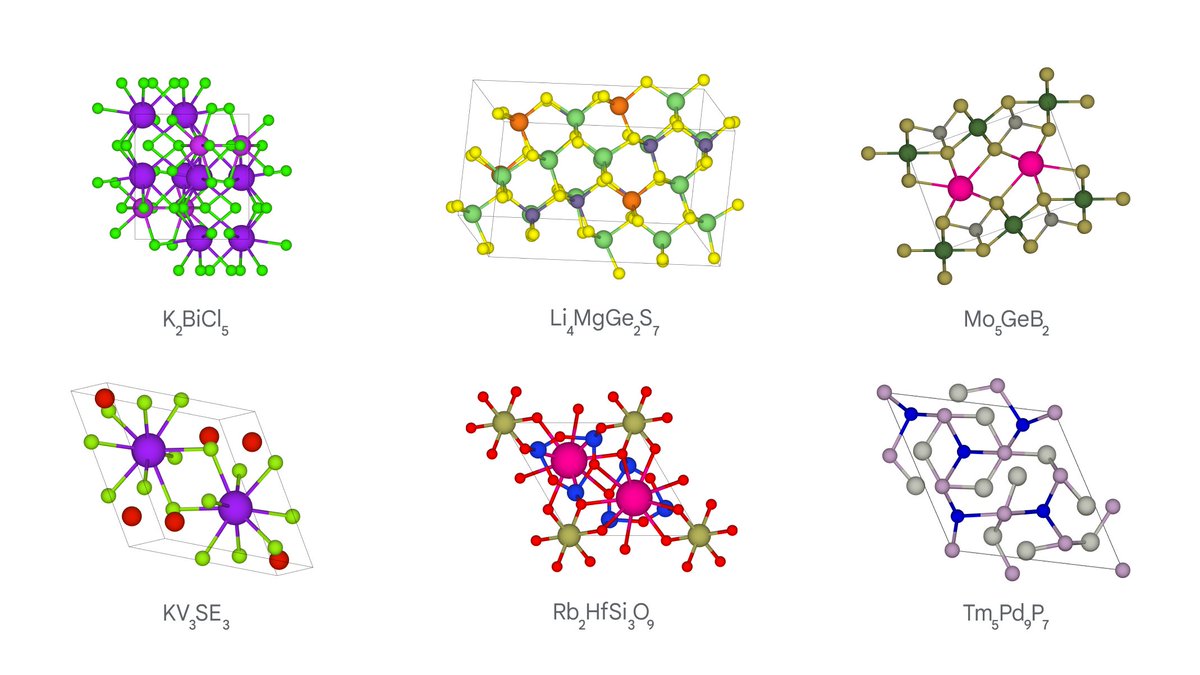
Graph Network for Materials Exploration (GNoME) was trained using ‘active learning’: a technique to scale up a model first trained on a small, specialized dataset. 📈
Developers can then introduce new targets, allowing machine learning to label new data with human assistance.
Are you a scientist ready to ride the 3rd wave of #AI? Excited by the potential impacts that #XAI is poised to make in #chemistry and #drugdiscovery?
We have 14 open PhD positions within the AiChemist Project: https://t.co/kZEb1HaZig. Apply now!
To make neural networks as modular as brains, We propose brain-inspired modular training, resulting in modular and interpretable networks! The ability to directly see modules with naked eyes can facilitate mechanistic interpretability. It’s nice to see how a “brain” grows in NN!
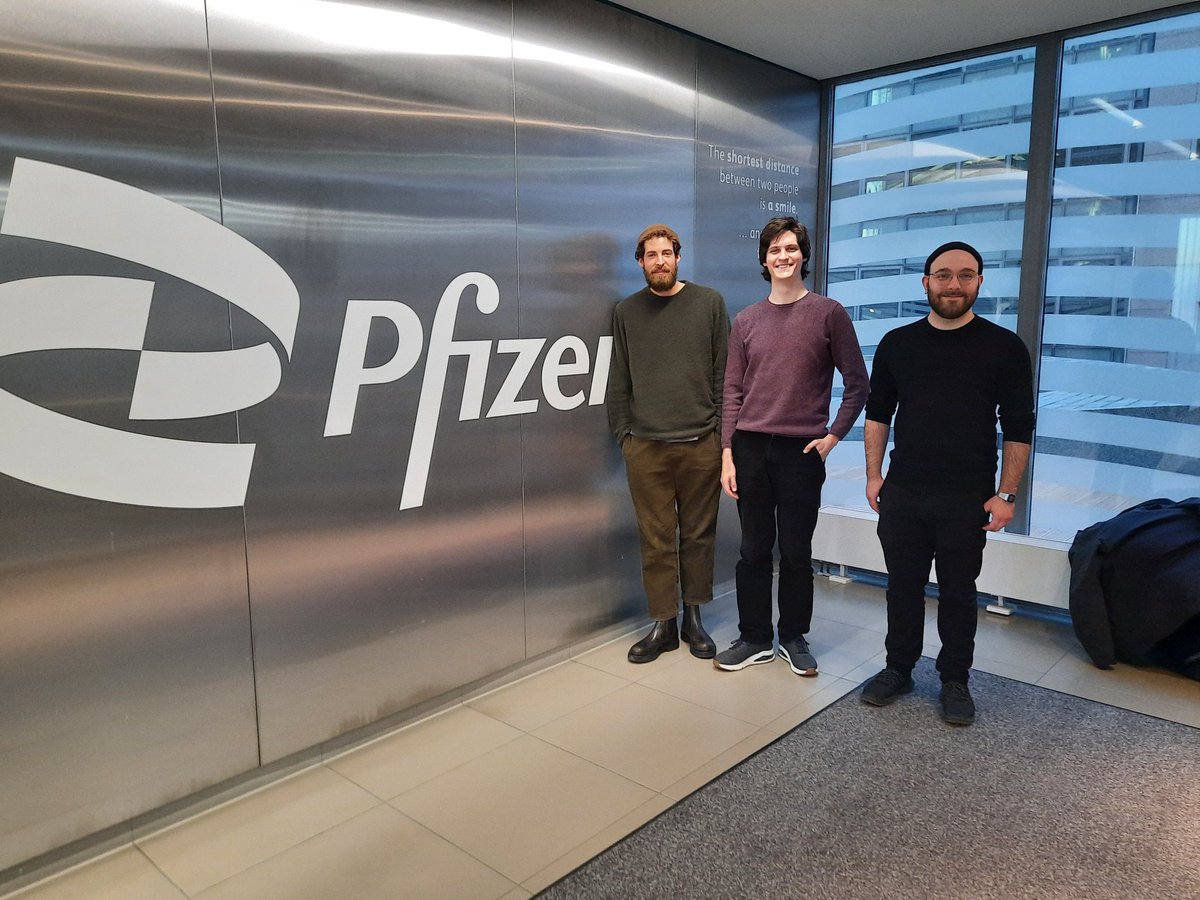
I am very excited to start the industrial part of my PhD in @OkkoClev's team at Pfizer in Berlin. Looking forward to amazing research together with @AiddOne fellows Julian Cremer, Alan Kai Hassen (@AlanKaiHassen), and other members of the team.
1.03.2023
Today we have awesome news! The world's largest quantum chemistry dataset to empower new materials design and drug discovery published by scientists from AIRI ⚡️
To find out more read you can read an article on @physorg_com: https://t.co/eali8AVbwz
Introducing a generalist neural algorithmic learner, capable of carrying out 30 different reasoning tasks, with a 𝘴𝘪𝘯𝘨𝘭𝘦 graph network.
These include:
🔵 Sorting
🔵 Shortest paths
🔵 String matching
🔵 Convex hull finding
And more: https://t.co/cegIEzB246
Last days to apply for this doctoral position in the Prof. Tkatchenko’s group (@TCPUniLu) at @uni_lu . The successful candidate will collaborate with the Discovery Sciences Computational Chemistry team at @AstraZeneca and be part of @AiddOne consortium.
https://t.co/QSIJDFmm11
Thrilled to announce my first preprint within the @AiddOne project! The work "Reagent Prediction with a Molecular Transformer Improves Reaction Data Quality" is done together with @v_in_cube, @OkkoClev, @SchmidhuberAI. Details in a thread 👇
A Large Language Model trained on scientific papers.
Type a text and https://t.co/XKTkxs8Ae0 will generate a paper with relevant references, formulas, and everything.
Amazing work by @MetaAI / @paperswithcode
Our experiments show that a transformer trained for reaction prediction on USPTO MIT with adjusted reagents outperforms the one trained on plain USPTO MIT! More details in the preprint text 😎 (https://t.co/q1lL0STMoj)
We can improve the reaction data quality in a self-supervised fashion using a reagent prediction model. In our work, we use a Molecular Transformer by @pschwllr et al. to predict reagent SMILES for a reaction written as "reactant SMILES>>product SMILES".