After about 1 ½ hiatus from coding on my NES emulator, I managed to hack away on the PPU during the christmas break... and now it actually renders stuff.
Come help me crash our servers!
Download our new release of Playbit at https://t.co/LfG0RZJpAx and join an incredibly fun *cough cough* game of moving discs around the screen, hammering our access point (TURN server)
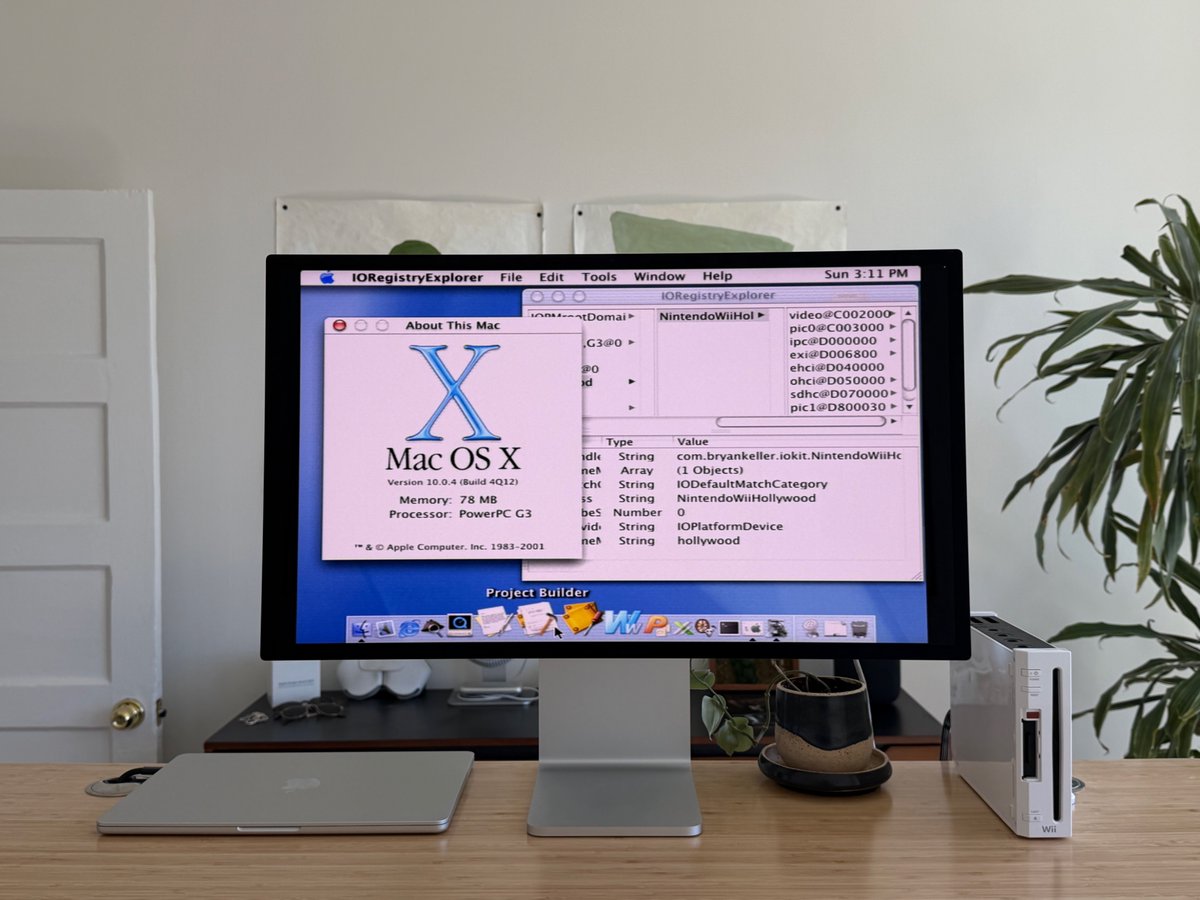
I ported Mac OS X to run natively on the Nintendo Wii - an idea I had over 10 years ago that I finally pursued last year.
Here’s how I pulled it off:
https://t.co/KfgptrGZp3
when software had a soul
there was a moment around 2005 when using a Mac felt like touching something alive.
the dock bounced. the genie effect swooped. exposé scattered your windows like cards on a table. none of it was strictly necessary. all of it felt like someone cared – not about metrics, but about the feeling of using a machine.
software back then had texture. it had a philosophy. you could feel the person behind it. someone made a decision to make that icon beautiful, to animate that transition just so, to write that error message with a little warmth. apps had personalities. some were weird. some were over-designed in ways that would make a modern PM flinch. but they were alive.
the web was the same. personal sites were genuinely personal. blogs felt like letters. forums had regulars. you knew who made what. the internet had neighborhoods, and each one felt different.
nothing was optimized for scale. things were made by people who loved what they were making.
somewhere along the way, we traded all of that for growth.
A/B tests flattened the edges. design systems standardized the personality out. everything got faster, smoother, more consistent – and somehow less interesting. the quirks were removed because they didn't test well. the warmth got cut because it wasn't measurable. we optimized our way into a world of things that work perfectly and feel like nothing.
now every app looks the same. every interface follows the same patterns. every product speaks in the same calm, frictionless voice, siloed in their own little islands. the humanity got rounded off.
and then came AI agents. and the speed got inhuman.
now you can generate an entire product in an afternoon. ship a feature before lunch. spin up ten variations before anyone's had their coffee. the gap from idea to code is basically zero.
which sounds incredible. and it is. but there's a catch.
when making things are too easy, the slop comes for free too. mediocre things don't look obviously bad – they look fine. they work. they ship. they pass review. and now there are infinite of them. the internet is filling up with software that functions but means nothing. interfaces that are correct but feel dead. products made by agents, reviewed by no one, shipped into the void.
this is the thing that keeps me up at night. not that AI will replace people who care. but that it will drown them out.
here's what I still believe: the best things are made by people who couldn't help themselves. someone who lost sleep over an icon. who rewrote the same line of copy twelve times. who added an animation nobody asked for because it made the thing feel right. that obsession – that's not inefficiency. that's the whole point.
AI doesn't make that irrelevant. it actually makes it rarer and more valuable. taste is not a markdown skill. caring is not a parameter. the weird, specific, "soul" thing you put into something – that can't be programmed into existence.
the path forward isn't to make more slop faster. it's to finally give people with real vision the tools to make the thing they always imagined but couldn't build alone. the designer who had the idea but couldn't code. the kid who saw something nobody else saw. the person who cared too much about something most people wouldn't notice.
if we get this right, we don't get a faster factory. we get a renaissance. more strange, personal, opinionated software made by teams of people who care and mean it.
that's still possible. but only if the people who care get the space and tools to actually express themselves – and don't just hand the wheel to the agent and walk away.
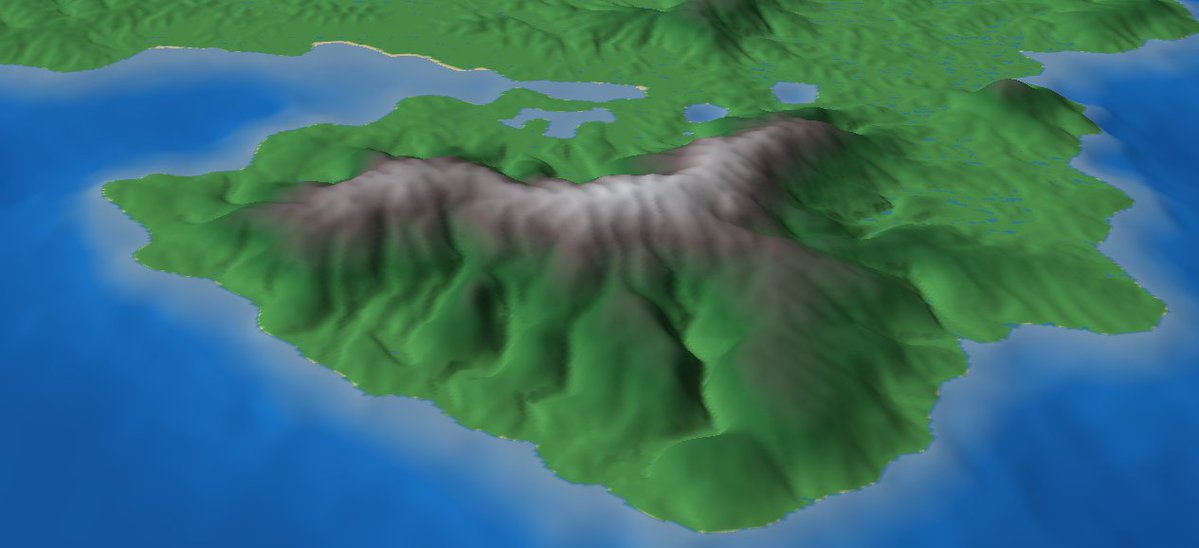
On a NOT Unbound note, here is a spare-time experiment I always wanted to try out:
Making physically plausible and interesting worlds *without* using Perlin noise and *without* using regular grids.
Here is how it works:
Today we at Playbit are sharing our first iteration of the Playbit runtime, our vision for building playful personal-scale software.
https://t.co/kIhrQoVnJL
Personal-scale software means programs by you, for you and for the people in your life. An app for your friends isn't very useful if only some of them can run it, so usually these projects have only one option: the web, an abstraction which many apps don't fit well into.
We wanted a better solution, so that's what we're building. A runtime designed for highly dynamic graphical apps that are collaborative, with a really good set of developer tools.
The Playbit runtime is a bit like an OS, but lives inside a host environment and gives guest code a small system layer to interface with. In practice it’s a minimal ABI-stable syscall interface with well-defined semantics.
While we only support macOS in this initial release, our vision is for a powerful multimedia and collaborative platform which you can write your app for once, and run it on any platform.
Learn more and grab the macOS app at https://t.co/kIhrQoVnJL
With love and a bit of code,
– Edward, Nick, Julia and Rasmus
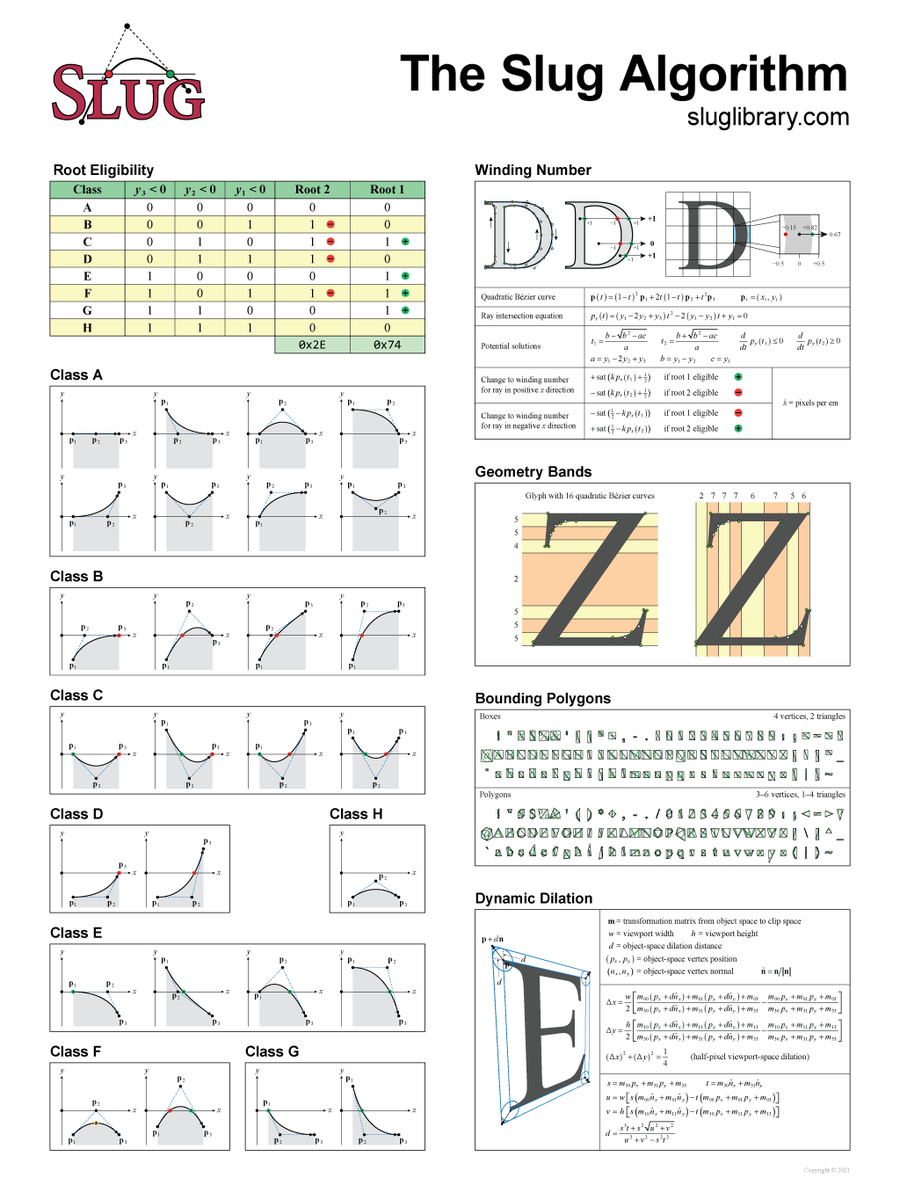
Open Source GPU text rasterization update:
Recently, Eric Lengyel dedicated his patent on the Slug algorithm to the public domain and released Slug's shaders as Open Source software.
I am happy to announce that GLyphy now implements the Slug algorithm:
https://t.co/KbejhS2Wki
New blog post: A Decade of Slug
This talks about the evolution of the Slug font rendering algorithm, and it includes an exciting announcement: The patent has been dedicated to the public domain.
https://t.co/xWEz0q2c4N
Every major lab has a browser agent now.
Every one of them sucks.
So I built a new version Do Browser.
Retheming a Figma file:
Claude for Chrome: 55 min
Do Browser: 30 sec
I probably, probably, made a physically accurate glass shader without any ray tracing or ray marching.
It based on some (relatively wrong) assumptions but it could give you realestic back face reflection/refraction.
I tested the prism from @SebastianLague video
Time to break the ice! 🧊
We invite to play with physics in the next Defold Community Challenge: Break it!
Come up with a creative idea, share a project #MadeWithDefold and win rewards! 🎁
#gamedev#indiedev#challenge#opensource
Time for another dev log!
Slow and steady progress. Spell range and enemy detection are now limited by walls. I went with a simple Dijkstra's implementation and cached the lookups, so performance hasn’t really taken any hit. Combat feels quite solid now, and I really like the small screen shake on damage.
#gamedev #IndieGameDev
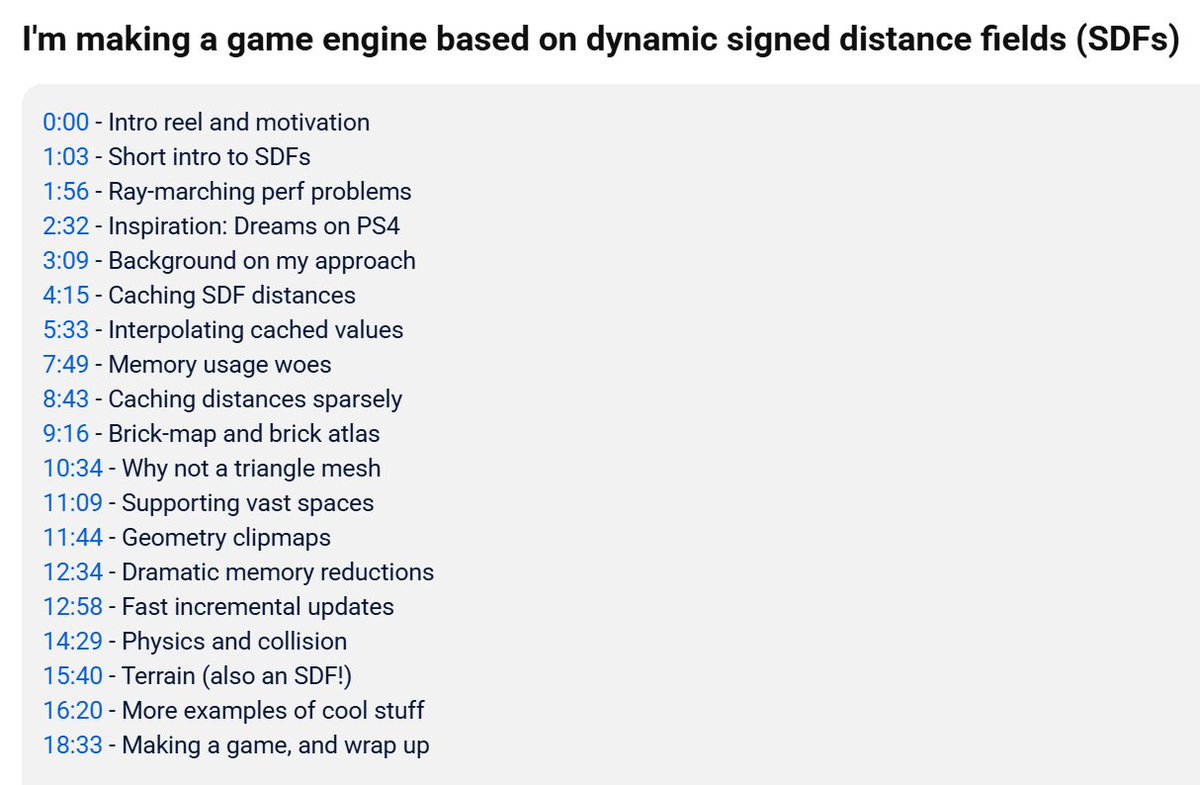
I just released my video about the engine (and game) I've been working on.
The engine is based on dynamic SDFs, and the video describes how it works and what it makes possible.
Link in the reply!
This is my first YouTube video and it took forever - please repost!