This inscription is a dedication by the Great Alexander himself to the goddess Athena. It was discovered in the Temple of Athena Polias in Priene. Priene is a Greek city, one of the hundreds in Asia Minor, that still shout "GREECE" and long to return to where they belong.
The inscription, written in Greek, reads:
"ΒΑΣΙΛΕΥΣ ΑΛΕΞΑΝΔΡΟΣ ΑΝΕΘΗΚΕ ΤΟΝ ΝΑΟΝ ΑΘΗΝΑΙΗΙ ΠΟΛΙΑΔΙ"
2,300 years later, we Greeks can read this inscription without any difficulty, because every single word is still used in exactly the same form today.
"King Alexander dedicated the temple to Athena Polias."
The inscription is currently in the British Museum, although it should be in Athens. It is a Greek find, and the dedication itself was made by Alexander the Great to the goddess Athena. It belongs in Greece.
Just like Ionia belongs to Greece.
The amazing true story of
THE TEN THOUSAND
The Ten Thousand (Greek: Μύριοι, Myrioi) were not the first mercenaries in history, but they are among the most famous mercenary armies ever recorded.
The Ten Thousand were approximately 10,000 Greek soldiers, mostly hoplites, who were hired by Cyrus the Younger in 401 BC to help him seize the Persian throne from his brother, Artaxerxes II.
At the Battle of Cunaxa, Cyrus was killed, leaving the Greeks stranded deep inside the Persian Empire. Their leaders were later betrayed and executed, after which Xenophon helped lead the survivors on an extraordinary march north toward the Black Sea.
Their story is told in Xenophon’s famous book Anabasis.
One of the most famous moments came when the Greeks finally saw the Black Sea near Trapezounta and shouted:
“Θάλαττα! Θάλαττα!”
“The Sea! The Sea!”
This cry meant they had reached a route back to the Greek world.
Many historians believe their success later influenced Alexander the Great, showing that the Persian Empire was not invincible.
The Ten Thousand were among the finest professional soldiers of their era.
Why they were so highly regarded:
They were experienced veterans from many Greek city-states.
They fought as heavily armed hoplites in disciplined formations.
After being stranded over 1,500 miles (2,400 km) from home, they managed to fight their way through hostile territory.
They survived attacks from Persians, mountain tribes, harsh winters, and difficult terrain.
Even after losing their original commanders, they maintained order and cohesion.
What impressed later generations was not just their battlefield skill but their discipline and endurance.
Many armies can win battles; few can survive a long retreat through enemy territory and still remain an effective fighting force.
They were among the best-trained, toughest, and most successful mercenary forces of the ancient world.
Their march home remains one of the greatest military feats ever recorded.
Some individual members of the Ten Thousand may have remained in the Black Sea region, but the Pontic Greeks as a people were not primarily descended from the Ten Thousand.
Their roots go much further back, to Greek colonists who began settling the southern Black Sea coast from around the 8th century BC onward.
So, while the Ten Thousand passed through Pontus and were welcomed there taken care of, most did not stay there permanently, and Pontic Greek history predates them by several centuries.
The story of the Ten Thousand is one of the greatest military epics of the ancient world 10,000 Greek mercenaries stranded deep inside the Persian Empire, fighting their way home through mountains, enemy armies, and harsh winters.
Their cry when they finally saw the Black Sea near Trapezus in Pontus still echoes through history:
«Θάλαττα! Θάλαττα!»
“The Sea! The Sea!”
For many Greeks, it symbolizes perseverance, courage, and never giving up no matter how difficult the journey.
Χαίρε, φίλε μου! 🇬🇷⚔️
A great book to read is
The Ten thousand by Michael Curtis Ford
And The Persian Expedition
The March of the Ten Thousand, or Anabasis. By Xenophon
The coolest people are always the weirdest
Everybody who's ever been successful is a weirdo...going against the grain.
I've been weird my whole life, but until I embraced it I was not free.
Weird comes from the old english word wyrd, meaning "having the power to control destiny"
It also means "something supernatural; uncanny"
Own your weird
Ritual 8: Deliberately choose your emotional state rather than inheriting it from your environment.
Most people wake up and absorb whatever emotional frequency is around them.
Stressed partner. Negative news. Difficult commute.
By 9am they are already operating at a frequency they never chose.
Ancient initiates understood that emotional mastery is not about suppressing feelings.
It is about consciously selecting the dominant state you operate from.
Gratitude. Expansion. Clarity. Power.
These are not feelings you wait to receive.
They are frequencies you practice until they become your default setting.
Friendly reminder: Iphigenia of Euripides by the Greek Michael Cacoyannis is one of the greatest (and most underrated) movies ever made. Made by Greeks, in the Greek language, with Greek actors, and with love and passion for our history.
When the soul within a person is stronger than the body and is in a state of intense excitement, it shakes the body from within and fills it with various diseases.
On the other hand, when a large and strong body, stronger than the soul, is paired with a small and feeble intellect, since human beings have by nature two kinds of desires, namely food for the body and wisdom (phronesis) for the divine part they possess (the intellect), the motions of the stronger prevail and increase its power, while the soul becomes foolish, lacking sufficient perception and significant memory.
Then arises the greatest and most dangerous of all diseases: ignorance (amathia).
For these two conditions there is only one way of salvation:
Not to exercise the soul without the body, nor the body without the soul, so that they do not react against each other but secure health and balance between them.
Thus, whoever engages in mathematics or any other intellectual pursuit with intensity must also exercise the body correspondingly with gymnastics. And whoever carefully tends the body must in turn provide corresponding exercises for the soul, cultivating music and philosophy in general, if he wishes to be called both good and noble (kalos and agathos).
Plato, Timaeus 88a
I’m noticing something alarming in our times. Some individuals who have mistakenly become role models for the new generations of men are promoting ideas that are hostile toward the opposite sex, as if we are in a war. This is dangerous, and no man should take such ideas seriously. The fact that there are women who hate men should not lead a man to develop a blanket, generalized hatred toward all women. Hating and generalizing all women as evil it's emotional immaturity.
A man’s purpose is to help, to protect, and to take control of the situation. A man has a duty to love woman and to look after her when she is in danger, and in our day and age, women are experiencing the most dangerous moment in their existence.
Dark interests of people who hate them have put on fake masks, pretending to help women, while their political agendas actually promote the dissolution, degradation, and humiliation of feminine nature. Some women have understood this, some have not.
We are here to protect them in any way we can, and to gracefully and simply marginalize those women who wish us harm.
However, under no circumstances should new generations of men be raised with a universal misogyny, considering it "manly" or a sign of masculinity.
True masculinity is being ready to protect woman from evil. To look after her, to love her, and to explain to her the dangers of her choices.
Yes, we are the target. Yes, they will insult you. Yes, they will fight you. Yes, you will be the villain of the story. Yes, everything will be your fault. But that’s how it has always been.
Don’t fall victim to the propaganda. A man should not desire woman only for sexual pleasure. A man’s first thought should always be the search for the woman with whom he wants to build a family. Stop sleeping around with many women, stop exploiting them, stop deceiving them and lying to them. Stop listening only to the desires of your lower head. Resist your passions and pursue virtue. If you don’t do this, women’s behavior in society will not change.
To improve things, both sides, men and women, must act together. One alone is not enough.
Tango is danced by two.
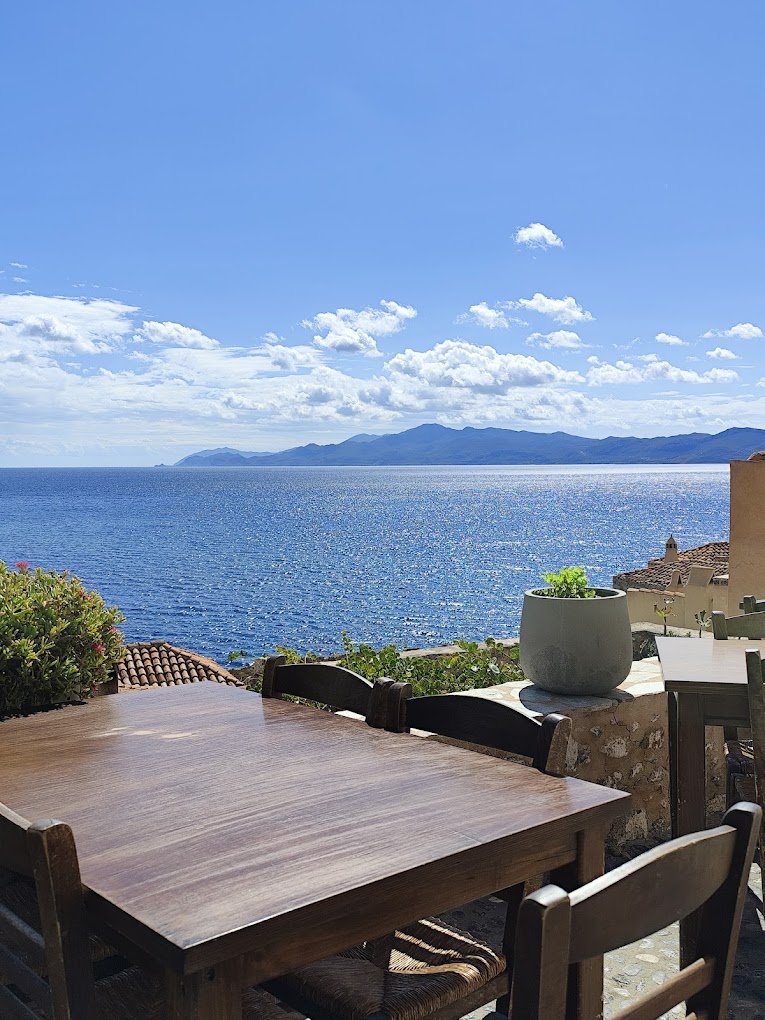
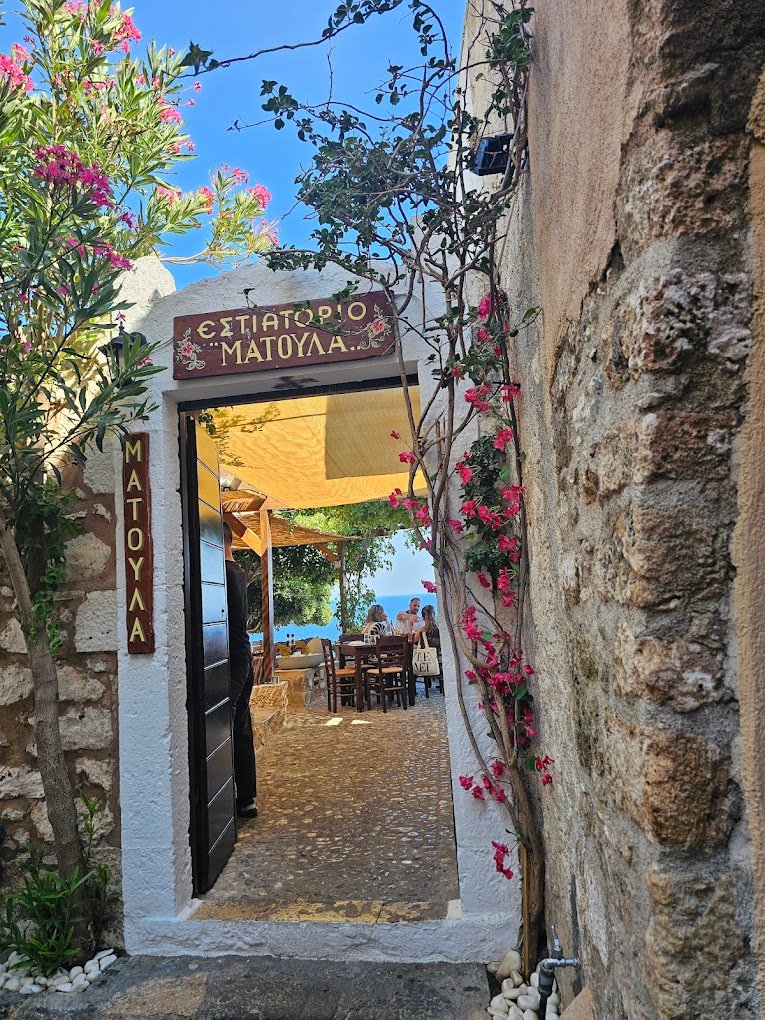
View from a taverna in Monemvasia Southern Greece. How much is a plate of food worth? Sometimes millions are not enough.Remnants of the love of this land and the poetry of Yiannis Ritsos still echo in this rocky masterpiece.
"Mild days with many trees.
This gentle breeze around your lips goes well on you.
This flower you are gazing at goes well on you..."
~~~Yiannis Ritsos
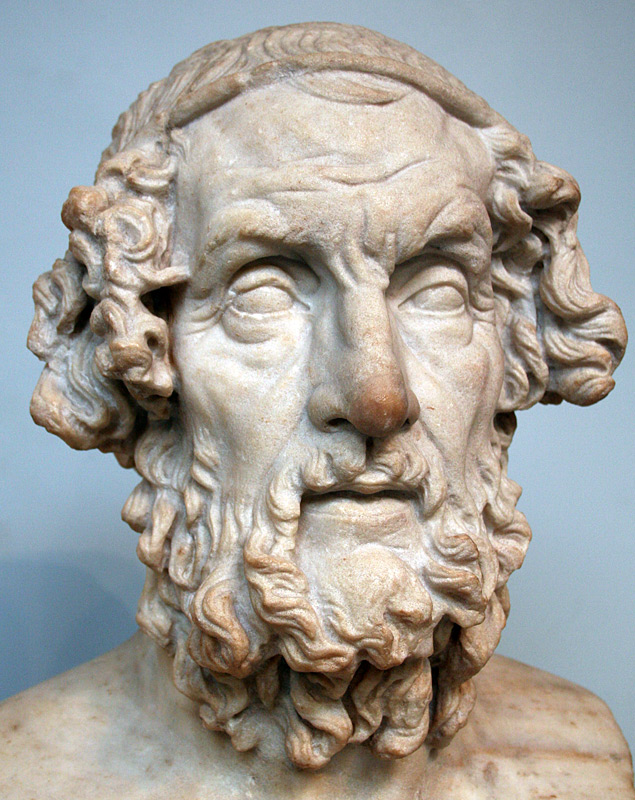
The whole Odyssey fiasco has not only showed me that most people have no knowledge of Homer, but also that almost nobody knows about Heinrich Schliemann and his discovery of the ruins of ancient Troy based on... you guessed it, reading Homer. It was NOT fiction.
When Solon visited Egypt, the priests told him something that should stop you in your tracks. You Greeks, they said, are like children. And the reason? You only remember one flood. They named three. Now that was preserved through Plato, and for a long time it was easy to file that away as mythology and move on. But here is where it gets interesting. Go to the geological record and you find meltwater Pulse 1A at around 14,500 years ago. Then meltwater Pulse 1B at approximately 11,600 years ago, which is precisely the date Plato gives for the subsidence of Atlantis. And now evidence is emerging for a third major meltwater event right at the onset of the Younger Dryas itself.
So you have an ancient priestly tradition naming three floods, and you have the stratigraphic record pointing to three distinct pulses of catastrophic sea level rise. At what point does that stop being a coincidence worth dismissing and start being a correspondence worth investigating? That is the question. The Egyptian priests were not writing poetry. They appear to have been preserving an actual record of events, transmitted across generations with enough precision that the dates still line up with what ocean cores and coastal geology are now recovering independently.
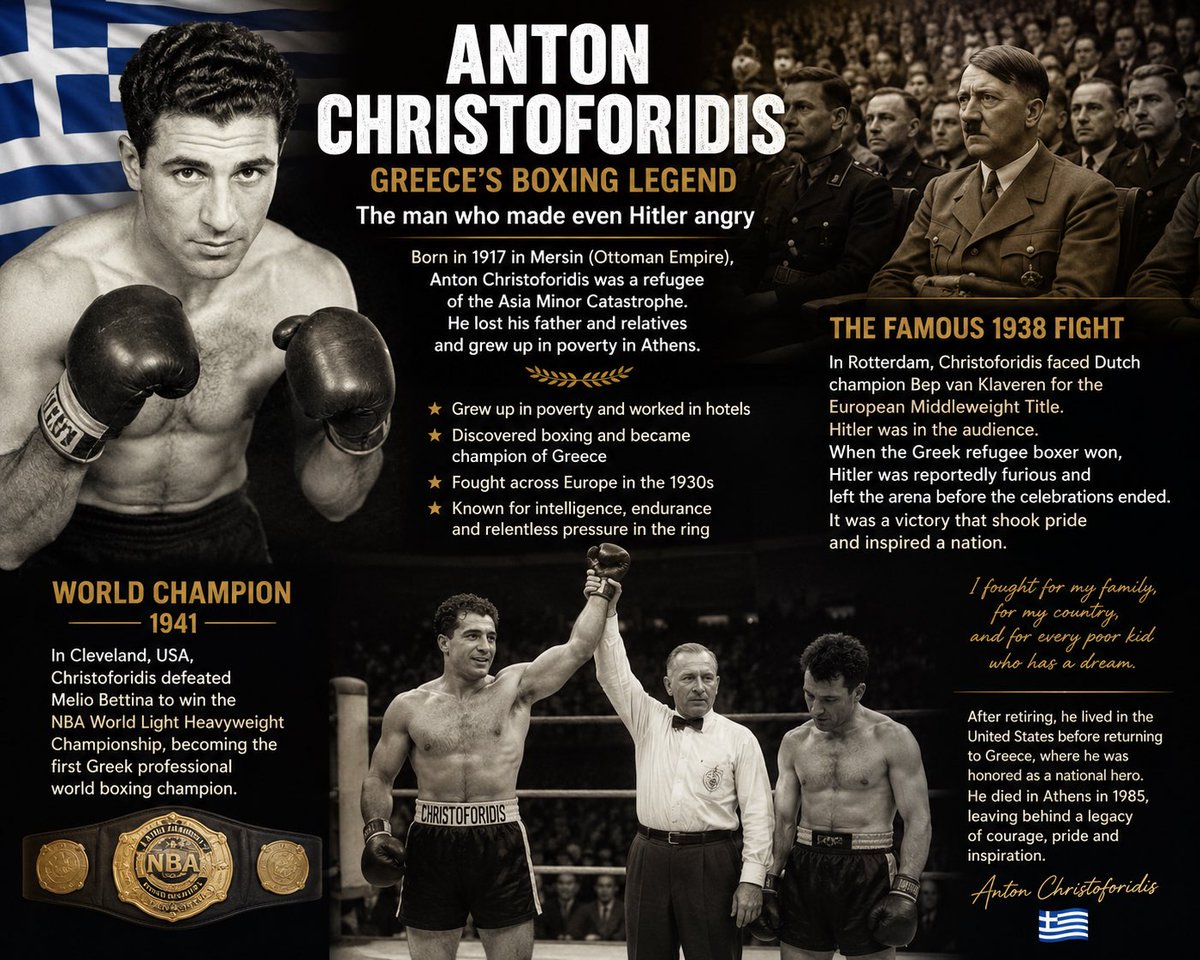
“Adonis” Christoforidis know to the world Anton Christoforidis
He was one of the greatest Greek athletes of the 20th century and became the first Greek professional world boxing champion.
Born in 1917 in Mersin in the Ottoman Empire (modern day Turkey) Christoforidis was a Pontic Greek refugee of the Asia Minor Catastrophe (genocide)
His family fled to Greece after the destruction of Smyrna in 1922.
Tragically, his father and several relatives were killed by the new Turkish regime
He grew up in poverty in Athens and worked in hotels and always took care of his little sisters, before discovering his talent for boxing.
As a teenager he quickly became a champion in Greece and later moved to France to pursue professional boxing.
During the 1930s he fought across Europe and earned a reputation for intelligence, endurance, and relentless pressure in the ring rather than knockout power.
As a Greek Orthodox Christian he made sure always to pray before and after his fights and always visited hospitals to help as much he can
The famous story involving Adolf Hitler comes from a 1938 fight in Rotterdam.
Christoforidis fought Dutch champion Bep van Klaveren for the European middleweight title.
Hitler was reportedly present among the spectators because Nazi Germany closely followed major European sporting events at the time.
According to boxing history accounts, Hitler became upset when Christoforidis, a Greek refugee boxer defeated van Klaveren and won the European title.
Some stories say Hitler left angrily before the celebrations concluded.
What made Christoforidis especially admired in Greece was that he symbolized resilience:
A refugee who lost his family,
rose from poverty, defeated Europe’s best fighters, and later became world champion in America.
In 1941 he won the NBA World Light Heavyweight Championship in Cleveland by defeating Melio Bettina, becoming the first Greek professional world boxing champion.
After retiring, he lived in the United States for years before eventually returning to Greece, where he was treated as a national hero. He died in Athens in 1985.
Anton Christoforidis really had an incredible story, from refugee hardship to becoming a world champion and a symbol of Greek resilience. 🥊🇬🇷
Some Turks are being offended when someone points out to the millennia old Greek history of Anatolia. Some try to point out other earlier civilisations that existed in parts of it thousands of years ago, while others attempt to highlight the much later Roman (Graeco-Roman) period of its history in a distorted way that ignores the predominance of Greek culture in the region during this period also.
Both approaches share a common goal; to minimise the importance of Greek Anatolian history and impact. Yet this cannot be possibly achieved since Anatolian Greek contributions are a core part, not only of the wider Greek civilisation but indeed the global one.
Especially Ionia in Western Anatolia is considered the birthplace of Greek and Western literature, philosophy and natural sciences, predating even Athens that became the main centre of Greek learning subsequently. Homer himself, as well as figures such as Thales of Miletus, Anaximander, Heraclitus and many other Greeks, hail from this part of Western Anatolia. Those lived during Archaic and Classical Greek periods, centuries before the Roman period.
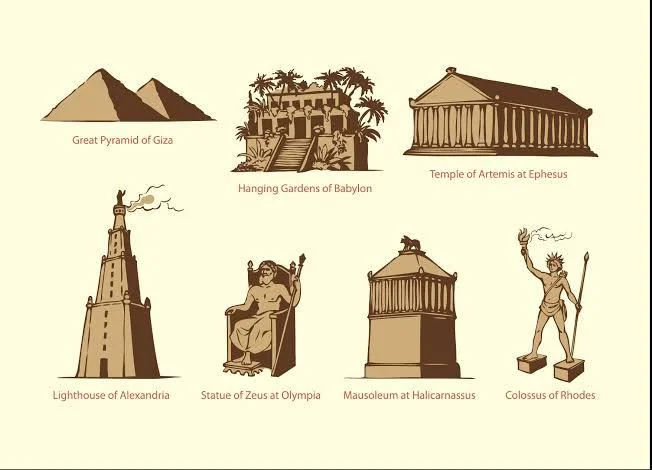
Two out of the seven wonders of the Ancient World were built in Ionian cities during these periods. The Mausoleum of Halicarnassus and the Temple of Artemis at Ephesus.
In short, the Greek Archaic, Classical and subsequent Hellenistic periods saw the civilisational and intellectual pinnacle of the Anatolia region, which remains unmatched since. Modern political matters and Turkish ultra-nationalism should not be allowed to distort and obscure such an important chapter of global history.
Greece MEP founder and leader of Greece's Voice of Reason, Afroditi Latinopoulou, a strong nationalist whose organization focuses on faith, family, country, and Greek tradition. She's everything the @EU is not.
Here we see Aphrodite demanding the past genocide of 353,000 of fellow people be recognized by all of Europe. She wears her faith and convictions with strength.
Once you hit about a 20-point IQ gap, communication starts to completely break down.
It's not that the lower IQ person is "stupid" (although that can often be the case) or the higher one is arrogant, it's that you're literally operating on different systems.
A 20 point difference (roughly 1.3 standard deviations) means:
Vocabulary and abstraction levels diverge sharply. What feels like crystal clear logic to one side sounds like vague, pretentious word salad to the other. Jokes land flat. Metaphors get taken literally. Complex cause and effect chains get simplified into "this good, that bad."
Different time horizons and pattern recognition. One person thinks in months or years and sees systems, the other is locked into days or immediate rewards. Trying to explain second order effects feels like speaking another language.
Also, processing speed and working memory gaps. The higher IQ person is already three steps ahead, getting impatient. The lower IQ person feels talked down to or overwhelmed.
Both walk away frustrated.
Both have wasted each others time.
There was a demographic problem 2,200 years ago, and Polybius wrote exactly what caused it. Read carefully:
"In our times, Greece as a whole is experiencing a lack of children and, more generally, a decrease in population. Because of this, cities have become deserted and there is a lack of productivity, even though we do not suffer from constant wars or epidemics. So if someone advised that we send priests to the gods to ask them what we should say or do to become more numerous and better inhabit our cities, he would not seem foolish, since the cause is obvious and the solution lies in our own hands.
People have turned to arrogance, greed, and laziness, and they neither want to marry, nor, if they do marry, to raise their children. Instead, they have only one or two children with difficulty, just to leave them wealth and raise them in luxury.
This evil grew rapidly, and we did not notice. For when there are only one or two children, and one is lost to war and the other to illness, it is obvious that the cities will inevitably become deserted, just as a beehive weakens little by little, so too do cities that lack population become unable to survive."
Source: Histories, Polybius, 36 (ΛΣΤ)
The similarities after 2,200 years.
People prefer partying, doing drugs, and living for today rather than having a purpose, building a family, and leaving a positive footprint in this world. They choose the easy life. At this point, it’s a form of natural selection between those who are worthy and those who are not to continue.