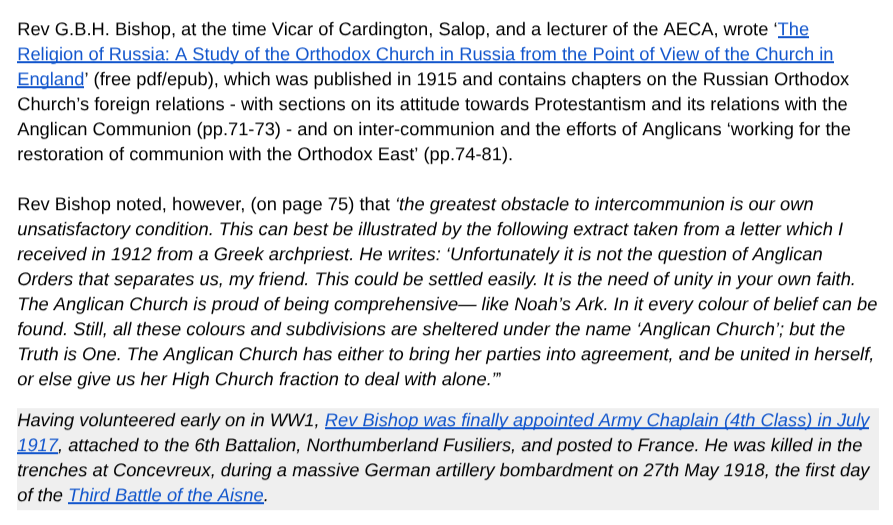
@letthemexult I like the words of a Greek priest when commenting over a century ago on Anglican efforts to reunite the Eastern Orthodox and Anglican Churches (efforts which had no doubt been given extra impetus by the last Pope Leo's Apostolicae Curae Encyclical of 1896)
@DrFrancisYoung@simon_beattie And there was a large subscription library which, when this catalogue was printed, in 1869, had 10,600+ books - I believe there were c.30,000 books when the church building was seized in 1920
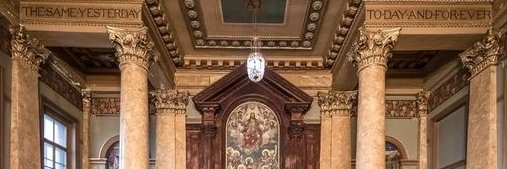
For more on the church history, see: https://t.co/s0hyo1nv90
@DrFrancisYoung@simon_beattie Amazing! Is this for sale? I find it fascinating how books from the British Factory/English Church at 56 English Embankment resurface every now & then - the Banns book in the London Archives that covers the later Victorian period turned up in Baku in 1998...
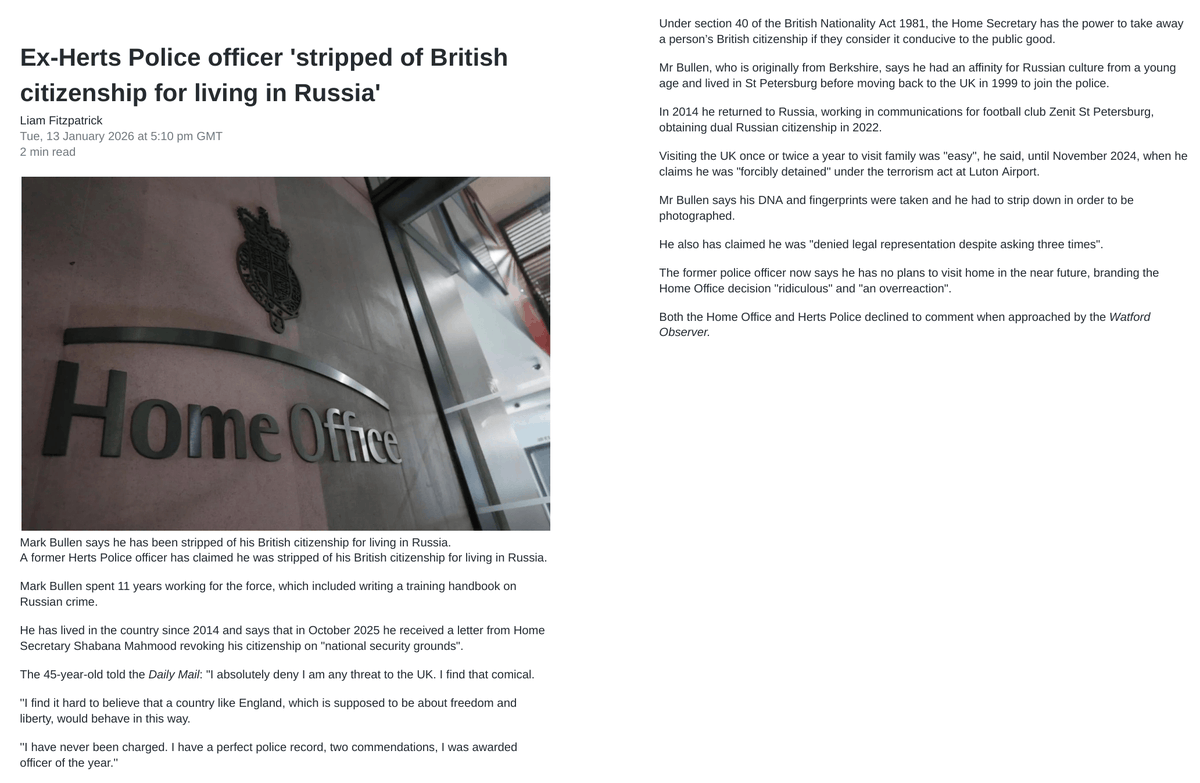
@jackmrankin He has a Russian wife & 4 young children who were raised Anglican (& baptised by the CofE chaplain on a visit from Moscow) and who I assume have also lost their citizenship. Originally from Berkshire, his family have English roots going back centuries - why was he singled out?
@jackmrankin And yet 1 person stripped of his British citizenship in 2025 was Mark Bullen who has never been involved in any pro-Kremlin/anti-British activity; he was the St Petersburg contact for the British Embassy+English chaplain in Moscow whenever they wanted to meet locally based Brits
@John_ForemanCBE@wallaceme Lucy Ash also did a three-part BBC World Service series, The Red and the White (2017), on the Allied Intervention in Northern Russia
https://t.co/Y8KfKNeZSk
For more on the 1918-19 Allied Intervention in Northern Russia, listen to this three-part @bbcworldservice series, 'The Red and the White' (2017): https://t.co/JevkkaloBy
@John_ForemanCBE@wallaceme We have often covered the CWGC cemeteries from British expeditionary interventions, following the Russian Revolution, in North/South Russia, the Caucasus & the Baltic, including in this🧵https://t.co/5sC4pWX4WD
27 WW1 memorials & cemeteries in Flanders are recognised as UNESCO World Heritage sites and feature in the Google Arts & Culture story linked to here by @CWGC, many in/around Ypres, site of 5 major battles from October 1914 to October 1918
(Long🧵follows on CWGC/Russia 1917-20)
@JacquiAMiller And for more on the author of "Russian Life To-Day", the much travelled +Herbert Bury, Bishop for Northern & Central Europe, under the Bishop of London, see our🧵on him from January 2024 https://t.co/Akp7MUWEhi
Bury (1854-1933) had been Bishop of British Honduras (1908-11) before becoming Bishop for Northern & Central Europe (1911-26), and his book, "A Bishop among Bananas" (1911), was one of a number that he wrote about his experiences as a bishop
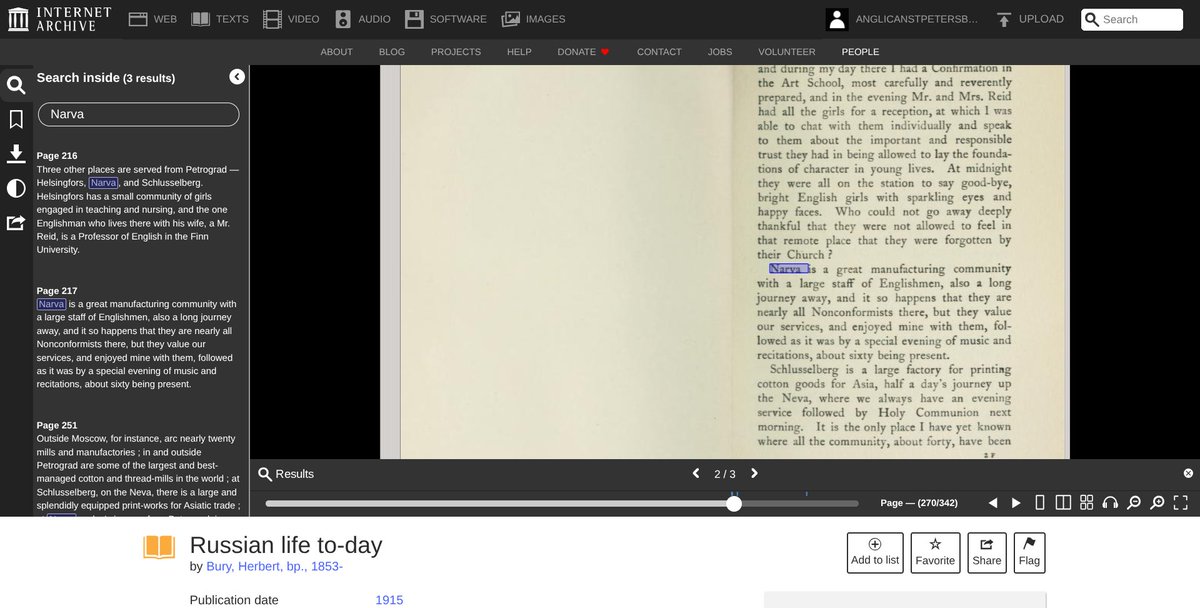
@JacquiAMiller Enjoy Narva - home to what was the largest cotton spinning mill in Europe, using English equipment & staff, it was served pre-1917 from the English Church of St Mary & All Saints at 56 English Embankment in St Petersburg; the text is from "Russian Life To-Day" (1915), see ALT
Rev Bousfield Swan Lombard (1866-1951), @ClareCollege alumnus, was the last chaplain of the English Church of St Mary & All Saints in St Petersburg/Petrograd, from 1908-1918
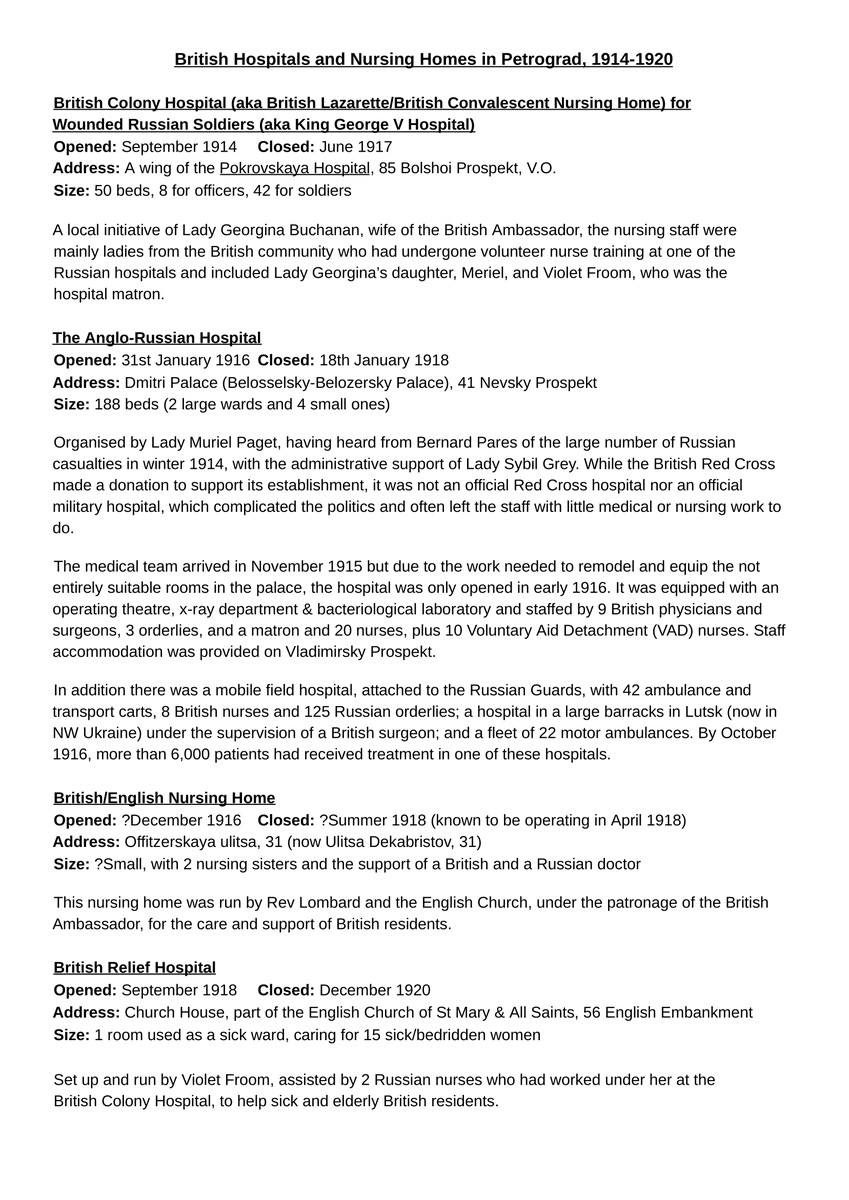
@fralanwalker@ClareCollege No, I hadn't seen this - and it doesn't seem to have been digitised by Project Gutenberg or the Internet Archive. I'll have to try to find a copy. And while perhaps lacking somewhat in holistic/spiritual healing, Rev Lombard set up/oversaw a nursing home in Petrograd, 1916-18.
@fralanwalker@ClareCollege I understand that Rev Lombard was involved at the Guild's founding, in 1904, as honorary secretary, but did he continue to be involved on his return from Russia in 1918? I note from his obituary in the 1952 Clare College Annual that he went on to serve in Salop, Cheshire & Hants.
@fralanwalker@ClareCollege His papers, including his draft memoirs, are in the Leeds Russian Archive (https://t.co/Jf502J0C08), and a number of items, incl 4 of his 'prison drawings', were used in a 2017 exhibition on the Russian Revolution & the British community in Petrograd, see: https://t.co/mwCOb74SZB
@fralanwalker@ClareCollege Were there different suggestions for the church from the others? I hadn't been aware of the Guild of Health (or Rev Lombard's role in it), although a Lambeth Palace Library blog post has filled me in a bit
@fralanwalker@ClareCollege It is on the corner of the Lieutenant Schmidt Embankment & the 15th Line, across the Neva from the English Church at 56 English Embankment where Rev Lombard lived & worked, so that would make sense. And comparing the painting with other Orthodox churches in the city draws a blank
@fralanwalker@ClareCollege Having shared Rev Lombard's watercolour on a chat group for Brits linked to St Petersburg, the emerging consensus is that it might be the Church of the Dormition of the Mother of God (https://t.co/mifSf4etie), albeit painted with a degree of artistic licence