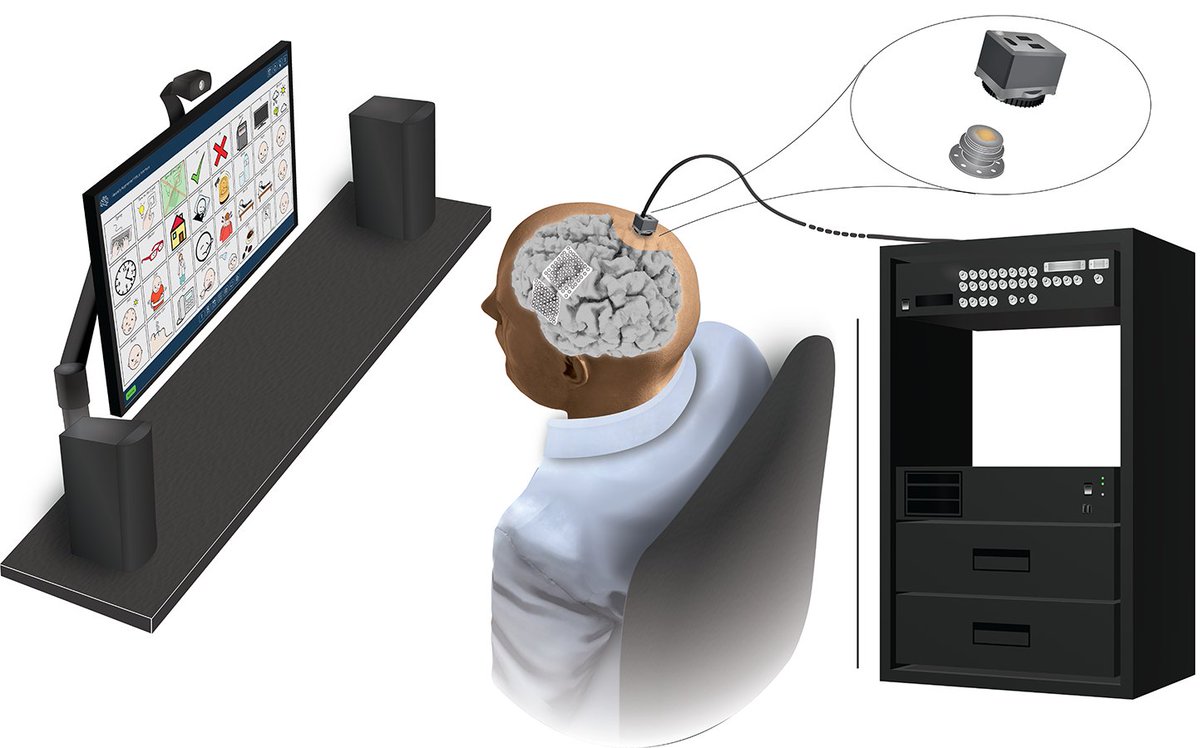
We are pleased to share a recent news story about our first CortiCom participant.
We are recruiting for our next participant. For more information, see: https://t.co/5GzeIxxenX
https://t.co/w8m2LTICfU
We are looking for participants for our #BCI trial. We aim to restore the ability to communicate in people with severe paralysis and speech impairments. See full info below 👇
The generated speech will be played back as a delayed auditory feedback, and we found that out of all trials from our live sessions, around 80% could be correctly identified by human listeners. Don’t miss our supplementary video which shows an excerpt from one of our sessions.
I am very happy to share that our paper about synthesizing speech from ECoG signals has been published today in Scientific Reports. I am very grateful to our whole team and our participant who have made this work possible. Read the full study here: https://t.co/KJERpK7rTn
We demonstrate an implantable BCI that allows our clinical trial participant to reliably synthesize a fixed set of words at his own pace. The BCI uses 3 RNNs to identify speech segments from the neural activity, isolates them and generates an acoustic waveform accordingly.
Interested in joining our team and step into the world of BCI? We have an open position in our lab @Crone_Lab for a Software Engineer to develop innovative communication applications. Feel free to send me a DM if you have any questions.
@Crone_Lab at Johns Hopkins is hiring a software engineer to develop communication applications for participants in clinical trials of brain implants. To learn more and submit your application: https://t.co/BGD7hKGF6i
Check out this new work from our team @Crone_Lab, lead by @systeve_luo, enabling an ALS patient to control devices over a period of 3 month using an implantable speech-BCI.
Excited to share our new paper published today in Advanced Science https://t.co/bY5AagfTUA. We demonstrate a speech brain computer interface that can be used to reliably control home devices. We were able to maintain 90% median accuracy without decoder recalibration for 3 months.
Do you have (or about to have) a PhD and are you interested in speech and intracranial recordings (seeg, ecog, and micro-ecog)? The Cogan Lab at Duke is looking for a postdoc! International applicants are welcome. Join us!
https://t.co/6sf3WeL7jw
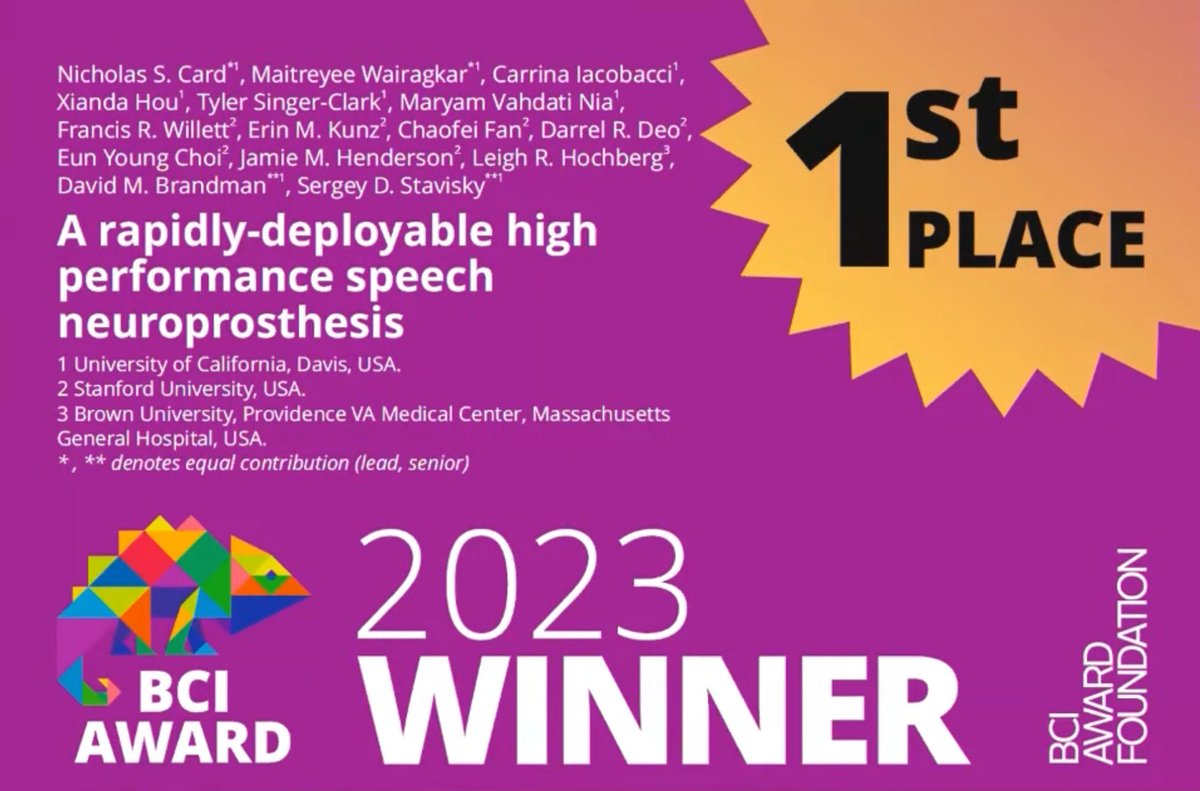
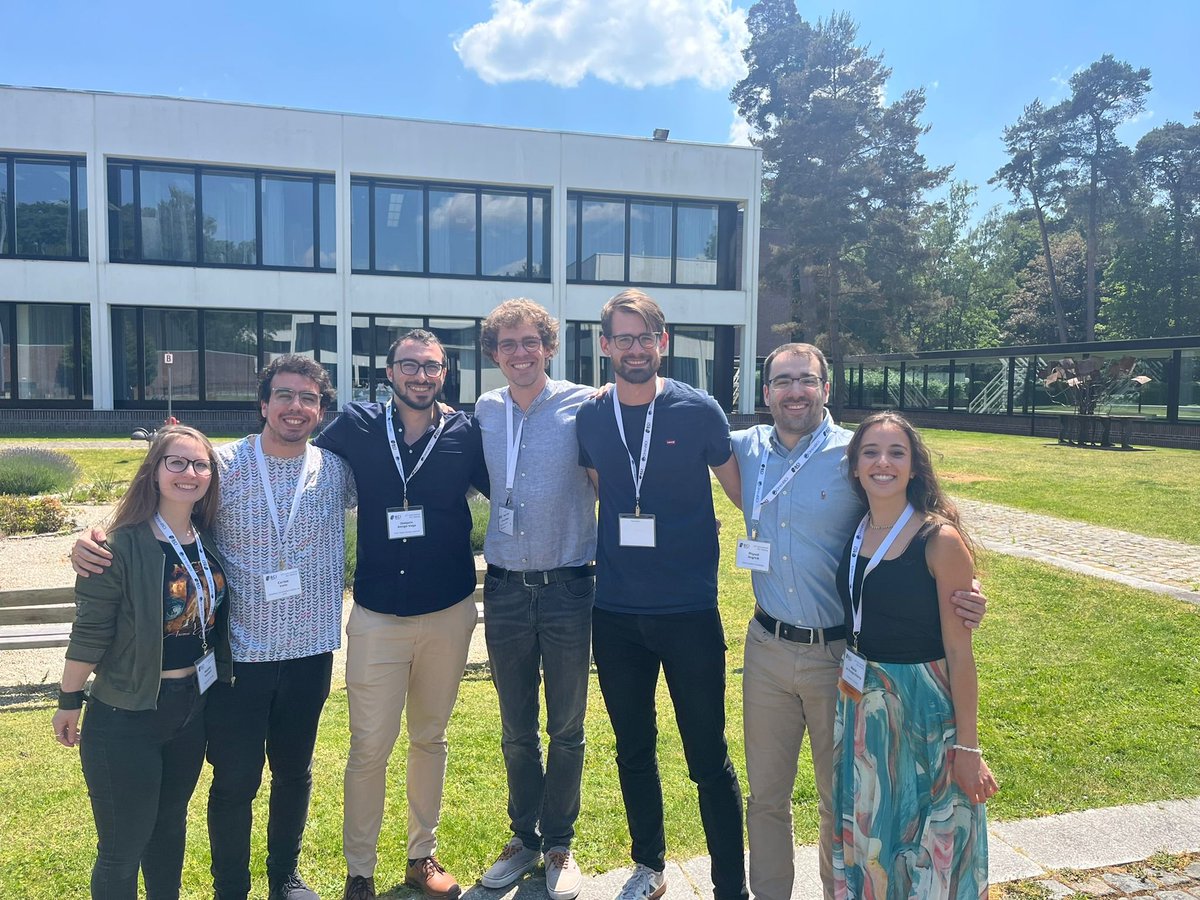
After getting a first glimpse of these 2 independent speech neuroprosthesis papers at this year's BCI meeting, I'm looking forward to finally getting into the details. Both published today in Nature: https://t.co/yEyDTftOni and https://t.co/mbfDkW2oSG. This looks amazing!
Just a few days left to apply! And to those who already did, sorry for the wait until we can start reviewing applications - being part of the country's best public university system is a privilege but it does come with rigorous process in the interest in fairness.
In our new work, we demonstrate a BCI that reliably synthesizes words produced by a speech-impaired individual with ALS from a vocabulary of 6 keywords, where the vast majority of these words could be correctly recognized by human listeners.
I am very excited to share our recent work on @medrxivpreprint about an approach to synthesize speech from neural signals of an ALS patient.
https://t.co/0Nr56YHCG8
Several recent studies have presented approaches to reconstruct the acoustic waveform of spoken speech from neural activity acquired directly from the cortex. These studies relied on retrospective analyses of data recorded from able-bodied participants, such as epilepsy patients.