The reason why TMC isn’t surviving one month of being voted out is because of a point I have made many times.
It’s a party with no ideology. There is no core belief. CPM exists 15 years after being voted out. BJP survives in states it loses and comes back. They are all parties that mean something to their supporters.
TMC means only loot. Every TMC member is in it for what they can get out of it. When not in power, why would you be part of TMC ?
Someone on his team would have pitched this idea. Modi probably would have laughed for five seconds straight and instantly said, "Done." Then some staffer would have been assigned to buy a Melody packet.
For the last few days across UAE, Netherlands, Sweden and Norway, he was probably carrying this in his head, internally giggling at the meme potential and the storm it'll cause on internet. Maybe that's why when the Norway journalist shouted about press freedom, he didn't hear her. The man was busy preparing his punchline in his head.
And now the moment is here, and it delivered. Peak internet bait. Credit to both leaders; that's how you instantly connect with the youth.
I am going to make it one my life’s mission to document the crimes of @MamataOfficial and her evil regime. She should never come back to power. TMC should never come back to power. Nowhere near power.
DMK lost very badly in Tamilnadu, People of other states DID NOT celebrate.
Congress lost very badly in Assam, people of other states DID NOT celebrate.
Mamata Banerjee lost, and the entire country erupted in joy. Even in Jammu, people celebrated her defeat.
In power : “Ten lifetimes won’t be enough for you to put even a dent in my diamond harbour model. I challenge the entire Union of India, come to Falta. Send your strongest, send one of the godfathers from Delhi.”
Now :
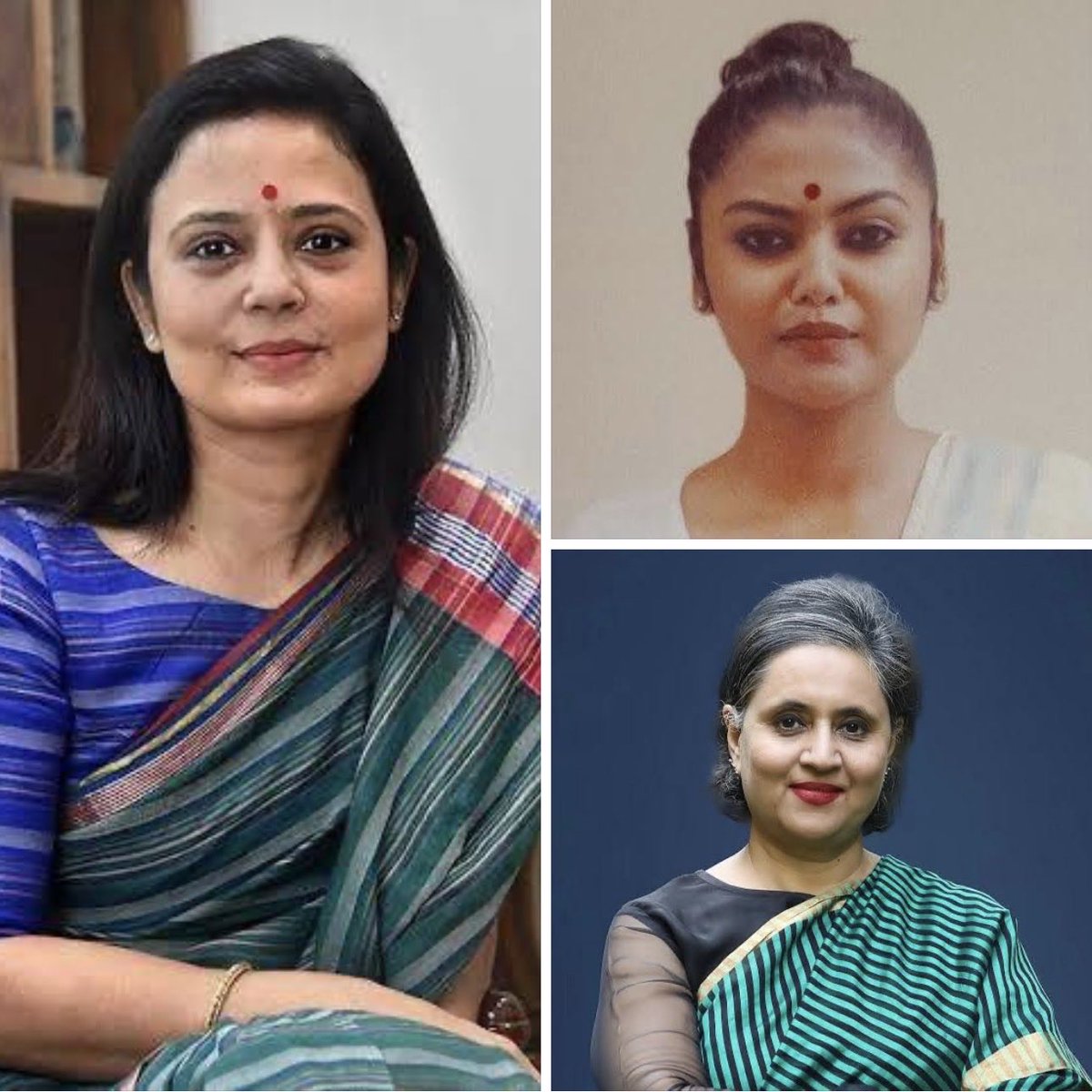
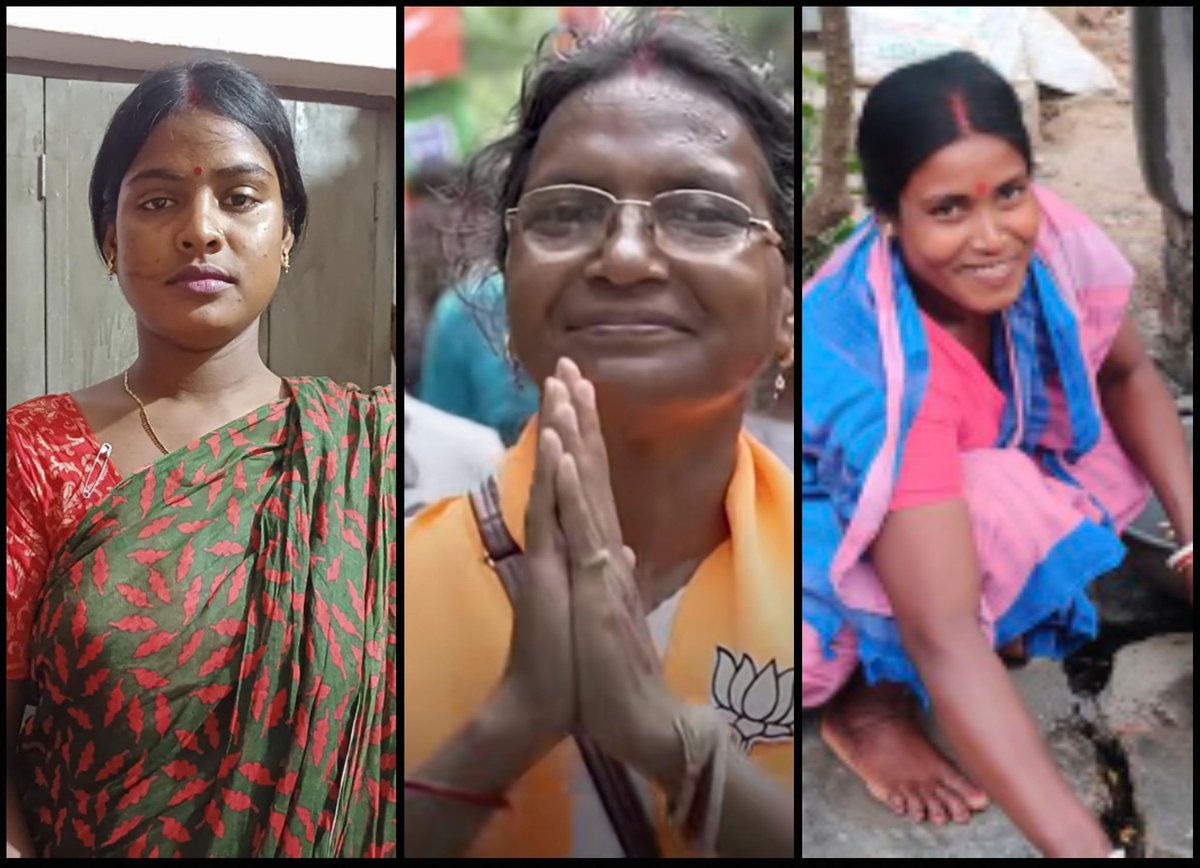
Compare the entitled, elite three witches of @AITCofficial, @MahuaMoitra@sagarikaghose and @sayani06, who are considered ‘intelligent and accomplished’ only because they know how to put on make-up and speak good English, to the three winning women candidates of @BJP4India in West Bengal,
Rekha Patra, the victim of Sandeshkhali mass gang rape by TMC men. Ratna Debnath, mother of RG Kar hospital rape & murder victim. Kalita Maji, worked as a house maid.
All three won! Meanwhile, the shrill witches of Momotabeth are hiding under a layer of foundation and red 👄
Dr Shyama Prasad Mukherjee persevered and prevented Calcutta and West Bengal from going to Pakistan.
Then he fought for Jammu & Kashmir to remain a part of India, sacrificing his life to save it.
Today, his party and successors have again saved Calcutta and West Bengal from cultural destruction and irreversible ruin.
🫡 🇮🇳
- Rekha Patra was victim of Sandeshkhali mass gang rape by TMC men. She defeated TMC candidate by 5000+ votes.
- Ratna Debnath is mother of RG Kar hospital rape & murder victim. TMC attempted shield the culprits. Ratna defeated TMC candidate by 28,000+ votes
- Kalita Maji is a maid who worked at four different houses to sustain her life. She was harassed by TMC workers regularly for supporting BJP. She defeated TMC candidate by 12,000+ votes.
Democracy is alive and kicking in India. Anyone who disagrees is just a chatukar of politicians who lost today.
Watching the events unfold in Bengal is fascinating. TMC & its eco-system are using a set of classic manipulation tools to try & fool the public, & rig the mandate. Here are a few examples:
#1 Gaslighting: A favourite tool of manipulators where they make people doubt their own memory or perception of reality by twisting facts or simply denying events that happened in plain sight.
Example: Mamata Banerjee is trying to erase memory the violence that she & her goons have perpetrated over the years, by playing victim. She had the gall to say recently, “Just look at this atrocity. What kind of hooliganism is going on? Voting does not happen like this. Voting happens peacefully. It is a festival of democracy."
That's gaslighting 101
https://t.co/H23sKWUWW0
VERY IMPORTANT TO ALL VOTING TOMORROW 29/4/2026 IN BENGAL SECOND PHASE POLL
IG CRPF West Bengal Sector cum State Force Coordinator has released this helpline number for assistance and grievance redressal during the second phase of the West Bengal Assembly Elections 2026.
Helpline nos for public
Mobile: 8420272101
8420272343
Landline: 03323671117
Why is Bengal politics so violent and why was polling relatively peaceful this time?
Its prehistory lies in the violent peasant movements (tebhaga) in 1946-47, which were brutally crushed, first by the Muslim League govt of Suhrawardy, then by BC Roy's Congress govt after independence.
Peasant violence reappeared in 1948-50 in Kakdwip, again brutally suppressed by the then Congress govt.
Then came the Naxal period, which made all parties - the Naxalites, the mainstream left, and the Congress - organise quasi-militias of their own.
Finally, after the Left Front began land reforms under Operation Barga, this violence became institutionalised in the political structure of rural Bengal.
The LF realised very quickly that it could not rely on the pro-landlord babus to implement its land reform programme. So, the party machinery replaced the state.
The Left Front govt also empowered panchayats to identify and register the share croppers (bargadars) in rural Bengal, which made the local council the most powerful institution of the state.
From there, rural Bengal became, what the political scientist Dwaipayan Bhattacharyya has called 'Party-Society'.
The party oversaw and administered every level of social existence in the village - from deciding who gets ration and subsidies, to resolving family disputes.
For this to work, without the formal sanction of state power, the ruling party needed to 'capture territory' through both violence and the threat of violence.
The cracks in this system from the early 1990s, were caused by the LF's inability to give jobs and the growing aspirations of the next generation of bargadars.
Yet the Left continued its rule till 2011, thanks to the all-encompassing, and unforgiving, Party-Society system.
But there was always a sizeable anti-Left vote in Bengal (~38-40%), which sought shelter in any party that held power at the Centre.
It was first the Congress, and then Mamata Banerjee after she joined the NDA.
The reason why TMC couldn't make a dent in 2001 was that INC was still a player at the centre at that time, and the anti-Left vote was divided between the two.
If the Left managed to sweep in 2007, it was probably because it gained from its proximity to the UPA, which was in power at the centre. Mamata couldn't offer any hope of protection for the anti-left voter.
The first setback for the Left was when Mamata tied up with the Congress in 2009, after the Left had been thrown out of UPA by Manmohan Singh.
From then on, TMC was able to counter the CPIM's violence in the villages, partly thanks to central backing.
The other key factor for Mamata's victory was the Left's rapid loss of Muslim votes.
There were several reasons for this - the Nandigram blocks targetted for acquisition were held by Muslim peasants, the Rizwanur murder case where the state govt was seen to be hand-in-glove with the killers, and the LF's attempt to secularise madrasa teaching.
What followed was a sustained period of violent expulsion of rural CPIM leaders from villages, and area 'dokhol' (capture) by the TMC.
Despite the massive Modi-wave across the rest of India, West Bengal stayed with TMC in 2014.
But the BJP notched up a 17% vote-share, and formed the first majority govt at the centre in 30 years.
This gave confidence to those at the receiving end of the TMC's violence, that the BJP under PM Modi will be able to protect them.
So, the biggest bump in the BJP's support base came from the persecuted old Left cadre, while the Congress kept some of its core support base intact (in Malda/Murshidabad).
And, what was once a LF vs TMC structural violence, was to become a TMC vs BJP fight for area dokhol.
While violence and its threat have always been part of Bengal's polity, the worst years of election-related violence have been the ones where both sides have been evenly placed.
- 2003, when Mamata was threatening to emerge as a challenger to LF rule
- 2011, when she was to finally unseat the Left Front, and the TMC was able to match the Left in territorial control.
Election years when one side has been overwhelmingly powerful have been relatively less violent.
What does that tell us about the lack of violence in West Bengal this time?
Is it the presence of central forces that has stopped TMC cadre, or is TMC's area control so strong that it does not need to be as violent?
Bengal is not just Bankim Chandra Chattopadhyay, Vivekananda, Subhash Chandra Bose and Tagore. It is also Raja Rammohan Roy, Vidyasagar, Bimal Roy, Amartya Sen, Mahasweta Devi and Satyajit Ray. Those who mention the former without the latter haven't got their Bengal right. It is a thinking and FEELING community for which life is much bigger than the economics of pomp and vanity.
“I will skin you alive, and you will lose your job in Bengal and will have to live in Delhi.”
This chilling warning is by TMC MLA candidate Byron Biswas, to the security forces on election duty !
These are security forces. Now imagine how common people would feel under such chilling threats. This is how TMC wins elections!
Why is he not arrested ??? @SpokespersonECI@ECISVEEP@CEOWestBengal@CrpfWest@crpfindia@HMOIndia@PMOIndia@AmitShahOffice
Please make an example out of him !!!
It is a tragedy that a state that produced Vivekananda, Netaji, AJC Bose, Tagore, Bankim and Vidyasagar is today thought of merely a source of household help in the rest of India. While there is nothing wrong in working as a maid or driver (all honest labour should be respected), the cultural and economic decline of my home state is not the joke that this gentleman seems to think. Some of us witnessed the collapse over half a century, and find this obnoxious.
It's frustrating that a premium train like Duranto(12222) gets late by more than 10 hours. If you cannot run properly then why not close the service. So many things get affected due to this generation old behaviour of Indian Railways @AshwiniVaishnaw@RailMinIndia@PMOIndia
I have irrefutable proof that @Lenskart_com CEO @peyushbansal is LYING when he says that the grooming code that says NO Bindi is ‘outdated’. I have proof of a video audit with the date 08/04/2026 where an employee was given a low rating for wearing a bindi. Will share in due course. Happy to share everything with a good lawyer. Lenskart is a publicly listed company that has to follow @SEBI_India guidelines, not Bansal’s private enterprise and they are violating article 15 of the Indian constitution. Cc @Vishnu_Jain1@JethmalaniM ji
Iran may soon validate my thesis that missile boats "trump" warships in coastal/littoral environments.
Cheap, fast craft with anti-ship missiles can threaten billion-dollar warships via swarms and saturation. The loss of a few missile boats is strategically tolerable, whereas the loss of a capital ship carries enormous consequences.
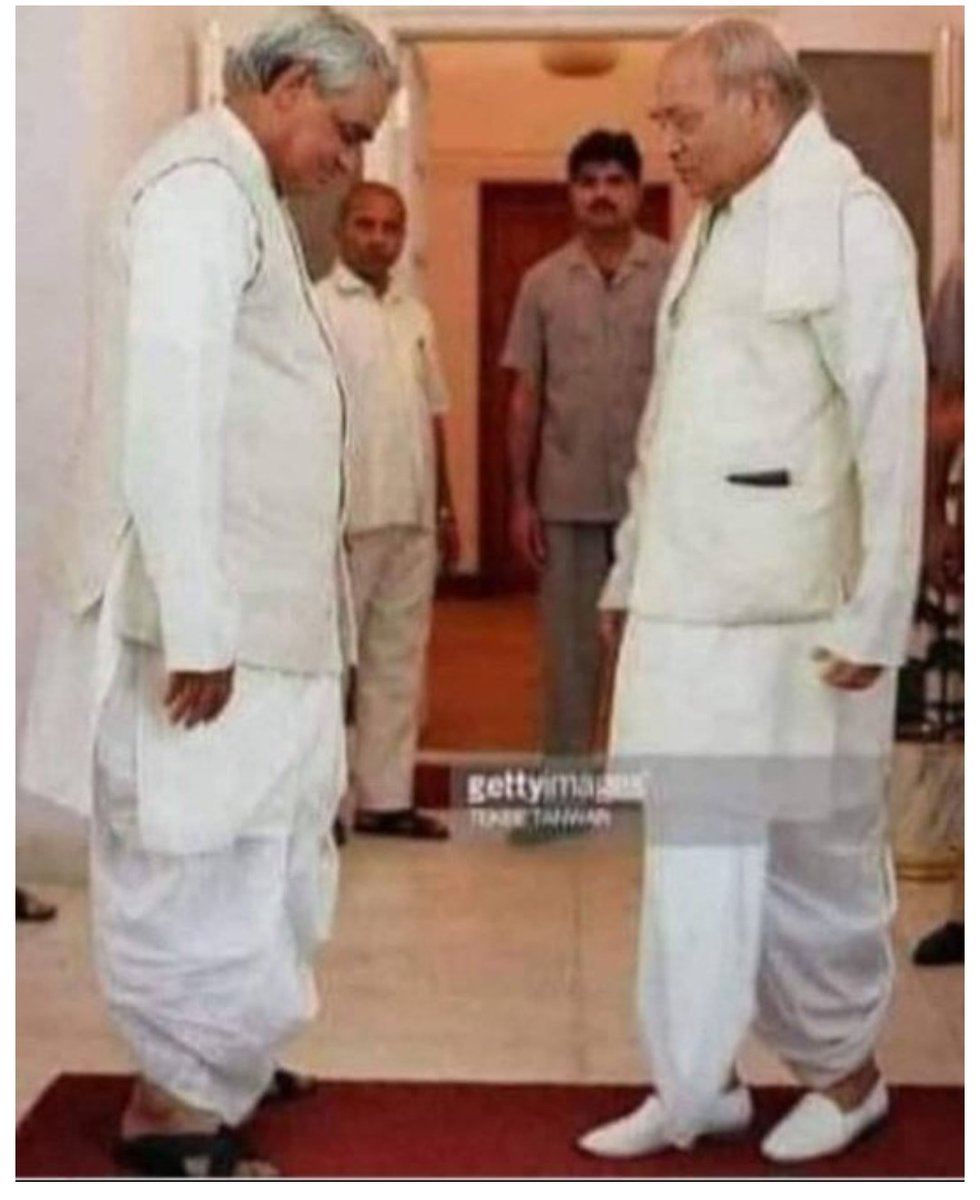
In 1991, India's economy was in dire straits. Prime Minister Narasimha Rao summoned Finance Minister Manmohan Singh and asked him how much money was left in the treasury. Manmohan Singh replied that there was only enough money to run the country for nine days.
Narasimha Rao then asked how they should deal with this situation, to which Manmohan Singh replied that the value of the Indian rupee would have to be devalued by 20%. Narasimha Rao said, "Okay, call a cabinet meeting." Manmohan Singh got up and started walking towards his office. After a few steps, he turned back and told Narasimha Rao that if a cabinet meeting was called, they wouldn't be able to make this tough decision, as all the ministers would be focused on their vote banks.
Narasimha Rao told Manmohan Singh to go to his office, and 20 minutes later, a secretary delivered a letter to Manmohan Singh's room. In that letter, Narasimha Rao had simply written, "Done."
Later, when it was revealed what had happened in those 20 minutes that led to the decision being made without a cabinet meeting, surprising even Manmohan Singh, Narasimha Rao said that he had spoken to Atal Bihari Vajpayee and finalized the decision.
This shows the trust he had in Atal Bihari Vajpayee, even more than in his own cabinet. He knew that Atal Bihari Vajpayee would only say what was in the best interest of the country.
That's what a nationalist opposition looks like. After the announcement of that tough decision, the BJP did not launch any protest movement; instead, they supported the then-Congress government to bring the country's economy back on track. And now, look at the attitude of the opposition parties lead by Congress.
Salute To Atal Bihari Vajpayee. 🫡🫡