Every flower in garden has its unique quality!Keen observer of the human psychology to adopt their best quality.Passion to gain knowledge about financial market
@DrRana777 Considering higher sugar prices and rising input costs, the price should ideally be around ₹600/quintal. However, based on current government policies and political developments, I estimate a likely increase of ₹40–₹60/quintal.
The Illusion of Booming GST Revenues: Dr. Arvind Subramanian
(a) 1 yr ago, govt re-labelled parts of GST (b) That created an optical illusion of booming receipts, while hiding a sharp decline in revenue performance (c) “Observers have been misled”
A Masterclass in Magic Tricks
In an illuminating piece titled “GST Re-labelling Misleads and Obscures,” former CEA Dr. Arvind Subramanian along with Abhishek Anand and Josh Felman, describe how “observers of revenue performance” (analysts, journalists, and general public) “have been misled.”
Starting in Sept 2025, the govt of India changed the labels on certain parts of the GST system. According to the authors, this “re-labelling” has led to two consequences:
(1) It creates an illusion of a booming growth in tax revenues, while hiding a sharp decline in actual revenue performance.
(2) It deprives state govts of about ₹15,000 to ₹20,000 crores every year from their fair share of the GST revenues.
How the Illusion Works
Imagine you have a ₹100 note in your left pocket and a ₹100 note in your right pocket. Now you move both notes into one pocket. Has your wealth doubled?
a. Before Sept 2025, the GST system had two main buckets: Regular GST and Compensation Cess (an extra tax on luxury or sin goods like SUVs & tobacco.)
b. Starting Sept 2025, the govt lowered GST rates on most items, and simplified the GST structure. The “Compensation Cess” was abolished in phases, while the items under that Cess were moved up from 28% GST rate to 40% GST.
c. Now in place of the abolished Cess, the govt introduced a new tax on these items called the Additional Excise Duty (AED).
d. In effect, the GST labels were changed. The old system was: “GST + large Cess”. The new system became: “Much bigger GST + smaller AED”.
Headline Numbers vs. Reality
a. The govt does not explicitly publish the data for the new Additional Excise Duty (AED). By obscuring this data, it becomes very difficult to compare the old GST numbers with the new ones.
b. The so-called massive surge in “GST” collections has occurred because a major portion of the old Compensation Cess is now labeled as “GST.” So, the GST bucket becomes fatter.
c. This moving money from one pocket to the other has been touted as a “Laffer Curve” phenomenon (“miraculous achievement”) where GST rates have been lowered, and yet tax collections have increased.
d. Headline vs. Actual GST Revenue Growth
Headline GST Growth
FY25: 9.4%
FY26: 7.5%
Q1FY27: 10.5% (Booming)
Actual GST Growth: Reality
FY25: 9.4%
FY26: 5.8%
Q1FY27: 4.9% (Declining)
IMPLICATIONS:
1. When you count ALL the taxes collected across all labels (GST + AED + old Cess), the total GST revenue growth in Q1 did not surge to 10.5%. It actually declined to 4.9%.
2. GST changes in Sept 2025 may have simplified and improved the system, but they have led to revenue losses.
The GDP Reality Check
To understand the economic conditions through the lens of tax revenue collections, you must look at net tax revenue (gross minus refunds), and then compare it against the GDP.
Since FY24, net GST revenues as a share of GDP have been steadily declining.
Net GST Revenues
FY24: 6.0% of GDP
FY25: 5.9% of GDP
FY26: 5.7% of GDP
Before the GST system was introduced in the country, the pre-GST average collection of indirect taxes was 6.2% of GDP. So, in terms of receiving revenue as a share of GDP, the govt is doing much worse in FY26 @ 5.7%.
The States are Hurting
a. When GST was designed, the Finance Commission’s formula meant that if ever the Compensation Cess was folded into the “Regular GST” structure, the states would receive 40% of the Central GST indirectly.
b. Reality: The Centre has completely changed the game under the new arrangements. The newly created Additional Excise Duty (AED) allows the Centre to keep a much larger slice.
c. The Centre has introduced a new tobacco machinery-related tax (“Health Security and National Security Cess”.) This is not shared at all with the states. The authors argue this seems to “legally” violate the GST law (“de jure”).
d. The Financial Hit: The authors estimate the entire act of re-labelling of taxes is depriving the state govts of ₹15,000 to ₹20,000 cr annually.
Dr. Subramanian’s full article is available as a repost on his X timeline @arvindsubraman
ENDQUOTE
“Everything the State says is a lie.” – Friedrich Nietzsche, Thus Spoke Zarathustra (1883)
@arabicatrader
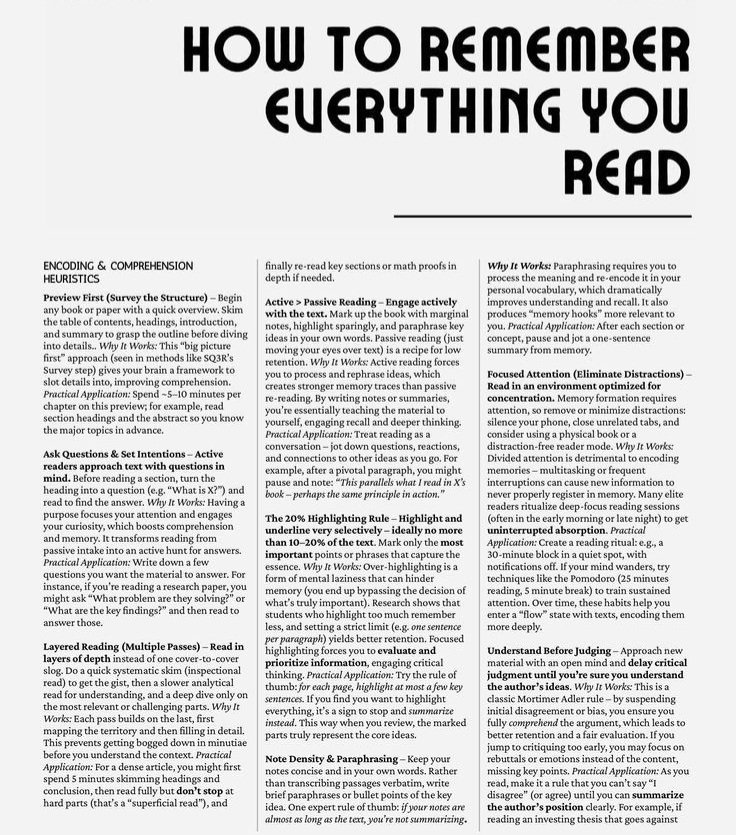
📚 Read smarter, remember more! 🧠✨
Active reading, focused attention, smart highlighting, and paraphrasing can transform the way you learn.
Save this for your next study session. 🔖🚀
Civic activist Santosh Pandit has reportedly been detained by Pune Police after repeatedly highlighting dangerous potholes, open manholes and poor road conditions across the city. His demonstrations brought attention to the everyday risks faced by commuters.
The incident has sparked questions online about civic accountability. When citizens raise concerns over public safety, the response should be to fix the problem, not silence the person pointing it out. 🙏
@sanjaykathuria Your calculations for inflation is totally wrong ?
In ground average inflation is reached more than 10 %. Check the ground realities not only predict data based
🇮🇳 Modi told a Delhi college hall that India will make the chips, ship the grain, park its own station in orbit, and throw an Olympics the world cannot look away from.
That was the 100-year event at Shri Ram College of Commerce, a top Delhi University campus.
The space station is already on the books for the 2030s.
The factory and farm lines are the same growth story he has been selling since the Make in India pitch in 2014, factories at home instead of import bills.
Writer: Lucas
2023-24 में दुनिया की सबसे पुरानी पार्टी कांग्रेस को 281 करोड़ का चंदा मिला और 2020 में बनी और सिर्फ एक उम्मीदवार खड़ा करने वाली आम जनमत पार्टी को 620 करोड़ का चंदा मिला।
आम जनमत पार्टी जैसी 6 पार्टियां हैं जिन्हें करोड़ों का चंदा मिला है, ये पार्टियां गुजरात में हैं।
है न कमाल।
#IN10Y
Going for breakout in monthly
What happens to inflation?
Rising yields and inflation are locked in a cause-and-effect loop. It usually plays out in two steps:
Step 1 (The Cause): Yields usually rise because inflation is high. If inflation is at 6%, an investor won't buy a government bond that only pays 5% (they would lose money in real terms). They demand a higher yield to beat inflation.
Step 2 (The Cure): Over time, these higher yields actually help kill inflation. Because loans get so expensive, businesses pause expansions and consumers buy fewer houses, cars, and goods. When people stop spending as much, demand drops. When demand drops, prices stop rising so fast—and inflation eventually cools down.
In short: High inflation causes yields to rise, but those rising yields act like the brakes on a car, eventually bringing inflation back down.
पहले पोस्ट withheld हुआ।
अब सवाल है, पोस्ट लिखने वाले Ashish Joshi कहाँ हैं?
अगर वे पुलिस हिरासत में हैं तो Delhi Police को तुरंत जवाब देना चाहिए।
देश जानना चाहता है: Ashish Joshi कहाँ हैं?
#AshishJoshi#DelhiPolice#Democracy#FreedomOfSpeech#SujataSpeaks
पत्रकार:- आदित्य कल आपकी मौजूदगी ने पूरी बिहार सरकार को हिला कर रख दिया
आदित्य:- तो छात्र की मांगो को पूरा कर दे
और मेरे माता पिता को मारने का क्या जरूरत था 😳
पत्रकार:- किसने मारा आपके माता पिता को
आदित्य:- SP साहब ने खुद ही मारा 😳
पत्रकार:- डीटेन किसने किया आपको
आदित्य:- SP साहब कही जा रहे थे, मैने उनकी गाडी को धर लिया 😜🤪
और बोला कि अपराध करके कहां भाग रहे तो उसी में गुस्सा गए वो और मेरे पीछे पड गए !!
Retail Losing Interest?
Friends,
Here is the 20 week data of the Nifty prompt futures and marketwide f&o open interest (number of lots).
The total f&o open interest is now at the lowest since August 2025 - a year long low. Last week MTF exposure ...... contd below
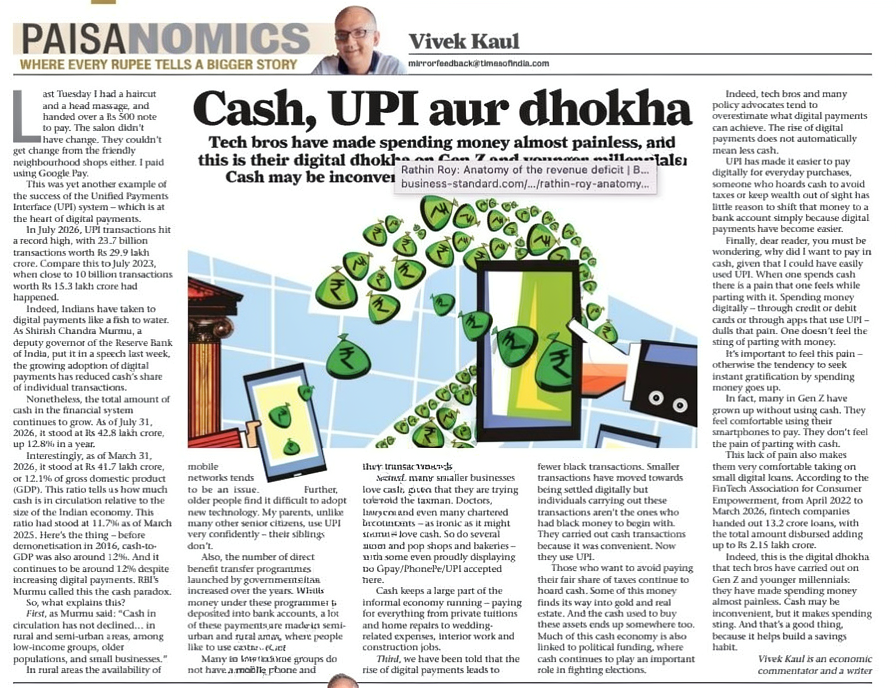
Cash, UPI aur dhokha
My Paisanomics column in the Mumbai Mirror.
UPI has transformed how Indians pay.
Yet here’s the paradox: cash in the financial system isn’t disappearing.
Cash stood at Rs 42.8 lakh crore on July 31, up 12.8% in a year.
Cash-to-GDP remains around 12% – roughly where it was before demonetisation.
Why? Digital payments may replace cash for everyday transactions, but they don’t eliminate the cash economy.
Rural India, small businesses and the informal economy still rely heavily on cash.
Doctors, lawyers and even chartered accountants love cash, as do many mom-and-pop shops and bakeries.
And those sitting on black money have little reason to move it into a bank account, just because UPI has become a convenient way to pay.
Some of that cash finds its way into gold, real estate and political funding.
But there’s another dhokha. Tech bros and policy advocates assume digital payments automatically mean less cash and less black money. They don’t.
Worse, UPI has made spending almost painless. That is the real digital dhokha inflicted on Gen Z and younger millennials.
When one spends cash there is a pain that one feels while parting with it.
Spending money digitally – through credit or debit cards or through apps that use UPI – dulls that pain. One doesn’t feel the sting of parting with money
When spending doesn’t hurt, saving becomes harder.
https://t.co/xki7imHjJs
A two-year return in two months sounds like an opportunity.
Often, it is a warning.
When information is free and simultaneous, capital can saturate an asset class very quickly. The same money that drives an asset higher can then leave just as quickly, creating what I call a rolling bubble.
That changes how we have to think about bubbles, valuation and risk.
I wrote about rolling bubbles, the rising cost of capital, debasement, gold, Japan, electrification and why cash still matters in this environment.
Link to full article: https://t.co/QuyiTeMDBL
Railroads were once 63% of the entire US stock market.
Not 63% of transport stocks. 63% of everything listed.
The history of concentration, in order:
– Tulips, 1637. A single bulb traded for the price of an Amsterdam canal house.
– South Sea Company, 1720. Shares went from about £128 in January to above £1,000 by summer, then back near £150 by December.
– US railroads, 1840s. 63% of US market cap.
– Utilities, telecom and industrials, 1929. 36%.
– Nifty Fifty, 1972. 40%.
– Japan, 1989. 44% of global equity.
– Dot com, 2000. 41%.
– AI Big 10, today. About 40%.
Every one of them was built on something real. Railroads did compress a continent. The internet did rewire commerce. Being right about the technology was never the thing that protected you.
The tulip story is also less clean than the legend. Modern research found the economic damage was modest and the ruin was mostly literary.
The bubble was never in the idea. It was in how many people decided to own the same idea at the same time.
What is the Indian market actually telling us right now?
And where is it headed?
There are 4 things I’m looking at —
Valuation,
Sentiment,
Global positioning globally and Market breadth.
And they tell a more interesting story than simply looking at whether the Nifty is up or down.
In this video, I break down what these signals are showing and why I think investors should look beyond the headline index before drawing conclusions about the market.
Worth watching if you’re trying to understand where the market stands — rather than guess where it will go next.
And one thing I would say — be careful about listening to projections of exactly what the market will do a year or two from now.
Markets are about probabilities, not certainties.
That’s what I’m looking at here.
Hope this helps.
#InvestingGuideByDevina