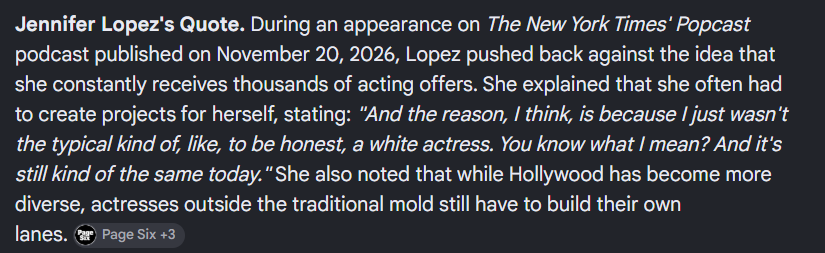
@canarymission If you watch the extended cut she says she was joking. True or not I don't know but I would give her credit for it in a comedy show especially one starring a guy who makes fun of minorities. He also has a much funnier story about antisemitism.
@humanprovince Gemini: Lebanon never revoked Jewish citizenship or seized communal property by law, as Iraq, Syria & Egypt did. Calling the exodus a state-ordered expulsion blurs the real culprit: state collapse under PLO & Iranian-backed terror.
@humanprovince Gemini: 1984–1986: Iran-backed militants (Organization of the Oppressed on Earth) executed 7 Jewish leaders — including Isaac Sasson, Elie Hallak & Salim Mourad Jamous — to extort prisoner releases from Israel. By 1990, fewer than 100 Jews remained.
@humanprovince Gemini: When civil war erupted in 1975, the main Jewish quarter, Wadi Abu Jamil, sat directly on the front line dividing Christian East and Muslim/PLO West Beirut. Lacking a militia, Jews were prime targets for ransom kidnappings.
@humanprovince Gemini: On September 6, 1971, Syrian intelligence agents abducted Elia in Beirut and tortured him to death in Damascus's Mezzeh prison because he helped Syrian Jews flee persecution.
@humanprovince Gemini: Between 1967 and 1971, over half of Lebanon's Jews emigrated to France, North America, and Israel—shrinking from ~6,000–7,000 to ~1,800–2,000 by 1975.
@humanprovince Gemini: During the June 1967 war, Lebanese police guarded Beirut's Jewish quarter to prevent pogroms. Still, anti-Jewish riots, economic boycotts, and calls to treat Jews as enemy agents broke the community's sense of safety.
Every year around this time, I see the same advice going around: "Don't bother applying in December. Nobody hires until January."
And if you've been job hunting for a while, I understand why that sounds like a relief, you can pause.
But December doesn't mean hiring stops. Lots of companies keep going all month; I've spent many Decembers hiring, sourcing, and interviewing people. And many of the people who start a new job in January had their first call in December.
So if you really need a break, please take it; you've earned it. Just let it be your choice, not something you did because someone from Instagram, LN, or TikTok told you the market closes for a month, because it doesn't.
(Sometimes I wonder how so many people who've never hired anyone think they're experts on this, maybe they earned their PhDs from the University of Google... 🤷♂️)
If you have a little energy left this year, here's where I'd spend it: Think of a few people you've lost touch with (ex-colleagues, friends, people you met on meetups...) and send each of them a short note.
Something like "Hey, I'm looking for my next role in X, and I thought of you. Let's grab a coffee (even a virtual one)" is enough.
People are warmer and more generous in December. Many of them have a bit more free time, too.
And I can tell you that one good coffee chat can do more for you than a perfect resume.
"2023-2024" can easily mean two months or two years. It could be 12/2023-1/2024 or 1/2023-12/2024. If it's your resume, you know which it was.
But the reader doesn't, and when people have to guess about dates, they rarely guess in your favor.
Personally, I'd much rather see months, even when the job was short (especially then). To me, short jobs are a normal thing and absolutely no reason to reject someone. Contracts end, companies promise what they can't deliver, startups run out of money, offices close, or life happens. And sometimes you realize in week three that you joined the wrong place or the wrong leader.
Add a few words in brackets and the question answers itself:
Product Designer, 03/2024-09/2024 (contract role)
Sales Lead, 01/2023-07/2023 (company closed its Prague office)
Now there's no mystery; nobody has to make up a story about you. And the reader moves on to what you actually did.
But I still keep seeing people judged for short jobs, even in this crazy market (like some people really need a reality check on what is going on before they judge others). People join a company, get laid off a few months later, and somehow that becomes their fault.
So maybe writing "2023-2024" is the only way some candidates can protect themselves from that bias.
@EclipeByDeath@MaxNordau Summer, no one disputed the reality of honour killings. There have been a few cases here in Canada. The common image of them tho is not falling from a rooftop.
If you still have doubts about Oswald's guilt read @geraldposner book Case Closed. Here is my distillation of the man from Conspiracy.
Lee Harvey Oswald was born in New Orleans in 1939 and joined the U.S. Marines in the 1950s, where he received riflery training. Contrary to what Oliver Stone has one of his character’s say in his film—that Oswald “shot Maggie’s Drawers,” meaning he couldn’t even hit the target—in fact Oswald scored the second highest rating possible in riflery, making him a sharpshooter.
Politically, Oswald was an avowed Communist who defected to Russia in 1959, worked in a radio factory in Minsk for two years, and married a Russian woman named Marina. After he grew disenchanted with the USSR, in 1962 he moved back to the United States, to Dallas, Texas, shortly after telling friends that he wanted to move to Cuba to join Castro’s communist revolution. This background helps establish a motive for killing Kennedy, as the President was avowedly anti-Communist, and after the failed Bay of Pigs invasion of Cuba, also clearly anti-Cuban and anti-Castro.
Temperamentally, Oswald was emotionally unhinged and suffered from delusions of grandeur, telling people he had ambitions to someday do something to make himself famous. He was very likely a sociopath, and quite possibly expressed the personality traits of psychopathy, narcissism, and Machiavellianism—the “Dark Triad”—dark because the combination often leads to malevolent actions.
While in Dallas, Oswald encountered the anti-Communist crusader Edwin A. Walker, a retired general who was himself something of a conspiracy theorist, once accusing the U.S. Supreme Court Justice Earl Warren of plotting to destroy the United States by banning prayer in schools and promoting civil rights for minorities. In April of 1963, just eight months before he assassinated Kennedy, Oswald attempted to assassinate General Walker by shooting at him from around 100 feet outside his home. Walker was struck with bullet fragments to his forearm and survived, and after the Kennedy assassination it was determined that Oswald used the same firearm for both: an Italian-made 6.5 mm caliber Mannlicher-Carcano bolt-action rifle, which he purchased by mail order in March of 1963, along with a .38 Smith & Wesson revolver, leaving a paper-trail investigators later uncovered. That same Mannlicher-Carcano rifle was found among some boxes near the sniper’s nest on the sixth floor of the Texas School Book Depository building, and in the sniper’s nest were three spent Carcano cartridges scattered on the floor.
After Oswald tried to kill General Walker, he told his wife Marina what he had done, and according to her he also planned to assassinate Richard Nixon when the former Vice President (and future President) visited Dallas, but she locked him in the bathroom to stop him. (After the JFK assassination the Warren Commission determined that it was Oswald who attempted to murder General Walker.)
That summer of 1963 Oswald created the New Orleans chapter of the pro-Castro organization called Fair Play for Cuba (he was its only member there), and he was arrested for getting into fights with anti-Castro Cubans, further evidence of his violent tendencies.
In September 1963, after his wife talked him out of hijacking a plane to Cuba, Oswald traveled to Mexico City in order to procure a visa to Cuba, but the Cuban embassy said they would give him a visitor’s visa only if he was returning to the Soviet Union with his family, which he refused. So he went to the Soviet embassy where he encountered three undercover KGB agents, who later reported that Oswald seemed unhinged, so they put him off.
Oswald then returned to Dallas, where on October 16 he started work at the Texas School Book Depository Building. Conspiracy theorists have made much of the fact that the building was on Kennedy’s parade route, but that route wasn’t determined until the week before the president’s visit to Dallas, well after Oswald got the job there.
Co-workers saw Oswald on the sixth floor of the Book Depository building shortly before JFK’s motorcade arrived and saw him exit shortly after the assassination.
The sniper’s nest on the sixth floor of the Book Depository building was constructed out of boxes, which had Oswald’s fingerprints on them.
Three bullet casings were found in the sniper’s nest indicating that he took three shots. This matches what 81 percent of eyewitnesses in Dealey Plaza reported hearing—three shots.
Subsequent tests with the Mannlicher-Carcano rifle, particularly that of the 1977 House Select Committee report, found that three shots can easily be taken in the eight seconds that Oswald had to shoot (and some researchers put it at 10 seconds). In fact, with the first bullet already chambered, it would have taken only 3.3 seconds to squeeze off three shots.
The three shell casings found in the sniper’s nest carry distinct ballistic markings on them showing that they were fired from Oswald’s rifle, and the one recovered bullet at the Parkland Memorial Hospital where Kennedy and Texas Governor Connally—who was also hit by the first bullet to hit JFK—were taken, showed matching ballistic markings indicating that it had been fired from that rifle.
After killing Kennedy, Oswald went home and picked up his .38 Smith & Wesson revolver and left again, shortly after which he was stopped by Dallas Patrolman J.D. Tippet. Oswald shot him dead with four bullets, an act witnessed by ten observers, and the bullet casings at the scene matched his .38 Smith & Wesson.
Oswald then fled the scene and ducked into a nearby theater without paying. The police were summoned to the theater where they confronted Oswald. Oswald pulled out his revolver and attempted to shoot the first officer, but the gun was wrestled away from him and he was arrested, saying, “Well, it is all over now.”
Actually, it was all over for Oswald two days later, when at 11:21am CST on Sunday November 24, a Dallas nightclub operator named Jack Ruby walked into the Dallas Police Headquarters when Oswald was being transferred to the city jail and shot him dead at point-blank range. In yet another eerie coincidence, Oswald was rushed to Parkland Hospital and pronounced dead, two days to the hour after President Kennedy died in that same hospital.