Wow, thank you, @ThePracticalDev . The Blog got 8k+ reads and
This led to the 'Top Docker author of the week badge'.
I will keep up with good contents.🙌
@Docker FOR EVER 💙 🐳💙
#blogs
Discover the core of Docker—how it runs containers innovatively via CLI & API, and utilizes Linux and C-Groups for isolation. #DEVCommunity
https://t.co/UfGxDowRF4
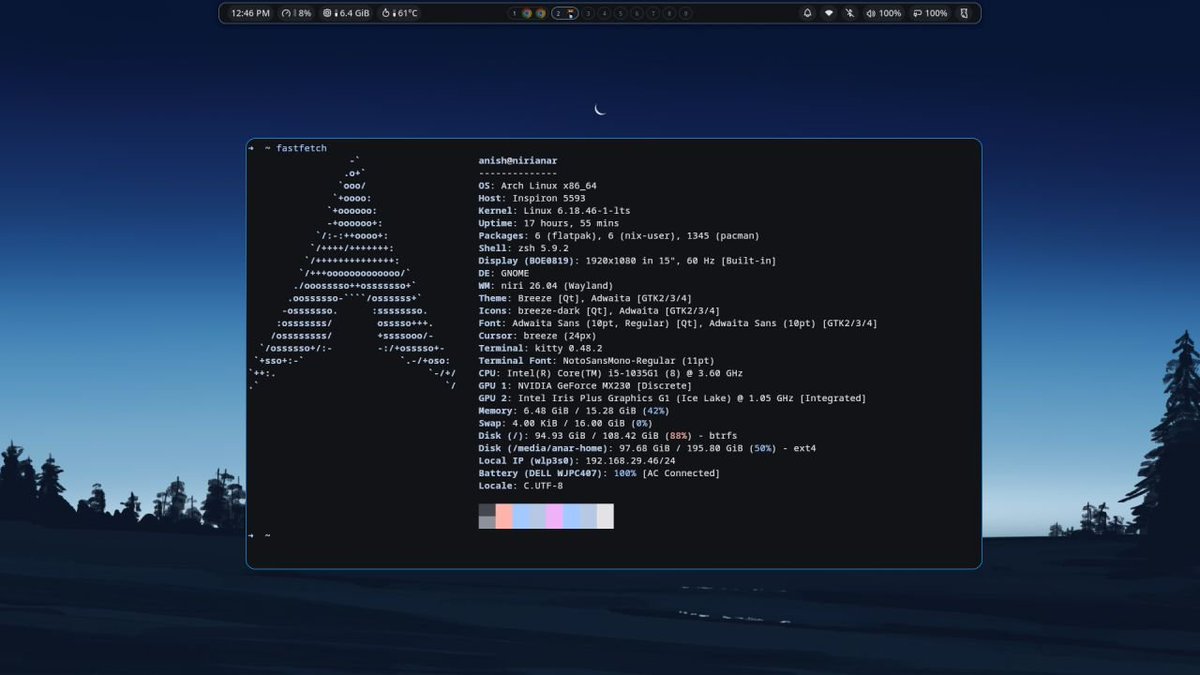
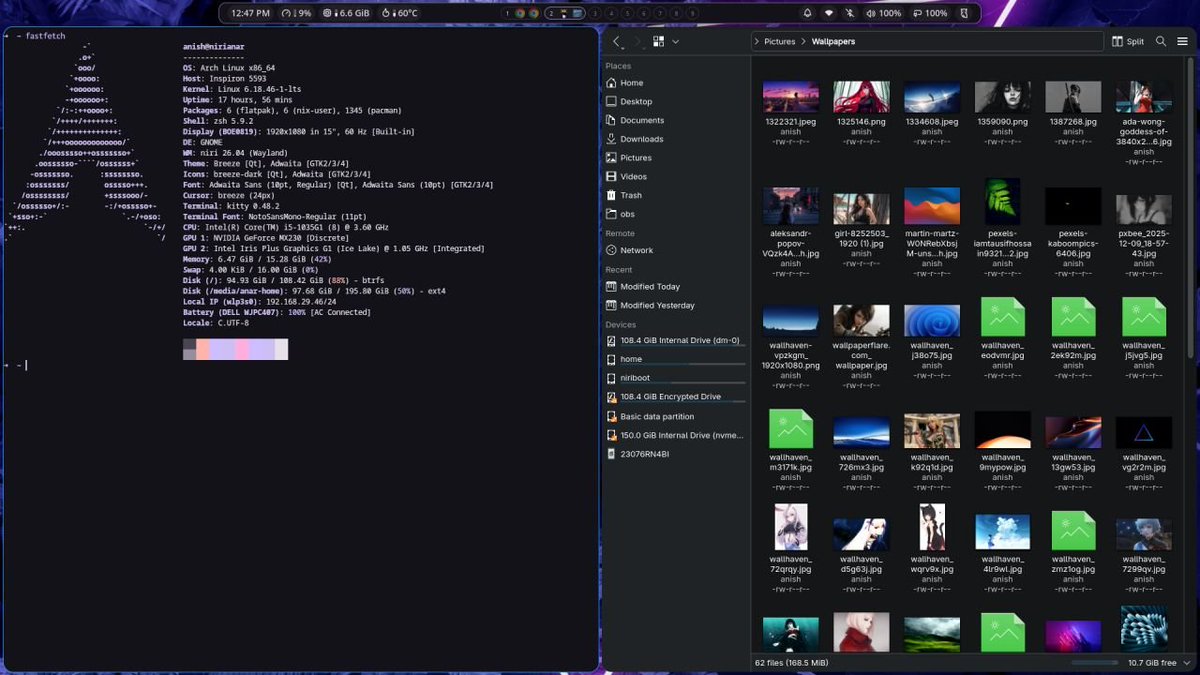
I am building my own arch Linux based distro with all the best tooling that I have gathered throughout years of use and experience. And of course with elegant looks. " Everything configured, just install and get to work"
We're back for Hacktoberfest 2026!
This year, we're not counting PRs. Instead, we’re hosting 300+ in-person “Fests” and an online event all about building with open-source and open-weight AI.
Learn more and see how you can get involved.
https://t.co/WZka1iMCUX
Upcoming Linux kernel 7.3 is one of the most performance-focused updates in years.
Btrfs gets 3x to 5x improvements across logging, fsync, extent buffer tracking, and direct I/O. The default free-space cache also switches from v1 to v2.
EXT4 is getting faster as well. Parallel direct I/O writes, multi-block allocator improvements via fallocate(), and IOPS jumping from 1.92M to 2.19M on Gen5 NVMe.
The scheduler gets a major overhaul bringing massive improvements to frame pacing, especially on "potato"-class hardware.
Memory management sees some improvements, too. zsmalloc contention fixes deliver 1.4x to 1.83x gains, with notable benefits for Raspberry Pi. KSM reverse-mapping lock times drop from over 500ms to under 2ms. That is a 100x to 500x improvement.
SMP real-time latency improves sharply too. P99 latency falls from 17ms to 1.5ms, which matters a lot for DPDK and real-time workloads.
Intel hybrid CPU users on Alder Lake, Lunar Lake, and Panther Lake get better P-core and E-core load balancing.
Excited for Kernel 7.3.