Among other things, Rajesh Exports was one of the companies selected for Production Linked Scheme PLI for Advanced Cell Chemistry (ACC) battery storage.
Masterclass of what matters in AI model companies.
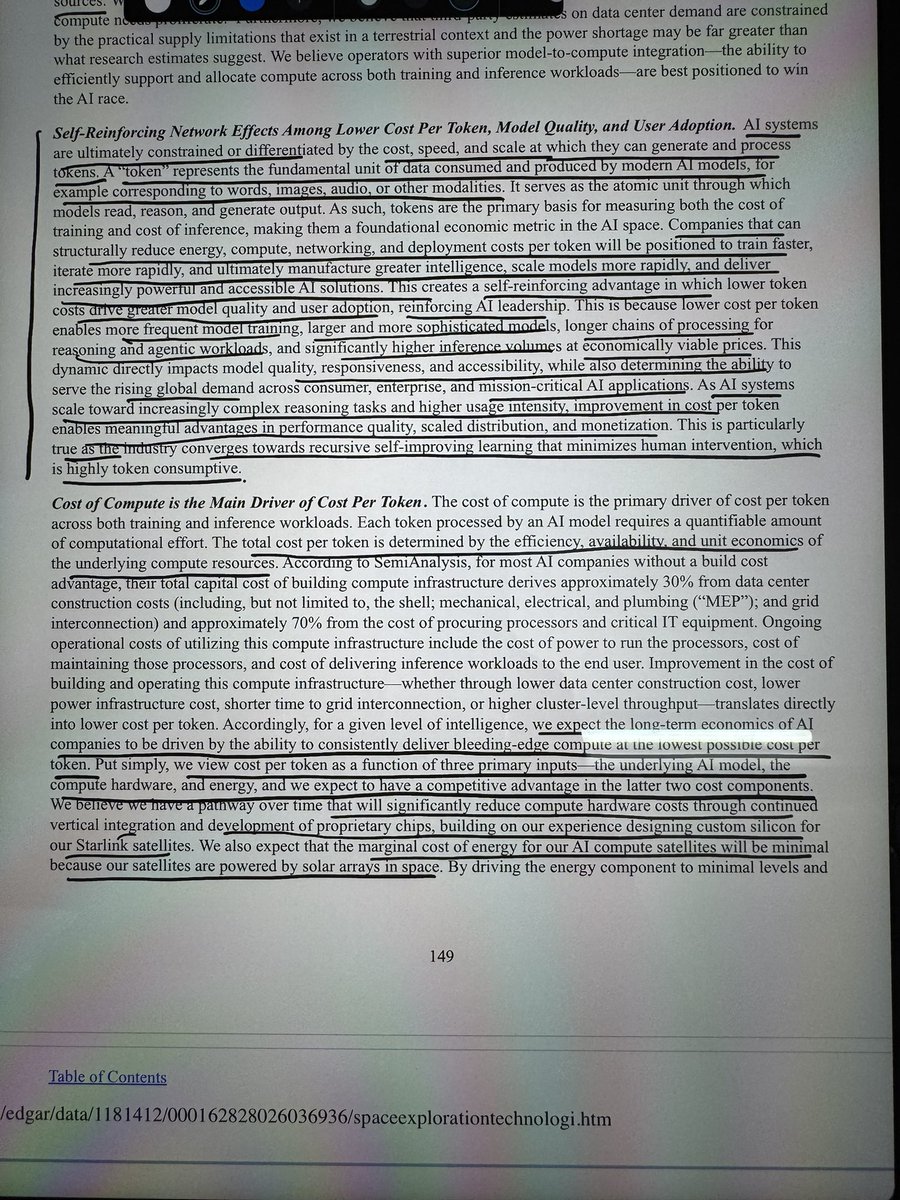
Was reading the S1 of SpaceX
Lowest cost per token is the key.
Cost of token is a function of three:
1. Underlying AI model
2. Compute hardware
3. Energy
Entire EM trade is a bet on AI.
Samsung, TSMC and SK Hynix are rallying because of AI driven capex cycle.
They operate in a notoriously cyclical industry.
Yesterday I finished listening to Anthropic's CFO Krishna Rao's podcast — and it gave me good insights to think about the business of LLMs and Anthropic per se.
Anthropic will be one of the most important businesses to exist on earth. They are killing it and how. They started this year at ~$9B annualised revenue and by the end of Q1, they were at a $30B run rate.
Some of my key takeaways:
- Managing Compute is the key:
LLMs are asset heavy business unlike traditional tech because of building compute for training and inference. How you manage and efficiently use compute is a major component of business success.
Anthropic operates across three chip platforms (Amazon Trainium, Google TPUs, NVIDIA GPUs) and built its own compilers, orchestration layers, and chip-level optimizations so that a dollar of compute inside Anthropic goes further than almost anywhere else. That kind of flexibility is a competitive advantage.
Also, the challenge is that if you build too much compute way ahead of demand, you might be bankrupt and if you build too little or are not at frontier you will fall back. So the balancing act is crucial. Anthropic manages it with rigorous bottoms-up demand modelling across 1–2 year horizons, with flexibility baked into every procurement deal.
- Frontier Model - Increases the TAM:
While there are concerns that the race for frontier models is a treadmill and there isn’t any competitive advantage being built as peers also reach frontier with some time lag.
But Krishna had an interesting take. Every Frontier model is increasing the TAM. Coding was the first area, and they plan to go after other areas.
This goes to show that the capex from frontier model development is kind of growth capex and is not fully maintenance capex.
- Intelligence is not a single IQ score.
Anthropic thinks about model capability across multiple dimensions — long-horizon tasks, tool use, agentic behaviour, speed. Benchmarks are saturated. What matters is real-world impact. And even between two equally capable models, one that completes tasks 7x faster is in a completely different category.
- Recursive self-improvement
Over 90% of Anthropic's own code is now written by Claude Code — which is also helping write the next version of Claude Code. Internal compute isn't just overhead. It directly accelerates the next model generation. The compounding loop is live.
- Pricing philosophy: maximise ROI, not margins.
When they dropped Opus pricing post-4.5, consumption exploded. Classic Jevons Paradox — lower the cost of intelligence, and demand scales faster than you'd expect. Their framework isn't gross margin maximisation. It's return on compute
Link in the subsequent tweet.
The company faces challenges like
• Execution risk: 10,000-machine capacity in 5 years is ambitious. Phasing helps but government approvals have already taken longer than initially guided.
• Revenue timing: Management repeatedly cited defence inspection cycles, customer loan delays, and machine delivery commitments as reasons for revenue spillover
• Finance cost creep: NBFC customer-financing scheme improved collections but raised finance costs in Q3FY26
• Working capital: Defence mix (90-day payment terms) will stretch working capital days.
• Capex funding not finalised: Blend of internal accruals, debt, and potentially a JV partner — execution is gated on clarity here
Also, this is an initial cut and more work is needed to understand the tailwinds, tech capabilities of MacPower and its peers, and their ability to move up the value chain. (8/8)
I look for companies which are undertaking large Capex, where the underlying business mix is changing towards higher value products, backward integration, margin expansion, has a good track record with tailwinds.
Came across one such company.
It is planning to 4x capacity over next 5 years.
🧵 (1/n)
How does competition stacks up:
The company claims that while there is not much difference with its domestic peers in terms of quality, everyone is net to neck and all follow international norms like Laser, Ball Bar, NAS test to deliver , they offer better features like their machines - length & speed is higher. (7/n)
Now that the government is serious on Coal Gasification.
Doesn't that change the terminal value math for Coal India.
While we may not use coal as a fuel for thermal power beyond a point, it might continue as a fuel to produce gas which is here to stay.
Need to understand the economics of Coal Gasification.
‘At best it will be a 20 Cr business’
The present market cap is around 2.47 lakhs Cr
Things evolve and execution brings insights along the way.
And no when knows enough at the beginning…
Is this US's 'Suez Crisis' moment: End of the era as World's only superpower
In 1956, Egypt under Gamal Abdel Nasser announced the nationalisation of the Suez Canal Company, the joint British-French enterprise which had owned and operated the Suez Canal since its construction in 1869.
Britain and France undertook a military expedition and occupied the canal. But they were forced to withdraw because of US pressure. This episode made it clear where the real centre of power was.
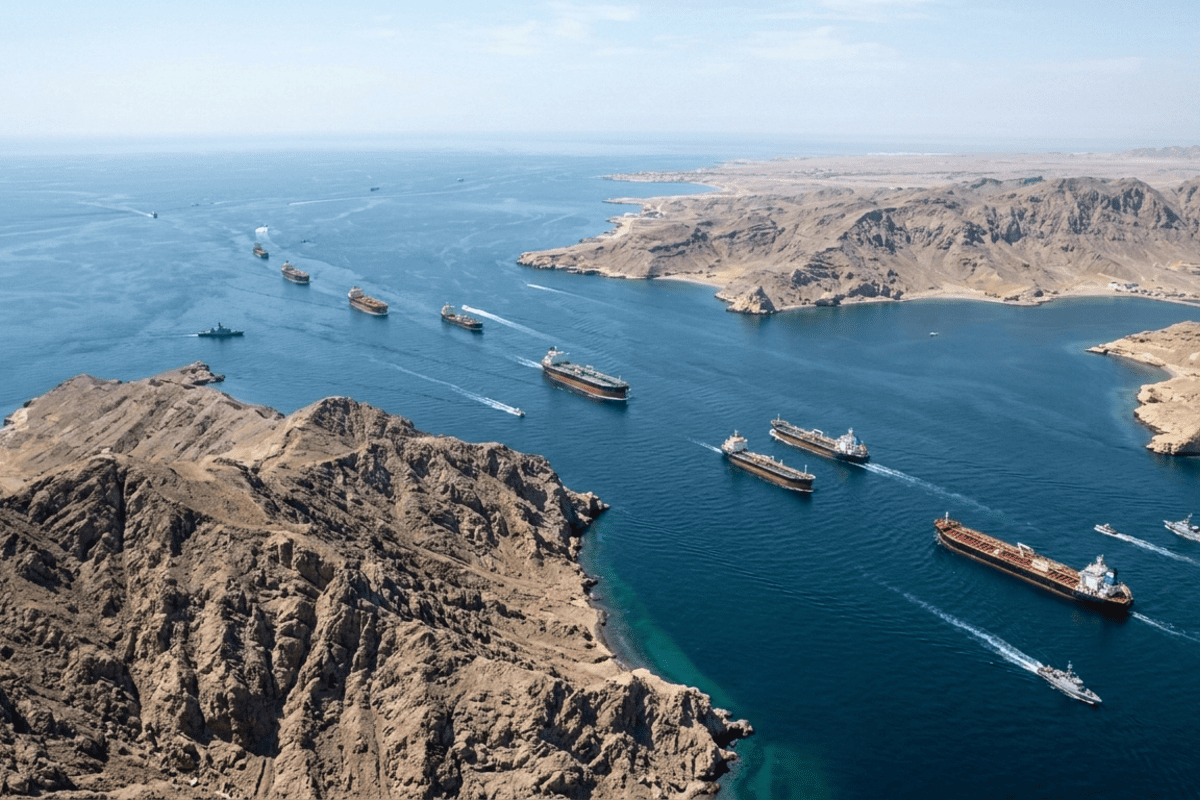
What's happening in the Gulf of Hormuz, is a test whether US is the sole 'Hegemon' or Superpower in the world.
Trump announced that they will blockade the Gulf of Hormuz. Won't let any ship pass through which is allied with Iran.
China has made it clear that they have a energy agreement with Iran and their ships should not be intercepted.
As I write this there are reports that a Chinese tanker has passed through.
This is the test for US's ability to impose its will in that part of the world. If it can't, it's not the only superpower.
It's the beginning of the end of the unipolar world as we see it.
McFaul: Trump doesn't get it. NATO is a defensive alliance.
NATO didn't fight in Vietnam with us, with the French in Algeria, with the Portuguese in Angola and Mozambique, or with the UK in the Falklands.
The only time they fought together was after Sep 11.