Nothing breaks my heart more than seeing elderly people navigate hospitals alone, trying to figure out labs, billing, consultations, and everything in between.
Nothing more satisfying than kpoppies admitting this category exists because of BTS & their faves wouldn’t even have a path to walk without BTS paving the way for them.
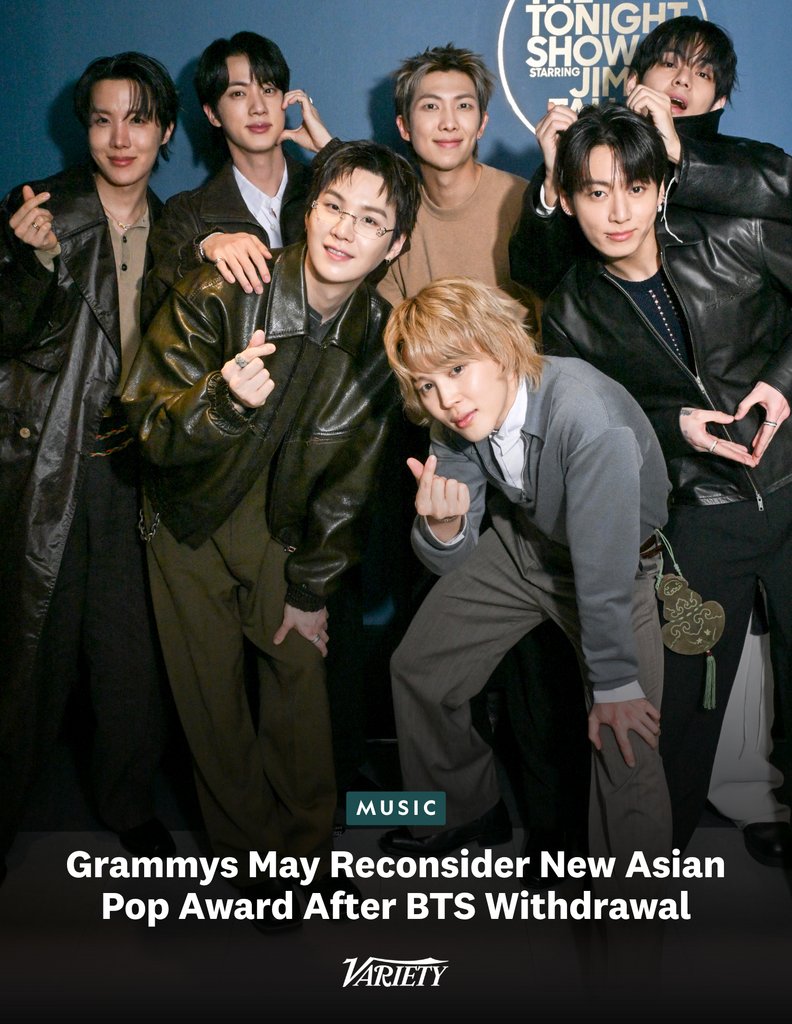
The Grammys appear to be rethinking the new award for Asian pop just weeks after BTS announced they would not submit their music for the 2027 awards.
“It’s clear from our numerous conversations with many stakeholders over the past two weeks that, regardless of our intent and desire to be even more inclusive, there are some artists in this space who feel that this category isn’t representing the music they work so hard to create, in the way they wish... The management and Board are committed to working together to keep pace with that progress and ensure the musicians we intend to honor feel truly seen and heard by our actions,” Recording Academy CEO Harvey Mason Jr. said in a statement.
Sources tell Variety that Mason and other Grammy executives have been in discussion with artists and execs representing K-pop, J-pop, C-pop, India and more. The Academy is convening its full Board and Awards & Nominations Committee to work with members of and leaders from this community to seek further advice on the category, as well as its process for introducing new categories and awards.
https://t.co/pwzV2B11ja
🔥 GEOPOLITICAL EARTHQUAKE!🚨
JD Vance’s sudden call to PM Modi is not routine diplomacy. It is a signal.
Three developments are converging at the same time:
1. Türkiye, Saudi Arabia and Pakistan have moved towards a formal mutual defence understanding. It creates a new military geometry in West Asia that dilutes traditional US leverage and gives Pakistan an external security umbrella beyond China.
2. Xi Jinping and Vladimir Putin are both scheduled to be in New Delhi for the BRICS Summit. Xi’s first visit since 2019 is not tourism. It is strategic signalling that India remains central to the emerging multipolar architecture.
3. Parallel pressure through tariff threats and economic coercion continues. Classic tools of influence when military and diplomatic levers begin to weaken.
Washington appears to be recalibrating. The fear is not just about losing access to the Indian market. It is about losing preferential strategic alignment with a rising power that is simultaneously deepening ties with both Moscow and Beijing while refusing to become a junior partner in any single camp.
The real question is not whether the US is “losing” the Global South.
It is whether Washington still has the instruments to prevent India from becoming the pivotal swing state in a genuinely multipolar order.
Strategic autonomy is no longer a slogan. It is being tested in real time.