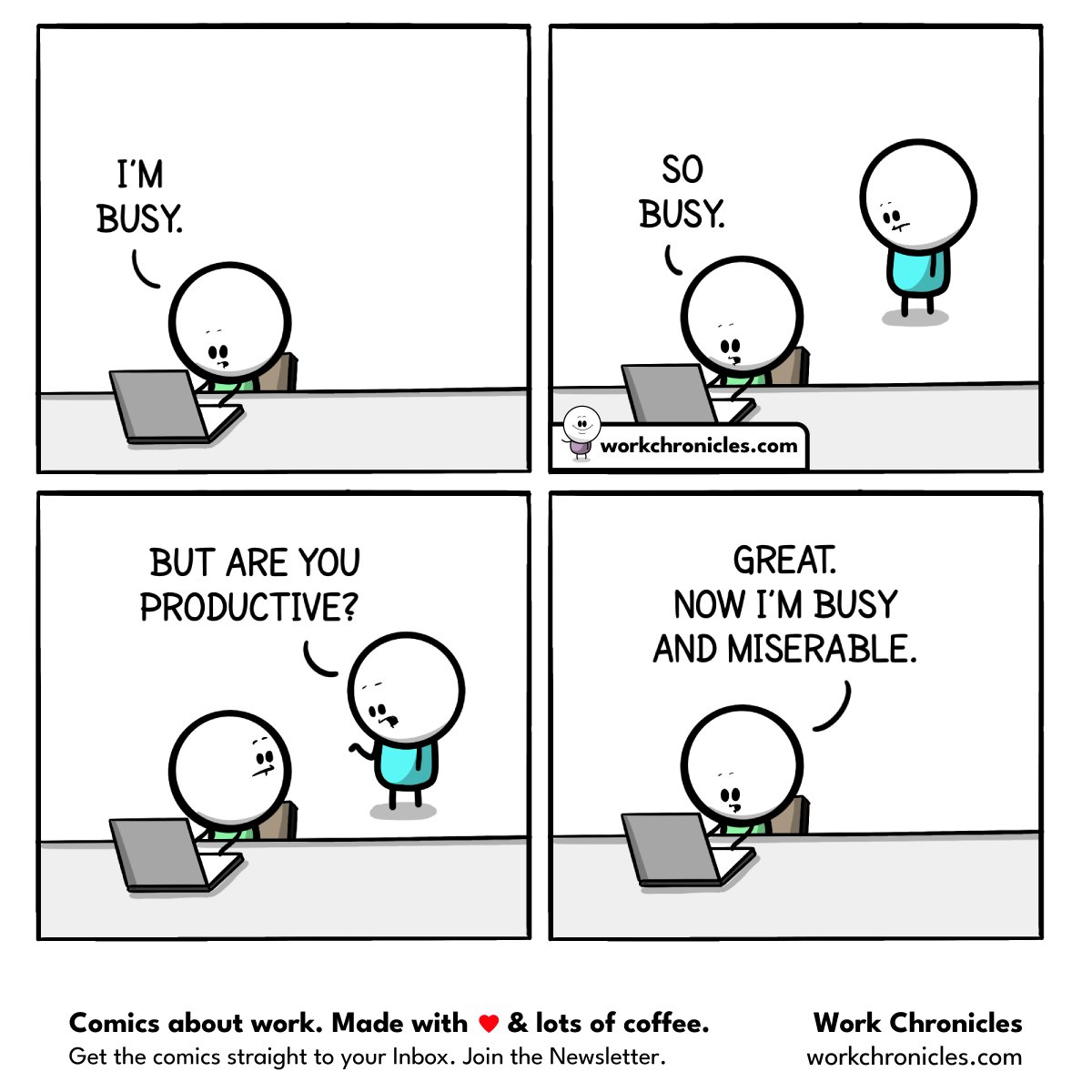
Ever since I was a little boy, I knew I wanted to log into Microsoft Authenticator 35 times a day, create deliverables for key stakeholders, and circle back offline.
Dear @RBI: Do not let the psychology of Rs 100 per dollar determine your policy response. 100 is just a number, like 99 and 101. Whether the oil shortage is short-lived or long-lived, the right response at this moment is to let the rupee depreciate. 1/6
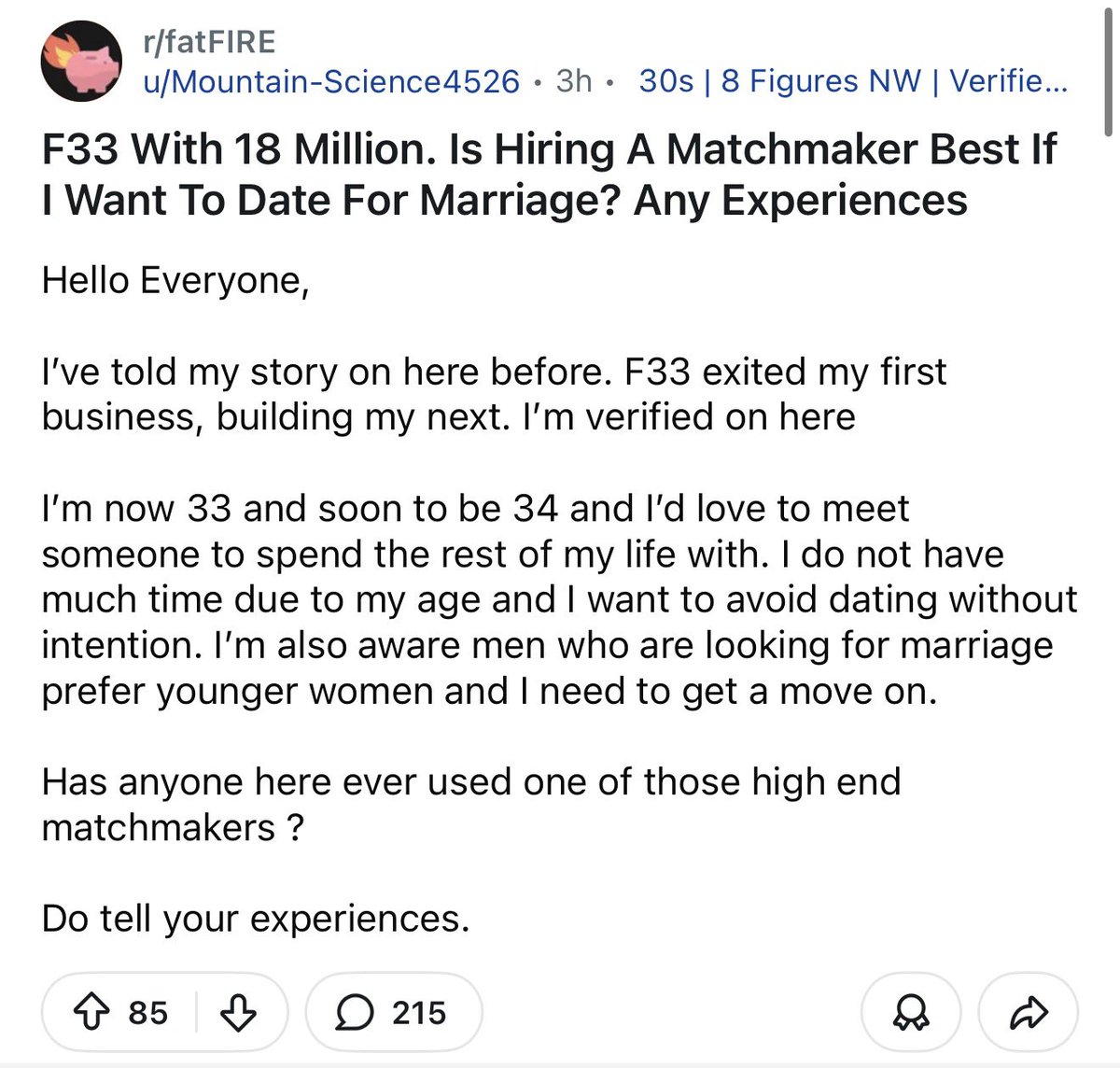
this woman doesn’t need a matchmaker. she needs to accidentally book the wrong airbnb in a mountain town called pine hollow.
it’s december. there’s one coffee shop, one christmas tree farm, & one emotionally unavailable man named jake who owns a struggling bookstore despite somehow having perfect stubble, a golden retriever, & unresolved grief from a fiancee who left him for a private equity guy in denver.
she arrives in a black suv, wearing a cashmere coat, trying to take a “clarity weekend” before interviewing $80k/year matchmakers in nyc.
the town hates her immediately because she asks if they have oat milk.
jake says, “we have milk.”
she says, “from what?”
tension.
then a snowstorm hits. her flight gets canceled. her phone dies. the only place with wifi is jake’s bookstore, which is called “second chances”.
over the next 4 days, she helps him realize the store doesn’t need to close, it just needs a better merchandising strategy, a paid newsletter, & a tasteful espresso machine. he teaches her how to chop firewood, slow down, & pronounce “community” like it isn’t a fund thesis.
by day 5, she has accidentally saved the town’s winter festival.
by day 6, she is wearing flannel.
by day 7, the high end matchmaker calls with “an incredible candidate” who is 42, divorced, skis, runs a family office, says he’s “emotionally available,” lives in tribeca, has 3 phones.
she looks across the bookstore at jake reading to local kids while his dog sleeps under a table.
she says, “i’m going to pass.”
cut to one year later & she has opened a bookstore wine bar called “due diligence.” jake still owns the original bookstore because hallmark cannot handle cap table complexity. she’s pregnant with twins. the golden retriever has a red bow. the matchmaker sends a christmas card.
“turns out the best match was the one not in the database.”
roll credits.
Humans tried to tame horses 5,500 years ago. It didn't work. Those horses eventually went feral, and we had to start over 1,300 years later with a different bloodline.
A group in Kazakhstan called the Botai kept horses for milk and meat around 3500 BCE. A 2021 Nature study read the DNA of 273 ancient horses and proved every horse alive today comes from a different population entirely. The successful domestication happened 4,200 years ago near the Volga and Don rivers. Those horses spread across Asia and Europe in 500 years, wiping out every other horse bloodline.
Two tiny changes in horse DNA made it work. One mutation appeared about 5,000 years ago and made horses less jumpy. The other came 4,200 years ago and gave horses backs strong enough to carry a grown person; before that, they were the size of ponies. This is why chariots came first as the main use of horses, and regular horseback riding only became common centuries later.
Before rideable horses reached the Middle East, the Sumerians made their own by crossbreeding domesticated donkeys with wild onagers, a wild Asian cousin of the donkey. Onagers can hit 43 mph and hold 31 mph for hours, with more endurance than any modern racehorse. But they bite, kick, and can't be trained. So Sumerians made a hybrid called a kunga, which kept the speed and dropped the temper. A kunga cost 40 times a donkey. It couldn't breed, so every generation had to be made fresh. These pulled the war wagons shown on the Standard of Ur, a Sumerian mosaic from 2500 BCE. It's the first known case of humans creating a new animal.
Zebras are the longest-running failure. Romans raced them in chariots during the emperor Caracalla's reign, around 200 AD. The Dutch tried in the 1700s. Walter Rothschild even drove a zebra carriage up to Buckingham Palace in the 1890s to prove the point. Germans gave it a shot in colonial East Africa. None of it worked. Zebras dodge lassos with a quick ducking reflex, have no hierarchy you can slot into, and have spent millions of years evolving alongside lions. A single kick can break a lion's jaw.
Jared Diamond ran the math on this. Out of roughly 148 large mammal species humans could have tamed, only 14 ever worked. The animal has to pass six separate tests: eat flexibly, grow fast, breed in a pen, stay calm, not spook easily, and follow a pack order. Miss one and the whole thing collapses.
The earliest confirmed horse riders were the Yamnaya, a nomadic steppe people from north of the Black Sea. They left behind skeletons showing the specific hip damage and healed fall injuries you see in modern riders. Out of 156 adult skeletons studied, only 24 had the pattern. Even inside a horse-riding culture, most people still walked.
Happy birthday to the @undertaker! Yes, you burned down the family home, encased my real father, Paul Bearer, in concrete, and set me on fire...a couple of times...but otherwise you're the best big brother anyone could ever hope for!
Asked why he didn't coordinate with allies before going to war with Iran, Trump says, "We didn't tell anyone about it. Who knows better about surprise than Japan? Why didn't you tell me about Pearl Harbor, OK?"
This is a ballsy power play by Trump.
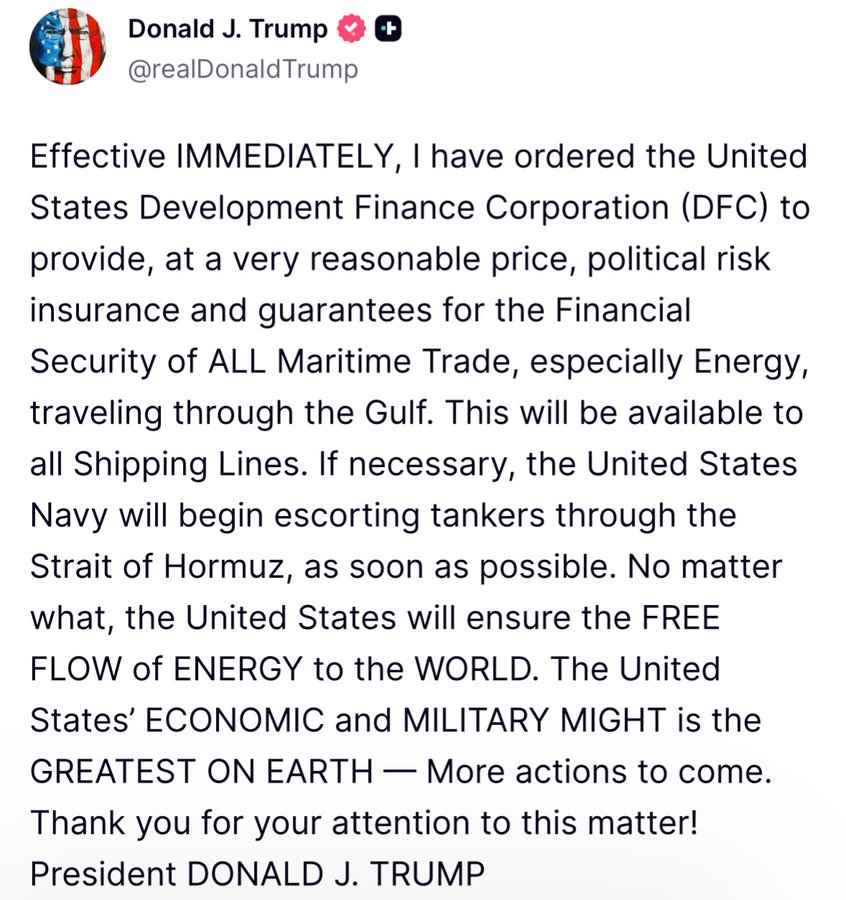
Lloyd's of London was the gold standard for maritime insurance policies until just a day or two ago when they started cancelling policies or jacking them up 3-5X. Others insurers followed. That collapsed commercial shipping traffic through Hormuz, which choked oil shipments out of the Middle East.
Trump doing this means the DFC has the chance to displace Lloyd's as the big dog in this game, when they have been the lock-in player for many years.
It also frees up all the oil that was getting trapped there, heading off shortages and keeping the energy market alive.
And why not? It's the American navy that sunk the Iranian ships that were harassing tankers. And the American Navy -- at least for now -- will keep those tankers safe.
It's a huge reassurance to allies -- both oil producers and oil consumers -- that our campaign in Iran isn't going to sink their economies. And it allows America to be choosy about traffic in the Strait.
It also potentially means billions of dollars in insurance premiums at wartime rates going to America instead of the UK. And those rates are STILL going to be cheaper than what shippers were getting.
- @SteveSkojec
The missile is reading the Earth like a blind person reading braille. Running its fingers across the surface and matching what it feels against what it memorized.
Before GPS, engineers had a problem. You’ve got a cruise missile flying 500 mph at treetop level toward a target 1,500 miles away. No pilot. No satellite link. How does it know where it is?
Their solution: give the missile a topographic map and let it read the ground.
TERCOM (terrain contour matching) works like this. Before launch, you load the missile with a series of altitude profiles of the terrain along its flight path. Think of it as a cross-section of every hill, valley, and plateau between point A and point B, sliced into strips.
During flight, a radar altimeter on the belly of the missile pings the ground constantly. It measures the exact altitude of the terrain below and builds a real-time profile. Then the onboard computer slides that real-time profile across the stored map, looking for the best match. When it finds the match, it knows exactly where it is, and corrects course.
The wild part: this worked over enormous distances in the 1970s. The Tomahawk cruise missile could fly 1,000+ miles through a pre-programmed corridor of terrain strips, checking its position every few minutes, and arrive within meters of a target. No GPS. No external signal. Just ground texture.
Then it got crazier. Engineers added DSMAC, digital scene-matching area correlation. Same concept, but with a camera instead of a radar altimeter. In the terminal phase, the missile takes a photograph of the ground below, digitizes it, and compares it to a stored satellite image of the target area. Pixel by pixel matching. In the 1980s.
The engineering constraint that made all of this necessary is the interesting part. Inertial navigation systems drift over time. Gyroscopes accumulate tiny errors with each passing minute. Over a 2-hour flight, those tiny errors compound into hundreds of meters of deviation. TERCOM exists because engineers needed periodic “reality checks” to reset the drift. Every time the missile matches a terrain strip, it zeroes out the accumulated error and starts fresh.
So the real architecture is: INS runs continuously as the baseline. TERCOM corrects the INS every few minutes by reading the ground. DSMAC does the final precision targeting by matching a camera image. Three totally independent systems layered on top of each other, each one compensating for the weakness of the others.
GPS eventually simplified this stack, but militaries still keep TERCOM because GPS can be jammed. Terrain can’t be jammed. The ground is always there.
So they don’t “know.” They use the ground to calculate.
We have raised a $110 billion round of funding from Amazon, NVIDIA, and SoftBank.
We are grateful for the support from our partners, and have a lot of work to do to bring you the tools you deserve.
we're making @blocks smaller today. here's my note to the company.
####
today we're making one of the hardest decisions in the history of our company: we're reducing our organization by nearly half, from over 10,000 people to just under 6,000. that means over 4,000 of you are being asked to leave or entering into consultation. i'll be straight about what's happening, why, and what it means for everyone.
first off, if you're one of the people affected, you'll receive your salary for 20 weeks + 1 week per year of tenure, equity vested through the end of may, 6 months of health care, your corporate devices, and $5,000 to put toward whatever you need to help you in this transition (if you’re outside the U.S. you’ll receive similar support but exact details are going to vary based on local requirements). i want you to know that before anything else. everyone will be notified today, whether you're being asked to leave, entering consultation, or asked to stay.
we're not making this decision because we're in trouble. our business is strong. gross profit continues to grow, we continue to serve more and more customers, and profitability is improving. but something has changed. we're already seeing that the intelligence tools we’re creating and using, paired with smaller and flatter teams, are enabling a new way of working which fundamentally changes what it means to build and run a company. and that's accelerating rapidly.
i had two options: cut gradually over months or years as this shift plays out, or be honest about where we are and act on it now. i chose the latter. repeated rounds of cuts are destructive to morale, to focus, and to the trust that customers and shareholders place in our ability to lead. i'd rather take a hard, clear action now and build from a position we believe in than manage a slow reduction of people toward the same outcome. a smaller company also gives us the space to grow our business the right way, on our own terms, instead of constantly reacting to market pressures.
a decision at this scale carries risk. but so does standing still. we've done a full review to determine the roles and people we require to reliably grow the business from here, and we've pressure-tested those decisions from multiple angles. i accept that we may have gotten some of them wrong, and we've built in flexibility to account for that, and do the right thing for our customers.
we're not going to just disappear people from slack and email and pretend they were never here. communication channels will stay open through thursday evening (pacific) so everyone can say goodbye properly, and share whatever you wish. i'll also be hosting a live video session to thank everyone at 3:35pm pacific. i know doing it this way might feel awkward. i'd rather it feel awkward and human than efficient and cold.
to those of you leaving…i’m grateful for you, and i’m sorry to put you through this. you built what this company is today. that's a fact that i'll honor forever. this decision is not a reflection of what you contributed. you will be a great contributor to any organization going forward.
to those staying…i made this decision, and i'll own it. what i'm asking of you is to build with me. we're going to build this company with intelligence at the core of everything we do. how we work, how we create, how we serve our customers. our customers will feel this shift too, and we're going to help them navigate it: towards a future where they can build their own features directly, composed of our capabilities and served through our interfaces. that's what i'm focused on now. expect a note from me tomorrow.
jack