The Moon does something invisible yet profound every single day. It quietly puts the brakes on our spinning planet. Without it, Earth would whirl so fast that a full day, sunrise to sunrise, might last only 6 to 8 hours, and a single year would be crammed with well over a thousand short, frantic days.
The reason lies in a gentle cosmic tug of war. The Moon's gravity pulls on Earth's oceans, creating the tides. As Earth rotates, that bulge of water creates a slight drag, acting like a brake pad slowing our spin bit by bit. This is called tidal braking. Billions of years ago, before the Moon settled into its steadying role, Earth spun far faster. Some estimates suggest early days lasted only around 6 hours. Over eons, the Moon has patiently stretched our day out to the comfortable 24 hours we know.
And it is still happening right now. The Moon is very slowly drifting away from us, about 3.8 centimeters farther each year, roughly the rate your fingernails grow. In exchange, our days keep getting almost imperceptibly longer, by a tiny fraction of a second each century.
But the Moon does more than manage our clock. It acts like a stabilizing anchor for Earth's tilt. Our planet leans at about 23.5 degrees, and that steady tilt is what gives us predictable, gentle seasons. Without the Moon holding it steady, Earth's axis could wobble wildly over time, swinging to extremes that might trigger chaotic and violent climate swings, brutal seasons lurching from scorching to frozen.
So the Moon is far more than a pretty light in the night sky. It is a silent guardian that shaped the very rhythm of life. Those short, dizzying 6 hour days would have made the world we know almost unrecognizable, and life itself may have evolved in a completely different way, if at all.
The next time you glance up at the Moon, remember it is not just floating there. It is actively steadying our world, gifting us long days, calm seasons, and the stable cradle life needed to flourish.
Knowing how much the Moon quietly does for us, does it change the way you look at it hanging in the night sky?
🚀🌌 Voyager 1 has left the Sun's protective bubble—the heliosphere—and is now traveling through interstellar space, over 25 billion km from Earth.
Launched in 1977, it's the most distant human-made object ever. Yet even after nearly 50 years, it isn't close to another star. At its current speed, reaching the nearest star system, Alpha Centauri, would take tens of thousands of years.
A humbling reminder of both human curiosity and the unimaginable scale of the universe. ✨
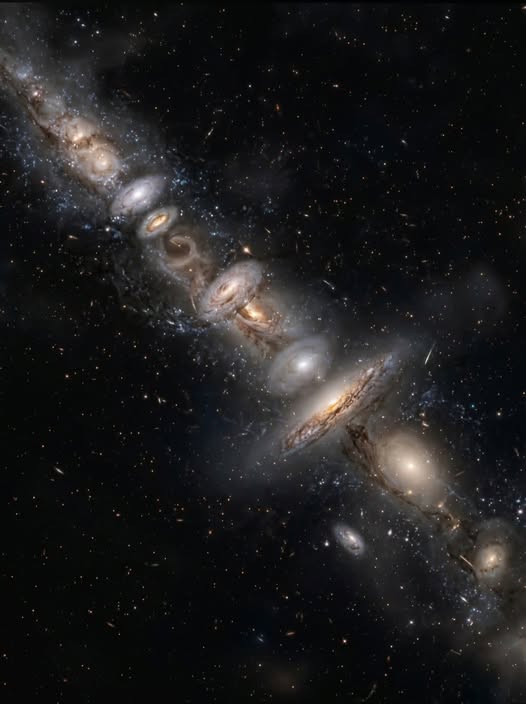
LATEST🚨: James Webb Just Found the Universe’s Skeleton! 🌌✨
In one of its deepest infrared views, Webb has revealed a massive cosmic filament containing nearly 20 galaxies, stretching an astonishing 13 million light-years across—all from a time when the universe was less than 1 billion years old.
This enormous structure is part of the "cosmic web," invisible strands of dark matter that guide galaxies into chains. We are witnessing the discovery of the universe’s ancient framework.
Mind = Blown. 🤯
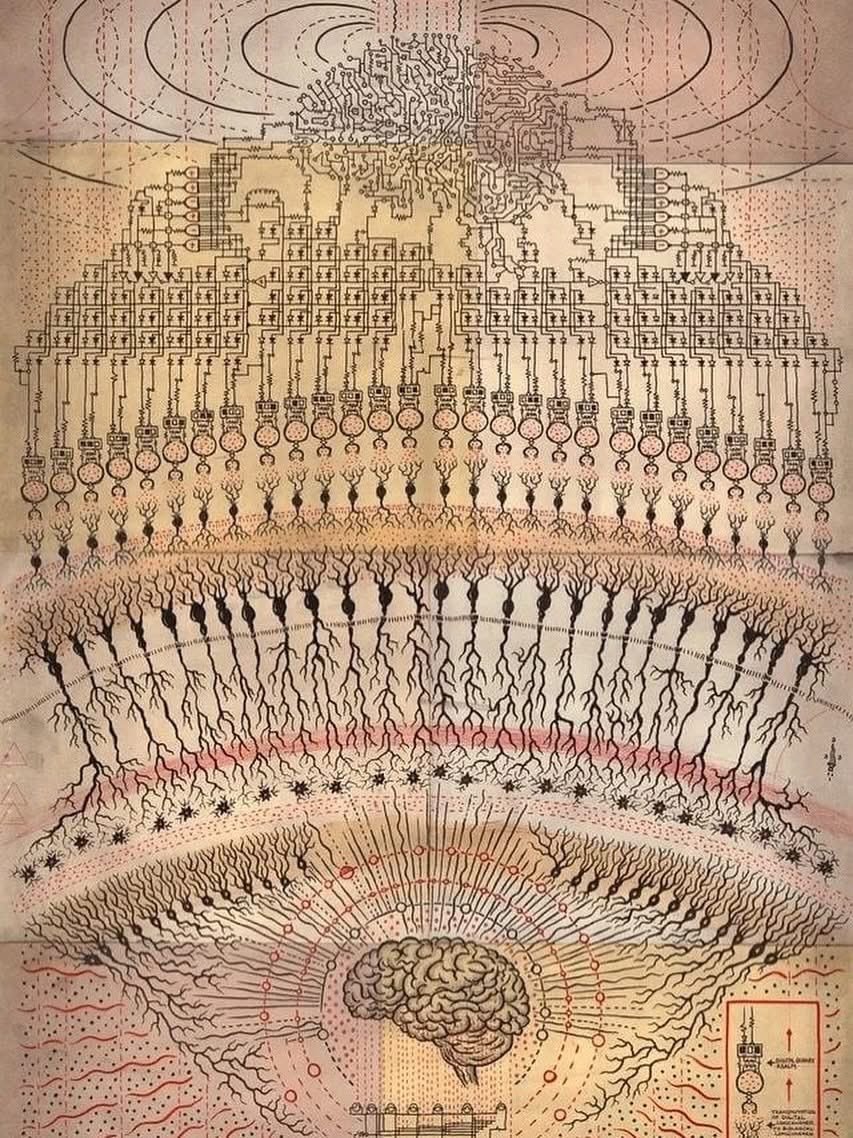
“My brain is only a receiver, in the Universe there is a core from which we obtain knowledge, strength and inspiration. I have not penetrated into the secrets of this core, but I know that it exists”
- Nikola Tesla