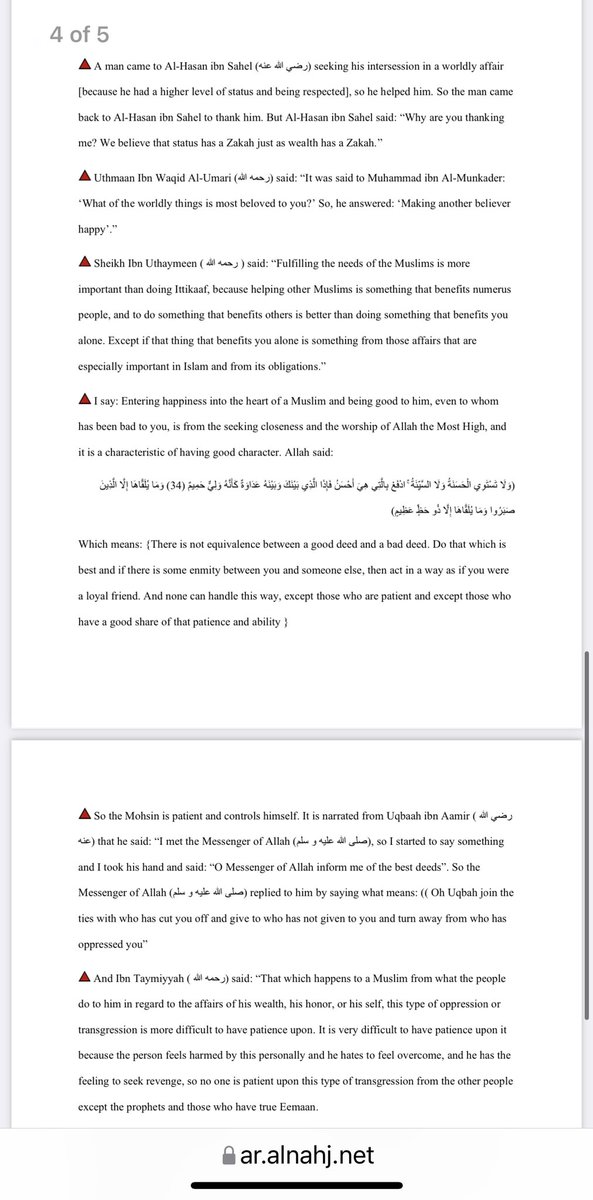
Why Are Good Manners the Heaviest Deeds in a Slave’s Scale?
Part 2️⃣ of 2️⃣
Notice that the closer someone is to a person, the more clearly their true nature is revealed.
This is because with those closest to them, the need for pretense, acting, and artificial politeness diminishes—especially over long periods of interaction. The true self emerges. This is where one should look for mercy, generosity, and good character, rather than with distant acquaintances, where reputation or interests may still influence behavior. In these cases, people often exhibit artificial, calculated manners that are not accompanied by a sincere desire for goodness.
If you wish to understand this matter more deeply, examine the enmity that Eemaan necessitates and the way it appears in the Sunnah.
You will find that the sincere, truthful follower of the Prophet (ﷺ) strives against those who promote falsehood and openly disapproves of them—often with little support—guided by knowledge, justice, and good intentions. He does this because he seeks Allah’s pleasure, aims to protect the true Islam, and sincerely wants to guide even those who oppose him.
On the other hand, the one who betrays the principles of correct Eemaan and sincere belief in enmity becomes harsh, aggressive, and violent—even against those upon the best guidance. He wrongly uses jihad as a means to satisfy his own desires and to vent his hidden grudges. We seek refuge in Allah from such a situation.
This type of person is among the most harmful to the truth, even if they claim to defend it. Their lack of justice and their sharp tongues distort the message of truth, repel people from it, and—whether knowingly or unknowingly—aid the followers of falsehood.
The greatest distortion and manipulation that has infiltrated good character comes from those who trade in outward, superficial, and manufactured displays of manners—such as forced smiles, excessive mentions of Allah, scripted supplications, the artificial softness of a snake’s skin, and false humbleness. But when a legitimate or even blameworthy dispute arises, they reveal their true nature with foul character, narrow-mindedness, and an exposed reality they previously tried to hide.
Contrast this with the life of the Prophet (ﷺ), and you will be amazed at the highest examples of good character he displayed, even toward those who opposed and harmed him. Despite fulfilling Allah’s command in striving against them, rebuking them, and even fighting them, his moral excellence remained unmatched.
True good character stems from sincere faith and is an essential part of it.
Though all humans fall short—except those whom Allah protects—the judgment of good character is not a self-assessment. Rather, it is what knowledgeable and observant people say about a person. This is why when a man asked the Prophet (ﷺ), “How do I know if I am a good person?” the Prophet replied: “If your neighbors say you are good, then you are good.”
Good character is not a mere claim that a person makes about themselves while harboring resentment and ill-nature. The true test comes when a financial or religious dispute arises—this is when hidden traits burst forth in words and actions.
The Prophet (ﷺ) said that the greatest jihad is the jihad of the self, and the most significant jihad of the self is in disciplining its behavior and refining its manners so that people are safe from its harm—and may even benefit from its goodness.
So congratulations to those whose scales are heavy with justice and good character—not merely with verbal remembrance and recitation.
BismillahirRahmaanirRaheem
Why Are Good Manners the Heaviest Deeds in a Slave’s Scale❓
Written by Sheikh Ahmad Al-Subayee, may Allah preserve him
Part 1️⃣ of 2️⃣
It is very evident from the saying of the Prophet (ﷺ): “A believer, through his good character, reaches the rank of one who fasts and prays at night.”
And his statement ﷺ: “There is nothing placed in a slave’s scale that is heavier than good manners.”
This is because good manners, in the sense of restraining oneself from harming others and continuously offering kindness—not just as an occasional act—are extremely difficult and burdensome. They can only be truly attained, after Allah’s assistance, through a sincere desire to achieve Eemaan and its necessary qualities truthfully, and a longing to please the Lord by treating His creation well.
A person of good character is still human; he is hurt by harsh words, inconsiderate behavior, and unfair treatment. However, he trains himself to practice good manners as an act of devotion to Allah and a pursuit of His pleasure. For this reason, Allah mentions good manners among the most defining qualities of the believers, as He says:
“And hasten to forgiveness from your Lord and a Paradise as vast as the heavens and the earth, prepared for the righteous, who spend [in charity] during ease and hardship and who restrain anger and who pardon the people—and Allah loves the doers of good. And those who, when they commit a sin or wrong themselves, remember Allah and seek forgiveness for their sins—and who can forgive sins except Allah? And they do not persist in what they have done while they know.” [Surah Aali-Imran: 133-135]
Notice how Allah emphasizes “those who restrain anger”, and how He mentions “in ease and hardship”.
The first point shows that they indeed experience pain and distress due to mistreatment or transgression against them, leading to hidden anger. However, Allah does not blame them for feeling this anger; rather, He praises them for suppressing it, ensuring it does not appear in words or actions, nor affect their love for their fellow believers. They do this out of their desire for Allah’s reward and their understanding that human nature is imperfect and bound to make mistakes. Therefore, patience in dealing with people is necessary—not only to endure the harm but to respond with kindness.
As for the mention of both ease and hardship, it signifies the constancy of good character in all times and circumstances, except in rare moments of heedlessness or when provoked by shaytaan. This is why Allah says:
“And tell My slaves to say that which is best. Indeed, shaytaan causes conflict between them.” [Surah Al-Isra: 53]
This is coupled with the mention of spending in charity, and the word choice for “those who restrain” (الكاظمين), which indicates that this is a continuous and ingrained quality.
Certainly, there are factors that make noble character easier, such as a person’s natural disposition, their environment, and the ease of their livelihood. However, the greatest determining factor—after Allah’s help—is the realization that every interaction, every word, and every intention will be accounted for, just as acts of worship and sins are accounted for—or even more so.
A sound heart and those close to it produce good and righteous actions, while a heart afflicted with corruption, deceit, treachery, and selfish desires breeds injustice, oppression, and transgression…
Tafsir of Allah’s statement in Surah Al-Baqarah:
“O Children of Israel, remember My favor that I have bestowed upon you and that I preferred you over all the creation.” (Surah Al-Baqarah: 47)
Written by Sheikh Mohammad Othman Al-Anjari
🔺 Tafsir of the Qur’an with the Qur’an
Allah The Most High said:
“And your Lord creates what He wills and chooses; they have no choice. Exalted is Allah and high above what they associate with Him.” (Surah Al-Qasas: 68)
Tafsir of the verse:
Allah alone has the power of creation and selection. He chooses messengers, just as He chose Muhammad ﷺ over all of the creation. He chose the Children of Israel in their time, and He chose Mecca over all other lands.
Evidences from the Qur’an:
•“Indeed, Allah chose Adam, Noah, the family of Abraham, and the family of Imran over all the creation.” (Surah Aali-Imran: 33)
•“Allah chooses from the angels messengers and from the people.” (Surah Al-Hajj: 75)
•“And I have certainly favored some of the prophets over others, and to Dawud We gave the Zabur (Psalms).” (Surah Al-Isra: 55)
🔺 Tafsir of the Qur’an with the Sunnah
The Prophet ﷺ said:
“Indeed, Allah chose Kinanah from the descendants of Ismail, and He chose Quraysh from Kinanah, and He chose Banu Hashim from Quraysh, and He chose me from Banu Hashim.”
This hadith indicates that Allah chooses whomever He wills from humanity. It is not a matter of personal effort or wants. It also confirms that nobility and prophethood are divine selections, not achievements attained through effort, intelligence, or strength.
Abdullah ibn Amr ibn Al-Aas (may Allah be pleased with them) said:
A man came to the Prophet ﷺ and said:
“I have come to pledge allegiance to you for hijrah and jihad; I seek reward from Allah.”
The Prophet ﷺ asked him: “Are either of your parents alive?”
He replied: “Yes, in fact, both of them.”
The Prophet ﷺ then asked: “And do you seek reward from Allah?”
He said: “Yes.”
The Prophet ﷺ said: “Then return to your parents and keep good company with them.”
This hadith demonstrates that Allah determines each person’s fate according to His wisdom. Not everyone attains what they desire, but Allah assigns each person and each nation what suits them.
🔺 Tafsir by the Companions and Successors
📜 From the Tafsir of Abu Al-‘Aliyah At-Tamimi
Who was Abu Al-‘Aliyah?
•He learned from the Companions of the Prophet ﷺ
•He memorized the Qur’an under the guidance of the noble Companion Ubayy ibn Ka‘b (may Allah be pleased with him).
His Tafsir of the verse:
Imam Al-Tabari recorded in his Tafsir, with an authentic chain of narration from Abu Al-‘Aliyah, regarding the verse:
“And that I preferred you over all the creation.” (Surah Al-Baqarah: 47)
He said:
“It means they were given rulership, prophets, and scriptures, over the people of their time. For every era, there is a chosen people.”
📌 Implication of the tafsir:
This confirms that the preference given to the Children of Israel was specific to their time and was not an eternal or absolute preference. Other texts in the Qur’an clarify this matter further.
🔺 Lessons Derived from the Verses and Interpretations:
1️⃣ Allah alone has the power of creation and selection; no one else shares this authority.
2️⃣ It affirms that divine law (Shariah) is from Allah, and He alone legislates for His slaves.
3️⃣ It highlights Allah’s wisdom in granting preference and making choices about His creation.
4️⃣ Prophethood and divine selection are purely Allah’s favors and not human entitlements.
5️⃣ Innovations and fabrications in the religion are forbidden because legislation belongs solely to Allah.
6️⃣ Preference among people is determined by Allah, whether in religious or worldly matters.
7️⃣ It teaches reliance on Allah in all matters while taking permissible means.
8️⃣ It reinforces belief in divine decree (Qadr); a believer strives but understands that everything happens by Allah’s will.
Written by: Sheikh Mohammad Othman Al-Anjari
اليوم الأول من رمضان
السبت 1 رمضان 1446 هـ الموافق 1 مارس 2025 م.
تفسير قول الله تعالى من سورة البقرة :
﴿ يَا بَنِي إِسْرَائِيلَ اذْكُرُوا نِعْمَتِيَ الَّتِي أَنْعَمْتُ عَلَيْكُمْ وَأَنِّي فَضَّلْتُكُمْ عَلَى الْعَالَمِينَ ﴾
كتبه الشيخ محمد عثمان العنجري
حفظه الله تعالى
🔺 تفسير القرآن بالقرآن.
قال الله تعالى:
﴿ وَرَبُّكَ يَخْلُقُ مَا يَشَاءُ وَيَخْتَارُ ۗ مَا كَانَ لَهُمُ الْخِيَرَةُ ۚ سُبْحَانَ اللَّهِ وَتَعَالَىٰ عَمَّا يُشْرِكُونَ ﴾
تفسير الآية :
تفرد الله تعالى بالخلق والاختيار، فهو يختار الرسل كما اختار محمدًا ﷺ على سائر الخلق، واختار بني إسرائيل في زمانهم، واختار مكة على بقاع الأرض.
ومن أدلة ذلك قوله تعالى:
•﴿ إِنَّ اللَّهَ اصْطَفَىٰ آدَمَ وَنُوحًا وَآلَ إِبْرَاهِيمَ وَآلَ عِمْرَانَ عَلَى الْعَالَمِينَ ﴾
•﴿ اللَّهُ يَصْطَفِي مِنَ الْمَلَائِكَةِ رُسُلًا وَمِنَ النَّاسِ ﴾
•﴿ وَلَقَدْ فَضَّلْنَا بَعْضَ النَّبِيِّينَ عَلَىٰ بَعْضٍ وَآتَيْنَا دَاوُودَ زَبُورًا ﴾
🔺 تفسير القرآن بالسنة.
قال النبي ﷺ:
“إن الله اصطفى كنانة من ولد إسماعيل، واصطفى قريشًا من كنانة، واصطفى من قريش بني هاشم، واصطفاني من بني هاشم.”
يدل هذا الحديث على أن الله يختار من يشاء من البشر، وليس الأمر راجعًا لاجتهاد الناس أو أهوائهم. كما يؤكد أن الشرف والنبوة اختيار إلهي، وليس أمرًا مكتسبًا بالجهد أو الذكاء أو القوة.
عن عبد الله بن عمرو بن العاص رضي الله عنهما قال:
جاء رجل إلى النبي ﷺ فقال: “جئت أبايعك على الهجرة والجهاد، أبتغي الأجر من الله.”
فقال له النبي ﷺ: “فهل من والديك أحدٌ حي؟”
قال: “نعم، بل كلاهما.”
فقال النبي ﷺ: “فتبتغي الأجر من الله؟”
قال: “نعم.”
فقال النبي ﷺ: “فارجع إلى والديك فأحسن صحبتهما. ”
يدل هذا الحديث على أن الله تعالى يختار لكل عبدٍ قدره وفق حكمته ، فليس كل من أراد أمرًا ناله ، بل الله يصطفي لكل إنسان وقومٍ ما يناسبهم.
🔺 تفسير الصحابة والتابعين .
📜 من تفسير أبي العالية التميمي
من هو أبو العالية؟
أبو العالية رفيع بن مهران التميمي من كبار التابعين، أدرك الصحابة رضي الله عنهم، وسمع من:
•عمر بن الخطاب، وعلي بن أبي طالب، وأبي بن كعب ، وأبي ذر، وابن مسعود، وعائشة، وأبي موسى الأشعري ، وأبي أيوب الأنصاري ، وابن عباس ، وزيد بن ثابت ، وغيرهم.
•حفظ القرآن وقرأه على الصحابي الجليل أُبَيّ بن كعب رضي الله عنه.
📖 تفسيره رحمه الله للآية:
روى الإمام الطبري في تفسيره بإسناد صحيح عن أبي العالية ، أنه قال في تفسير قوله تعالى: ﴿ وَأَنِّي فَضَّلْتُكُمْ عَلَى الْعَالَمِينَ ﴾
“بما أُعطوا من الملك ، والرسل ، والكتب ، على عالمي من كان في ذلك الزمان ، فإن لكل زمان عالمًا .”
📌 دلالة التفسير :
يؤكد رحمه الله أن التفضيل كان مخصوصًا بأهل زمانهم ، وليس تفضيلًا مطلقًا مستمرًا عبر الأزمان ، كما توضح نصوص أخرى في القرآن.
🔺 الفوائد المستنبطة من الآيات والتفسير :
1.تفرد الله تعالى بالخلق والاختيار، وليس لأحدٍ من الخلق ذلك .
2.إثبات أن الشريعة من عند الله، وهو تعالى الذي يشرِّع لعباده.
3.التأكيد على حكمة الله في التفضيل والاختيار بين العباد.
4.الاصطفاء والنبوة فضل من الله تعالى وحده، لا استحقاقًا بشريًا.
5.تحريم الابتداع والإحداث في الدين، لأن التشريع حق لله وحده.
6.بيان أن التفضيل بين الناس بيد الله، سواء في الدين أو الدنيا.
7.تعليم العباد التوكل على الله في كل الأمور، مع الأخذ بالأسباب المشروعة.
8.الإيمان بالقضاء والقدر، فالمسلم يسعى ويجتهد، مع يقينه بأن كل شيء بقدر الله.
كتبه : محمد عثمان العنجري
*The Flag of Our Brother, Our Beloved, Shaykh Muhammad bin Hadi Remains Pure & White - حفظه الله تعالى*
Allah said:
”قُلۡ بِفَضۡلِ ٱللَّهِ وَبِرَحۡمَتِهِۦ فَبِذَ ٰلِكَ فَلۡیَفۡرَحُوا۟ "
{Say: "Due to the Favour of Allah and His Mercy, let them rejoice."}
Praise and gratitude be to Allah:
The Supreme (Sharia) Court ruled to uphold the ruling of the Court of Appeal, which acquitted the Shaykh, the A’lim, Muhammad bin Hadi Al-Madkhali - حفظه الله - from the false charges and rejected the request to cancel that acquittal; so the futile mischief of the mischief-makers fell upon the pure rock of truth.
Let the followers of the Qur’an and Sunnah upon the understanding of the noble companions rejoice, for here is Muhammad bin Hadi victorious.
And the Messenger of Allah صلى الله عليه و سلم- said: “How amazing is the believer’s affair, for his whole affair is good, and that is not for anyone but the believer; If good things happen to him, he is grateful and that is good for him, and if bad things happen to him he is patient and that is good for him.”
May Allah سبحانه و تعالى reward you for your beautiful patience, and may my Lord make you steadfast upon the truth and certainty.
Written by: Muhammad Othman Al-Anjari
Saturday 20 Rabi’ al-Akhir 1445 AH
Corresponding to 4/11/2023
https://t.co/ICNH0x2Z9G
Have a Good Opinion of Your Lord and Put Your Trust in Allah
Newly translated article by Shaykh Mohammad Othman AlAnjari
حفظه الله تعالى
https://t.co/GtpMt8zes6
@AnnahjRadio NEW ARTICLE:
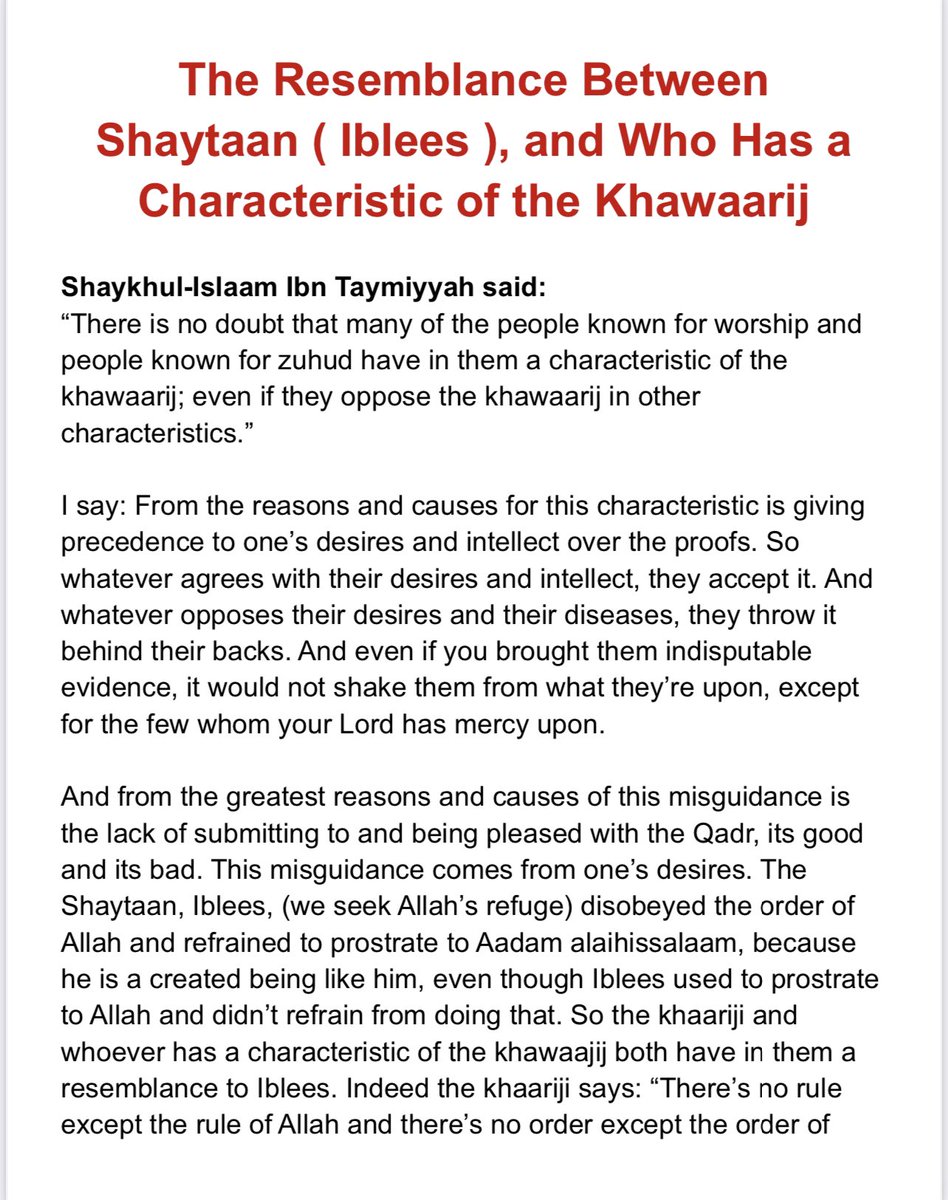
The Resemblance Between Shaytaan ( Iblees ), and Who Has a Characteristic of the Khawaarij
By:
Shaykh Mohammad Othman AlAnjari حفظه الله
-
Link for PDF:
https://t.co/hpXVHkj77q
الشَّبه بين الشيطان إبليس
ومَن فيه شعبةٌ خارجية
كتبه الشيخ | محمد عثمان العنجري
حفظه الله تعالى
الثلاثاء ٧ صفر ١٤٤٣
الموافق ١٤ سبتمبر ٢٠٢١
.
رابط PDF :
https://t.co/9Qtqzq2UBe
@AnnahjRadio NEW ARTICLE:
The Resemblance Between Shaytaan ( Iblees ), and Who Has a Characteristic of the Khawaarij
By:
Shaykh Mohammad Othman AlAnjari حفظه الله
-
Link for PDF:
https://t.co/hpXVHkj77q