For @pulitzercenter, @ColumbiaJournMA alum @anne_whiting (MA Arts and Culture '23) reported from Ghana about the hidden health hazards in leftover clothing. https://t.co/v0J8Tm0n5w
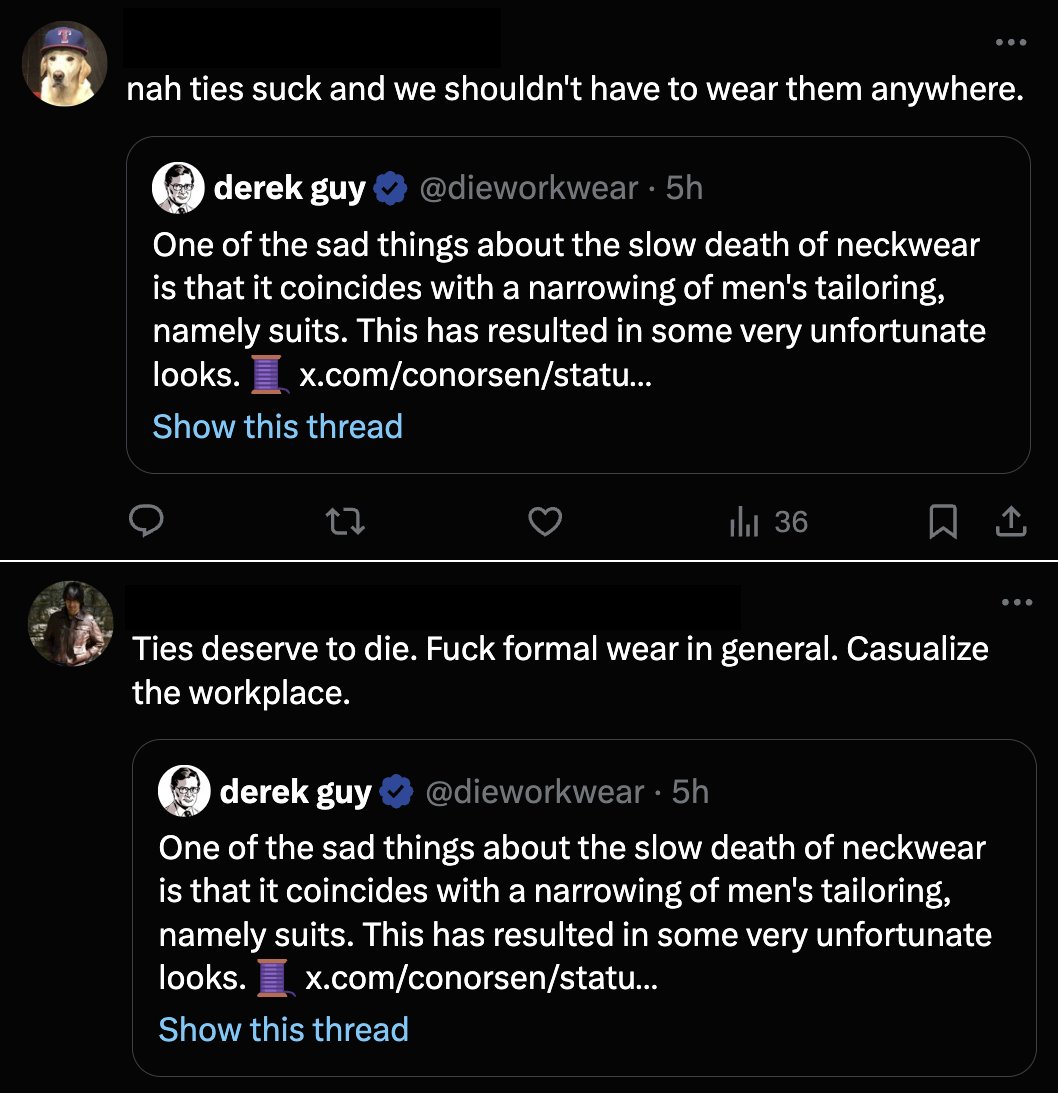
not convinced that anyone who talks like this has worn a tie in this century. ties died 50 years ago. saying you hate ties when they haven't been relevant in your lifetime is pure performance. if you want to be counter-cultural, hate business casual
One of the sad things about the slow death of neckwear is that it coincides with a narrowing of men's tailoring, namely suits. This has resulted in some very unfortunate looks. 🧵
to be pondered: i have this note from some seminar that i jotted down that says "fashion as direct manifestation of one's personal convictions and ethos" -- is it always?
URGENT: I just joined over 3 MILLION people urging the President of Tanzania @SuluhuSamia to oppose the eviction of the Maasai people from their ancestral lands. Join here & RT #IStandwiththeMaasai https://t.co/vtGiKs2cad
for a country of 330 million, Americans use 2.5 million plastic bottles every hour according to https://t.co/cWTMFoEjJ4 which is 60 million a day which is 21, 900,000,000 per year eek
As I continued sorting, however, I mainly found fast-fashion tops, pit-stained or coming apart at the seams (wiper), old children’s pajamas (grade B) and a ball of worn-out thongs, which went straight into the garbage, writes @dwpenny for @newlinesmag
In 2021, the global market for secondhand clothing was worth $96 billion. By 2026 it is projected to more than double, reaching at least $218 billion...
@dwpenny for @newlinesmag https://t.co/cufzQgG5eI
sigh sigh sigh..... E-commerce sellers Shein and Temu are offering a lifeline for small suppliers in China’s manufacturing hubs—but it isn’t always a straightforward win https://t.co/mR8nnPeUJl via @WSJ