Dwa kolejne skandale w resorcie kultury: PAP sprzedał po cichu dawną drukarnię na Mińskiej 65! Myśmy zrobili tam Centrum Przemysłów Kreatywnych, oni oddali ten unikalny teren deweloperom? A Muzeum Narodowe w Gdańsku właśnie sprzedaje atrakcyjną działkę, na której miała powstać jego nowa siedziba. Deweloper już się chwali! Śmiało, teraz możecie juz opylić Pałac Czartoryskich-Potockich na Krakowskim Przedmieściu, bo po co komu takie ministerstwo...
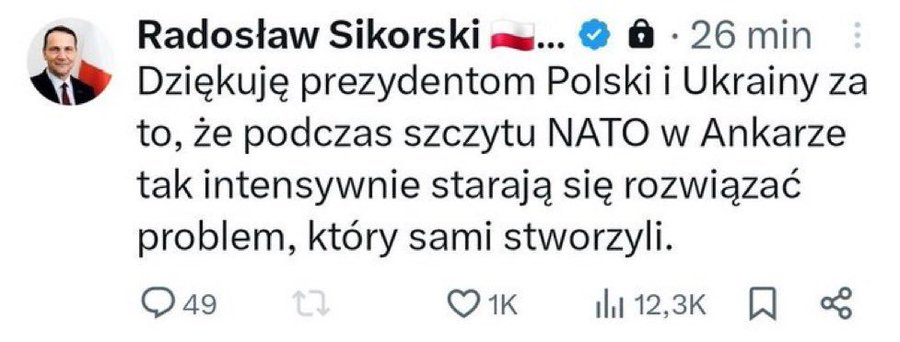
Ależ to jest skandaliczny wpis... I to spod palców ministra spraw zagranicznych! Dla niego nawalanka w prezydenta RP ma priorytet przed interesem Polski i racją stanu.
We are pleased to announce that we have officially nominated Edward Reid for the IPN's "Ambassador of Polish History" Award.
Edward Reid is one of the most distinguished international advocates of Polish history and remembrance. For nearly two decades, he has devoted himself to promoting Poland's history among English-speaking audiences while consistently defending the good name of Poland on the international stage. He documents and shares stories that should never be forgotten.
The history of WWII lies at the heart of his work. Through meticulously researched publications, Edward Reid helps international audiences understand Poland's wartime experience, highlights the courage and sacrifice of the Polish people, and emphasises the immense contribution of Polish soldiers to the Allied victory.
Through his English-language publications and extensive social media presence, he reaches hundreds of thousands of people around the world, effectively countering historical misinformation and challenging harmful stereotypes about Poland.
The "Ambassador of Polish History" award would be a well-deserved recognition of Edward's many years of outstanding, entirely selfless dedication to preserving and promoting the truth about Poland's history.
Od 24 godzin ani kierownictwo @MON_GOV_PL, ani nikt z rządu nie odniósł się do informacji, która jest dziś jednym z najgłośniejszych tematów w internecie.
Jeżeli potwierdzą się doniesienia, że Polska przekazała Ukrainie pociski PAC-3 do systemów Patriot, będziemy mieli do czynienia z decyzją wymagającą natychmiastowych i szczegółowych wyjaśnień. To pociski stanowiące kluczowy element obrony polskiego nieba przed rakietami balistycznymi i innymi zaawansowanymi zagrożeniami.
Przekazywanie uzbrojenia o tak fundamentalnym znaczeniu dla bezpieczeństwa Rzeczypospolitej – w sytuacji, gdy sam rząd ostrzega przed rosnącym zagrożeniem ze strony Rosji – byłoby decyzją skandaliczną.
Polacy mają prawo wiedzieć, czy informacje o przekazaniu pocisków PAC-3 są prawdziwe. Milczenie rządu w tak poważnej sprawie jest niezrozumiałe.
"Tusk jest człowiekiem jedynym, o którym ośmielę się powiedzieć - złym do szpiku kości. Steruje on sceną polityczną jak w teatrze marionetek. W jego działaniach widać w sposób jasny i czytelny, że celem nie jest dobro Polski, ale własna kariera i chęć zemsty".
/prof. A. Nowak/
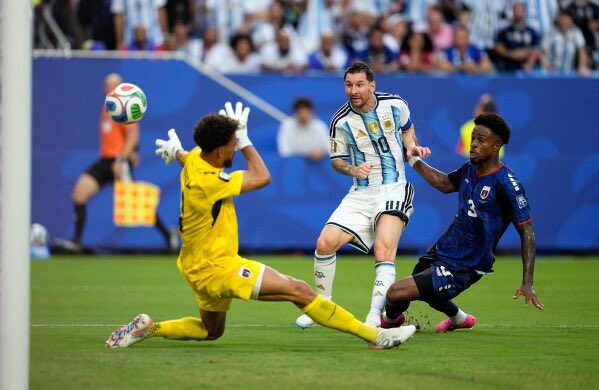
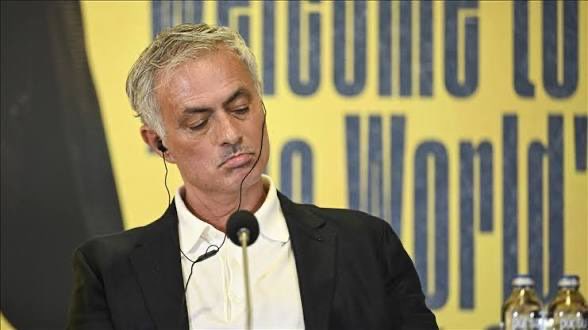
🚨🗣️ José Mourinho on the refereeing in Argentina's 3-2 victory over Cape Verde:
"We are watching a script, not a football match. Cape Verde did not just play against eleven men from Argentina tonight, they played against the referee, they played against the system, and they played against the entire agenda of the tournament.
When you are a small nation, you have to be perfect to win. But when you are Argentina, you are allowed to make mistakes because the whistle will always save you. Every 50/50 challenge went one way. Every time Cape Verde built momentum, there was a convenient foul given. A 111th-minute own goal? The pressure was artificially created. It breaks my heart for Cape Verde because they were absolute warriors, but in modern football, being a warrior is not enough when the result has already been decided in an office."
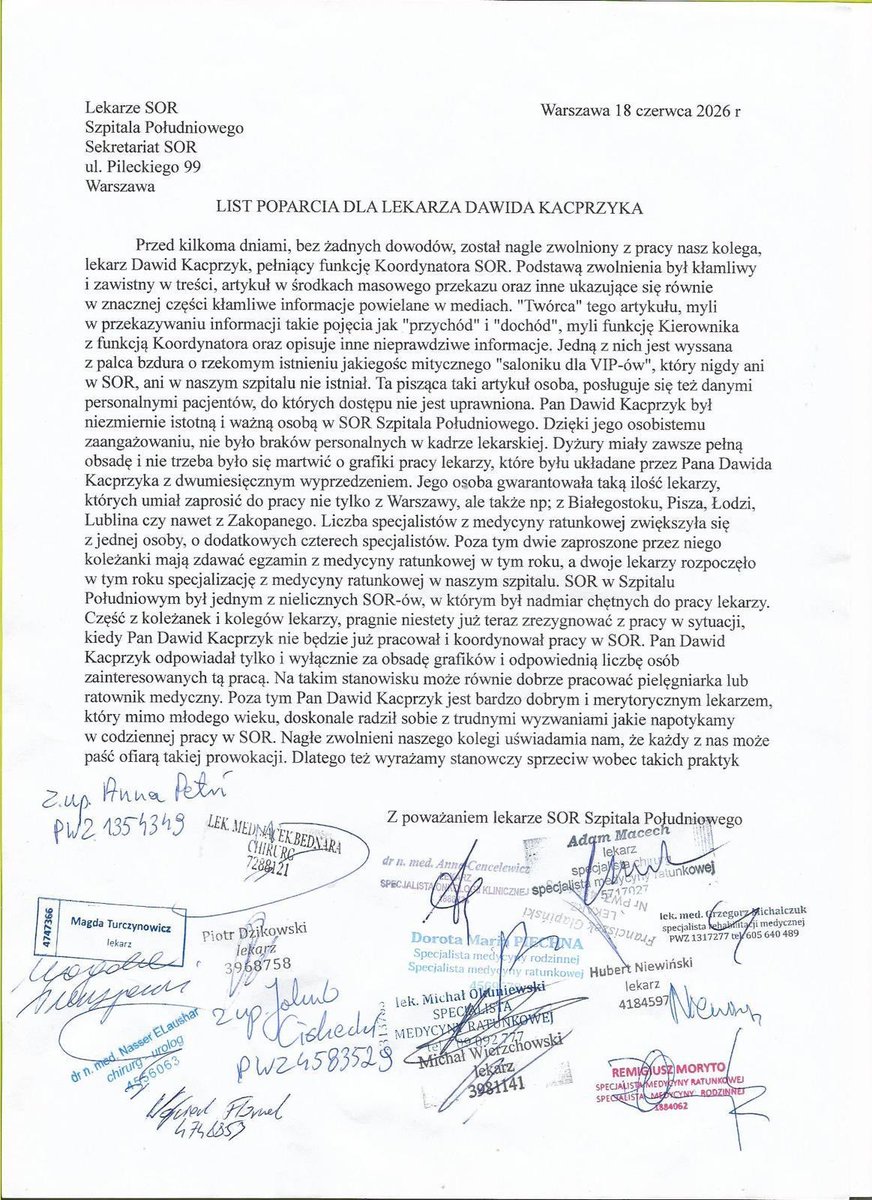
Warto zapisać sobie te nazwiska. 16 osób twierdzi, że Kacprzyk zarobił 1,6 mln zł za tylko i wyłącznie układanie grafików, co mógł robić ratownik medyczny lub pielęgniarka.
Nie dość, że kłamią, to dodatkowo robią to z całkowitym brakiem szacunku do inteligencji ludzi.
Poland's reward for saving Ukraine: AMNESIA.
The Ukrainians seem to have forgotten that without Polish pressure, the West — Scholz, Macron, Biden — would have let them down.
Remember Scholz's 5,000 helmets, Macron's endless phone calls to Putin? Remember Biden's slow, hedged, incremental reaction, weapons systems approved only after months of Ukrainian pleading and battlefield necessity?
Poland decisively changed all of this. It organized the reaction of the West when the West preferred to hesitate. The Poles were everywhere: opening their border to millions of refugees, turning Rzeszów into the logistical spine of Western military aid, pushing NATO to send tanks before Berlin would even discuss it, lobbying for fighter jets while others still calculated the risk of provoking Moscow. Poland did not calculate. It did everything it could.
And in return, once the job of mobilizing the West was done, Ukraine decided that Poland was a second-rate player after all, not a partner worth attention, not a power worth sharing common interests with.
It has always been only about Ukrainian interests, with Poland's own interests treated as an afterthought at best, an inconvenience at worst. German interests, French interests, American interests, however, were courted with real eagerness, real diplomatic tact, real willingness to compromise.
Poland got gratitude in press releases and friction everywhere it mattered: the grain corridor dispute, where Ukrainian exports flooded Polish markets and undercut Polish farmers, met not with negotiation but with Kyiv's indignation that Warsaw would dare protect its own producers. The truckers' blockades that followed were framed by Ukrainian officials as Polish betrayal, not as the predictable consequence of a neighbor absorbing the costs of war with no reciprocal accommodation. Zelensky himself, standing at the UN, could imply that certain unnamed neighbors were playing into Moscow's hands, a remark that landed in Warsaw exactly as intended.
Volhynia remains unaddressed. Seventy years of a massacre Poland has been extraordinarily patient in raising diplomatically, and still no Ukrainian government has been willing to treat it as the reckoning it deserves to be, because admitting Polish grievance has never seemed worth the political cost to Kyiv.
When Poland finally asks for something in return, it is treated as an unreasonable demand from a junior partner who should simply be grateful to have been allowed to help. Ukraine was sure Poland's only interest was that Ukraine would fight Russia, and that Poland, having no interests of its own worth honoring, had nothing to be owed in exchange.
Poland bled goodwill so Ukraine could bank it. That is the whole story, stripped of diplomatic phrasing. Every tank Warsaw sent before Berlin dared to. Every refugee absorbed without a single EU quota forcing the hand. Every border crossing turned into a supply artery running day and night while other capitals debated committees. Poland did not deliberate. Poland moved. And Ukraine watched, took the shipment, and kept its warmth for the countries that made it wait.
Ask what Volhynia has earned in seventy years of Polish patience. Silence, mostly. Diplomatic silence dressed up as tact, because admitting a massacre costs Kyiv nothing with Berlin and everything with its own nationalist mythology. Ask what the grain corridor earned Polish farmers. Ruin, and then indignation from Kyiv that Warsaw dared object to its own ruin. Ask what four years of unconditional logistics earned Poland at the table where decisions are actually made. A folding chair, pulled up after France and Germany had already taken the good seats.
There is a kind of contempt that only the rescued can show the rescuer, because gratitude implies debt, and no nation likes admitting it owes its survival to the neighbor it has spent a century looking down on. Poland was never the ally. Poland was the tool that worked, and tools do not get consulted, they get used and put back in the shed. Warsaw should remember that the next time Kyiv calls.
There is a geography to Ukraine's gratitude, and it runs backward. The farther a capital sits from the Russian border, the more indulgence it receives, the more its hesitations are forgiven, the more its eventual help is treated as a gift rather than an obligation. Washington can arrive late and still be thanked first. Paris can phone Moscow throughout the war and still be received as a statesman. But Warsaw, Vilnius, Riga, Tallinn, the nations that actually share a fence line with the Russian threat, that live with the same fear pressing on their own borders, are expected to help simply because they exist next door. Their assistance is not a choice to be honored. It is a natural feature of the terrain, like weather.
This is the logic Kyiv has never said aloud but has practiced consistently: if you fear Russia the way Ukraine fears Russia, if the threat sitting on your border is the same threat sitting on Ukraine's, then your help was never really a gift, it was self-interest wearing the costume of solidarity, and self-interest does not require gratitude. Only the distant, the safe, the countries who could have stayed comfortably uninvolved and chose otherwise, only they get treated as benefactors. Poland's proximity to Russia, the very thing that should have made its solidarity more credible, more urgent, more deserving of trust, became instead the reason that solidarity was assumed rather than earned. Nobody thanks the neighbor for putting out a fire that could have reached his own house next.
And so the arrangement settles into something almost administrative. Poland's help gets taken, filed, consumed, and the relationship moves on without adjustment, without priority, without a single Ukrainian concession ever weighed against it. Ask for movement on Volhynia, and the answer is silence. Ask for consideration on the grain corridor, and the answer is indignation. Ask, simply, to be treated as a partner whose interests matter as much as Berlin's or Washington's, and the answer is a folding chair. Fear of Russia, it turns out, is not a currency Kyiv values in its neighbors. It is simply the price of admission, paid in advance, and never redeemed.
There is a word for a relationship where proximity to power obligates assistance but confers no standing, where the neighbor's role is fixed in advance and cannot be renegotiated no matter what is given. That word is not alliance. It is empire, and empires have always organized their peripheries this way.
This is, surprisingly and paradoxically, the shape of what Ukraine has constructed with Poland, whether or not Kyiv would ever use the word for it. Poland's tanks, Poland's border, Poland's logistics, Poland's political capital spent in Berlin and Brussels, none of it was received as the discretionary act of a sovereign equal choosing to stand with a friend. It was received as tribute, the expected offering of a smaller neighbor to the cause that mattered more, collected without negotiation and without the courtesy of treating the giver as someone whose own demands might now be owed a hearing in return. Tribute does not buy influence. That is precisely what distinguishes it from investment, from partnership, from any relationship between equals.
What makes this arrangement particularly bitter is that Ukraine is not even the empire in the classical sense, it is itself the smaller power fighting for survival against one. And yet it has absorbed, perhaps unconsciously, the exact reflex of empire toward its own periphery: the assumption that those closest to the danger owe the most and are owed the least, that proximity is a debt rather than a claim, that the neighbor who cannot afford to look away has therefore already committed to helping regardless of how he is treated.
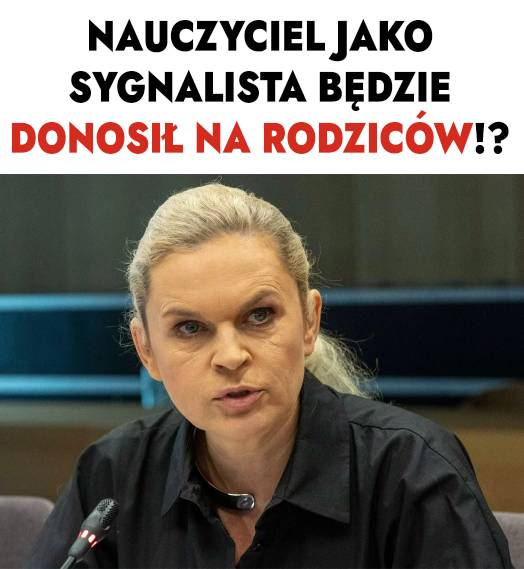
Nauczyciel jako sygnalista będzie donosił na rodziców!?
NOWE WYTYCZNE NOWACKIEJ
Szkoła ma coraz częściej oceniać stan psychiczny dziecka i "funkcjonowanie w rodzinie" na wzór unijny. Tu kończy się pomoc, a zaczyna wchodzenie z butami w dom!
Reforma oświaty, która wchodzi etapami, kładzie ogromny nacisk na "dobrostan psychiczny" uczniów, "rozpoznawanie problemów emocjonalnych" i "ocenę funkcjonowania ucznia w środowisku". Nauczyciele mają być szkoleni z wychwytywania sygnałów kryzysu. Brzmi jak troska. Ale kryje się w tym poważne zagrożenie, o którym trzeba mówić otwarcie.
Jeden z nauczycieli ujawnił, że zgodnie z wytycznymi od dyrekcji ma od września stać się sygnalistą, który będzie donosił np. na szybki spadek wagi czy stres. Wszystko w celu zgłoszenia tego do opieki społecznej.
Nauczyciel to nie psychiatra ani pracownik socjalny. Gdy jego zadaniem staje się ocenianie, czy dziecko jest zamyślone, smutne albo schudło, i wyciąganie z tego wniosków o sytuacji rodzinnej, robi się z niego obserwator życia prywatnego rodziny. A stąd już tylko krok do uruchamiania instytucji, które zapukają do drzwi i zażądają wyjaśnień.
Każde dziecko bywa smutne, zmęczone czy zamknięte w sobie. To normalna część dorastania, a nie dowód, że w domu dzieje się coś złego. Jeśli państwo zacznie traktować takie sygnały jako powód do interwencji, żaden rodzic nie będzie pewny, czy zwykły gorszy tydzień dziecka nie ściągnie mu na głowę urzędnika.
To rodzice mają prawo i obowiązek wychowywać własne dzieci. Nie szkoła, nie samorząd, nie urząd. Państwo może rodzinę wspierać, gdy ta poprosi o pomoc, ale nie może jej zastępować ani nad nią czuwać jak nadzorca.
Autorytet rodzicielski to fundament zdrowego społeczeństwa. Osłabianie go, choćby pod najszczytniejszym hasłem, uderza w samo serce rodziny. A rodzina to nie jest sprawa państwa. To sprawa rodziców.
457 years ago, the Act of the Union of Lublin established the Polish-Lithuanian Commonwealth – an early model of shared sovereignty and a multicultural, multilingual and religiously diverse state.
Today, this shared 🇱🇹🇵🇱 legacy continues to inspire our work for a united Europe.