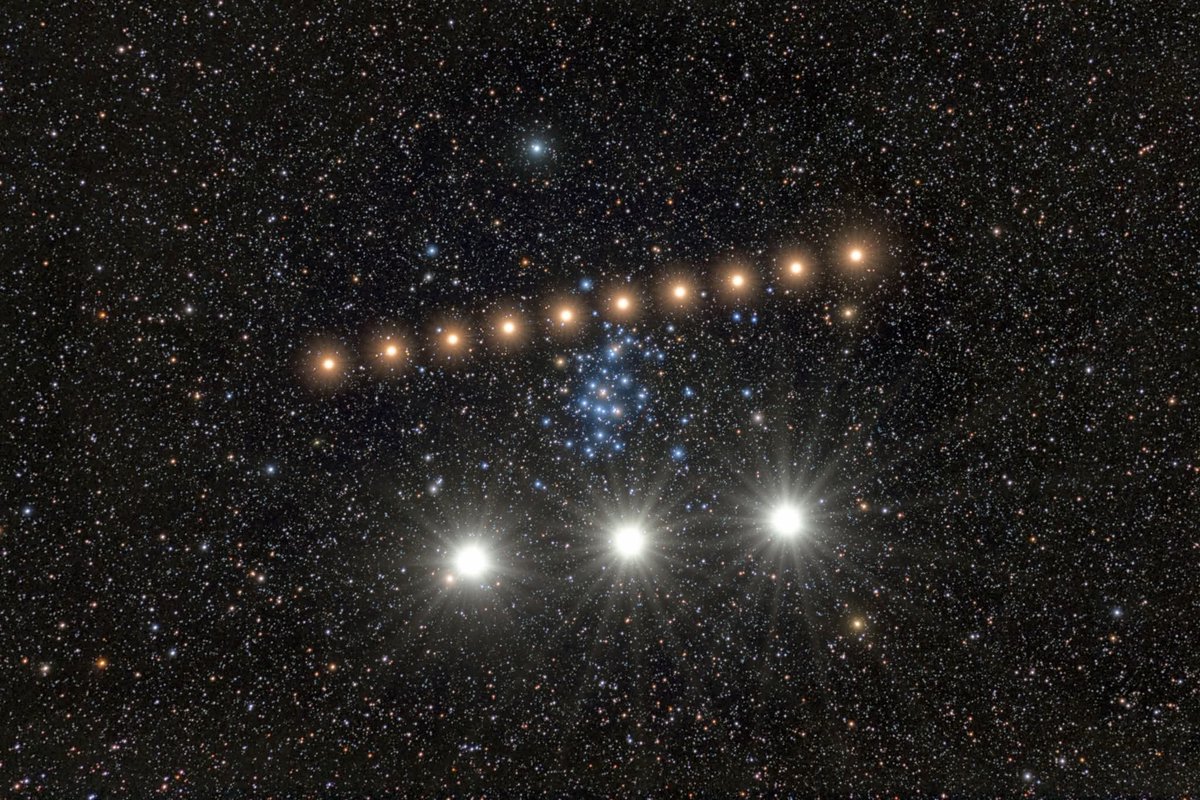
That's a beautiful pair of astronomical events from 2025!The Beehive Cluster (Messier 44 / Praesepe) is one of the most impressive open star clusters visible to the naked eye, located about 600 light-years away in Cancer. Its loose, sparkling appearance has earned it the nickname "Beehive" since ancient times—Ptolemy called it a "nebulous mass in the breast of Cancer," and Galileo was among the first to resolve it into individual stars with his https://t.co/SY5oSNeGln 2025, both inner planets put on a memorable show by passing directly in front of the cluster:Mars crossed the Beehive in late April to early May, moving slowly enough through the evening sky for its nightly progress to be captured beautifully.
Venus, as the brilliant Morning Star, made its own swift passage through the cluster in late August to early September during pre-dawn twilight.
The composite time-lapse image you shared was created by astrophotographer Petr Horálek (an NOIRLab Audiovisual Ambassador) using observations from multiple sites, including Cerro Pachón in Chile (home to the Gemini South telescope operated by NSF’s NOIRLab), locations in Bolivia, and the Czech Republic. It cleverly combines the two separate planetary transits into a single striking view, with Mars tracing its path above and Venus below.These kinds of conjunctions are a wonderful reminder of how our solar system’s planets move against the much more distant backdrop of the stars—pure line-of-sight magic from our perspective on Earth.Absolutely worth savoring as a highlight of 2025’s night sky!
🚨🇷🇺🇺🇦 REPORT: U.S. intelligence warns Putin intends to seize all of Ukraine and reclaim parts of Europe once under Soviet control, according to Reuters.
Follow: @RTSG_News
🚨 In a world-first, U.S. researchers have teleported a quantum state of light across 30 kilometers of standard internet fiber while normal web traffic flowed through the same cables.
This marks the first time quantum teleportation has succeeded over a live, public-style network. The team synchronized quantum photons with regular data signals, keeping their fragile quantum properties intact throughout the journey.
The result? Proof that quantum communication can coexist with today’s internet no massive infrastructure overhaul needed.
The implications are staggering: ultra-secure, unhackable communication, powered by the laws of physics. The dream of a global quantum internet is no longer science fiction it’s happening now.
Sources: NASA, Caltech, U.S. Department of Energy, Nature Photonics, National Geographic
🚨 MYSTERY ALERT - 3I/ATLAS 🚨
⚠️😱Hours before its closest encounter with Earth, interstellar object 3I/ATLAS appeared to change its “heartbeat.”💓☄️
🛸The object passed Earth on Dec. 19, at a distance of about 170 million miles — close enough for detailed monitoring.
👽 Unusual signal rhythms.
🔭 Non-standard behavior.
❓ An origin beyond our solar system.
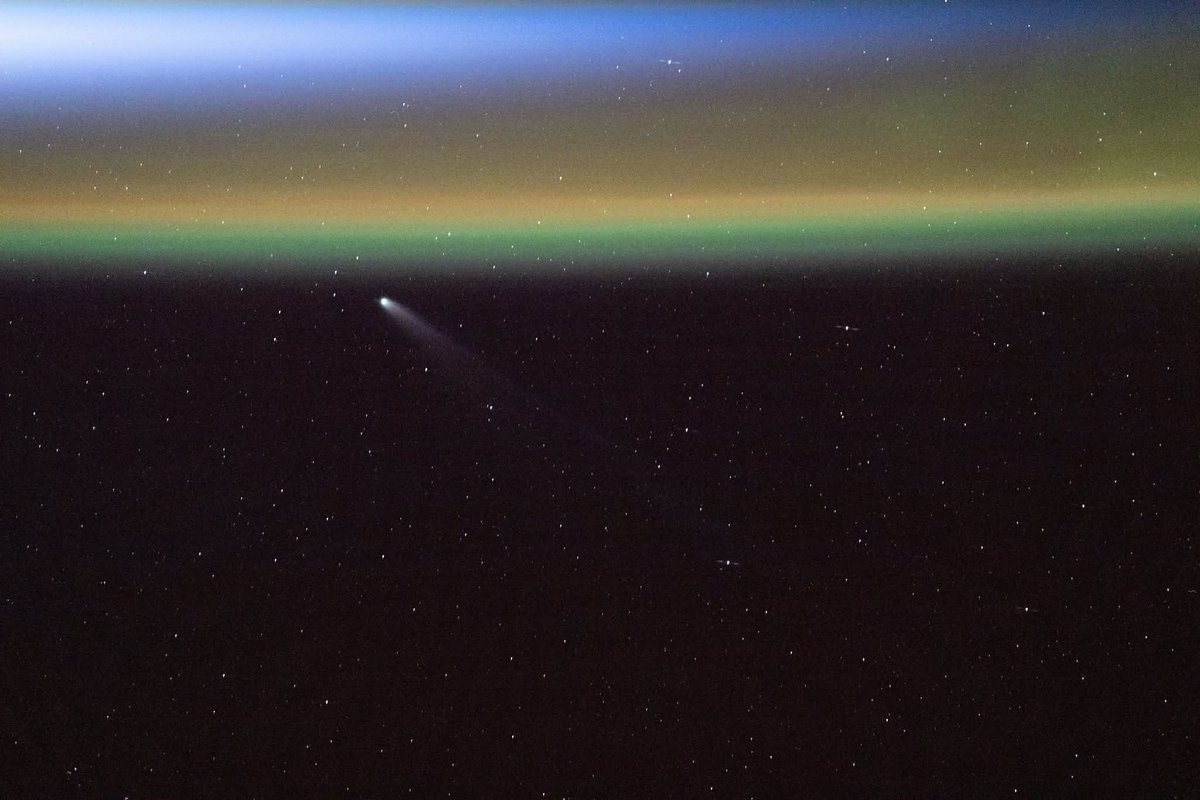
🚀 Since 2023, astronauts aboard the space station have captured stunning images of four other comets — but none like this.
✨ Natural visitor… or something else entirely?
📸 More images below ⬇️
#3IATLAS #AlienMystery #InterstellarObject #HeartbeatSignal #SpaceAnomaly #ISS #CosmicUnknown
Absolutely groundbreaking! This is indeed a historic confirmation of the first unambiguously detected isolated stellar-mass black hole roaming the Milky Way.The object, designated OGLE-2011-BLG-0462 (also known as MOA-2011-BLG-191), was initially proposed as a black hole candidate in 2022 based on earlier Hubble data. But a new study published in The Astrophysical Journal (Volume 983, 2025) by Kailash C. Sahu and collaborators has solidified its identity using additional Hubble observations (extending the dataset to 11 years) and updated ground-based photometry.Key facts:Mass: Approximately 7.15 ± 0.83 solar masses – too heavy for a neutron star, confirming it's a black hole.
Distance: About 5,000–5,600 light-years away, in the direction of the Galactic bulge (constellation Sagittarius).
Detection method: Gravitational microlensing in 2011, where the invisible lens passed in front of a background star, bending and brightening its light. Follow-up astrometry from Hubble precisely measured the tiny relativistic shift in the star's position.
It's truly isolated: No detectable light or accretion signature from a companion.
This "dark wanderer" likely got a natal kick from its supernova birth, sending it speeding through the galaxy at ~45 km/s relative to nearby stars.Excitingly, the upcoming Nancy Grace Roman Space Telescope (launch ~2027) is expected to detect many more such rogue black holes via https://t.co/XeKPPnFKWM are some artist's illustrations and diagrams depicting the microlensing event and the wandering black hole:The universe's hidden population of silent black holes is starting to reveal itself – mind-blowing stuff!
🚨3I/ATLAS: The Sunward Anti Tail Problem Just Got Worse Anomaly #15!
Avi Loeb's newest essay sharpens what he's now calling a 15th anomaly around 3I/ATLAS and this one is hard to wave away with rare comet behavior.
Here's the clean breakdown of Avi's latest article, without hype.
Images from December 9-15, 2025 show a tightly collimated anti tail jet pointing directly toward the Sun, remaining confined to 6-8° over a distance of 500,000 km farther than the Earth to Moon separation.
That alone is unusual, but it's not the whole problem.
3I/ATLAS displayed a sunward anti tail both before and after perihelion. If the rotation axis really was aligned within 8° of the Sun at large distances (as recent analysis suggests), then the pre-perihelion jet base must lie near one rotation pole while the post perihelion jet base must lie near the opposite pole.
Each jet activates only when Sun facing and stays dormant on the night side, that implies two well insulated, pole adjacent sources, each capable of producing an unusually tight jet. For a natural comet, that's already stretching credibility.
Normal Physics Struggles as Eric Keto notes that a sun aligned jet near the rotation axis could spin like a rifle bullet explaining limited wobble but that does not explain why both poles behave this way across perihelion.
Frank Laukien goes further stating that a normal comet tail can collimate naturally because sunlight and solar wind push material away. A sunward anti tail should not remain tightly collimated, instead we should see a hemispherical sublimation plume should spread into 2π steradians, not a narrow beam.
The only natural workaround would be something like a deep 'gun barrel" ice cavity, but sunlight would only illuminate it briefly on a rotating body and not persistently before and after perihelion.
Loeb's Probability Stack combines the geometry:
Trajectory aligned within 5° of the ecliptic = 0.002
Rotation axis aligned within 8° of the Sun = 0.005
Two independent, pole aligned, tightly collimated jets = 0.000025
Multiply them together and you get 1 in 4 billion and that's before counting other anomalies like the nickel rich composition inconsistent with natural iron ratios.
NASA’s position remains that 3I/ATLAS is "definitely a comet" shaped by a different birth environment. However Loeb disagrees stating that a birth environment doen't explain multiple, Solar System referenced geometric alignments.
Different chemistry is one thing, but repeated, precise alignment with the Sun and ecliptic is another level.
In short Loeb's latest article points out that this isn't a single weird feature, it's layered improbability, all pointing in the same direction.
You don't have to jump to conclusions here, but dismissing this without serious curiosity is no longer scientific skepticism, its blinkered avoidance.
#3IATLAS #InterstellarObject #AviLoeb #Astrophysics #UAP #CometScience #SolarSystemAnomalies #SpaceMystery
Source:
https://t.co/m1hsGf0cML
Video Clip Courtesy of Dobsonian Power:
https://t.co/JBN2hUTf0P
Mercury's Off-Center Magnetic Field: A Unique Planetary PuzzleNASA's MESSENGER mission (2004–2015) provided the first detailed orbital measurements of Mercury's global magnetic field, confirming it as a weak, internally generated dipole—much like Earth's, but with striking differences. The field is remarkably axisymmetric (aligned closely with the rotation axis, tilt <0.8°) and dominated by dipolar components, yet it's significantly offset northward by about 484 km (approximately 20% of Mercury's radius, or 0.2 R_M, where R_M = 2440 km).This offset results in:Stronger magnetic field intensities in the northern hemisphere (up to ~3 times stronger at the surface than in the south).
Better shielding from solar wind in the north.
Greater exposure in the southern hemisphere, allowing more direct bombardment by charged particles. This enhances space weathering (e.g., darkening and chemical alteration of the surface) and contributes to Mercury's low-reflectance crust and unusual exosphere composition.
Illustration of Mercury's offset dipole magnetic field (NASA/MESSENGER): The dipole center is shifted north, leading to asymmetric field lines—tighter and stronger in the north, weaker and more open in the south.
Schematic comparing Mercury's asymmetric field to a centered one, highlighting the north-south differences in magnetospheric protection.
Why the Asymmetry?The offset challenges traditional dynamo models, which predict more symmetric fields for planets with uniform internal conditions. Mercury's enormous iron-rich core (~85% of the planet's radius) and thin mantle suggest unique dynamics:Convection in the molten outer core is likely uneven or influenced by a thick stably stratified layer at the top.
Possible mechanisms include iron snow (volumetric buoyancy release) or double-diffusive convection, leading to north-south differences in helical flows (kinetic helicity).
Recent models (e.g., 2019 symmetry-breaking self-regulating dynamo; 2025 double-diffusive simulations) reproduce the offset without requiring asymmetric boundary conditions, attributing it to feedback between magnetic fields and fluid motions.
This demonstrates that stable, long-lived dynamos can produce highly lopsided fields, even on small, sun-scorched worlds. It refines theories for other rocky exoplanets and explains how Mercury sustains a dynamo despite cooling expectations.
Artist's concept of Mercury's magnetosphere (NASA): Showing how the offset allows more solar wind penetration in the south, forming a compact, dynamic magnetosphere.The ongoing BepiColombo mission (ESA/JAXA, arrived 2021, full operations ongoing as of 2025) is providing complementary southern-hemisphere data to further test these models.
Sources: NASA MESSENGER science papers (e.g., Anderson et al., Science 2011; JGR: Planets), recent reviews (2024–2025), and dynamo simulations (Nature Communications 2019; JGR: Planets 2025).
NEURALINK’S TECH IS GIVING VOICES BACK TO THE VOICELESS
Science made personal. Real tech, real voice, real impact.
Voice Wave:
* Brad, diagnosed with ALS, lost his ability to speak
* He became the third person to receive a Neuralink brain implant
* The implant helped him reconnect – voice, emotion, presence
* From silence to communication, powered by thought
This is what it looks like when Neuralink science gives humanity the mic back!
Source: @Neuralink
Imagine a star so obscenely large that the phrase “larger than life” feels insulting.Stephenson 2-18 isn’t just big; it’s cosmic hubris made plasma.Our Sun, the unquestioned ruler of our sky, is a mere speck next to it: a glowing marble beside a weather balloon the size of a small country. The Sun’s diameter is 1.39 million kilometers. Stephenson 2-18 laughs at that number. Its diameter is estimated at roughly 3 billion kilometers (2,150 solar radii, give or take the usual red-supergiant mood swings).If you dropped this crimson titan into the center of our solar system, its surface would reach somewhere between the orbits of Saturn and Uranus on a good day. Mercury, Venus, Earth, Mars, Jupiter, and Saturn wouldn’t be planets anymore; they’d be crumbs toasted inside a star.Picture it: Earth, the entire orbit of Jupiter (all 5.9 billion kilometers of it), just a shallow layer beneath the star’s roiling, semi-transparent outer atmosphere. You could fit more than 10 billion Suns inside its volume. Ten. Billion.Yet this monster is dying. It’s a red supergiant in the absolute final chapters of its life, burning through the last of its fuel in a desperate, bloated spectacle. One day (astronomically soon, maybe in a few tens of thousands of years), it will detonate as one of the most violent hypernovae the Milky Way has ever seen, briefly outshining entire galaxies before collapsing into a black hole that will weigh dozens of times more than the Sun.Stephenson 2-18 is 7,500 parsecs away in the constellation Scutum, hidden behind thick curtains of dust, so we’ll never see it with the naked eye. But it’s there, right now: a swollen, crimson ember the size of a planetary system, quietly reminding us that in the universe’s ledger of extremes, our Sun doesn’t even register as https://t.co/rTvkYtu7UL’s not just a star. It’s a warning label on the cosmos: “Objects in telescope may be more terrifying than they appear.”
It is very rare for the vast majority of Fidesz supporters not to line up behind a measure simply because the word "government" appears in the question. And yet, this is what happened now, according to a survey commissioned by Telex. https://t.co/C6S20wXNPY
???
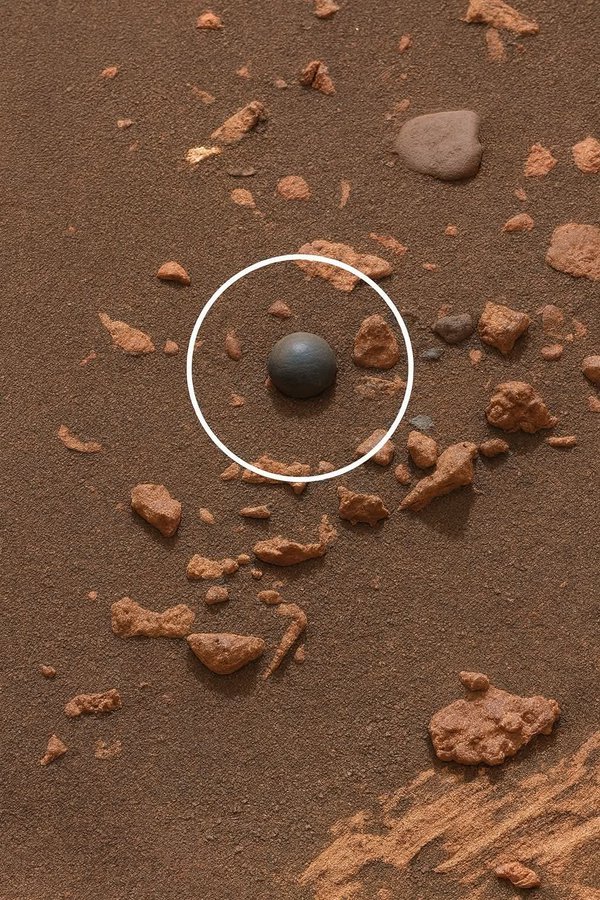
A perfect sphere on Mars?
NASA’s rover spotted this unusually smooth, almost manufactured-looking ball sitting alone in the Martian dust.
Natural formation… or something far more engineered?”
NASA’s DiskSat is gearing up to launch into low Earth orbit!
Four plate-shaped spacecraft will demonstrate a new small spacecraft technology that aims to lower mission costs and expand access to space.
The launch window opens Dec 18 at 12am ET. Live coverage from @RocketLab begins approximately 20 minutes before launch.
Learn more: https://t.co/0q14uDXa6a
Astronaut floating in space outside ISS stares at Africa's raw majesty: Sahara's endless golden sands unleashing a massive dust storm racing toward the Atlantic.
NASA
UFOs/UAPs and their possible spacetime-warp propulsion.🧐🤔🛸🛸🛸🛸🛸🛸🛸
If even one credible UAP video is real hardware, then something out there is bending spacetime, canceling inertia, or bypassing conventional propulsion entirely. That’s a bigger deal than AI by a mile.